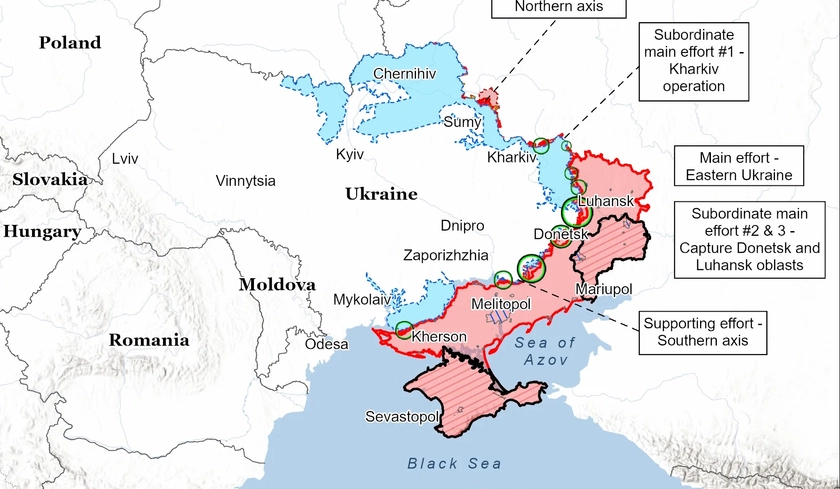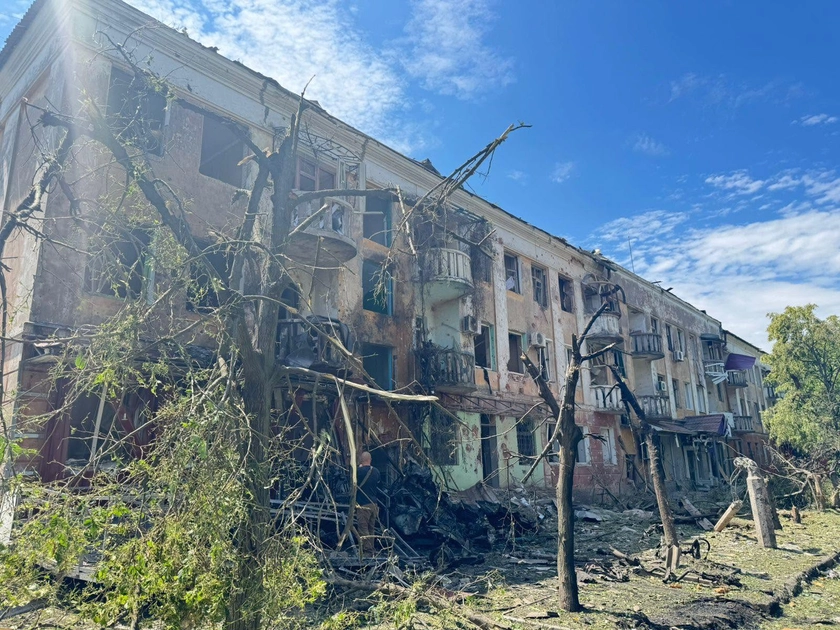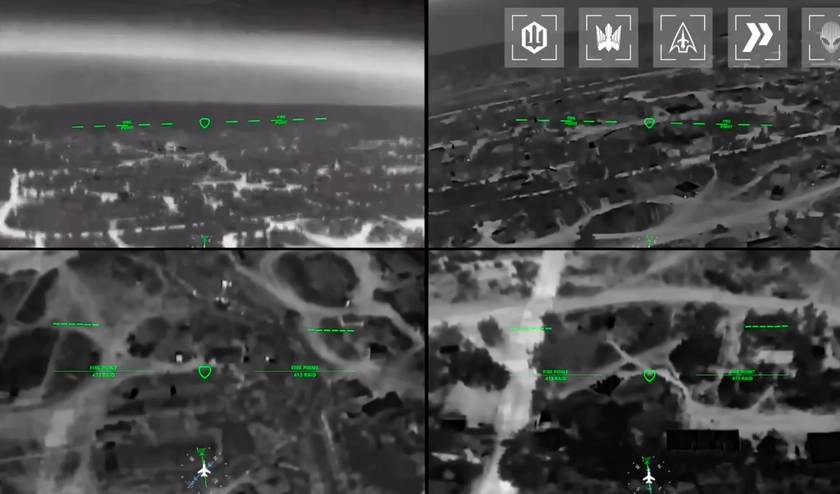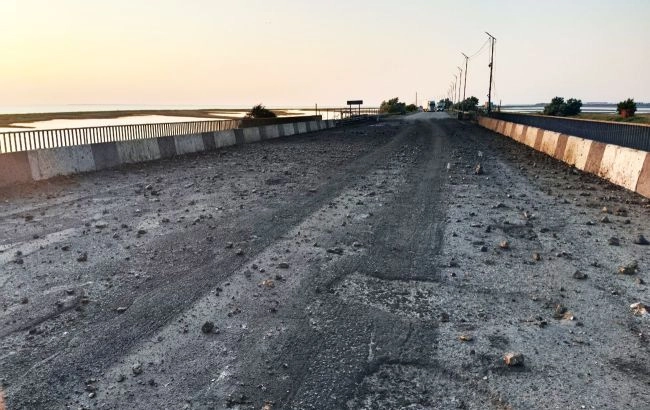
The Armed Forces of Ukraine (AFU) have intensified their systematic interdiction campaign in southern Ukraine, executing a series of strikes that severed a critical railway line and disabled alternative pontoon crossings used by Russian forces in Kherson region.
Collapsing the alternative logistics grid
Dmytro “Perun” Filatov, the commander of the 1st Separate Assault Regiment revealed details of the midnight operation, Suspilne reported. Filatov explained that the latest wave of strikes targeted the alternative infrastructure engineered by the Russian military to bypass crippled mainland arteries.
JOIN US ON TELEGRAM
Follow our coverage of the war on the @Kyivpost_official.
“Tonight there were new hits. As a result, another important transport artery was damaged – this time a railway,” Filatov stated. “Previously, strikes had already been carried out on the Chonhar and Armiansk bridges. After that, the Russian military built several pontoon crossings to restore movement. One of these crossings was also damaged today.”
According to the commander, by systematically hunting and knocking out these transport links, the Sifas of Ukraine are actively forcing the Russian military into a dangerous operational dilemma. Stripped of reliable rail logistics and permanent concrete bridges, Russian forces have been forced to accumulate tightly packed transport columns on fragile pontoon bridges to ferry ammunition, heavy armor, and personnel.
Filatov noted that this clustering effect plays directly into the hands of Ukrainian reconnaissance and strike teams. Furthermore, he highlighted the asymmetrical economic nature of the contemporary bridge campaign.
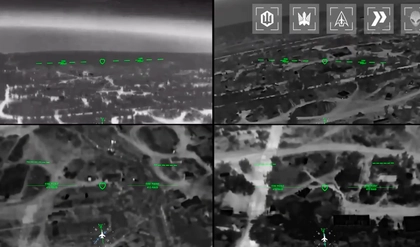
Ukraine’s Drone Forces Strike Russian Training Ground in Zaporizhzhia
“Pontoon crossings do not have powerful structural designs, and destroying them does not require expensive weapons,” the commander emphasized. “We have assets valued at under $5,000 that will sink these crossings.”
Occupation authorities confirm widespread disruptions
The scale of the destruction was inadvertently validated by the Russian-installed puppet governor of the occupied Kherson region, Volodymyr Saldo.
On Saturday morning, Saldo went public to announce that Ukrainian forces had launched concentrated attacks against the bridges leading toward the village of Chonhar – the primary bottleneck directly connecting mainland Kherson with the occupied Crimean Peninsula.
Saldo confirmed that the severity of the arriving fire forced occupation authorities to completely shut down all civilian and military traffic flow near the crucial Dzhankoi checkpoint. Furthermore, Saldo admitted that Ukrainian tactical units struck a vital bridge connecting the port city of Henichesk to the Arabat Spit, a narrow strip of land running down the eastern coast of Crimea.
The strategy of a total “logistics lockdown”
The weekend operations in Kherson represent a localized tightening of a broader campaign orchestrated by Ukraine to completely isolate Russian forces entrenched in Crimea. Robert “Madyar” Brovdi, commander of Ukraine’s Unmanned Systems Forces (USF), recently stated that the objective of the mid-strike campaign is to create entirely unlivable conditions for the Russian military footprint on the peninsula, ultimately forcing a mass withdrawal rather than relying strictly on a costly frontal assault.
The strategy has already triggered profound, measurable ripples across the regional civilian and military economy. Sustained drone and missile strikes have brought the R-280 “Novorossiya” highway – the primary land bridge running from Rostov-on-Don through Mariupol and Melitopol toward Crimea – under Ukrainian fire control, reducing its heavy military cargo traffic by up to 71 percent.
The immediate result on the ground has been near-total resource exhaustion inside Crimea itself. Multiple eyewitness reports confirmed that gas stations across the major cities of Sevastopol and Yevpatoriya have completely run out of petrol, as regional governors struggle to implement strict fuel rationing schemes.
You can also highlight the text and press Ctrl + Enter

ANALYSIS: Russia’s Air Defense Problems Are Growing