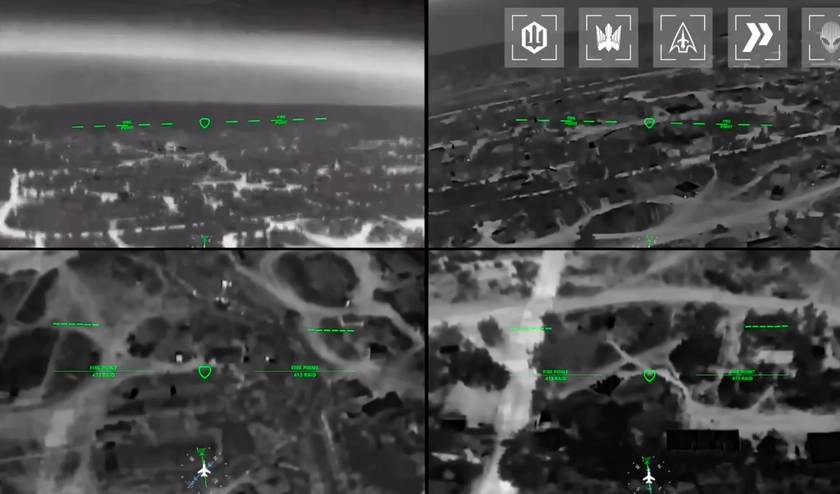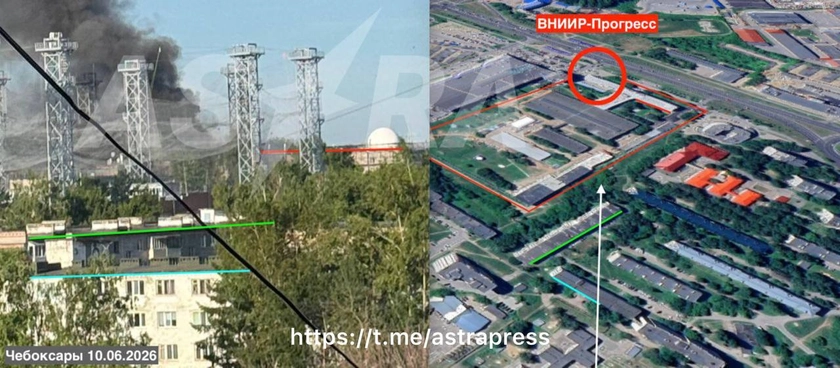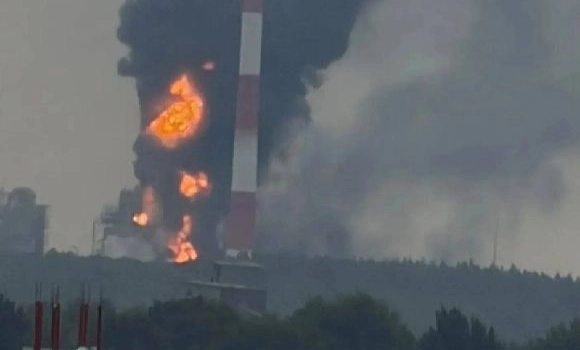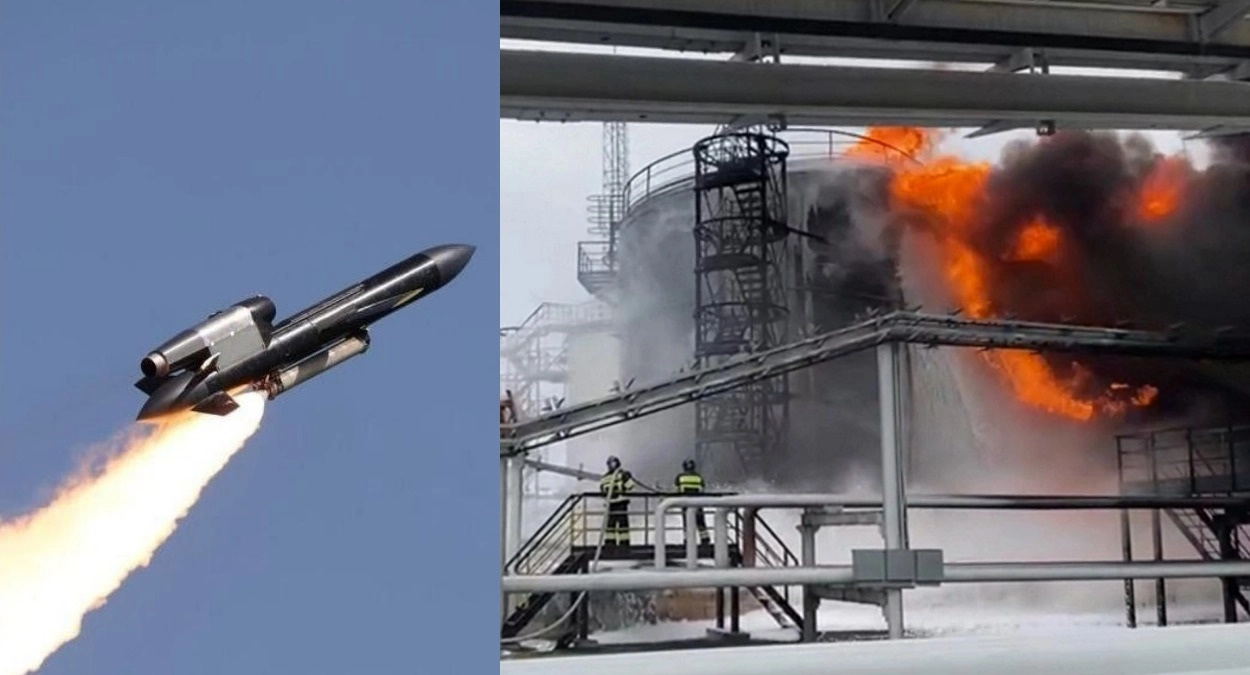
The world saw a revolution in air warfare in 2025: For the first time in history, a country – Ukraine – has mounted an effective, punishing, and highly complex strategic air bombardment of its enemy (Russia) by drone.
In a relentless strike campaign kicked off at the end of July, Ukraine’s drone forces had set fires so massive to Russian oil refineries the flames are visible from space, smashed high-tech air defense networks set up specifically to prevent intrusion into Russian airspace by Ukrainian drones, plowed into tankers and the terminals loading them for oil export critical to Kremlin finances, and crossed hundreds of kilometers of hostile territory to blast equipment inside power stations and heating stations all across western and central Russia.
On Oct. 19, Ukrainian kamikaze drones swooped down on the city of Orenburg, in western Siberia, scoring multiple hits on the Orenburg Gas Processing Plant, the world’s largest gas condensate producer. The Ukrainian aircraft – without pilots on board – set fires, blew up a processing and purification unit, forced a temporary halt to all natural gas transfers from Kazakhstan to the Russian Federation, and in a matter of minutes reduced production from the neighboring Karachaganak gas field by 25-30 percent.
By mid-November, according to Bloomberg and other industry watch agencies, Ukrainian drone strikes against Russia’s oil and gas industry had reduced petroleum production across the entire Russian Federation by about one-fifth. Some Russian oil processing facilities, such as the unfortunate Afipsky refinery in the Volgograd region, had, by mid-December, been set on fire six times.
The Illusion of a Peace Deal for Ukraine
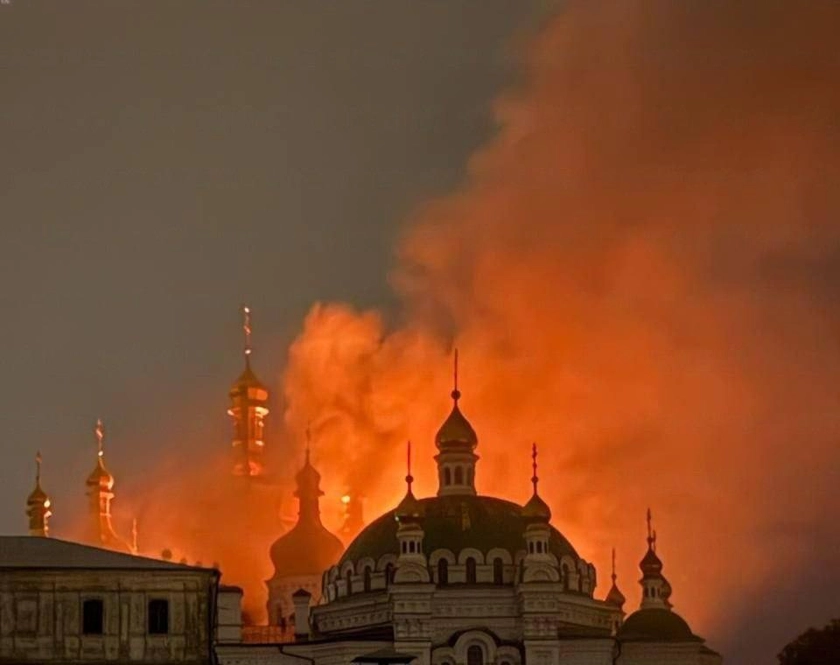
Ominously for the Kremlin, the pace and scale of the Ukrainian strikes appear to be accelerating. The single most massive and ambitious attack operation, taking place overnight Dec. 11-12, saw more than 300 explosives-toting robot aircraft thread their way through Russian air defense networks to hit, set off explosions, and ignite fighters and four oil supplies at three or four major military air bases. For the first time in the war, Ukrainian drones flew as far as the Caspian Sea that night, also setting ablaze an offshore oil processing platform. That strike probably flew 1,100-1,200 kilometers to knock the rig owned by Lukoil and its connected 20 underwater wells offline.
Despite Washington’s attempts to limit Kyiv’s legitimate aerial counterattack, Ukraine is implementing its own variety of strategic campaigns
White House officials, from both the current, almost overtly pro-Kremlin Team Trump and the previous timidly pro-Kyiv Biden administration, have used diplomatic threats, political strings attached to US and European weaponry in Ukraine’s hands, and outright embargoes on Ukrainian use of NATO long-range strike munitions against Russia. The justification put forward by both the Biden and Trump administrations has been, simply put, that Washington thinks Ukraine, using sophisticated weapons to defend itself with long-distance attacks against Russia, which has been bombarding and shelling Ukrainian homes, businesses, hospitals, schools, and even civilian pedestrians for years, might make the Kremlin angry.
Ukraine has struck back against both the Kremlin and a Trump administration that sought to control and stifle Kyiv’s attempts to defend itself, utilizing imagination and creativity, home-grown weaponry, and a sophisticated strike campaign that any professional air force in the world would be proud of, while exploiting deep knowledge of Russian weaknesses.
Air (and naval) campaigns, Ukrainian style
The hallmark of air war Ukraine-style is detailed, complex, situation-specific operational planning, sometimes lasting months before execution. The basic assumption is that the adversary will be bigger and stronger, but his defenses cannot be everywhere, and his very size creates an opportunity to catch him flat-footed. A strike (almost always) is not seen as a single event with a single objective, but as a piece of a larger strategy. If the attack works, to the Ukrainian way of thinking, there should not just be immediate results like a runway cratered or an ammo dump blown up; there must be “downstream” effects as well.
Probably the first and certainly one of the best-known examples of the Ukrainian approach became reality in April 2022, when Ukrainian forces, using heavy Bayraktar unmanned combat aerial vehicles (UCAVs) as a distraction and home-made Neptune anti-ship missiles as the punch, hit Russia’s biggest warship in the Black Sea, the cruiser Moskva, and sank it.
That was already a media victory and a giant loss to the overall tonnage of Russia’s Black Sea Fleet (BSF), but for the Ukrainians, that was only half the success. By design, armed to the teeth with anti-aircraft cannon and missiles, the Moskva was critical to the BSF’s air defenses. Once she hit bottom in the Black Sea, the rest of the BSF became more vulnerable to other air threats. By October 2023, in a naval defeat not suffered by Russia since World War II, the BSF evacuated its main port in Crimea – repeated Ukrainian missile strikes had made the place untenable.
Since summer 2023, one of the highest priority targets for elite Ukrainian Special Operations Forces (SSO) commandos, long-range rocket and missile troops, and Unmanned Systems Forces (USF) drone units, anywhere within reach, has been Russian air defense systems: the more sophisticated the system, the harder the Ukrainians have worked to damage and destroy it.
Probably at the top of that list has been the Russian Air Force’s fleet of A-50 AEW&C (Airborne Early Warning and Command) aircraft, a plane designed to spot and track planes, cruise missiles hundreds of kilometers away. In January 2024, the Armed Forces of Ukraine (AFU) pulled off a successful “SAMbush,” secretly redeploying a long-range Patriot missile system close to the front lines to knock an A-50 down. In February, using an ancient Cold War-era S-200 (NATO: SA-5 “Gammon”) missile fired into an A-50’s path 150 kilometers away, somewhat like a duck hunter leading a duck, the AFU shot down another.
In March 2024, drones flying below Russian radars pounded the Beriev repair plant in Taganrog: Russia’s sole facility for repairing and upgrading A-50 planes. In June 2025, in the spectacular Operation Spiderweb, Ukrainian special forces used strike drones concealed in civilian freight trucks to attack Severny air base in northern Russia. The drone operators targeted the plane’s almost-irreplaceable radar domes, which are its raison d’être. In November 2025, the AFU mixed drones and missiles to hit the Beriev plant again, burning at least one aircraft and probably damaging two or three more inside the facility.
With a reported six or seven A-50 AEW&C planes still operational, and the world’s biggest airspace to watch, the Kremlin now faces a burgeoning Ukrainian drone threat, with a diminished A-50 fleet.
With its now four-month-old air bombardment campaign of Russia’s energy industry, Ukraine is exploiting gaps like Russia’s A-50 shortage to pursue more and more complex objectives.
The primary goal, measured by burning refineries and tanker loading terminals in Russia, and by Bloomberg and Reuters reports on the prevailing per-barrel price of Urals Blend or Russian Export Blend Crude Oil (REBCO), is to reduce Russian oil output and overseas energy earnings.
However, in a big conventional war like the Russo-Ukrainian War, public morale and willingness to sacrifice and resist are at least as important for victory as better weapons and tactics. Russia has bombarded Ukrainian homes and businesses systematically since the fall of 2022. Currently, it is launching around 150 drones a day, and about 100 missiles of various types a month, to demolish as much of Ukraine’s energy grid as possible, to force Ukrainians to undergo winter in cold, dark apartments, and to leave Ukraine’s national leadership with no option but capitulation.
Along with reports of the latest blackouts, in Ukraine video of Ukrainian drones hitting Russian oil refineries, blowing up Russian oil tankers, torching Russian heating plants, setting Russian power transmission stations on fire, and boring in and smashing into Russian air defense radars and missile launchers are daily top news in Ukraine; it is visible evidence to average Ukrainians that Ukraine is hitting back, hard. People of Ukraine are tired of the war and badly want a peace deal if possible, but fully three-quarters of Ukrainians support fighting on rather than capitulating to Russian demands, a December Kyiv International Institute of Sociology report found.
Kyiv’s grand strategy: securing a stable, long-term, prosperous future using military, diplomatic, economic tools and ingenuity
If this were the US Department of Defense, we would be examining conventional air and naval powers’ roles in winning or losing based on the grand strategy objectives of fighting for a secure and peaceful future.
Instead, this is Ukraine’s warfighting answer – fought within the constraints imposed by a powerful “ally” mediating between the democracy-minded forces of a sovereign European nation and the bloodthirsty forces of the authoritarians: Kyiv is using what it has to ensure its survival against this existential threat.
History of Ukraine’s unconventional air power as analyzed by future historians and democratically minded people
Perhaps one day in recognition of the Ukrainian nation, its citizenry, its innovations, its desire to survive and progress in its existential fight to rid itself of centuries of jealous authoritarian desires of its upstart dukedom Muscovy neighbor, citizens across the globe will make a substitution and repeat the sentence Churchill said after Britain’s Royal Air Force defeated Nazi Germany in the 1940 Battle of Britain, with pilots from the UK, Canada and across the British Empire, as well as some from the US, and, most notably, from Poland.
After Ivan the Terrible, and more terribly, Catherine and Peter the “Great,” or post-Tsarist Kremlin attempts at collectivization by starvation – sending the homegrown crops from “the breadbasket of Europe” abroad for cash during the height of the Great Depression, perhaps democratically minded historians will join the refrain:
“Never in the field of human conflict was so much owed by so many to so few.”
You can also highlight the text and press Ctrl + Enter


ANALYSIS: Russia’s Air Defense Problems Are Growing