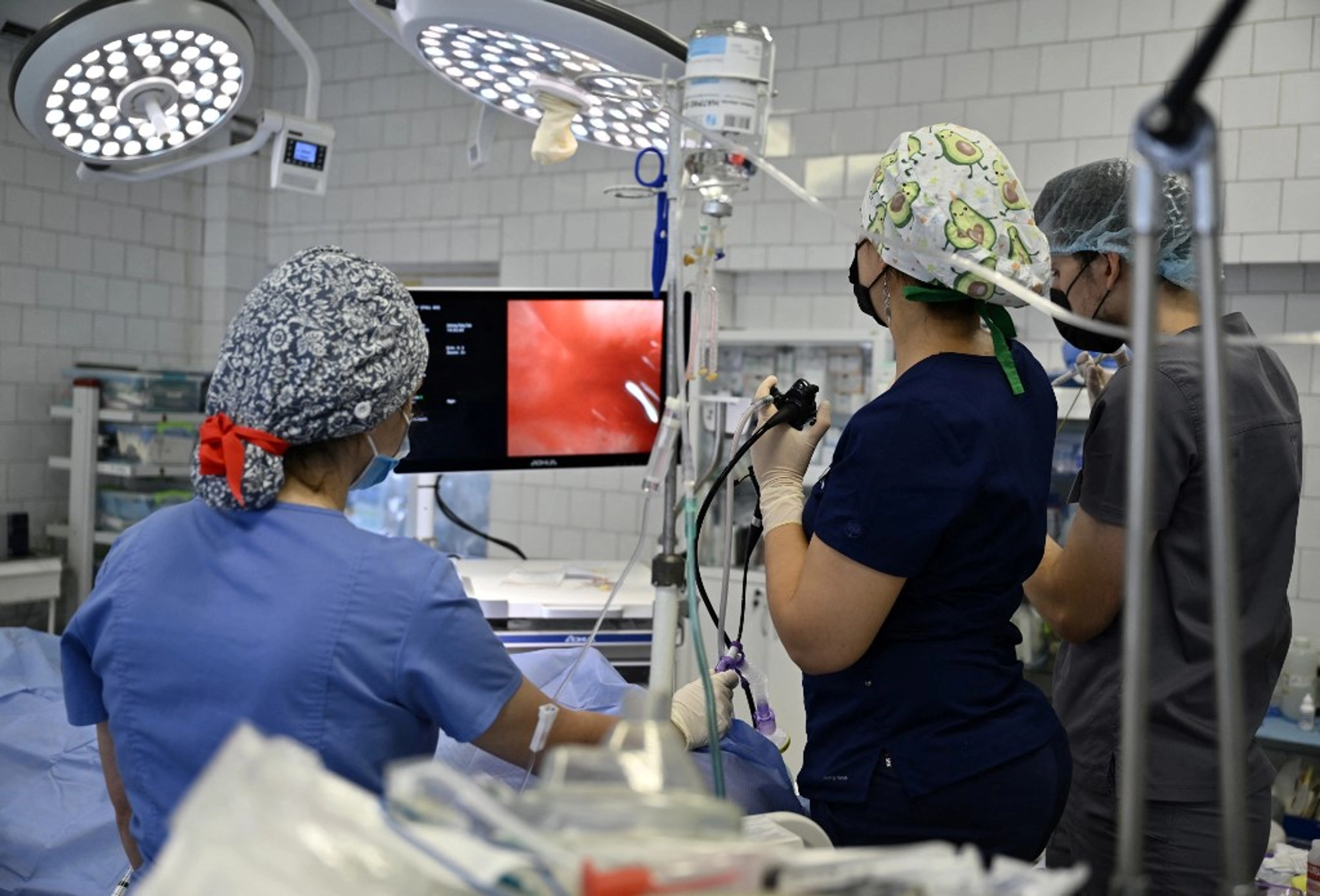
What usually takes stable health systems decades to reform, Ukraine has been forced to accelerate in just a few years of full-scale war.
When I attended the UA-Med Heal Ukraine conference at Harvard this November, one message stood out. Ukraine is not only treating wartime injuries. It is rebuilding major parts of its medical system in real time, and many of the solutions emerging under pressure have relevance far beyond the
JOIN US ON TELEGRAM
Follow our coverage of the war on the @Kyivpost_official.
This rapid progress comes from conditions that cannot be replicated in peacetime. Evacuation delays can last hours. Stabilization points work under the risk of repeat strikes.
Supply routes shift because of drones and shelling, and mobile teams often become the only medical support available. Under these circumstances, adaptation is measured in hours and days, not years.
New methods are tested quickly, refined based on outcomes, and adopted when they save lives. Physicians strive to maintain standards, yet the pace of implementation has become as essential as the standards themselves.
Several panels at the conference highlighted how collaboration drives this evolution. Reconstructive and craniofacial surgeons from the United States and Ukraine presented complex cases performed together in Lviv, Ivano-Frankivsk and Kyiv.
These procedures require rebuilding bone structures, designing custom implants and coordinating teams across borders. Through this shared work, Ukrainian and American specialists are effectively forming a modern school of wartime reconstructive surgery.
Italy Rejects PURL Funding for Ukraine
Rehabilitation is also undergoing structural change. Ukraine faces what may become the largest long-term veteran-care challenge in Europe.
Clinics are building integrated programs that combine physical rehabilitation, mental-health support and family services.
This marks the creation of a new framework for veteran medicine shaped not by policy decisions but by the scale of modern conflict and the needs of millions of service members who will require sustained care.
The prosthetics sector illustrates similar transformation. As Antonina Kumka of Protez Hub explained, the system that existed in 2014 was fragmented and relied heavily on foreign expertise.
There were no university programs, few What usually takes stable health systems decades to reform, Ukraine has been forced to accelerate in just a few years of full-scale war.
Specialists and many amputees had to travel abroad for a functional limb. Over the last decade, this landscape changed significantly. Ukrainian universities now operate dedicated prosthetics and orthotics programs, a national professional standard has been adopted and dozens of clinicians have passed international certification.
Even with more than 20,000 new amputees since 2022, Ukraine avoided a prosthetics collapse. Patients generally wait only a few months for a device, timelines comparable to several EU countries.
The system still has challenges, but it continues to function and mature under extraordinary pressure.
Discussions at the conference also showed how quickly surgeons are forced to adopt new tools when traditional approaches are no longer possible. Listening to these panels, I was reminded of Ukrainian technology.
Svarmed is a low-temperature surgical energy system used for tissue bio-welding in both open and laparoscopic surgeries. Several teams in military hospitals and on the frontline have rethought its use when they need to control bleeding or close internal injuries quickly.
In some cases, mobile stabilization units and even armored vehicles were equipped with the system to perform safe internal closure directly at the point of injury.
This adaptation has reduced the rate of amputations. Its evolution illustrates a broader pattern emphasized by the speakers: in wartime, innovation cycles shorten dramatically, and practical solutions appear far faster than in peacetime.
A similar process is visible in materials science. The Colmatek technology, developed at the Institute of Biochemistry, is a Ukrainian line of hemostatic solutions created for different types of injuries.
Traditional global products often fail to manage the severity of modern explosive trauma. The accelerated development of these materials reflects a central theme repeated throughout the panels: war creates medical challenges that demand immediate experimentation, and this is how knowledge emerges that remains valuable long after the war ends.
Another important perspective was outlined by military surgeon and former Deputy Minister of Health Oleksandr Linchevskyy. He noted that Ukraine entered the full-scale invasion without a modern medical data infrastructure, including the ability to track preventable death rates.
Clinicians, paramedics and volunteers had to develop new models for stabilization, evacuation and triage under shelling and drone attacks.
In just a few years, they produced practical insights into mass-casualty management, prolonged evacuation and low-resource trauma care that very few countries possess.
For U.S. policymakers and health-security experts, these developments matter. Modern crises, from natural disasters to interstate conflict and infrastructure failures, increasingly require medical systems to function under unstable conditions.
Ukraine has already lived through scenarios that other nations may face. The knowledge produced by its medical community could strengthen US emergency readiness, civilian-military coordination and trauma-care protocols.
Ukraine did not choose to become a center of crisis-driven innovation. But the world has a choice in how it responds. Learning from these advances now gives countries the chance to prepare before their own emergencies arrive.
You can also highlight the text and press Ctrl + Enter

Zelensky Reveals Intercepted Intel From Putin’s Desk