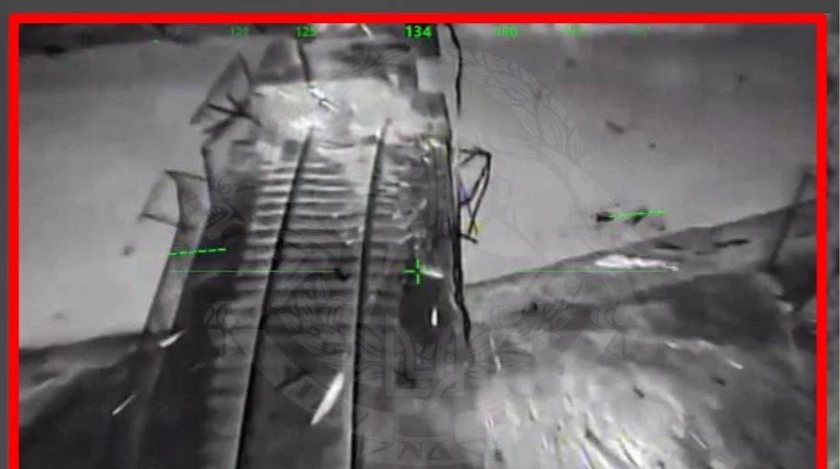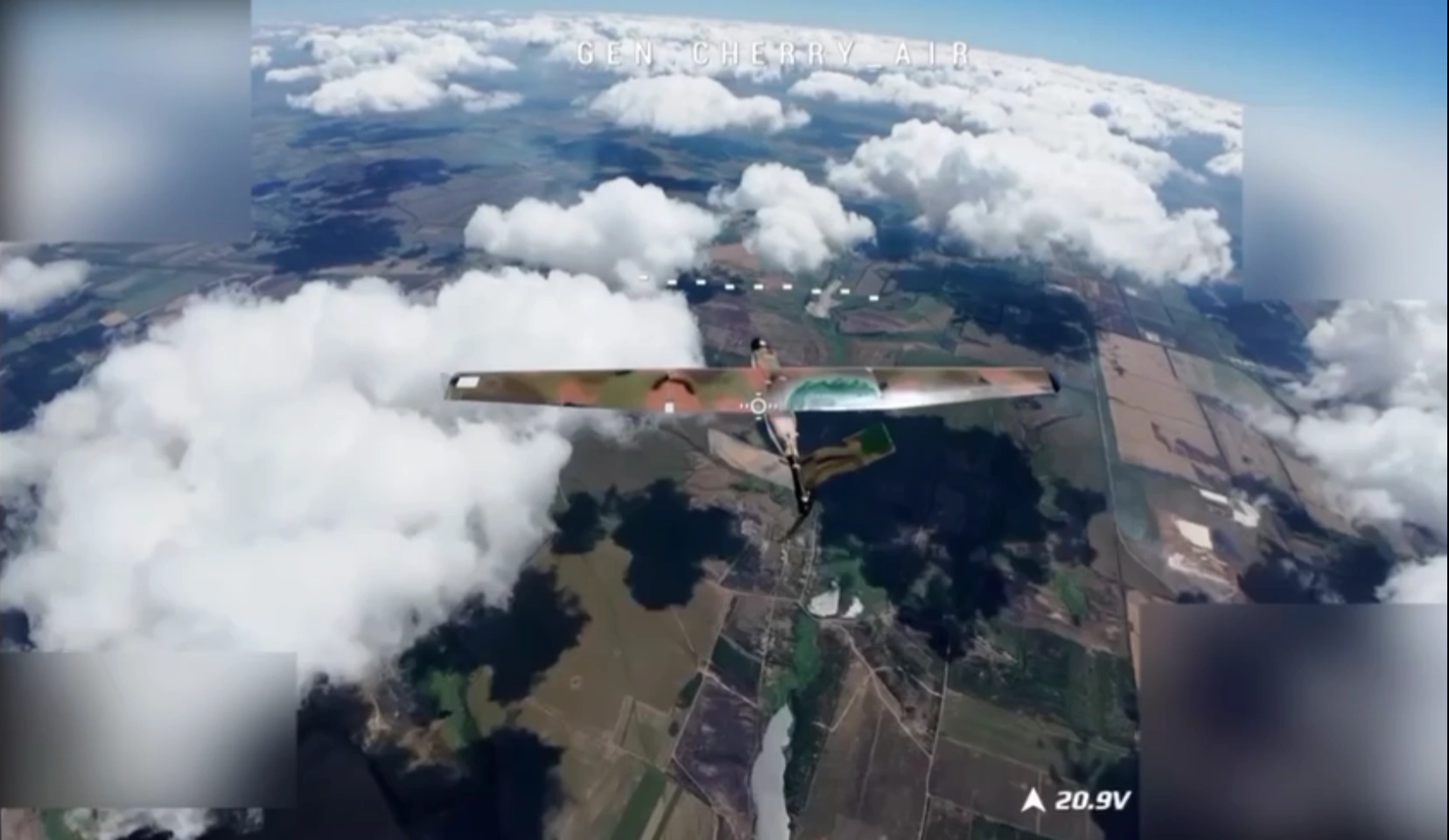
Ukrainian forces have shot down a rare Russian ZALA Z-20 reconnaissance drone using a General Cherry AIR interceptor.
According to the Telegram channel of the Melitopol partisan detachment Rotten Cherry “Hnyla Chereshnya”, the drone was destroyed by a “Hrim” [Thunder] crew from the 55th Separate Artillery Brigade, Zaporizhzhia Sich.
JOIN US ON TELEGRAM
Follow our coverage of the war on the @Kyivpost_official.
The channel reported that the ZALA Z-20 is valued at about $200,000 and is equipped with artificial intelligence used to detect and identify objects and prioritize targets.
A video of the interception was also published, though Kyiv Post was unable to independently verify the time and location of the footage.
According to the Manufacturers in the Rear website, the General Cherry AIR FPV interceptor drone costs nearly Hr.48,000 ($1,135) with a battery.
The listed specifications indicate a flight time of up to 35 minutes, a payload capacity of up to 1 kg (2.2 lb), a maximum speed of 170 km/h (106 mph), and a flight range and altitude of up to 7 km (4.3 miles).
The Brave1 defense innovation cluster reports that the AIR system has undergone combat testing and has been successfully used by dozens of units of Ukraine’s Security and Defense Forces to intercept Russian reconnaissance UAVs.
As of December 2025, more than 300 confirmed UAV interceptions have been recorded, including Orlan-10, ZALA, Supercam, and Merlin drones.
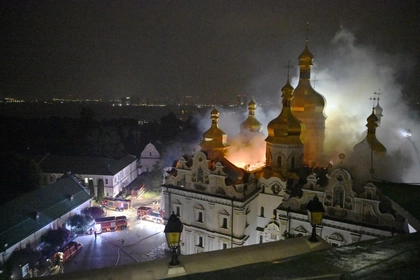
UN Security Council to Convene on Kyiv-Pechersk Lavra Strike
As per the reports, the ZALA Z-20 is an electrically powered Russian reconnaissance drone designed for surveillance and target acquisition. It is also used to adjust artillery fire and monitor the battlefield and is believed to play a key role in identifying targets for ZALA Aero’s Lancet loitering munitions.
The Z-20 was first publicly unveiled in 2023. Russian manufacturers claim that its electric motor allows the drone, which has a wingspan of about 4 meters (13 feet), to remain airborne for more than 6 hours and transmit high-quality video at distances exceeding 100 km (62.14 miles).
According to Russian sources, the drone is equipped with an onboard computer using artificial intelligence algorithms to assist with decision-making. It is launched via a pneumatic catapult and lands using a parachute and shock-absorbing system.
In promotional materials, ZALA Aero Group – part of the Kalashnikov Concern – has highlighted the Z-20’s resistance to electronic warfare, low radar signature, secure communications, signal retransmission capabilities, and onboard AI for object recognition and target prioritization.
Ukraine is building an echeloned system to intercept Shahed-type attack drones using unmanned aerial vehicles, Commander-in-Chief of the Armed Forces of Ukraine Oleksandr Syrsky said earlier.
He said priority is being given to expanding Ukraine’s UAV interceptor capability by increasing the number of interceptor drones, ground control stations and radars, as well as improving the scale and quality of crew training.
Interception lines, he added, are already being established at a distance from major cities as part of the broader echeloned air defense system.
While the number and effectiveness of drone interceptors are growing, Syrsky acknowledged that the pace of development must be accelerated.
President Volodymyr Zelensky has previously said that Shahed-type drones have, in some cases, become more dangerous than ballistic missiles, prompting Ukraine to speed up production of interceptor drones. He added that while Patriot systems can counter ballistic threats, mass drone attacks require a wider range of defensive tools.
Zelensky said that more advanced self-guided interceptors are already in development and that production is expected to reach 500-800 units per day.
Defense Minister Denys Shmyhal has said Russia is now capable of launching up to 800 drones in a single night during major attacks, forcing Ukraine to rapidly scale up its air defense.
You can also highlight the text and press Ctrl + Enter

Zelensky Reveals Intercepted Intel From Putin’s Desk