Fresh tension has been injected into Hungary’s politics just three weeks ahead of the country’s elections.
The new controversy follows a report by The Washington Post alleging that Hungarian Foreign Minister Péter Szijjártó regularly updates Russia’s Sergei Lavrov on discussions held in EU Council sessions. Poland’s Donald Tusk said on Sunday it “shouldn’t come as a surprise” if Hungary were leaking “every detail” of EU deliberations to the Kremlin.
JOIN US ON TELEGRAM
Follow our coverage of the war on the @Kyivpost_official.
“That’s one reason why I take the floor only when strictly necessary and say just as much as necessary,” Tusk wrote on X.
The allegations have unsettled – though not surprised – EU diplomats, reinforcing concerns that Moscow may already have access to sensitive internal exchanges.
“It’s a deplorable situation. If [Viktor Orbán] stays after the election, I think the EU needs to find ways to deal with this in another manner,” one EU diplomat told Rapporteur.
Szijjártó dismissed the claims as “crazy conspiracy theories” and “Ukrainian propaganda,” framing them as an attempt to sway Hungary’s election.
Tusk’s remarks follow media reports that Polish President Karol Nawrocki – a political ally of Tusk’s domestic opponents – is set to meet Orbán in Budapest today. US Vice President JD Vance is also said to be planning a visit in the coming days to support the Hungarian prime minister.
Russian Troops Forced to Walk 30 km After Ukraine Hits Logistics, Minister Says
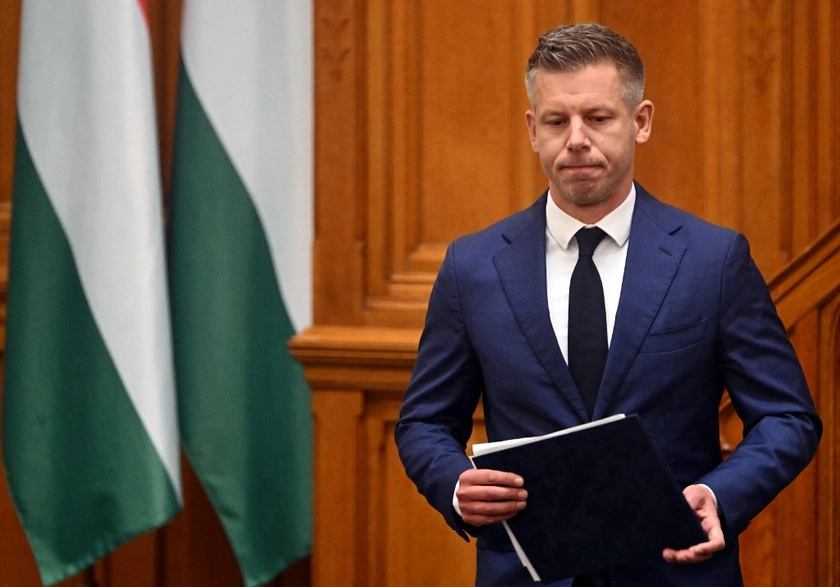
Polls suggest the opposition Tisza party, led by Péter Magyar, is still out in front, with Orbán’s Fidesz trailing.
“Leaking information to the enemy in wartime is the ultimate betrayal,” said EPP lawmaker Tomáš Zdechovský, while Green MEP Daniel Freund told Rapporteur that, if confirmed, such actions could justify Hungary’s exclusion from the European Council for violating core EU values such as solidarity.
A European leader’s admission of intentional self-censorship during a meeting has also reignited a rather uncomfortable question: just how confidential are EU summits and meetings?
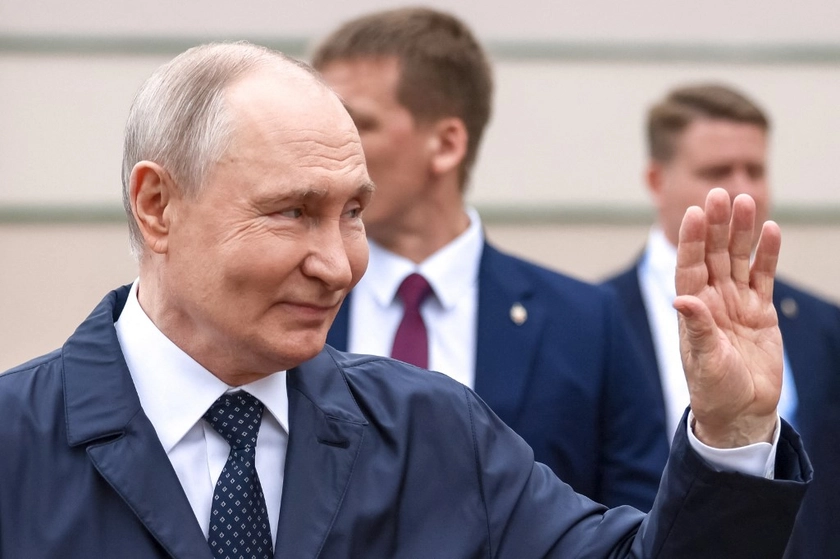
Leaders often retain their phones during meetings, discussions are wide-ranging, and the most sensitive matters are rarely aired in large plenary settings, one other diplomat noted. “If Putin reads your liveblog, he already knows enough,” they told me – and he’s probably just there for the infamous leaders’ dinner menu too.
Concerns remain, even if the official reaction has so far been muted. At last week’s leaders’ meeting, Orbán maintained his veto on a €90 billion loan for Ukraine, conditioning his approval on the resumption of Russian oil flows via the Druzhba pipeline. EU capitals appear wary of escalating tensions in ways that could play into his domestic campaign.
A third EU diplomat said the episode may “increase the pressure” for action – though any concrete response is likely to be deferred until after the election in April.
See the original of this report for Euractiv’s Rapporteur here.
You can also highlight the text and press Ctrl + Enter