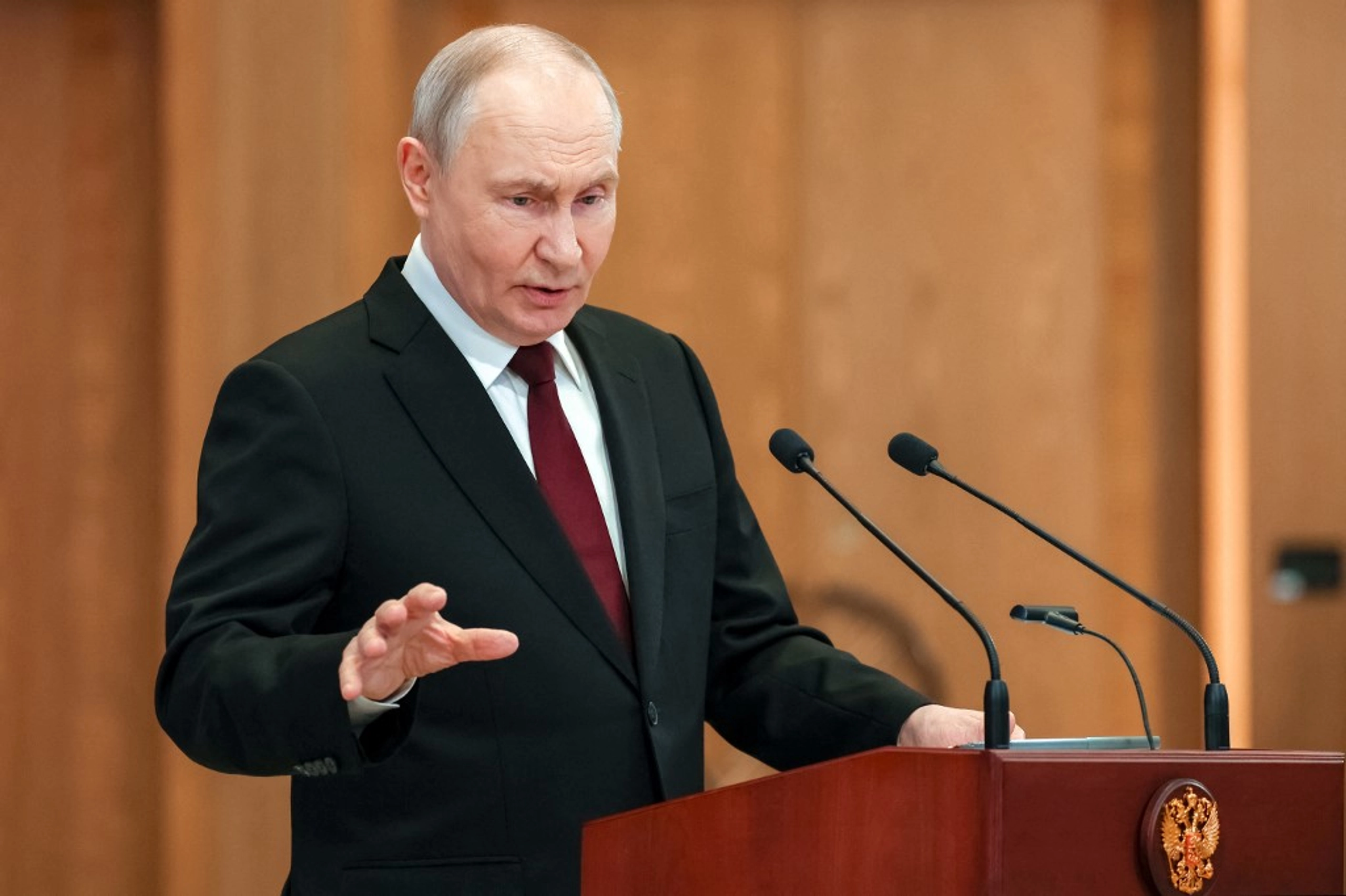
The Kremlin leader Vladimir Putin has ordered the Federal Security Service (FSB) to organize internet access for Russians on the basis of “white lists” – which would restrict the open web with a narrowly defined set of approved online resources.
This means that the state would not only filter out banned platforms, but allow only services that pass political and security vetting.
JOIN US ON TELEGRAM
Follow our coverage of the war on the @Kyivpost_official.
While the officials claim the move would protect the country from “information threats” and foreign influence, it significantly narrows state control over what most users can see online.
FSB Director Alexander Bortnikov and Prime Minister Mikhail Mishustin were tasked with implementing the directive and must submit a report to Putin by July 1.
According to The Moscow Times, Russian authorities began turning off mobile Internet from May 2025, which resulted in more than 60 regions of shutdowns occurring regularly. The services that should remain working even when the Internet is disconnected are medical care systems, banking applications, and the portal “Public Services.”The context of implementing such rules were explained as protection against Ukraine’s drone strikes and intelligence. During the outages, access could be retained to resources from the “white list”, which the Ministry of Digital Resources first introduced in September 2025.
Russian Region Deploys Police at Gas Stations As Fuel Crisis Deepens
Currently, the list includes state resources such as applications of some banks, transport and logistics companies, food and goods stores, state-controlled media and online cinemas.
Putin’s ‘digital sovereignty’ drive expands online controls
According to The Bell, communication, IT, and internet in general, were previously handled by technical units inside the FSB, mainly the Center for Information Security (CIB) and the Scientific and Technical Service (NTS), whose specialists often worked with major tech firms. Control has since been shifted to the Second Service, which inherited the KGB’s 5th Directorate role and focused on domestic politics, “ideological sabotage”, historical “correctness” and opposition monitoring.
The service has been linked to crackdowns on cultural figures and operations against Navalny, Nemtsov, and Kara-Murza, marking a more repressive turn in internet governance.While Putin explained this by the need to defend itself against Ukrainian drones, digital rights advocates argue that this turns the Russian internet into a tightly controlled space, with increased censorship and a highly limited exposure to external media during wartime or political crises.
Digital rights advocates argue that “white lists” could improve the state’s ability to manage local protests and limit independent reporting.
The Kremlin, however, presented the policy as a logical extension of “digital sovereignty” that will ultimately help shield citizens from disinformation and extremism, along with foreign intelligence activities.
You can also highlight the text and press Ctrl + Enter

Russia Hit by 660-Drone Overnight Barrage Targeting Moscow, Crimea and Key Military Sites