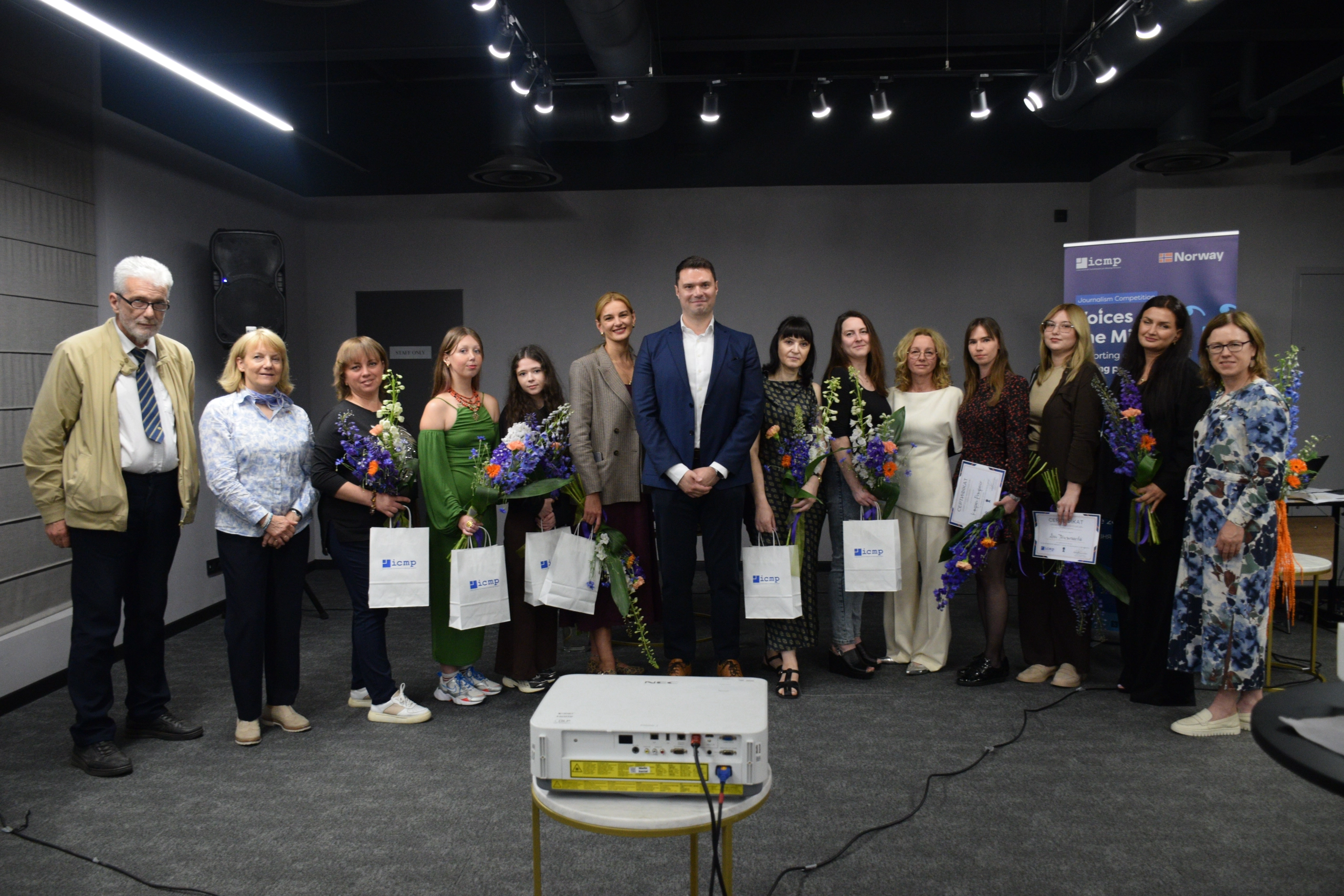
On Monday, The International Commission on Missing Persons (ICMP) announced the winners of its “Voices of the Missing” journalism contest, which focuses on reporting about Ukraine’s missing persons and the families trying to find them.
The contest was organized by ICMP with support from Norway through a NORAD grant. It aims to highlight journalism that covers the human side of disappearances and efforts to account for people still missing because of the war.
JOIN US ON TELEGRAM
Follow our coverage of the war on the @Kyivpost_official.
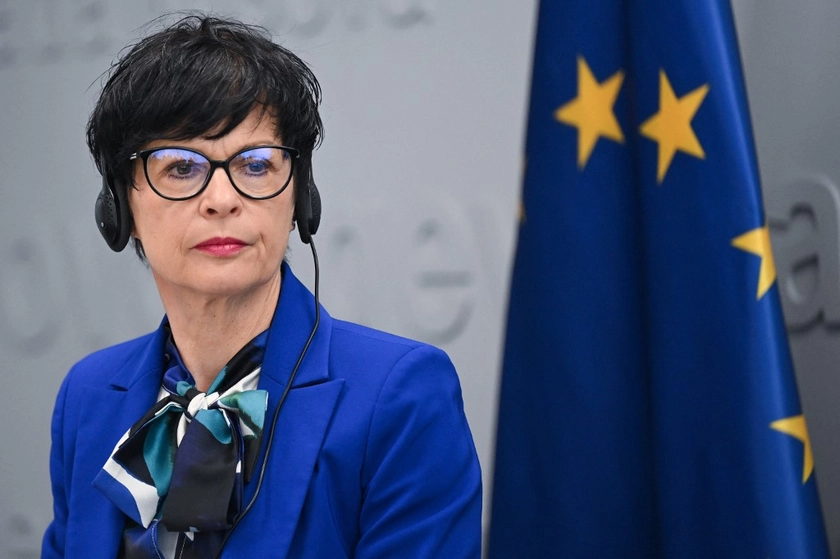
Ingrid Schøyen from the Norwegian embassy said: “How a nation treats the issue of missing persons says something about who we are as a nation.”
A total of 53 journalistic works from across Ukraine were submitted. A jury made up of journalists, civil society representatives, and families of missing persons selected the winners.
Two Kinds of Return
Among the authors present was Olha Hlechyk, who told the story of the mother of a missing person. Her winning piece, “My heart told me this is my son: How a mother from the Odesa region single-handedly found a missing soldier in captivity,” carries a title that stops you.
She describes a form of motherhood that does not wait for official confirmation or scientific explanation. In her story, belief becomes action. The narrative ends in rare resolution: the missing soldier returns from captivity and is now happily married. It is a story that sustains the idea that a missing person is a “person of fate,” whose story is not yet complete.
Belarus’s Lukashenko Does a 180 on Ukraine, Abandons Russian Victory Rhetoric
One member of the jury, Ruslana Bronovytska, brings a different ending. Her own son was once missing. Through identification – the painstaking forensic work supported by ICMP in Ukraine – he was returned, identified, and buried with honor.
She now serves on the jury, having crossed from one side of this story to the other. In that transition, the contest reflects its deeper meaning: when professional duty becomes shared experience.
Later, in informal conversation, Bronovytska reflected that it is easier to be among people who fully understand your experience – where you can simply be yourself.
The Winner
The winner of the competition is Junior Lieutenant Kateryna Rotarenko, who works directly with the missing in the field, confronting more death than most her age should have to face.
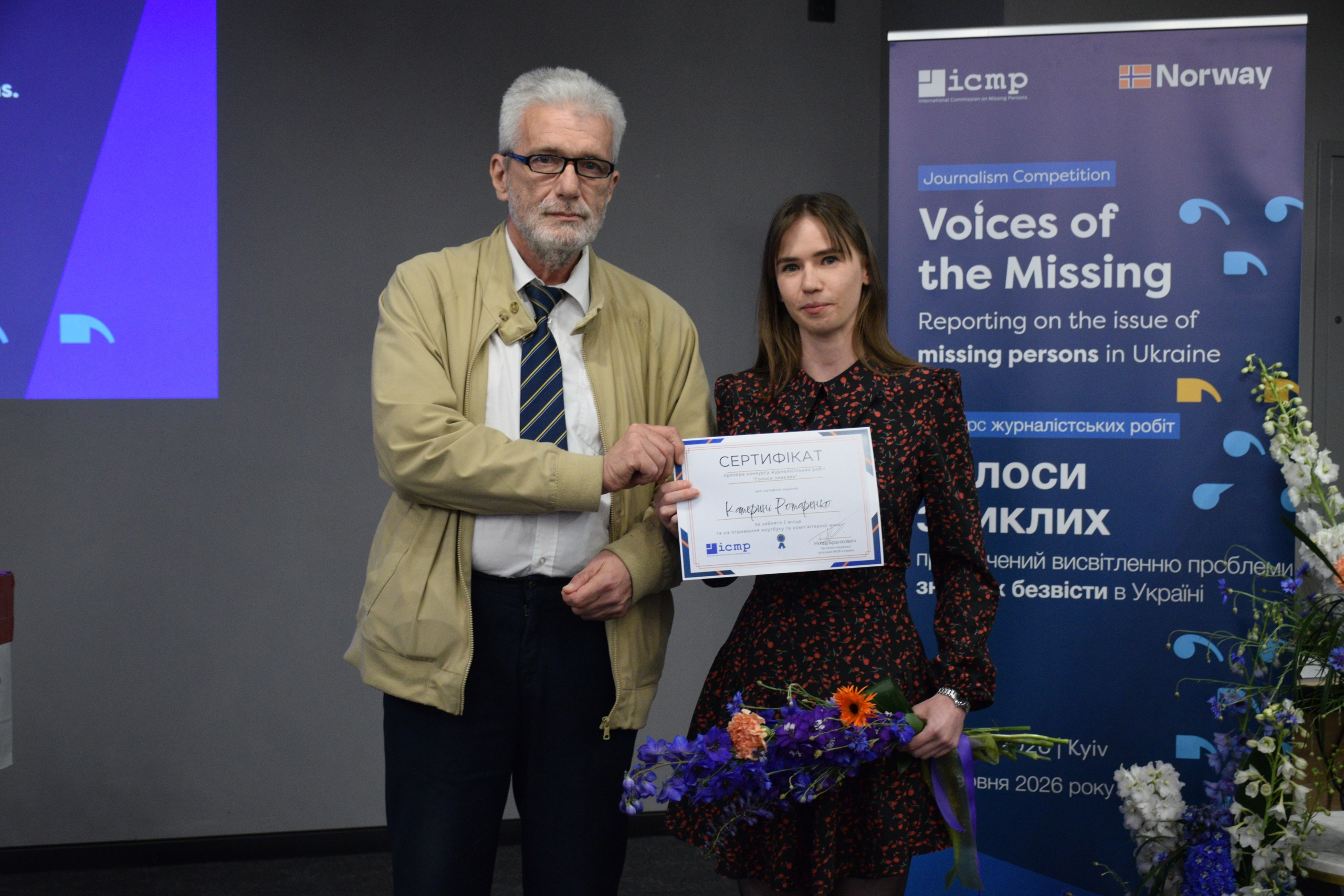
Her piece, “I feel more alive as I carry death in my arms,” approaches the subject differently from most journalism on missing persons. It focuses on recovered remains and the quiet dignity of those who have been found. Her writing reflects a transition from soldier to storyteller, and a careful effort to preserve humanity in conditions that often strip it away.
The jury, composed of prominent figures from Ukraine’s journalism community, noted that the award recognizes not only the article itself, but also the lived experience behind it.
The Scale of What Is Unspoken
Since the full-scale invasion in 2022 – and with cases also stretching back to 2014 – more than 90,000 people are listed as missing according to Ukrainian authorities.
This figure represents not only statistics, but tens of thousands of unresolved stories and families still searching for answers.
ICMP, which established the contest, has been operating in Ukraine since 2022. Its mission is to help account for missing persons through cooperation with Ukrainian experts, forensic support, and assistance to families. The journalism competition complements this work by drawing attention to the human stories behind the numbers.
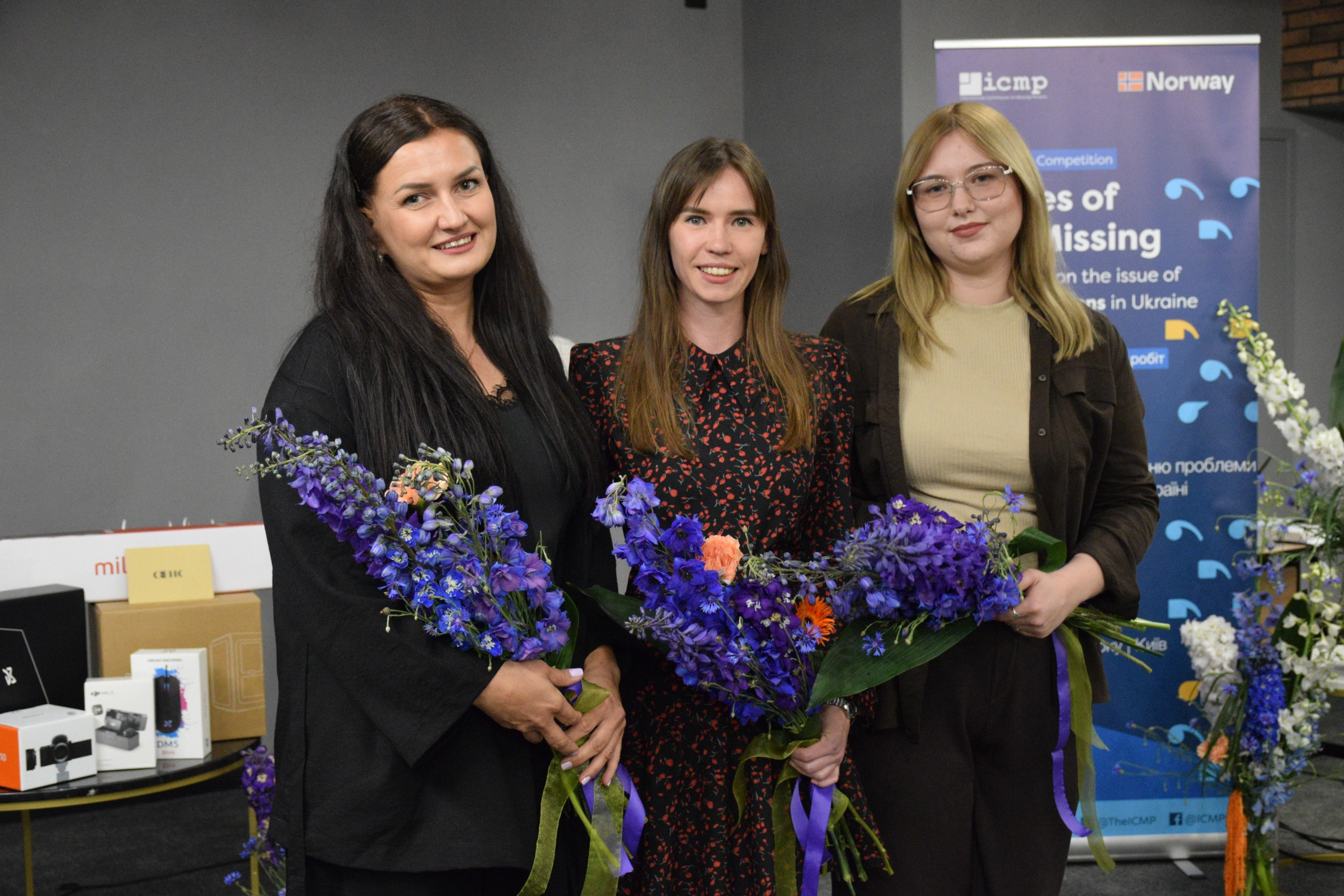
53 works were submitted by journalists and students focusing on disappearance, loss, and search. The initiative, supported by NORAD, reflects the idea that storytelling, alongside forensic and legal work, is part of dignity and justice.
What Continues
The contest may be over, but the work continues.
ICMP remains engaged in supporting families, working with Ukrainian forensic specialists, and strengthening systems of identification and return.
At its core, the effort is not only institutional but human – focused on dignity, understanding, and the return of identity to those who have been lost.
In that room, the stories honored at the ceremony reflected two forms of return: reunion and identification. Both carrying the same weight of closure, each in its own way.
You can also highlight the text and press Ctrl + Enter