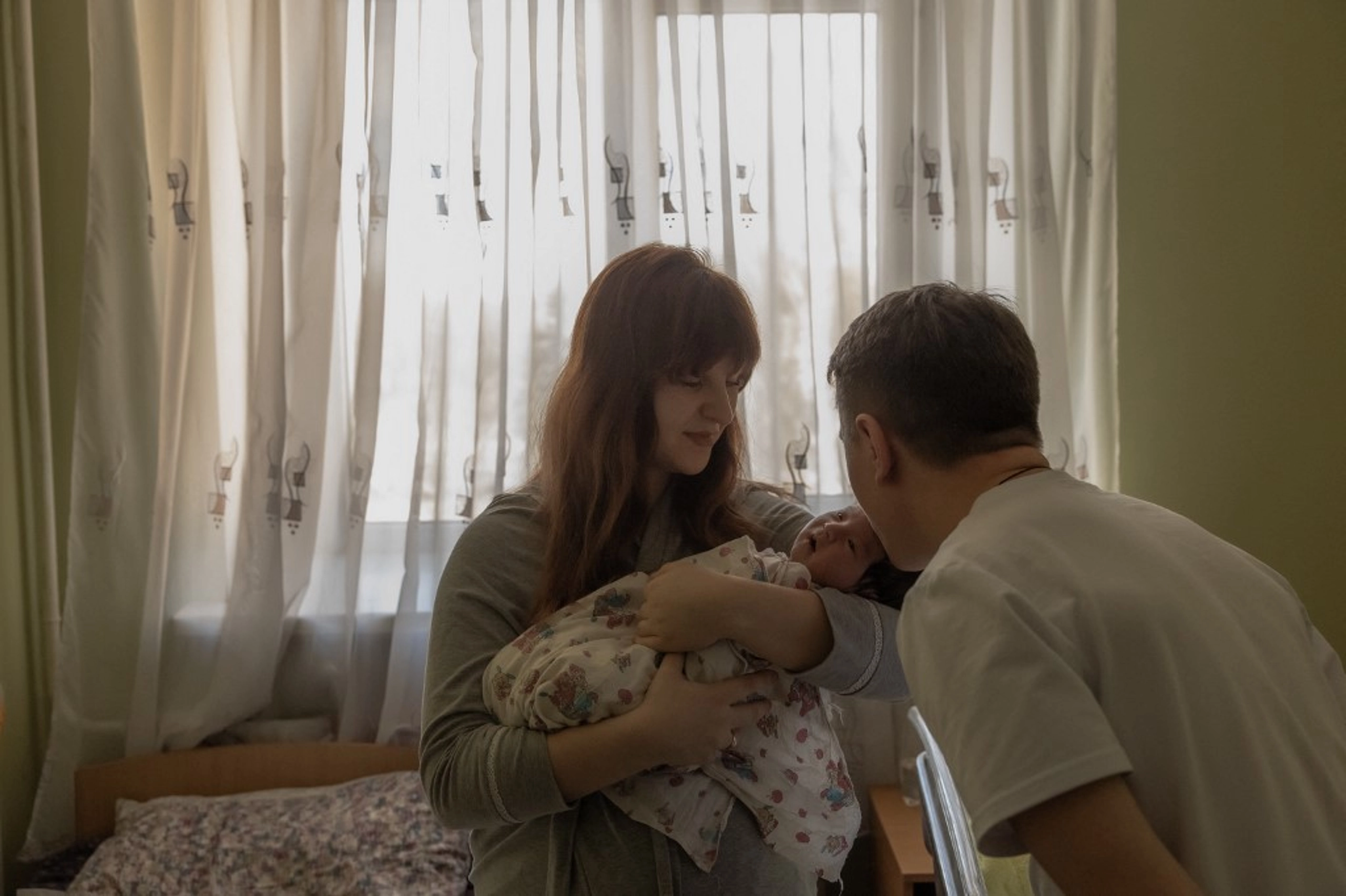
Ukraine’s first nationwide household survey in over a decade has revealed the war’s impact on family life and recorded a fertility rate of 1.1 children per woman – higher than the 0.9 figure previously cited by government officials.
Ukraine has not produced nationally representative household data of this quality since 2012.
JOIN US ON TELEGRAM
Follow our coverage of the war on the @Kyivpost_official.
Since then, the country has been hit by major events such as the annexation of Crimea, Russia’s intervention in the Donbas in 2014, and the full-scale invasion in 2022, all of which have had lasting effects on its demography, geography, and economy.
But an update finally arrived when Ukraine’s State Statistics Service launched the Multiple Indicator Cluster Survey (MICS) with support from UNICEF.
Fieldwork covered 16,186 households in government-controlled territory, with frontline and border communities excluded, except the city of Kherson.
“It reflects the feelings, emotions, experiences, and needs of those who fall outside the scope of administrative data,” Arsen Makarchuk, chairman of the State Statistics Service, said at a briefing on Thursday.
Data collection took place from October 2025 to March 2026 – Ukraine’s coldest months, marked by devastating strikes on energy infrastructure and prolonged blackouts. Despite these conditions, the response rate reached 74%, unusually high even by European standards, according to Makarchuk.

Ukraine Couldn't Break Russia's Land Bridge With Tanks – Now Drones Are Doing the Job
“I am constantly reminded of my conversations with colleagues from peaceful European countries, where the response rate for household surveys typically ranges between 20% and 30%,” he said.
The results are preliminary, with a full report and datasets to be released in the coming months.
Kyiv Post highlights the key findings from the MICS survey presentation.
Population and household characteristics
Ukraine’s demographic profile, also known as the “demographic pyramid,” has shifted drastically since 2012. Ukraine’s scholars and economists have previously warned of an aging population, and the MICS survey has now provided proof of that.
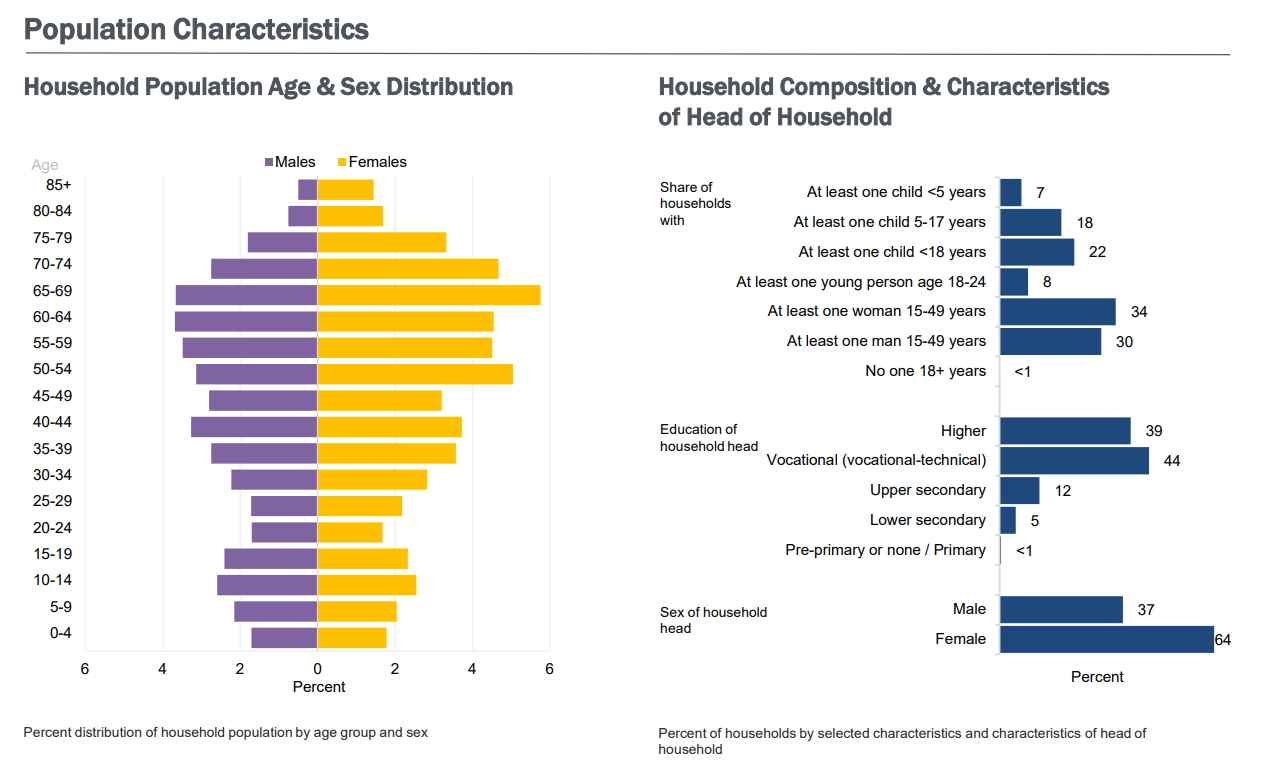
Children now account for just 16% of the surveyed population, and only 22% of households include children – down from 31% in 2012. Single-person households make up 39% of the total.
The population pyramid shows a pronounced thinning in the 20-39 age group, reflecting both wartime losses and forced migration. Among children, 62% live with both parents, 30% live with their mother only, and 3% live with neither biological parent.
Ukraine’s fertility crisis less severe than previously estimated
While former Deputy Minister of Social Policy Daria Marchak said in March 2025 that the fertility rate had fallen to a record low of 0.9 children per woman, the MICS Ukraine 2025-26 survey places it somewhat higher at 1.1.
“It is quite positive to see the total fertility rate at 1.1. Many experts predicted 0.8, and I myself said 0.9. A rate around 1.1 is approximately where Ukraine was in 2001. It is also roughly the current fertility rate in China,” Oleksandr Hladun, deputy director for Research at Mykhaylo Ptoukha Institute for Demography and Life Quality Research, told Kyiv Post at the briefing.
“In North Korea, it is 0.7-0.72 – and these are countries without a war,” he added. “So yes, Ukraine is in the group of countries with the lowest birth rates in the world, but even in wartime conditions, we cannot say it is the lowest in the world.”
The birth rate among girls aged 15-19 stands at 11 births per 1,000 – down sharply from 34 per 1,000 in 2012.
“This is precisely the point where we can talk about progress, and it’s actually a good indicator,” UNICEF Monitoring Officer Andriy Gorbal said while presenting the MICS survey.
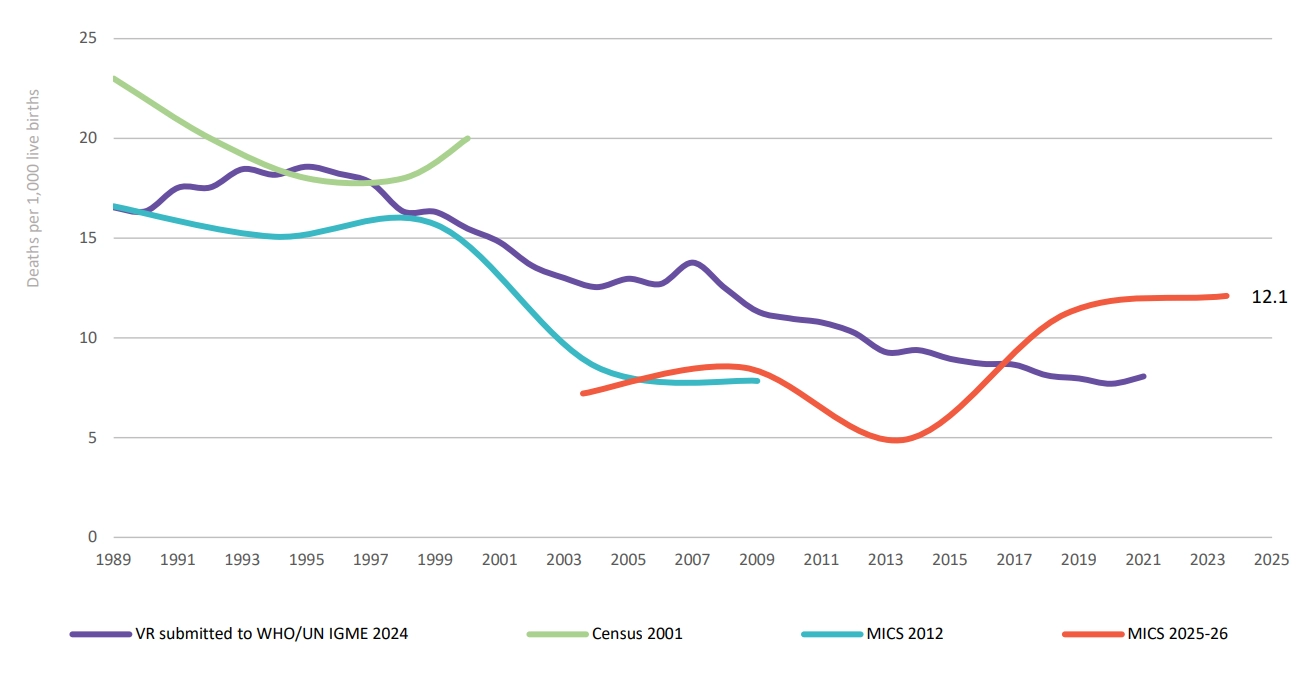
At the same time, mortality for those under five years old has risen to 12.1 deaths per 1,000 live births, according to the survey – more than double the level recorded 10-14 years earlier, when it stood at around 5 per 1,000.
Impact of the full-scale invasion
The survey shows that 59% of households have been directly affected by Russia’s full-scale invasion. Around 12% were displaced, and 5% lost at least one member to the war.
Southern and eastern Ukraine recorded the highest impact rates at 74% and 70%, respectively, compared with 41% in western Ukraine.
The most common form of impact was economic shock, reported by 38% of households. Of those, 33% cited a loss of income, while others reported damage or destruction of their homes and the loss or theft of valuables.
About 23% of households experienced demographic changes – displacement, death, or separation of household members – while 19% lost access to sanitary, education, or healthcare services. A further 17% reported health-related impacts.
The survey also highlights the impact of Russia’s invasion on the health of Ukrainians – 15% of households have one or more members who became seriously ill as a result of the full-scale invasion, while 4% said someone in the household had been injured.
How children are born and raised in Ukraine
The MICS survey shows that women receive adequate care before childbirth.
About 95% of women had at least one visit with a skilled provider, and 90% had four or more visits.
Postnatal care, however, appears less consistent: 73% of women had eight or more care visits after birth, suggesting that more intensive post-birth care may not be fully accessible to all. Nearly all births take place in specialized facilities staffed by trained medical staff.
Care for newborns is also high: 99% received essential post-birth medical checks within 2 days of birth, and 74% were breastfed within the first hour. However, only 43% of infants aged 0-5 months were exclusively breastfed.
Among children aged 6-23 months, 75% met minimum dietary diversity standards, but only 63% had a minimum acceptable diet. At the same time, sugar consumption is relatively high: 56% of children in this age group received sweet beverages, and 21% received unhealthy food.
Education outcomes remain strong.
The survey says 99% of children complete primary and lower secondary education, and 95% complete upper secondary education. Attendance across all ages is nearly equal between boys and girls, with disparities driven primarily by region, residence, and household wealth.
Parental involvement is also high: 91% of caregivers received report cards, and 95% met with teachers to discuss their child’s progress.
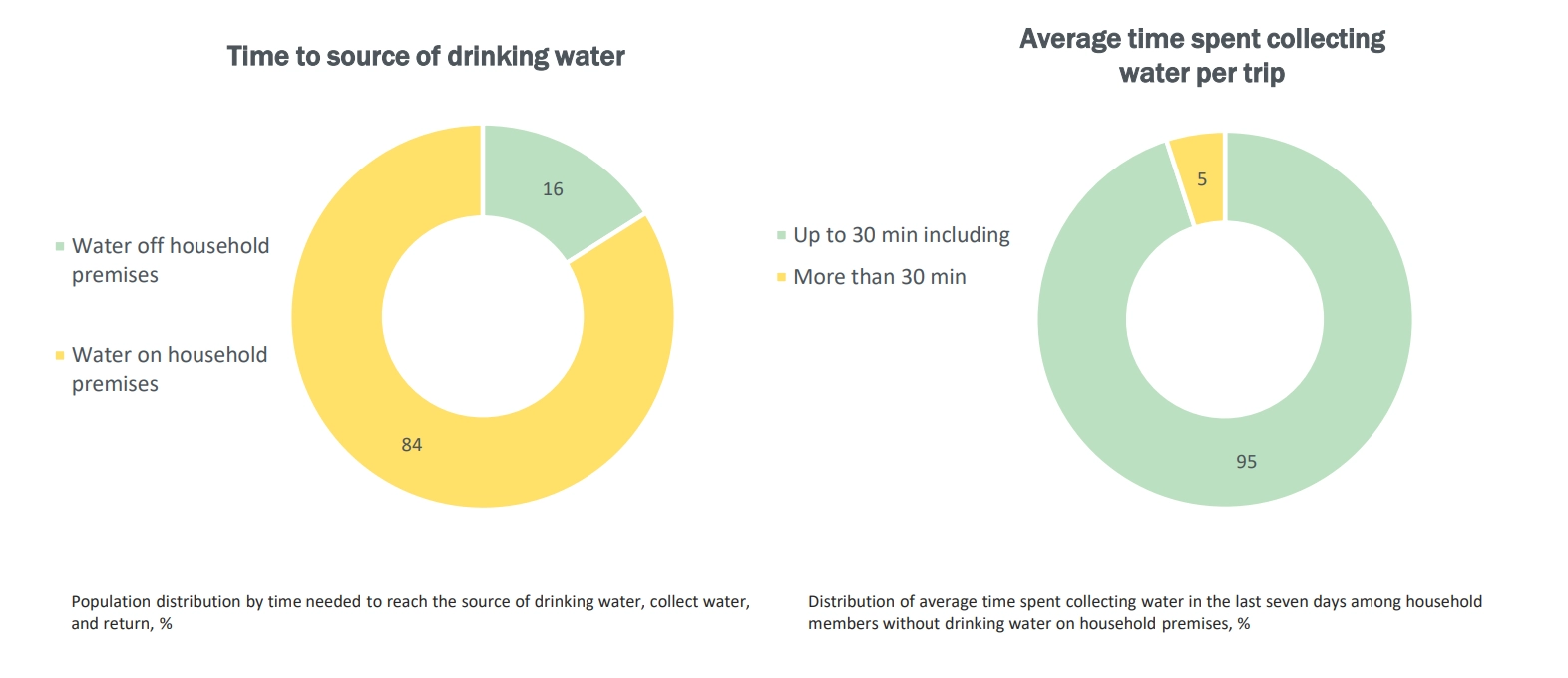
Nearly half the population (47%) relies on piped water as its main source of drinking water, while 22% depend on water kiosks or bottled supplies.
Access remains uneven.
While drinking water is available when needed for 86% of households nationwide, the figure falls to just 59% in southern Ukraine.
This decline is linked in part to the destruction of the Kakhovka Hydroelectric Power Plant dam on June 6, 2023, which caused widespread flooding, disturbed irrigation systems, and drained a reservoir critical to southern Ukraine’s water supply.
Despite these challenges, basic sanitation coverage stands at 94%, and basic hygiene is at 85%.
However, water quality remains a concern: E. coli was detected in 24% of household drinking water samples and 19% of water sources.
Access to mobile technology is nearly universal, with 97% of households owning a mobile phone, and 84% having internet access at home. However, only 50% of households have a computer.
Digital financial services are widely used: 76% of households have at least one member using a phone for financial transactions, which echoes the recent World Bank research on access to financial services.
However, access to technology remains uneven. Internet access in the poorest households stands at just 47%, compared with full coverage (100%) among the wealthiest, highlighting a significant digital divide.
The survey covers only territory under Ukrainian government control, excluding frontline areas, regions bordering Russia, and Russian-occupied territories.
You can also highlight the text and press Ctrl + Enter