Ukraine’s healthcare system has changed dramatically in recent times.
The war has taken a severe toll on its workforce. Some staff left the country, others relocated between regions, some were mobilized, and others have been killed. Russia continues to strike hospitals, clinics, and ambulances. Meanwhile, the deterioration of living conditions – power outages, shelling, stress, mass displacement – has complicated disease statistics and worsened health indicators that were already far from ideal.
JOIN US ON TELEGRAM
Follow our coverage of the war on the @Kyivpost_official.
Despite this, the system continues to function. Ukrainian hospitals offer the full range of medical services, and emergency responders will reach patients in any situation – sometimes faster than in 2021.
But the underlying problems have not gone away; if anything, they are deepening. Staff shortages persist, Ukrainians’ incomes are falling while drug prices rise, and the prospects for post-war reform remain highly uncertain.
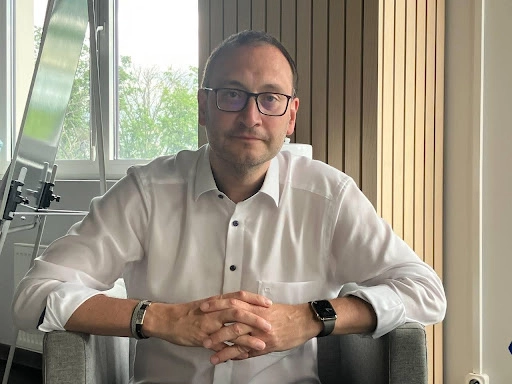
Dr. Jarno Habicht has served as the World Health Organization’s (WHO) representative and head of its Ukraine office since autumn 2018. Over those seven years, he has witnessed much of what has shaped the country’s healthcare trajectory: the reform drive under Health Minister Ulyana Suprun to move past the Soviet legacy, the COVID-19 pandemic, and the full-scale invasion, which brought mass casualties, population displacement, and far reaching structural strain.
Ukraine Strikes Henichesk Strait Bridge and Russian Military Targets
Throughout this period, he and his team have been tracking statistics, providing recommendations, and offering practical support to keep Ukrainian healthcare functioning where it is needed most – in frontline regions.
What is the state of the sector today, and what lies ahead? That is the subject of our conversation.
Kyiv Post: So what’s the influence of the war on the healthcare system? I mean the losses, maybe some numbers. How has the healthcare system been affected by the war? I mean damage, losses, and so on. What do you see in Ukraine compared to the pre-war period?
Dr. Jarno Habicht: There are various aspects to consider, and let me start with attacks on healthcare.
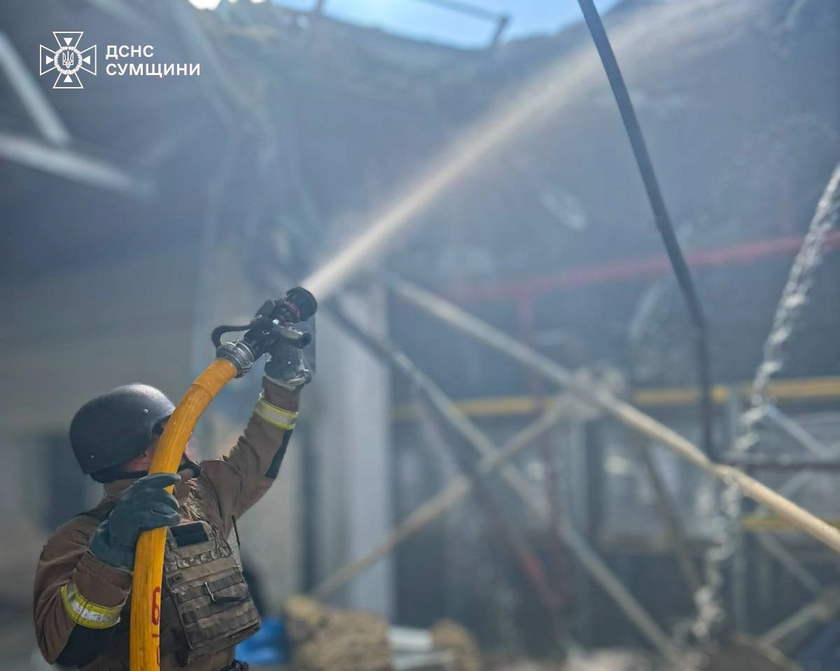
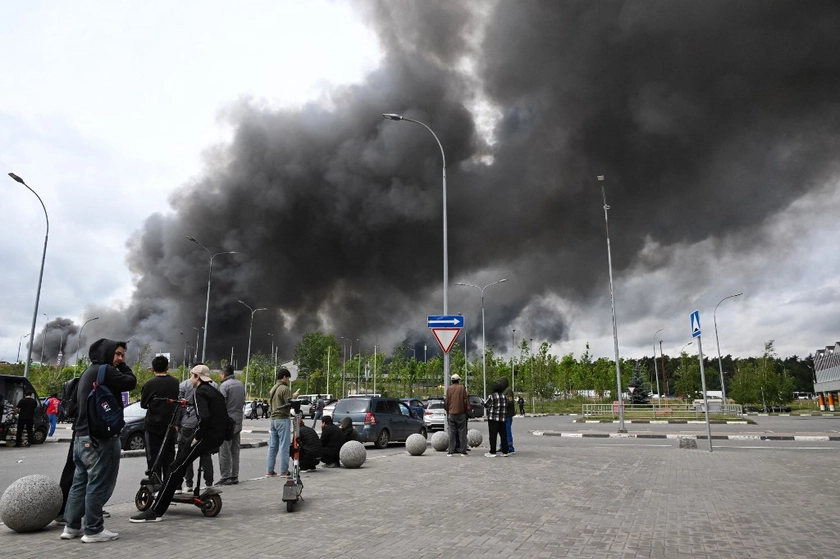
As of now, since Feb. 24, 2022, we have documented more than 3,000 attacks on healthcare facilities and services. That is literally two attacks every day. These attacks put both healthcare workers and patients at risk. It is also important to stress that international humanitarian law must be respected.
When we look at these attacks, we know that more than 1,000 healthcare workers and patients have been injured. In addition, 240 people have been killed. These are losses that would not have occurred without the war.
Another important point is that every third attack on healthcare targets primary healthcare services, and every fifth attack targets medical transport – ambulances and paramedics who are trying to save lives.
What about destroying the healthcare system? How can you describe it?
Recently, we have seen more attacks in frontline oblasts. While there were more attacks in 2022, the number declined in 2023. However, since 2024, we have again seen an increase in attacks on healthcare.
I think it is very important to acknowledge that this is happening. At the same time, we must focus on what can be done to ensure that people continue to receive healthcare services.
You asked about the impact of these attacks, but also about what we can do to reduce the impact of the war on patients.
Since the beginning of the war, WHO has been distributing and delivering ambulances. This was particularly important in 2022 and 2023. We have also worked extensively to support medical evacuations.
A second major area of work has been supporting and training emergency medical teams.
As you mentioned, there is a need for new healthcare workers and new teams. We also see that emergency medical teams are increasingly required to address primary healthcare needs.
I remember discussions several years ago with emergency medical teams in Odesa. They explained that they were conducting far more pediatric visits than before, particularly in areas such as Mykolaiv and Kherson.
These are examples of the new responsibilities that emergency medical teams have taken on during the war.
A third priority is ensuring access to primary healthcare. We know that attacks have destroyed many healthcare facilities, so alternative solutions are necessary.
Last year, WHO helped facilitate more than 20,000 medical visits to people living in frontline areas, particularly within 6-50 kilometers (4-31 miles) of active combat zones. This year, in 2026, we have already supported more than 6,400 visits to these communities.
As you asked about the impact of war, one major consequence is the loss of essential infrastructure. That is why these outreach visits are so important. They ensure that people receive healthcare services and access to medicines.
In many frontline regions, elderly people do not always have reliable access to medication. That is why we continue supporting these outreach missions.
A fourth area that I would like to mention is the construction of modular healthcare facilities.
Since 2023, we have built 46 modular primary healthcare units. These facilities became particularly important after the destruction we witnessed in the Kharkiv Oblast, but also in Sumy and other regions. We have established such facilities in the Dnipropetrovsk Oblast and elsewhere.
This is one of the ways we are addressing the shock of war and infrastructure damage while ensuring that people continue to receive healthcare services.
These are just some of the activities WHO has been implementing while also coordinating the work of more than 120 health-sector partners who are providing similar support, especially in frontline areas.
Do you have any statistics about healthcare personnel, etc.? The reason I’m asking is that right now in Ukraine it’s very difficult to understand how many healthcare workers we have, where they are located, and what their qualifications are. People are moving from one part of the country to another. Someone may be registered in one region but actually live in another. Sometimes it becomes very difficult to understand the real picture. What about healthcare personnel? What is the situation there?
Let’s start with healthcare personnel. The war has had a significant impact on their distribution. We have fewer healthcare workers in eastern Ukraine and more healthcare workers in western Ukraine.
The key question is how to ensure that healthcare workers are available where they are most needed. The large-scale population movements that took place in 2022 have had a lasting impact.
The second issue concerns the types of specialists available. If we compare Ukraine with the EU, we know that Ukraine has approximately half as many nurses per capita as EU countries. This is particularly important because doctors and nurses work as teams.
The war has also significantly increased the demand for rehabilitation services. For example, when we look at physiotherapists and occupational therapists, their numbers remain considerably lower than in neighboring EU countries.
And what about the broader healthcare reform? How many hospitals do we need, and what is happening with the system overall?
Ukraine began transforming its hospital and primary healthcare sectors in 2016, so 10 years ago. We strongly support the emphasis that has been placed on primary healthcare. More investment has gone into this area, and I have seen many excellent examples of family medicine across Ukraine.
When we talk about hospitals, I think it is important not only to focus on current needs but also to consider where Ukraine will be in 2030, 2040, and 2050.
Ukraine’s healthcare infrastructure was originally designed for a population of around 50 million people. If the population is now closer to 30 million or even 25 million, then key questions emerge: Where should hospitals be located? How can ambulance transport be organized most effectively? And how do we ensure that everyone has access to the care they need?
We also need to consider two major trends.
The first is urbanization. The second is demographic change. Ukraine now has a relatively larger elderly population, partly because many younger people are among the millions who have left the country and are currently living abroad.
These trends create additional challenges.
The war has also created staffing shortages in frontline regions. When we look at Sumy, Kharkiv, Zaporizhzhia, Dnipro, and especially Kherson, we often see a lack of healthcare workers. The longer-term question is what kind of healthcare system will exist in the post-war environment and whether there will be enough people to provide that care.
As Ukraine moves closer to the EU, it will be increasingly important to retain healthcare professionals within the country.
How do we ensure that they have decent working conditions and adequate salaries? How do we encourage them to stay in Ukraine and work in the oblasts you mentioned while ensuring that healthcare services remain available to those who need them across the country?
You may not have exact figures, but are you observing increases in certain diseases? Last year we saw a growing number of electric vehicles, and people often talk about environmental protection. But as Ukraine fights a war, many people ask: what environmental protection are we even talking about? Have you observed any changes in disease statistics? What does the picture look like today?
It is important to understand the overall impact of war on people’s health. Let me share a few figures from studies conducted by WHO.
When we ask adults whether they feel their health is worse than it was before the war, 68% say that their health has deteriorated compared with the pre-war period.
Looking specifically at 2025, every second respondent reported that their health had worsened during the previous year. By comparison, only 9% said that their health had improved.
Another important finding from our studies is that more than 70% of people report experiencing anxiety, stress, or other mental health-related symptoms.
We have seen this number increase as the war continues.
There are many reasons for this, but it highlights the importance of mental health and psychosocial support services for the population. A third figure is also important when we look at public health more broadly.
36% percent of people – more than one in three Ukrainians – are delaying seeking healthcare.
In frontline areas, this figure is even higher. In Kherson, for example, it reaches 43%.
So what we see is that:
- Two-thirds of people say their health is worse than before 2022.
- More than 70% report anxiety, stress, or other mental health symptoms.
- More than one-third are delaying healthcare.
Naturally, this will have significant consequences for population health.
For example, we are seeing an increase in the number of stroke cases. We are also seeing heart attacks and strokes occurring more frequently among younger people compared to the pre-war period.
The key message is that the war is already affecting people’s health and will continue to have long-term consequences.
Vaccination. What is the situation now?
When it comes to vaccination, I would say that I see encouraging trends as we move through 2026.
If we look back at 2025, we saw, for example, a fivefold increase in measles cases. However, when I look at the statistics from the past few months in 2026, I see positive developments regarding vaccine-preventable diseases.
For example, vaccination coverage against measles, mumps, and rubella among one-year-old children has reached 96%.
If we look at polio vaccination coverage among 14-year-olds, it stands at 91%.
For many vaccine-preventable diseases, vaccination coverage now exceeds 90%. Just a few years ago, some of these rates were between 50% and 60%.
The war had a significant impact on vaccination coverage in the early stages because people were displaced and children moved from one location to another.
Today, the situation has become more stable. It is not yet perfect, but I believe 2026 is showing more stability than 2024 or 2025. However, we still need to do more, especially in frontline regions.
In general, how should the healthcare reform launched 10 years ago by Minister Suprun continue during wartime? How might the war change it?
First, if we look at the reforms that began in 2016 after the Revolution of Dignity, many of the ideas focused on how to move the healthcare sector forward, increase transparency, and create new institutions.
This included establishing institutions such as the National Health Service of Ukraine, developing eHealth systems, and making medicine procurement more transparent and effective.
Having worked in Ukraine for almost eight years, I believe these reforms have made the healthcare system more resilient and better able to respond to the challenges of war.
Without those reforms, I do not think the healthcare sector would be operating at the level it is today.
At the same time, this resilience is not only the result of reforms. It is also the result of the courage of healthcare workers and the knowledge and experience that Ukrainians have developed over the years.
Another important point is that many people view reform as a one-time process.
My experience in Ukraine has been different. Over these years, Ukraine has continuously transformed its healthcare system.
During COVID-19 and throughout the war, the healthcare system has continued to evolve.
New expertise has been developed. Training in mental health support, including programs such as mhGAP, has expanded. Healthcare workers have received additional training in trauma surgery and mass-casualty response.
Ukraine has also trained many more physiotherapists and occupational therapists to provide rehabilitation services.
So, I believe Ukraine has continued reforming its healthcare system even while fighting a war.
In that sense, the country has not only been responding to immediate challenges but has also been investing in recovery and long-term transformation.
When I visit regions across Ukraine, I see this happening firsthand.
In Zaporizhzhia, local authorities and hospital managers proudly showed me how they are renovating and modernizing hospitals.
In Kharkiv, I saw similar efforts. At the same time, local officials explained how they were consolidating some healthcare facilities in order to improve efficiency.
A few months ago, when I was in Mykolaiv, regional and city leaders were discussing ways to strengthen cooperation among hospitals and improve coordination across the healthcare network.
I think it is extremely important that Ukraine has continued this transformation process despite the war.
You asked whether the healthcare situation is different today.
The answer is clearly yes. We need significantly more trauma care, more mental health services, and stronger mass-casualty response capacity.
Some diseases are increasingly affecting younger people, and we must continue investing in prevention.
At the same time, I am concerned about whether we are fully prepared for the post-war period.
We will need to provide comprehensive support to veterans, with many of them requiring long-term healthcare and rehabilitation services.
We also need to support the large number of people who have postponed medical care. As we discussed earlier, 36% of people are delaying treatment, but their medical conditions have not disappeared.
We need to ensure that they receive the care they need.
Another important question is whether the healthcare system will be modern and attractive enough if some of the millions of Ukrainians currently living abroad decide to return from countries such as Germany or Poland. Will they feel confident enough in the healthcare system to raise their families in Ukraine?
That is a crucial question.
What encourages me is that Ukraine has not stopped transforming its healthcare system during wartime. However, we must already be thinking about what kind of healthcare system Ukraine will need after the war.
Human capital will be critical. For economic growth, reconstruction, and the creation of a prosperous Ukraine, people are essential.
The healthcare system is one of the cornerstones of that effort. That is why we cannot afford to wait.
Beginning discussions about recovery as early as April 2022 was extremely important, because healthcare recovery cannot start only after the war ends.
We need to build that future now. Is the healthcare system perfect? No. Are there gaps? Of course there are. And we need to address them.
In some communities, there are not enough doctors or nurses. In others, pharmacies remain closed because private operators have not reopened them. Some of these gaps can be covered temporarily by humanitarian organizations.
In some areas, medicines are delivered through Ukrposhta and other alternative mechanisms. People are constantly finding solutions. One thing I have learned while traveling across Ukraine is that alongside every challenge, there are people working to solve it.
I constantly see problems, but I also constantly see Ukrainians finding ways to overcome them. And that gives me hope.
So, in general, can you say that the system is functioning and has not collapsed?
Yes, I believe the system is functioning. One of the reasons I say that is because I look at the scale of humanitarian assistance required.
In conflict settings, humanitarian support typically fills gaps when people’s needs exceed the capacity of national systems.
If we look back at 2022, more than 12 million people in Ukraine required humanitarian health assistance.
That meant that roughly one out of every three Ukrainians had humanitarian healthcare needs.
Today, the number of people whom humanitarian health partners are expected to support is around 1.5 million. This tells us something important.
It tells us that Ukraine’s own healthcare system is functioning.
You can also highlight the text and press Ctrl + Enter

Zelensky Reveals Intercepted Intel From Putin’s Desk