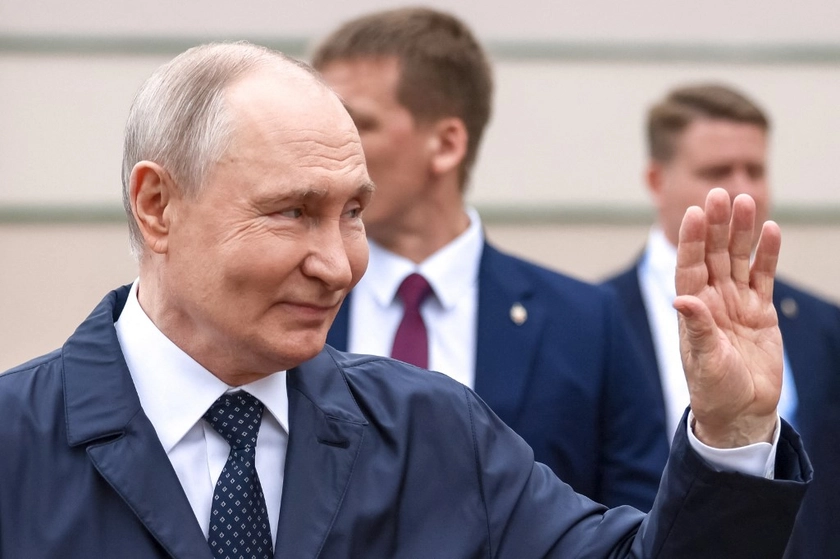
Vladimir Putin has issued a decree to expand the central administration of the Federal Protective Service (FSO) for the fourth time since his forces invaded Ukraine in 2022.
The FSO is tasked with a wide range of security functions, including the personal safety of the head of state.
JOIN US ON TELEGRAM
Follow our coverage of the war on the @Kyivpost_official.
Prior to the full-scale invasion, the service’s central apparatus had not been expanded since 2010.
The decree, which was set to enter into force on July 1, raises the maximum number of military and civilian personnel in the central apparatus to 812 from 785, the independent outlet Verstka reported in late June, citing the draft published on Russia’s legal acts portal.
Beyond this administrative core, which forms the FSO’s nerve center, the service is believed to include tens of thousands of officers and troops responsible for protecting state properties and high-ranking officials.
Their primary duty is to protect the president, his family and the prime minister, but their remit also extends to securing the Kremlin, parliament (the State Duma) and dozens of heavily fortified presidential residences.
One specialized branch of the FSO, the Special Communications Service (Spetssvyaz), controls the nuclear briefcase associated with Putin while his close-in physical protection is handled by another FSO unit, the Presidential Security Service.
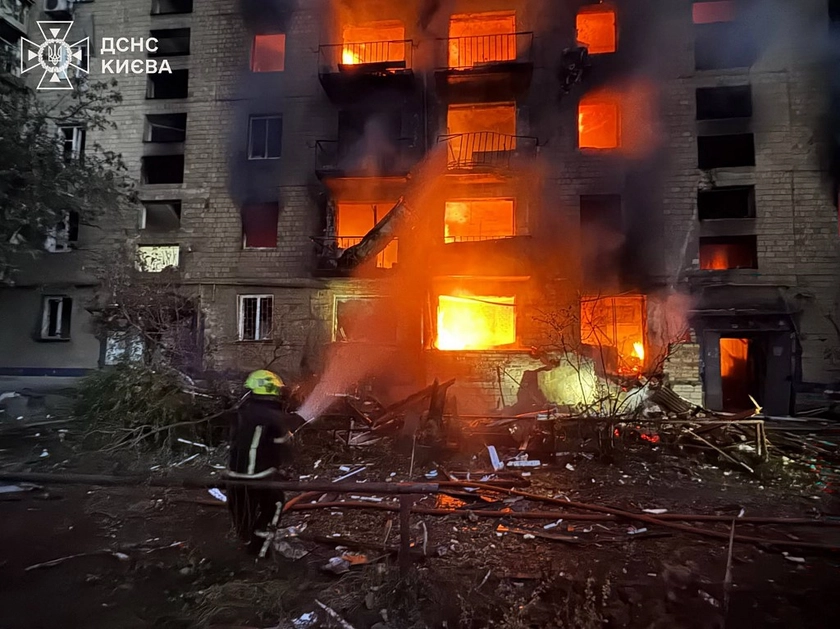
Kyiv Residential Block Torn Open as Death Toll From Russian Barrage Rises to 8
A paranoid president?
The first decree setting a ceiling for the central FSO staff was issued in 2004, when the level was capped at 600.
Since then, it has been raised several times, reaching 725 in 2010 under then-president Dmitry Medvedev. For almost 13 years thereafter, the number remained unchanged, until Putin raised it to 760 at the end of 2022.
Since the full-scale invasion, Putin has hiked the headcount a further three times, taking the maximum staff of the central apparatus from 725 before the war to 812 under the latest decree, an increase of around 12%.
Until now, all these changes took effect at the beginning or end of the year; this is the first expansion during the war to be implemented in mid-year, as Verstka has pointed out.
Russian and international media have reported in recent months that Putin appears increasingly concerned about his personal safety.
In May, a European intelligence assessment reported by Western outlets said Putin feared an assassination attempt and a coup, and that security measures had been significantly tightened as a result.
According to those reports, employees working near Putin have been banned from using mobile phones and are required to wear masks and remove wristwatches before meeting him.
The FSO has also drastically curtailed Putin’s travel schedule, keeping him more often in secure facilities, while his trips abroad are accompanied by visibly reinforced security.
During a visit to Kazakhstan in May, his motorcade reportedly included an armored car, a helicopter and vehicle equipped with an electronic warfare system designed to disrupt potential threats.
You can also highlight the text and press Ctrl + Enter