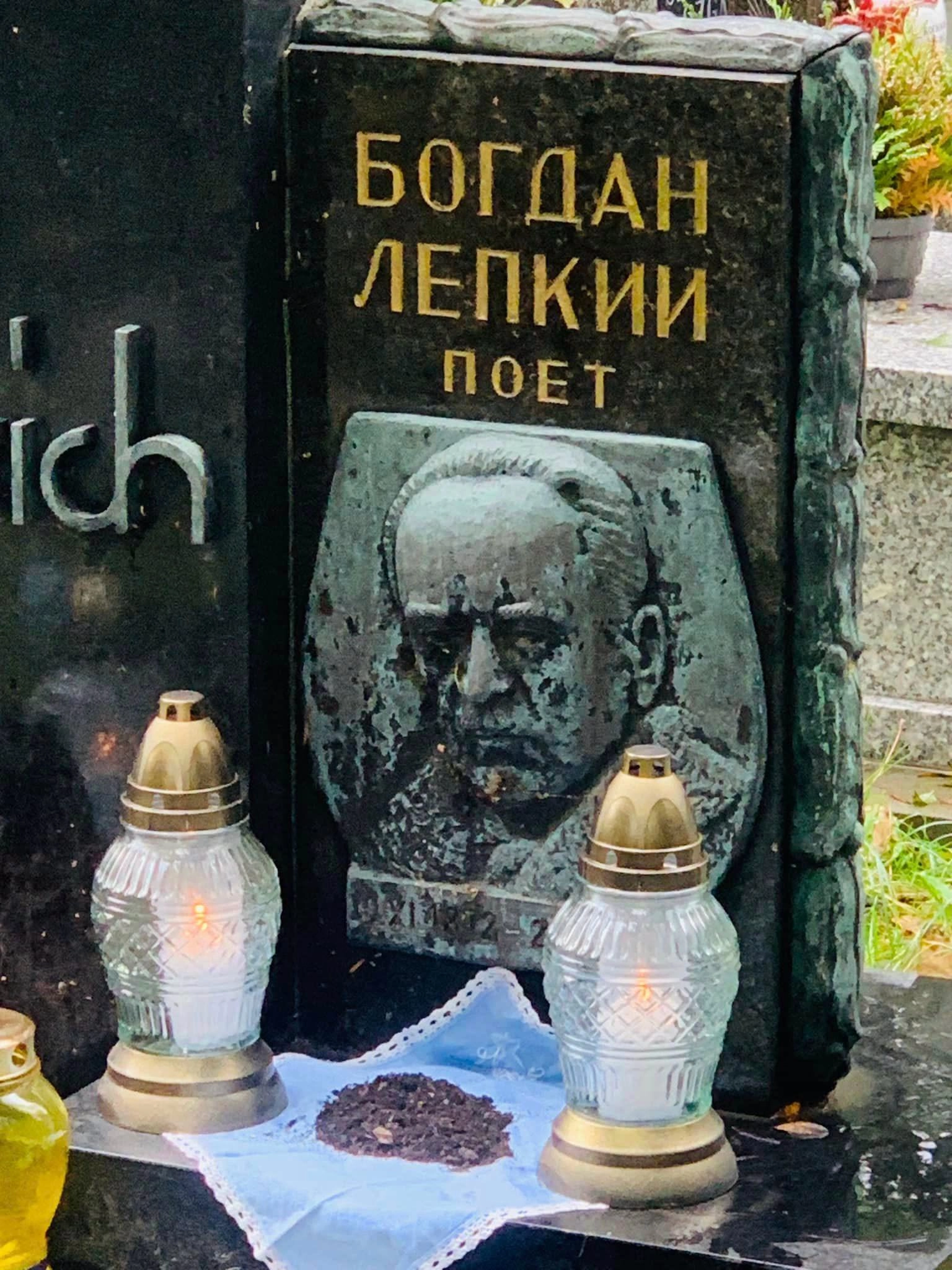
The tombstone of a Ukrainian writer and professor has been vandalized and a bronze relief stolen from his grave in southern Poland, Ukraine’s foreign ministry has said, calling it a “deliberate provocation.”
Pictures posted on social media on Saturday show the damage to the Bohdan Lepkyi’s marble headstone in Krakow’s Rakowicki Cemetery. Lepkyi, who lived from 1872 to 1941, was a Ukrainian poet, prose writer, and professor at Jagiellonian University, one of Poland’s oldest and most prestigious universities.
JOIN US ON TELEGRAM
Follow our coverage of the war on the @Kyivpost_official.
The Association of Ukrainians in Poland said the grave was vandalized within the last two weeks, meaning the incident occurred during the ongoing diplomatic dispute between Kyiv and Warsaw that began at the end of May.
Heorhii Tykhyi, spokesman for Ukraine’s Foreign Ministry, said unknown individuals have stolen the writer’s bronze relief from his gravestone.
“We regard this act of vandalism as a deliberate provocation aimed at further fueling hostility between Ukraine and the Republic of Poland,” he said.
“We expect all the circumstances of this act of vandalism to be established promptly, those responsible to be held accountable in accordance with the laws of the Republic of Poland and effective measures to be taken to prevent similar incidents in the future.”
Regional police confirmed that the theft had been reported. Police spokeswoman Katarzyna Cisło told the Polish Press Agency (PAP) the plaque had been torn off and stolen

Germany Dismisses Taurus Missile Delivery, Citing Ukraine’s Drone Success
“This isn’t the only grave destroyed at Rakowicki Cemetery. Recently, we’ve had more than a dozen reports of thefts of various metal items, such as crosses, plaques, and figurines,” she said.
The cemetery, opened in 1803, is the final resting place of cultural figures, scientists, members of prominent families, independence, political, and social activists, and participants in uprisings and both world wars.
You can also highlight the text and press Ctrl + Enter