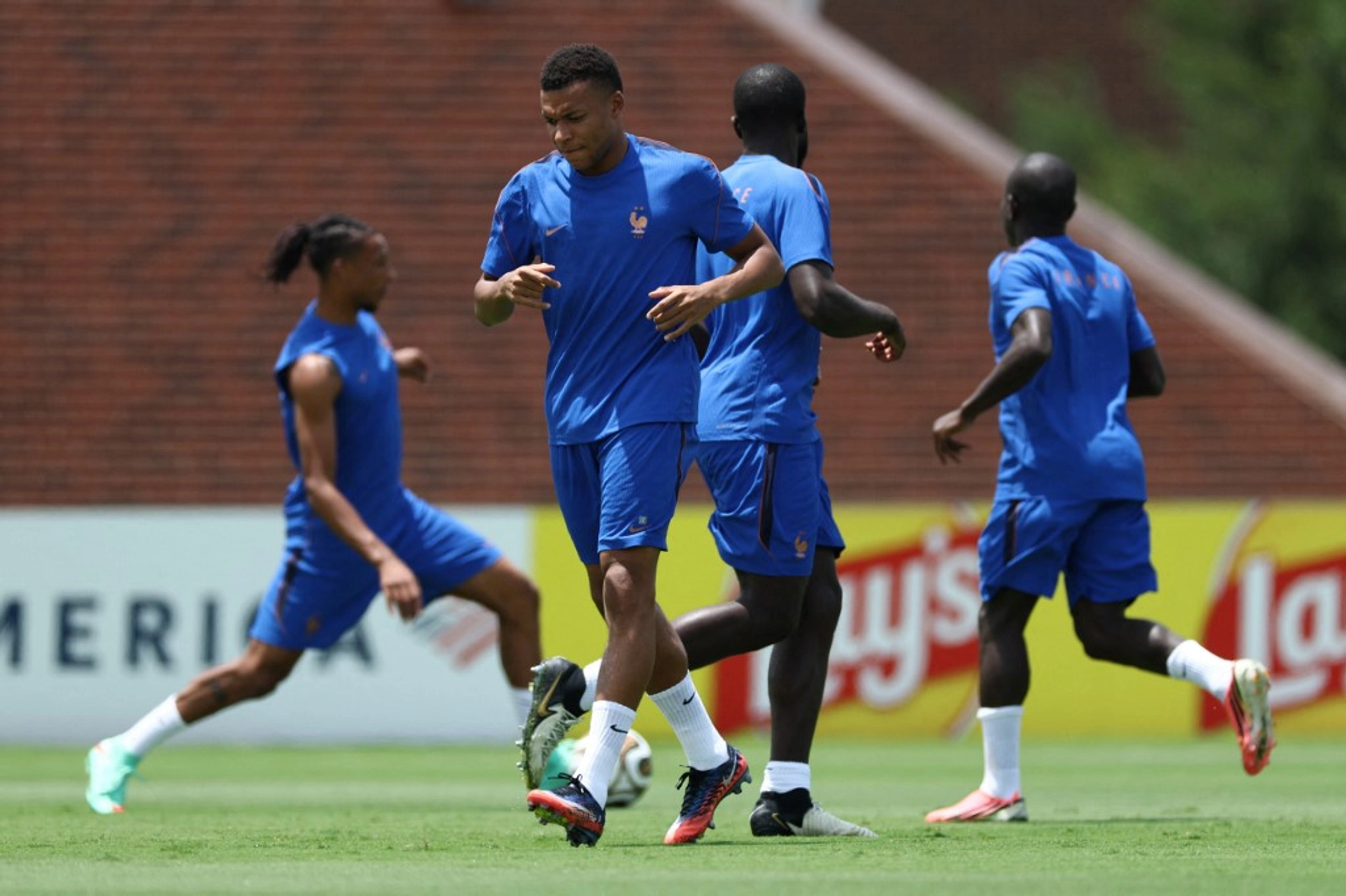
Ahead of today’s World Cup semi-final between France and Spain, certain comments by former Spanish prime minister Mariano Rajoy have sparked a heated debate in Europe’s press and beyond. He wrote that France had “a top-level squad. That said, they don’t have any French players”. Aurore Bergé, France’s Minister for the Fight Against Discriminations, condemned the politician for making racist remarks.
Nations are something more than tribes
JOIN US ON TELEGRAM
Follow our coverage of the war on the @Kyivpost_official.
Lamia El Aaraje (Spain) , deputy mayor of Paris, writes in El País:
“Being French is not a question of ethnicity, ancestry or skin colour. It is a political promise, a contract that each individual signs based on what they contribute, not on what they inherit. One can belong to a nation through the blood one has received or the blood one sheds – by birth or by choice. But never because of the colour of one’s skin. That is precisely what makes our nations something more than tribes, and that is precisely what nationalists in every country cannot forgive them for. ... On Tuesday evening two great nations will come together in Dallas – nations that did not have to be ‘pure’ to be great.”
Hard-earned success
The French national team is an example of successful integration achieved through hard work and dedication, Webcafé (Bulgaria) affirms:
“Sport is one of the few areas in which people from poor, predominantly migrant-populated ghettos can successfully integrate into society. ... Sport is one of the few remaining areas in which a person can prove their own worth – through hard work, effort, dedication and achievements – rather than through who their parents are and whether they were born with a silver spoon in their mouth or in a squalid ghetto. In football you only get ahead if you fight hard and constantly prove yourself – to yourself, to the team and to the fans.”
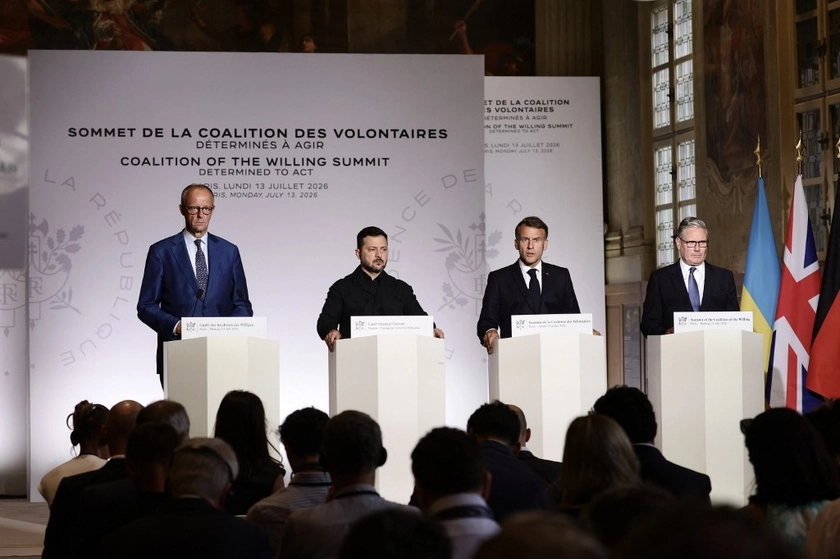
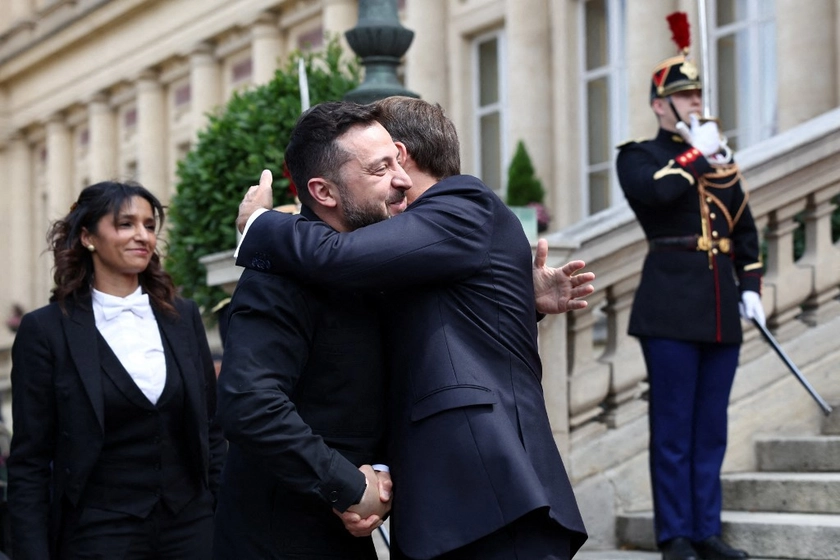
Zelensky Touches Down in Paris to Talk ‘Anti-Ballistics’
Unrealistic view of society
France has a problem with its self-perception, The Conversation explains (France):
“Ours is a hybrid society – a nation shaped by its colonial history, yet one that remains at times uncomfortable with representations that diverge from a traditionally white image of France. The problem therefore seems to lie less with the French national team and more with France’s own image of itself. This sometimes appears to be frozen in the pre-colonial image of a ‘white France’, without fully acknowledging that today’s France is the product of a complex and multicultural past.”
Latent resentment
The Frankfurter Allgemeine Zeitung (Germany) notes that the French team’s successes and failures have always been linked to issues concerning the players’ origins:
“We need only recall the euphoria when France won the World Cup for the first time in 1998 and half the country celebrated on the Champs-Élysées chanting ‘Black, blanc, beur’. Or the ‘Knysna fiasco’ in South Africa in 2010, when the players went on strike in protest against Nicolas Anelka’s exclusion from the team and then found themselves labelled with racist stereotypes. ... Nowadays there’s little talk of these old grievances. Everyone likes winners. But the ugliness that has momentarily faded within is coming back from without, like an echo that brings shame not on the team, but on the country.”
A Bleu that binds
The teams in various sports reflect France’s diversity, according to Libération (France):
“The fact that a particular skin colour predominates in the French national team highlights above all the impact of the housing allocation policies pursued since the 1950s, and the importance of football as a pathway to success for a section of the French population from a migrant background, a group that has been disadvantaged by ghettoising urbanisation. But regardless of whether the ‘Bleus’ in football are Black, the national rugby players have accents from the south of France or [overseas territories] Wallis and Futuna, and the members of the French equestrian team often bear aristocratic surnames: they are all the ‘Bleus’.”
See the original of this report here.
You can also highlight the text and press Ctrl + Enter