President Volodymyr Zelensky said Ukraine will open its intelligence archives related to the Volhynia Massacres as part of a broader push to rebuild trust with Poland, after a long-standing dispute regarding the matter strained their relations.
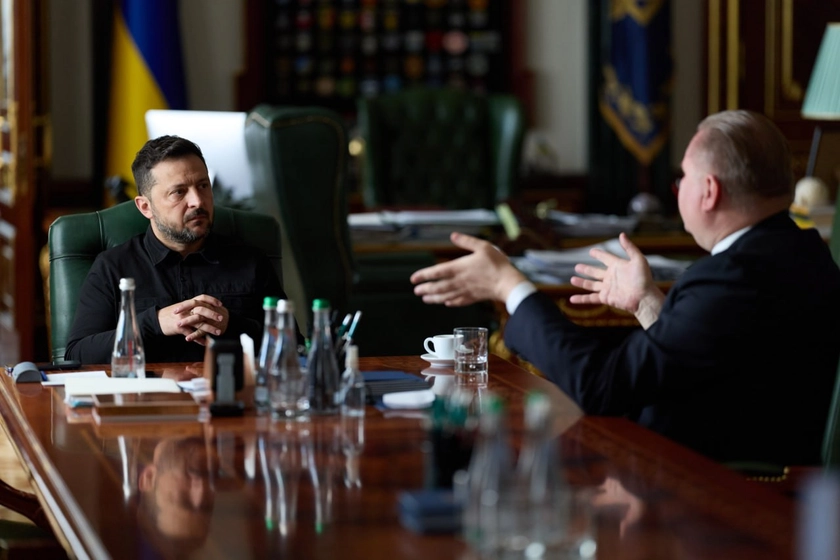
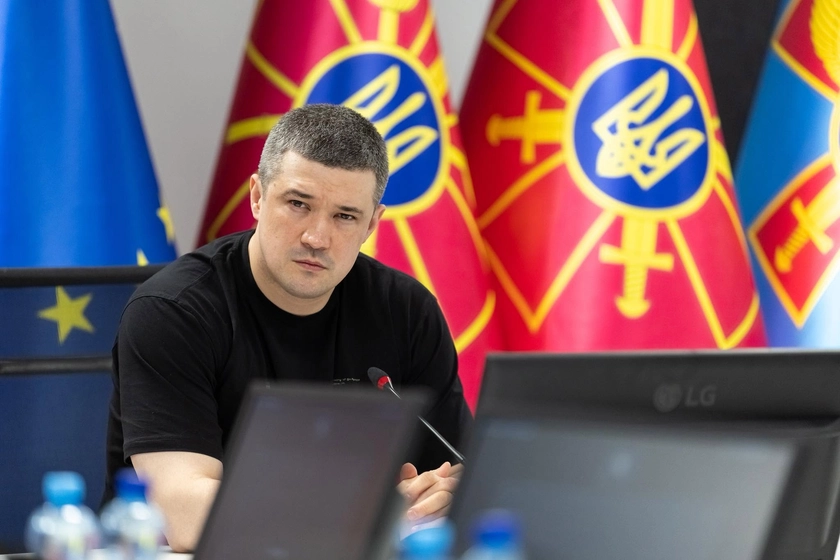
Zelensky made the announcement following a meeting dedicated to Ukraine’s policy toward Poland on Friday, where he outlined five commitments aimed at strengthening bilateral ties, including diplomatic steps, archival transparency, and expanded cooperation on historical remembrance.
JOIN US ON TELEGRAM
Follow our coverage of the war on the @Kyivpost_official.
Zelensky framed the effort as central to regional security, arguing that support for Ukraine’s independence and Poland’s own security are directly linked.
“The security challenges facing Europe today can only be resolved through cooperation,” he said, adding that Poland “provided significant support to Ukraine after the start of the full-scale Russian invasion.”
Archives and exhumations
All archives held by the Security Service of Ukraine (SBU) and the Foreign Intelligence Service of Ukraine concerning the Volhynia Massacres will be made accessible, a step long sought by Warsaw.
Ukraine will also issue a significant number of permits for search and exhumation work tied to the historical events, with both governments cooperating on the excavations to “ensure greater capacity to carry out such work,” according to Zelensky.
Expanding institutional support
Beyond the declassification of the Volhynia archives, Ukraine and Poland are discussing new formats for expanding dialogue. Zelensky confirmed an agreement with Oleksandr Alfiorov, head of the Ukrainian Institute of National Remembrance, aiming to broaden the institute’s capabilities.
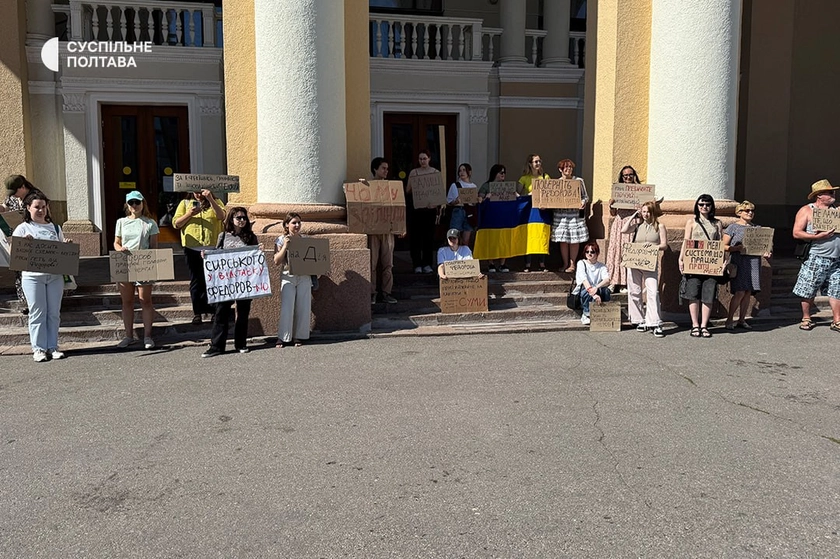
Day Two of Fedorov Protests Sees Hundreds Rally Across Ukraine
Reportedly, Alfiorov is expected to prepare detailed proposals for expanding the institute’s work, which Zelensky said should be matched with greater government backing.
“I ask the relevant government officials and the corresponding committee of [Ukraine’s parliament,] the Verkhovna Rada, to consider increasing the financial and other support for the Ukrainian Institute of National Remembrance,” Zelensky said, adding that “proper representation of Ukrainian interests requires the appropriate capabilities.”
Ukraine-Poland diplomatic fallout
The diplomatic rift between the two neighbors escalated after Ukraine’s decision to grant a military unit the honorary title “Heroes of the UPA.”
The Ukrainian Insurgent Army (UPA) was a nationalist partisan force that fought during and after World War II for an independent Ukrainian state. While many Ukrainians view the group as part of the country’s struggle for independence, Poland considers the UPA responsible for mass killings of Polish civilians in Volhynia and Eastern Galicia during the war.
Nawrocki responded June 19, by stripping Zelensky of the Order of the White Eagle, Poland’s highest state honor, saying the move was “not against the Ukrainian people” stating that it did not signal a shift in Poland’s support for Ukraine.
Just a day later, Zelensky returned the decoration, with three former presidents – Leonid Kuchma, Viktor Yushchenko and Petro Poroshenko – renouncing the same Polish honor, while Foreign Minister Andrii Sybiha, Presidential Office chief Kyrylo Budanov and Ukraine’s ambassador to Poland also gave back their Polish state decorations. Sybiha described Nawrocki’s decision as a “strategic mistake.”
“This is not about medals, but about respect,” Sybiha said, adding that Ukraine had consistently sought a relationship based on mutual respect despite disagreements over historical issues.
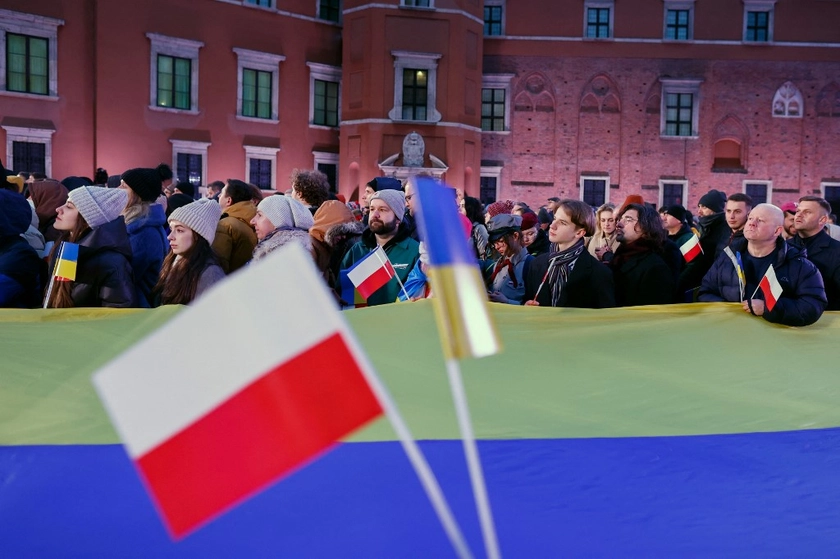
Polish activists responded to Nawrocki’s revoking of Zelensky’s state award by giving Zelensky and the Ukrainian people their own honor, “Civil Order of the Future.” The organizers accused Poland’s right wing of exploiting the Volhynia massacres ahead of the parliamentary elections, saying that “politicians are arguing over the year 1943, while people are still dying in Ukraine in 2026.”
On June 22, Nawrocki was excluded from the Ukraine Recovery Conference taking place in Gdańsk, Poland, as Prime Minister Donald Tusk did not send him invitations to the event co-hosted with Zelensky.
The ongoing dispute between the two countries drove anti-Ukrainian hate incidents to surge in Poland. Experts linked the hostility trend to the historical disputes, as well as election politics and Russian disinformation campaigns that seek to further undermine relations between Ukraine and Poland.
The issue attracted further national attention after a 54-year-old man insulted two 11-year-old Ukrainian girls travelling on a bus in the southern city of Bielsko-Biała.
You can also highlight the text and press Ctrl + Enter

Trump Says US Will Let Ukraine Build Patriot Systems: ‘We’ll Show Them How to Make Them’
OPINION: The Bill for Crimea Comes Due for Putin