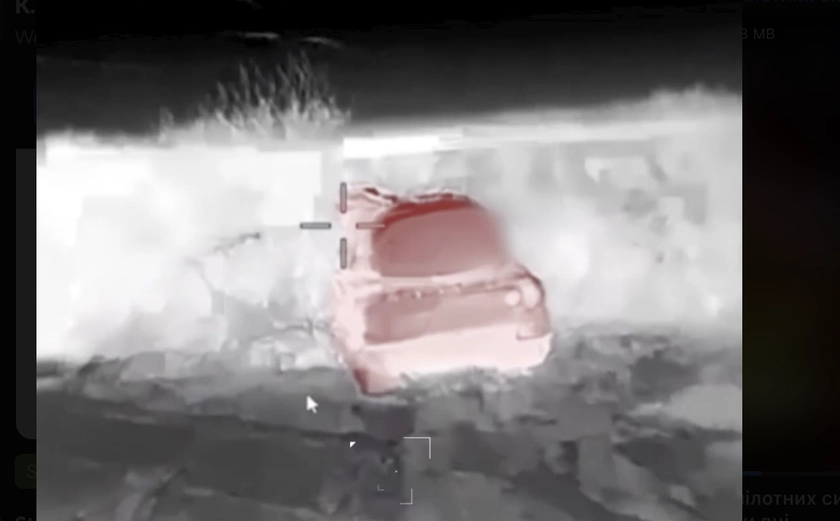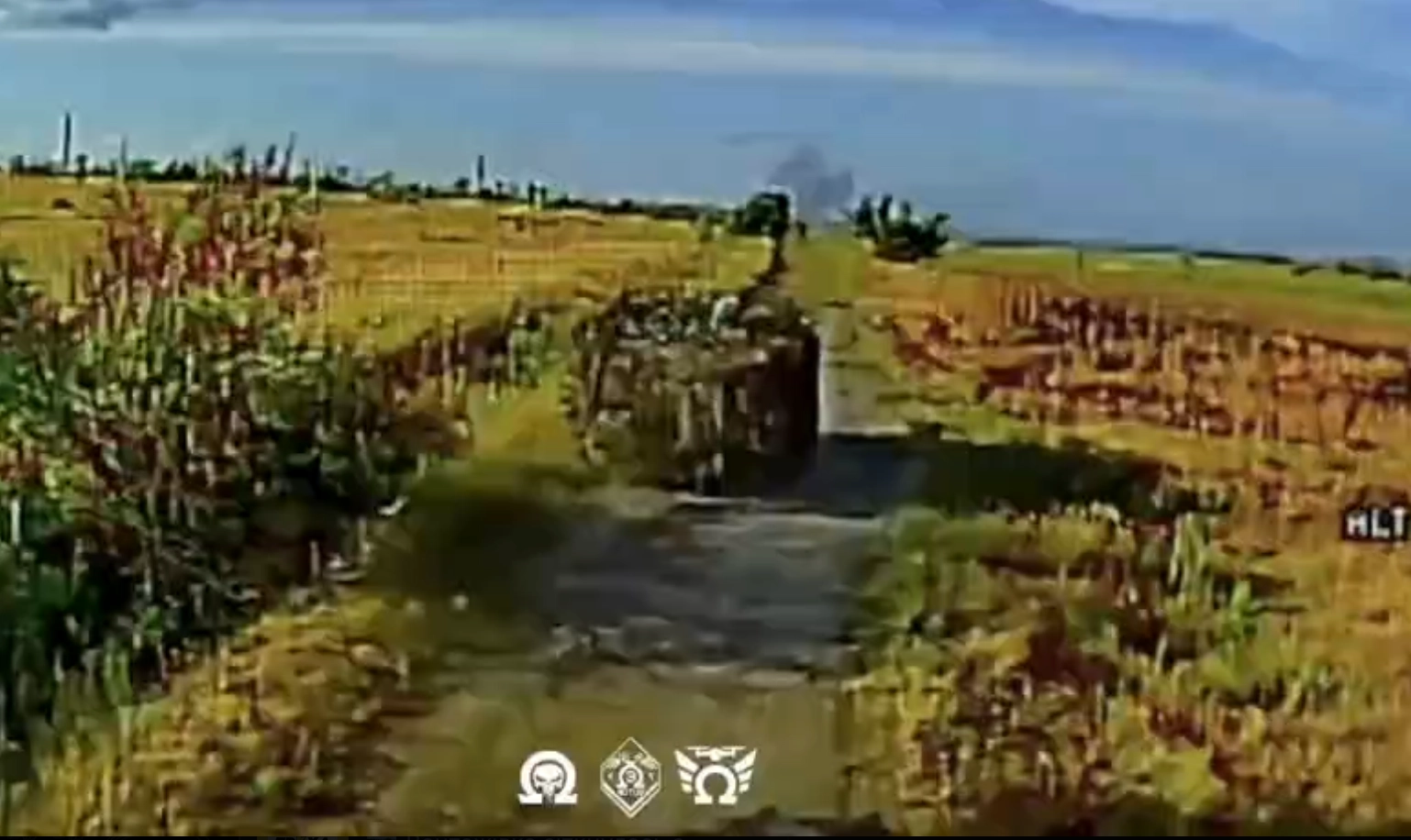
Ukrainian drone footage shows Russia’s new tank protecting Arena-M anti-drone system in action – or rather, not taking any action.
The Arena-M, officially indexed as T09-A6-1, is classified as an active protection system (APS). Russia claims its radar can detect incoming drones and missiles, which are then intercepted by fragmentation warheads from 12 defensive launch tubes mounted around the turret, providing nearly 360-degree coverage.
JOIN US ON TELEGRAM
Follow our coverage of the war on the @Kyivpost_official.
But a combat video shared by the Ukrainian National Guard’s “Omega” special forces unit shows its first-person view (FPV) drone ramming into the back of the Russian tank, meeting with no resistance.
Military outlet Militanyi identified the tank as Russia’s T-72B3A, a modernized version of the Russian T-72B3 main battle tank with the Arena-M attached. The outlet said the attack took place near the village of Maiak in eastern Ukraine’s Donetsk region.
Russian outlet Izvestia reported earlier in July that the exact model with the new Arena-M was being deployed to combat in Ukraine, with the system having completed qualification testing in 2024 before being integrated into Russia’s T-72 and T-90 main battle tanks.
Performance questioned by Russian experts
Russian military analysts have previously cast doubt on the system’s advertised radar performance.
In November 2025, Russian military analyst Viktor Murakhovsky argued that the Arena-M faced fundamental limitations in detecting the very drones it is now claimed to defeat.
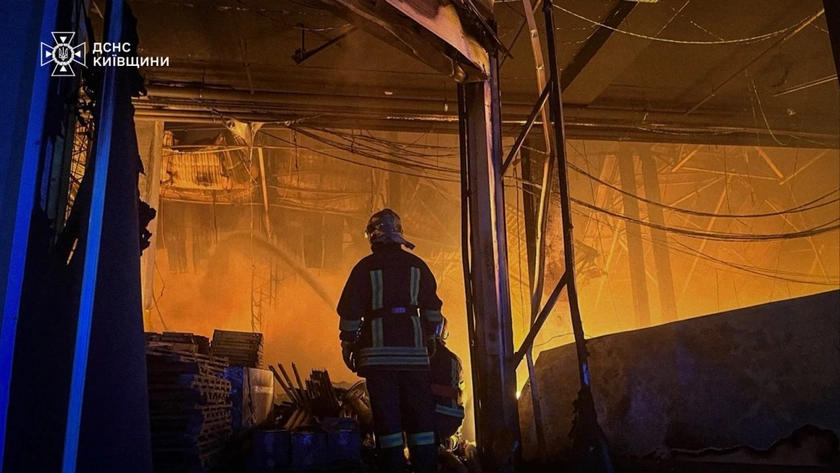
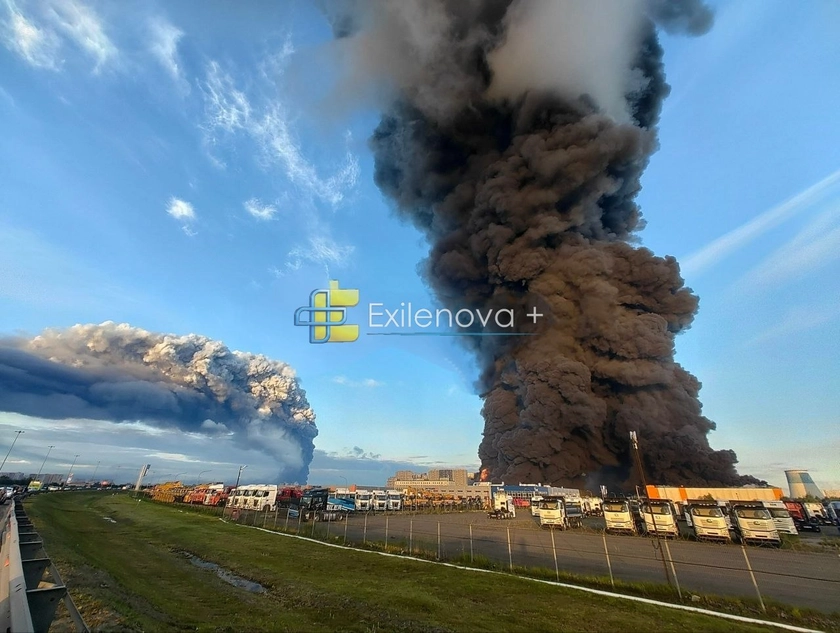
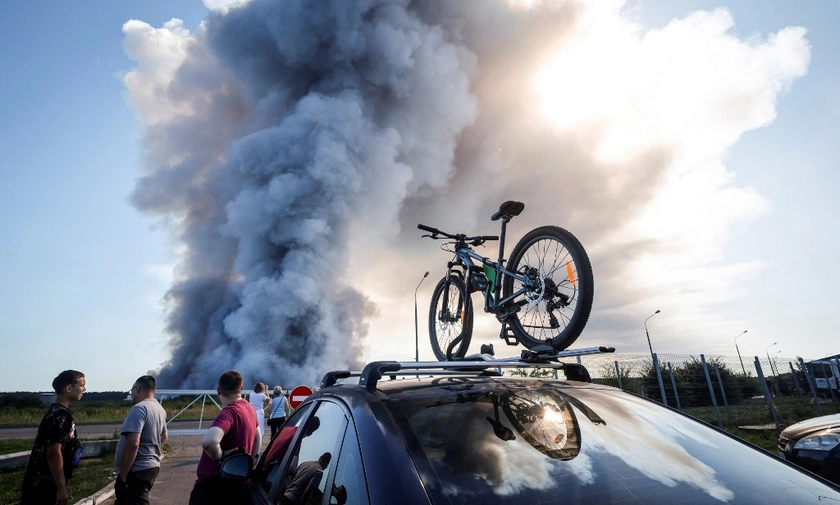
Wildberries Warehouses Burn Near St. Petersburg, Flamingo Missile Reportedly Hits Defense Plant
According to Defence Blog, Murakhovsky said the system’s radar struggled to detect small FPV drones built largely from radar-transparent materials such as plastic and composites.
He also noted that conventional radar is optimized for tracking fast-moving aircraft and missiles, but is far less effective against drones flying slowly, erratically, and close to the ground – the typical attack profile of FPV drones targeting armored vehicles.
“The radar has not yet achieved this level of detection,” Murakhovsky said.
Aging military developments
Though the underlying technology found in the Arena-M is classified, its shortcomings could suggest fundamental limitations plaguing other Russian systems – namely, its aging technology, an issue exacerbated by Western sanctions.
Prior to the 2022 full-scale invasion of Ukraine, Russia had relied on foreign components for some of the more advanced features in its weapons amassed throughout the 2000s and 2010s, such as the French-made night vision sights found on the T-90 tanks.
Another example is Moscow’s newly prized Oreshnik missile, where reports suggest its major inaccuracy issue stems from Soviet-era guidance systems.
Western sanctions meant Russia could no longer obtain – or at the very least found it much harder to obtain – advanced foreign components, forcing the country to pursue a more “sovereign” approach. However, Russia’s technological edge had already been set back by decades of reliance on Western components – and corruption.
At any rate, the new Arena-M appears to be more sophisticated than Russia’s improvised “cope cages” and “turtle tanks” seen earlier in the war.
But whether it’s more practical is another question altogether.
You can also highlight the text and press Ctrl + Enter