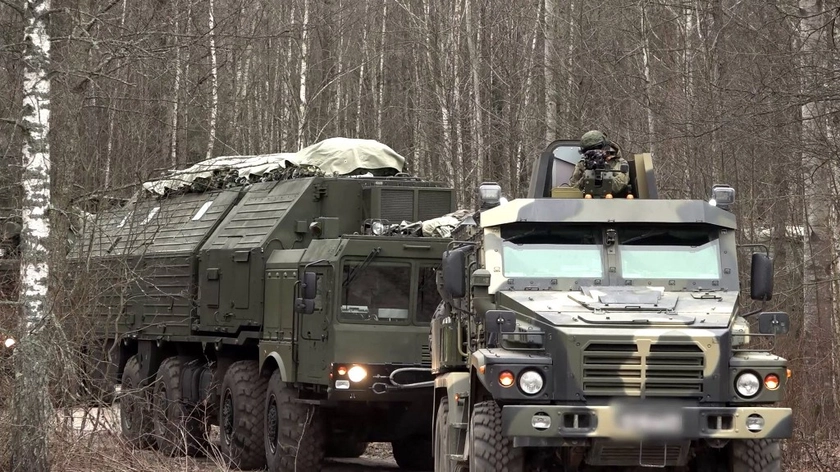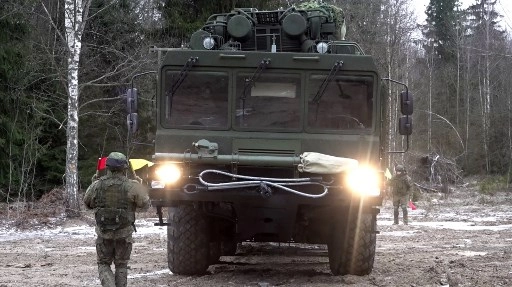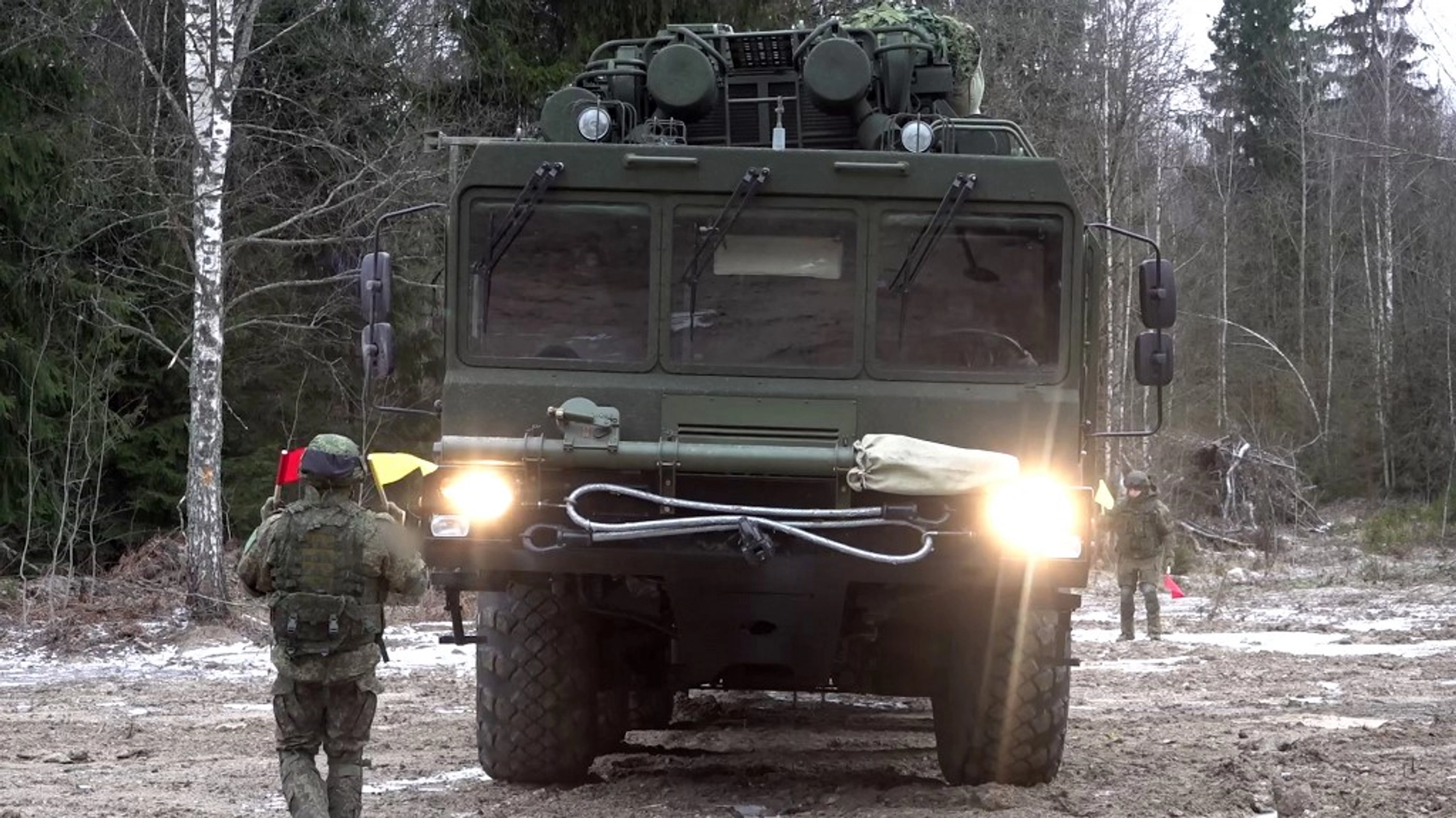
Russia’s much-publicized Oreshnik missile program may be suffering from critical technical failures, causing missiles to miss targets by tens of kilometers.
According to a new investigation published on Tuesday by Dallas Analytics, a Ukrainian private intelligence and data analysis firm, the Kremlin’s newest intermediate-range ballistic missile (IRBM) is affected by major guidance system defects linked to production bottlenecks and reliance on outdated Soviet-era components.
JOIN US ON TELEGRAM
Follow our coverage of the war on the @Kyivpost_official.
Russian leader Vladimir Putin used the Oreshnik in its debut strike on central Ukraine’s Dnipro in November 2024, presenting the missile as proof of Russia’s technological superiority and using it to escalate threats against Kyiv’s Western allies.
According to the report, Putin ordered the production of four additional missiles in 2025 following the initial strike, but subsequent launches have exposed major reliability issues.
Since its first use, Russia has launched three additional Oreshnik missiles at Ukraine.
One struck western Ukraine’s Lviv region in January, while another hit Bila Tserkva south of Kyiv in May.
Following this, a second warhead package disappeared over the Russian-occupied Donetsk region.
The Institute for the Study of War (ISW) wrote in its latest assessment that Russia likely has one operational Oreshnik missile remaining in its arsenal.
Dallas Analytics attributes the failures to a critical component known as the “GU-503,” a high-precision gyroscopic unit responsible for stabilizing missile flight and correcting pitch, roll, and yaw deviations.
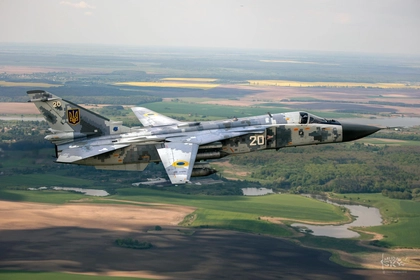
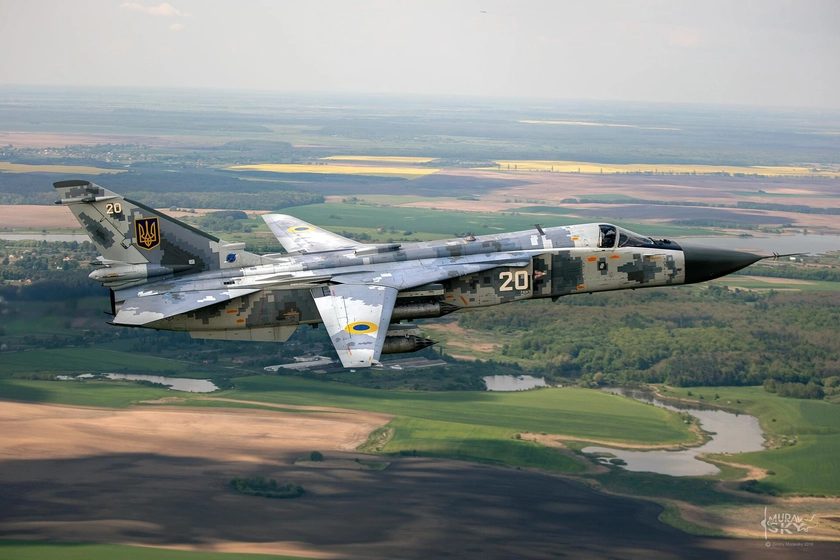
Investigation Begins Into Fatal Su-24M Crash in Western Ukraine
Without a fully functional gyroscope, even a minor deviation can become catastrophic at hypersonic speeds.
“Without a perfectly functioning gyro unit, the weapon flies blind, incapable of detecting if atmospheric wind shear or engine vibrations have pushed it off course,” the report says.
“Because a ballistic missile relies on an exact mathematical arc, an uncorrected mechanical error of just 0.5 degrees at hypersonic speeds will compound over the flight trajectory, translating into a catastrophic terminal miss distance of tens of kilometers,” it adds.
Manufacturers
To support its findings, Dallas Analytics published what it says is internal correspondence between two Russian defense manufacturers: the Michurinsk Plant Progress and the Azov Optical-Mechanical Plant.
The March 2025 letter reportedly reveals that the GU-503 has not been mass-produced for years and that the equipment needed to calibrate and test it dates back to the 1970s.
According to the document, much of the production infrastructure is obsolete, with critical components no longer manufactured and no replacement parts available.
Dallas Analytics says Russian manufacturers were forced to bypass standard quality-control procedures to meet politically imposed deadlines set by the Kremlin.
The investigation also claims physical analysis of missile debris recovered in Ukraine found GU-503 units bearing 2025 production markings, suggesting Russia abandoned plans to replace the outdated system with a newer design.
The report argues that this supply-chain crisis helps explain why Putin recently shifted his public rhetoric on Oreshnik.
During the St. Petersburg International Economic Forum (SPIEF) in June, Putin appeared to walk back earlier claims that serial production had already begun, instead describing recent launches more as testing exercises.
While the missile’s reliability may be in doubt, Dallas Analytics warns against underestimating the threat.
Further analysis
Despite manufacturing issues, Oreshnik remains a potentially dangerous platform capable of carrying nuclear warheads and striking targets across Europe, particularly if deployed closer to NATO territory through Belarus.
“The West must see the Oreshnik for what it truly is. It is the product of an isolated regime that masks structural weaknesses behind aggressive escalatory threats,” the report adds.
In late May, Ukrainian forensic experts challenged the Kremlin’s narrative surrounding the missile, showing the weapon is nearly a decade old and contains no Western-made electronic components, according to Reuters.
Technical analysis of missile fragments recovered after a Russian strike on a gas depot in the Lviv region showed the Oreshnik used in the attack was assembled in 2017, using electronic components manufactured in 2016 or earlier.
The findings support earlier assessments by the US Department of Defense, which described Oreshnik as an experimental ground-based missile heavily derived from Russia’s older RS-26 Rubezh program.
Experts also found that Oreshnik’s guidance and processing systems rely entirely on components produced in Russia and Belarus, suggesting the system was designed to avoid dependence on Western supply chains even before sanctions were imposed after the 2022 full-scale invasion.
The Oreshnik has an estimated range of 3,000–5,500 kilometers (1,864-3,418 miles) and uses multiple independently targetable reentry vehicles (MIRVs), potentially capable of carrying nuclear warheads.
Although the Kremlin claims the missile reaches speeds of Mach 10 and is impossible to intercept, Ukrainian and international analysts dispute that characterization.
Experts at the Polish Institute of International Affairs noted that, unlike true advanced hypersonic weapons, Oreshnik’s warheads do not perform complex evasive maneuvers during terminal flight.
That means that despite their high speed, the warheads follow largely predictable ballistic trajectories, making them theoretically vulnerable to modern anti-ballistic missile systems deployed on NATO’s eastern flank.
You can also highlight the text and press Ctrl + Enter

Putin’s Worst Nightmare