The big Kyiv political typhoon-in-a-teakettle news last week was the departure of Ukraine’s cool, Gen-Z Defense Minister Mykhailo Fedorov, according to him, because he told President Volodymyr Zelensky to pick between him and General Oleksandr Syrsky and Zelensky picked that old stick-in-the-mud Boomer Syrsky.
There has been much handwringing and pearls-clutching over this by the smartphone class. There were pro-Fedorov protests in several big Ukrainian cities.
JOIN US ON TELEGRAM
Follow our coverage of the war on the @Kyivpost_official.
Some Russian mil-bloggers certainly took Fedorov’s tenor as defense minister as a positive – as it is thought to be responsible for getting lots of drones to the Armed Forces of Ukraine (AFU), and the perception is that the AFU is pretty effective because of all the drones it has.
Meanwhile, in the actual war, last week saw some of the most powerful Ukrainian strikes on land and sea in years, and by some measures, by any military, ever, in any war.
It is just astounding how Ukraine’s strikes against Russia aren’t front-page news from Portugal to Japan. It’s been going on for almost exactly a year, and it’s accelerating. The Russians obviously can’t stop it.
Essay on the Fedorov brouhaha at bottom. As always, we start out with the fighting front.
The front
Enough information has come in to confirm the gradual Ukrainian liberation of territory in the Oleksandrivka/Hulyaipole sector.
The Ukrainian mil-blogger corps seems pretty confident that over the past 45 days the Ukrainians have retaken about 120 square kilometers (46 square miles) and these six settlements: Ternove, Zaporizke, Novoheorhiivka, Vorone, Sichneve, and Maliivka. The point formation carrying out the attacks is the 425th Assault Infantry Regiment, my guess – by its 2nd and 3rd Battalions. There have been losses, not too heavy by that unit’s standards and excessive by standards of some other formations I know. There are other Ukrainians units in the area, but I hesitate to identify them.
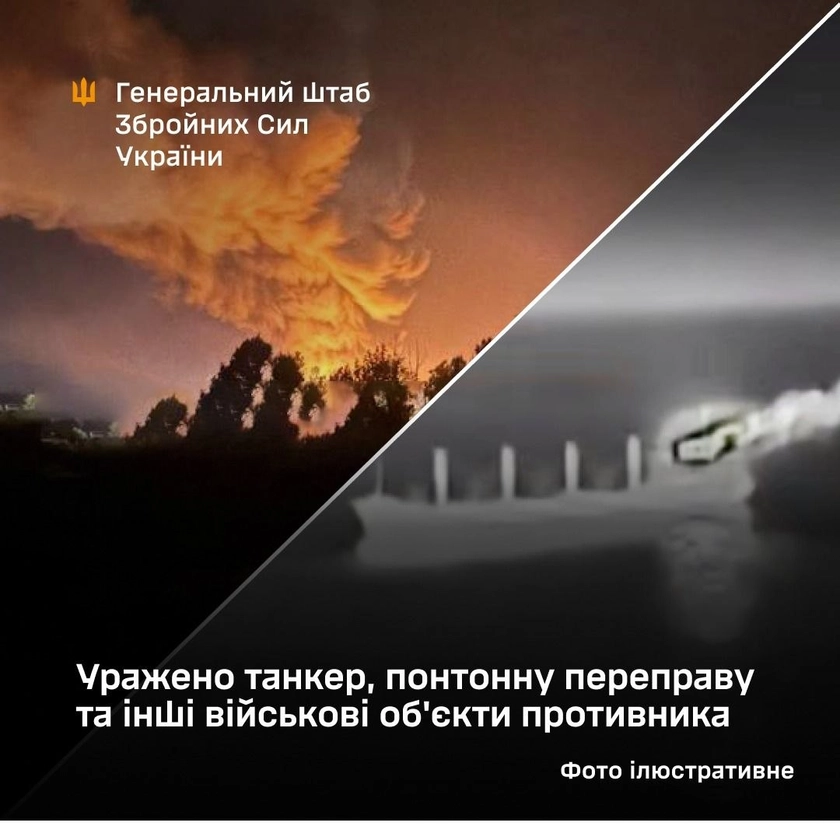
Ukraine Hits 3 Russian Targets, Including Tanker in Black Sea, Pontoon Crossing
Open sources say the new Russian Marine Division 336th Naval Infantry is defending. Again, to be clear, this is not some sudden big success but just a judgement that enough supporting information has come in that it’s safe to declare Ukrainian ground progress here. By the overall scale of the war, it is at best a minor Ukrainian success.
Clement Moulin turned his diligence glass on Russian air strikes across the front, and concluded that the number of Russian airstrikes has dropped from 500 every 10 days in May, to 350 in June, and fewer than 200 currently. He likewise confirmed general Ukrainian defensive solidity around Ternuvate and Hulyaipole. According to him, the current focus of Ukrainian attacks is a village called Uspenivka.
In Kostiantynivka, reports are that the situation generally is the same, but now all roads in and out of the city are closed due to Russian drones and artillery; the only way in or out is on foot. Power is out, water service is out, mobile phone coverage is sketchy. Russian infantry teams are still infiltrating into the suburbs of the city, particularly the village of Druzhivka, but the general picture is islands of the city held by small groups of Ukrainian soldiers supplied by drones; the drone supply is reliable, and the Russians take casualties as they try to expand their territory. From the attrition point of view, the Ukrainians are doing well, but from the operational point of view, the Russians are winning and sooner or later they’ll capture the ruins of the city.
Operational hints?
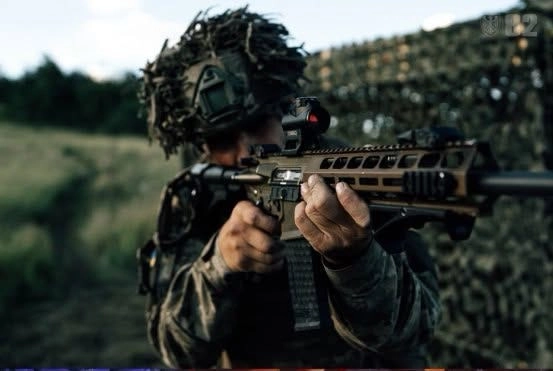
More anecdotal evidence surfaced last week to support the theory that if and when the Ukrainians attempt a major offensive ground operation, it will be in the south in Zaporizhzhia and Kherson regions and the trigger point will be collapse of Russian defensive capacity because of drone strikes against the Russian front lines’ supply.
One indicator was a Wednesday announcement by the Kherson Region Defense Council that the Dnipro River-side villages Zelenivka and Charivne, along with portions of the village Khreschenivka and mostly riverside streets in Kherson will be forcibly evacuated, the civilians must leave their homes, the cops will throw them out if they refuse. Also, public transport will be amended and some bus routes canceled.
Certainly, one reason for the order is that Russian drones have been patrolling those areas for some time, since Russia-occupied territory is on the other side of the river, and the Russian drones have been attacking civilian pedestrians, buses, shops and even playgrounds. So keeping civilians alive is part of the decision. Ejecting traitor civilians passing on information to the Russians, although unmentioned, is certainly another.
However, we war veterans know that evacuation of civilians from a region is a fairly reliable indicator of a planned Ukrainian offensive operation of some kind, and an ironclad indicator of AFU intent to do something militarily that it doesn’t want civilians watching, be it launch drones, build fortifications, or develop an observation line. We saw this repeatedly along the Russia-Ukraine international frontier in 2024-2025. With the civilians out, cross-river boat operations become much easier for the Ukrainians, and if Russian drone capacity is degraded – see the section on Moscow – then it becomes easier still. So all in all, this a pretty reliable sign the AFU is up to something
Next, and this is worth bearing in mind if and when you get to the Fedorov section, on Thursday, Zelensky did a conference call with the Unmanned Systems Forces (USF) Commander Robert Brovdi, the commander of 1st Corps “Azov” Denys Prokopenko, the Commander of 2nd Corps “Khartiya” Ihor Obolenskyi, the Deputy Commander of the AFU Southern Military District Andriy Tkachuk, and the Commander 19th Corps, South Operational Command, Valery Skred. I would be remiss if I didn’t note that the backbone regular “old army” brigade of 19th Corps is the 28th Brigade out of Odesa.
Khartiya has been generally deployed in the Kharkiv sector, but there is some evidence some of their formations have been pulled off the line and are in a rest and recovery cycle. Azov’s traditional area of operation (AO) is the Donetsk sector, but if you look you can find evidence they too have units off the line, and for more than a month the Azov drone units have been operating over southeasst Donetsk region and especially Mariupol. According to the official statement, subjects discussed were: “the situation on the front lines, the issues of production and supply of fiber-optic drones, and foreign fighters in the AFU.”
This could, possibly, be read as the president consulting with key players in a possible southern offensive. But it also could have been Zelensky making sure his most politically influential field commanders were still going to fight hard and not rock the boat. Still, what we are not seeing are hints the Ukrainians are planning something in the Donetsk, Kharkiv, Sumy or Chernihiv sectors.
I suppose it’s also worth noting that DeepState seems to suspect some kind of Ukrainian operation is brewing in the Hulyaipole-Kostiantynivka arc, although defensive or offensive it’s not possible to say.
Spectacular Ukrainian strike last week – Part I
The Ukrainians pulled off not one, but two really impressive naval operations last week, and it’s indicative of a lot that in the world the big news appears to be the World Cup, hot weather, ICE killing some more US citizens, and the Mall reflecting pool.
That being said, this first spectacular strike is really, really interesting, really only if you think Russo-Ukrainian back history is worth knowing; otherwise this section is about just another Russian warship blown up by the Ukrainians.
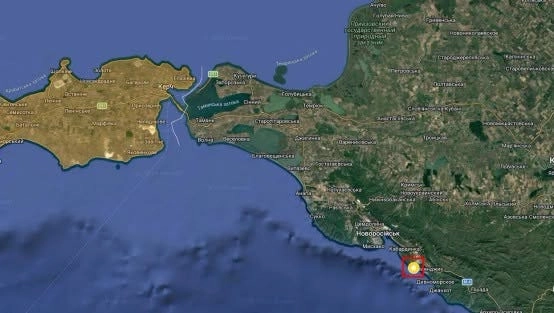
The strike itself took place on Tuesday, July 14, when a Ukrainian naval drone we had heard about but not really seen reports about being in action before, called a Sargan-3000, hit and sank a pretty big Russian warship operated by the Russian secret police, the FSB, near the port Novorossiysk, which is what the Russian navy has been based since October 2023 when the Ukrainians chased the Black Sea Fleet out of Sevastopol.
Not much is known about the Sargan-3000 except, per open sources, it’s Ukraine-developed, and it has a 450-kilogram (992-pound) warhead. The default Ukrainian sea drone for several years has been a hybrid British/Ukrainian weapon called a Magura V7, which is a remote-controlled 7-meter (23-foot) motorboat that navigates by Starlink and has a pretty good reputation for blowing things up. The easiest guess is the Sargan-3000 is the pure Ukrainian/probably improved version of the same thing.
(I have warned people before and I say it again: ANY weapons system the Ukrainians get their hands on they will reverse engineer, and nearly always what they come up with will be a lot cheaper and more reliable than the Western version. The longer this war goes on, the worse the future competition for Israel and the big boys is going to get – I’m not kidding. See the section on France.)
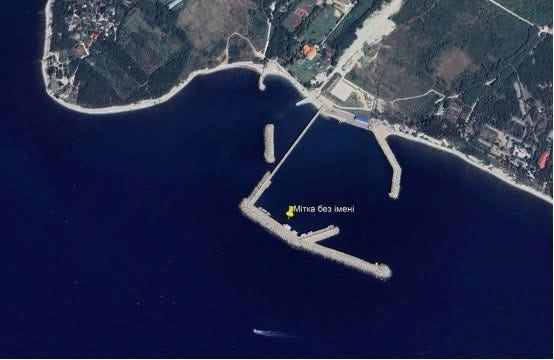
Anyway, on Tuesday somehow the FSB border patrol ship “Izumrud” turned out not to be inside Novorossiysk behind the block ships and torpedo nets and so forth, but tied up at a pier just outside the port. The logical guess here is that since cutter’s job is patrolling Russian territorial waters, and that’s an ongoing responsibility, someone decided it was easier for the next patrol if the Izumrud didn’t’ mess with all the security and clearances to go back into port, but tied up just outside.
This is not an insignificant ship by scale, it was new, launched in 2014, cost about $40 million, armed with an autocannon, a couple of heavy machine guns, landing deck for a helicopter, fitted out anti-aircraft missiles, mounts for anti-ship missiles, length 62 meters (203 feet), beam 11 meter (36 feet), speed 25-30 knots, about 700 tons fully loaded, crew 25-30. For reference, this is a ship about the same size as the WWII-era Flower class corvette, or about as long as 14 London double-decker buses parked end-to-end or one-third the size of Roman Abramovich’s super-yacht the Eclipse.
Historically, the Izumrud is a ship of substantial significance because, in November 2018, in what in Ukraine is known as the Kerch Strait Incident, and what, outside of Ukraine generally was classified as “Russia messing with Ukraine that we could care less about,” that Russian warship intercepted three Ukrainian smaller vessels in international waters near Kerch Strait. The Russians ordered the Ukrainians to heave to; the Ukrainians told the Russians to stuff it, and so the Izumrud’s captain rammed the smallest of the three Ukrainian ships, a tug called the Yany Kapu, three or four times, and threatened to open fire on all of them. Later on, the Russians did open fire, and several Ukrainian sailors aboard the gunboat fired upon, named Berdyansk were wounded. The Berdyansk could have but did not return fire because the Russian flotilla outgunned it.
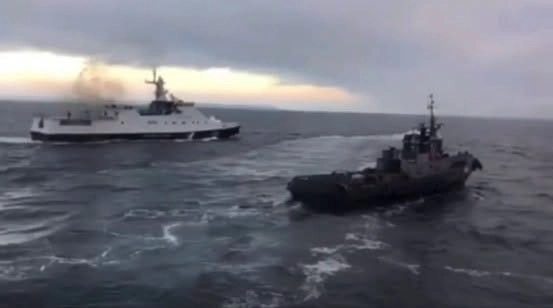
The Russians then sent Spetnaz to board and capture all three vessels. Twenty-four Ukrainian sailors were imprisoned by Russia for ten months. Russia returned the ships after a year; they had taken apart all the weapons systems and basically wrecked all three vessels internally.
This all was in direct violation of a 2003 treaty between Ukraine and Russia to use the waters of the Kerch Strait jointly and without interfering with each other, but of course there had been other treaties where Russia had promised to respect Ukrainian territorial integrity and then invaded Crimea and Donbas, and we all know how that turned out.
The best guess at the time, and still it seems to me to be pretty probable, was that the Russians giving the Izumrud’s orders estimated, correctly, that Russian warships firing on Ukrainian warships on the high seas would not be interpreted in the West as Russian aggression needing a Western response so that further Russian aggression might be deterred, but Russian aggression needing to be ignored because it’s just Ukrainians, shooting them isn’t the same as shooting people in “real” countries.
I reported on all of that in detail, and it was impressive, even then, how little the world cared about Russian warships shooting up Ukrainian warships. The Ukrainian navy, of course, was really mad, and after that they went about their business in those waters loaded for bear and ready for war. By that time, it was the same situation on land, but again, just because the Ukrainians were ready to fight by the early 2020s, that didn’t mean anyone outside Ukraine even gave a fig, it was much easier to believe Russia was big and could do whatever it wants to Ukraine whenever Russia felt like it. But I digress.
The Ukrainians announced the Sargon-3000 drone rammed the Izumrud pretty much dead amidships, starboard side, detonated, and that broke the FSB cutter in half and sank her at moorings. As well it should, considering the half-ton warhead.
Russian military media and even Z-blogger media pretended it didn’t happen; however, satellite imagery is unfairly Russophobic, and those images confirmed the Ukrainian drone forces – probably this was the Ukrainian security service - the SBU, possibly it was the Ukraine Navy – were telling the truth. Ukrainian bloggers either knowing or having recently read up on the Kerch Incident took the opportunity to demonstrate they too knew Trek lore and deployed the line about cold revenge and Klingons.
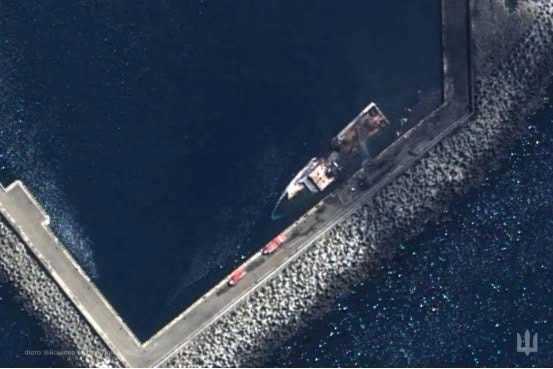
Worldwide, war news, from what I could see, Wall Street Journal, Financial Times, Deutsche Welle, Le Monde and Telegraph noticed Ukraine still lacking a proper navy had sunk another Russian warship at the entrance to a major Russian naval base.
BBC, CNN, NYT, WP, Guardian, NBC, ABC, CBC, CBS, Fox, Bloomberg, Figaro, Der Spiegel, FAZ, El País, Corriere della Sera – not interested, who cares, move on, that’s boring.
The grid of the Izumrud’s remains is: 44.5645851, 37.993442. A few Ukrainian reports said the entire crew died, but I doubt it.
Spectacular Ukrainian strike last week part II – Naval drones vs tankers south of the Kerch Strait
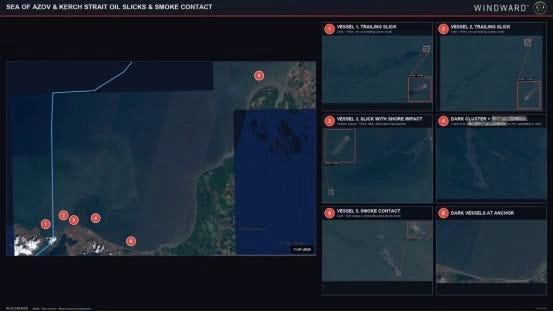
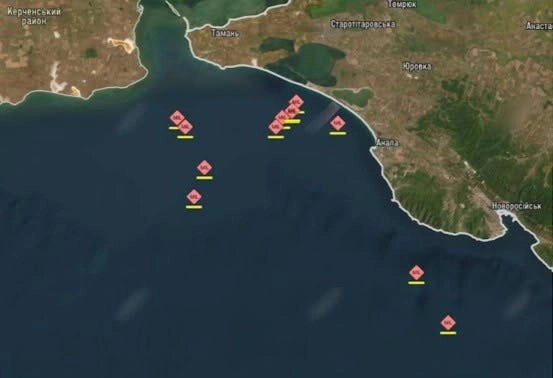
On Thursday the SBU published pretty much incontrovertible video and statements documenting that at least four of its robot kamikaze boats had hunted down and badly damaged a pair of Russian shadow fleet tankers in the Black Sea, about 50-75 kilometers (31-47 miles) south of the Kerch Strait. This was in broad daylight.
The unlucky vessels were identified as Louise 1, flag Panama, deadweight 160,000 tons; and Banda, Liberia flag, deadweight maybe 140,000 tons. Both had been sailing with transponders turned off.
The video shows two hits to each vessel, and in one of the four attacks, light and not really effective defensive fire. Two hits were dead astern in the engine/propeller area; at least one was aft port beam. Damage isn’t clear, but on beaches near the Krasnodar region port of Tuapse, big oil slicks and tar along the high water line was reported, so certainly it’s reasonable to guess some damage was done.
As to Russian denials, yes there were, however, one video section showed the ship name “Louise 1” clearly legible on the tanker’s stern in letters I estimate must have been a meter tall, before the sea drone impacts in the rudder area.
Strictly speaking, Ukrainian drones blowing up Russian tankers is no longer news, as you will see in the section about the tanker war. The significance here is that this was SEA drones in less than two hours’ fast motoring from the Kerch Bridge.
If the Ukrainians can operate sea drones with half-ton to one-ton warheads south of the bridge but near it, and the Russians can’t stop it, then the fact that the bridge stands isn’t so much effective Russian defenses, as it is a Ukrainian decision not to attack the Kerch Bridge for the moment.
The most obvious time for the Ukrainians to bring the bridge down would be at the outset of a major offensive that gained ground, although it’s not at all clear the Ukrainians will ever get to that point. But it’s already pretty obviously their aim.
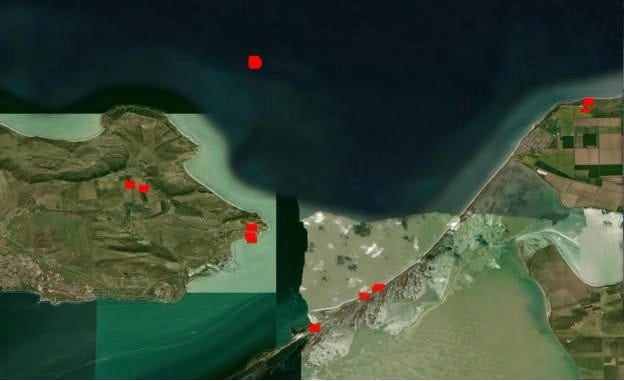
Spectacular Ukrainian strike last week – Part III
Over the week there was a slightly higher quotient of Ukrainian deep-strike drones heading into Russia’s Samara region, and on Tuesday and Wednesday Ukrainian drones seemed like they were heading towards the military airfield there or maybe the air defenses nearby. As always, the Russian Defense Ministry account of how that ended was that everything was shot down and nothing was damaged.
I checked; it had been more than a month since Ukrainian drones had been flying around more or less in the vicinity of Engels airfield. To remind you, this is one of the bases from which Russian flies strategic bombers that launch missiles that hit Ukrainian homes and businesses, for the past couple of months especially in Kyiv.
Overnight Thursday-Friday there was a flurry of reporting that yet again it’s drones polluting the airspace around Engels airfield, except this time, the Russians report there was an actual attack, which of course was completely cut to bits. Meanwhile the Ukrainian internet, as it has for the past week, reported that there was evidence the Russians are concentrating missiles, crews and bombers for another big strike.
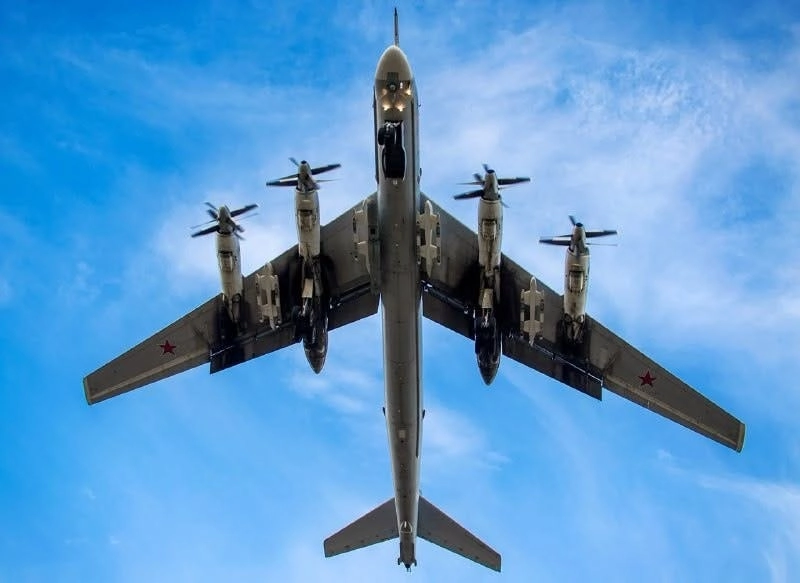
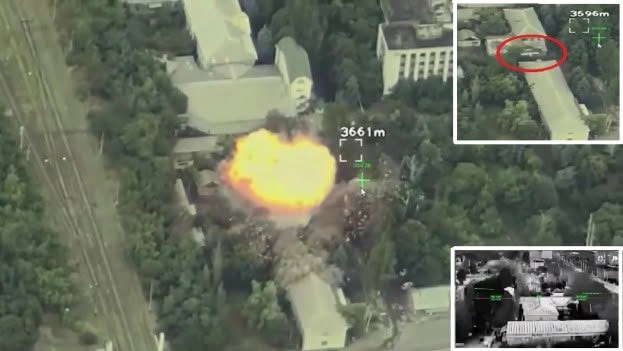
The Ukrainians, by early afternoon, had a different version of events: SBU drones had threaded the needle of several belts of air defense, they had caught some Tu-95M Bear bombers out on the tarmac, and at least one drone had connected solidly and blown the tail of the aircraft right off. The bomber was a total loss.
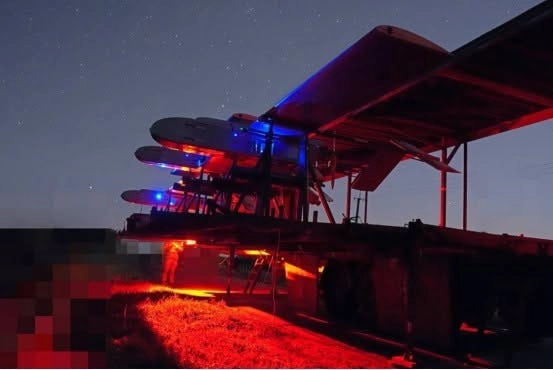
Samara “citizen journalists” a/k/a Russian social media confirmed definitively that some of the aircraft were Begemot drones, which is the Ukrainian version of the bat-wing Shahed, but according to advertising with better control surfaces, a somewhat bigger warhead and more resistance to jamming. The thing is the size of a Mini Cooper almost, so if one plowed into a Bear bomber, it would take it out, even without exploding.
The usual mil-bloggers are confirming the strike and some are speculating that it was pre-emptive, which would be a first because for four years of war, the Ukrainians hadn’t managed to catch Russian bombers on the ground as they were preparing to hit some Ukrainian cities.
UPDATE: Ukrainian sources say it was a training plane and not used for strikes. Still, the point remains that a bomber that drops cruise missiles from deep inside Russia to blow up Ukrainian homes and businesses isn’t always safe on the ground deep inside Russia.
Tanker War, the Kerch Strait and middle strike
This is really the important news of the week, and it’s no less important because it’s been the major story for the past two weeks now. It’s probably the most important war news of the past three months, and we’ll see, possibly 2026.
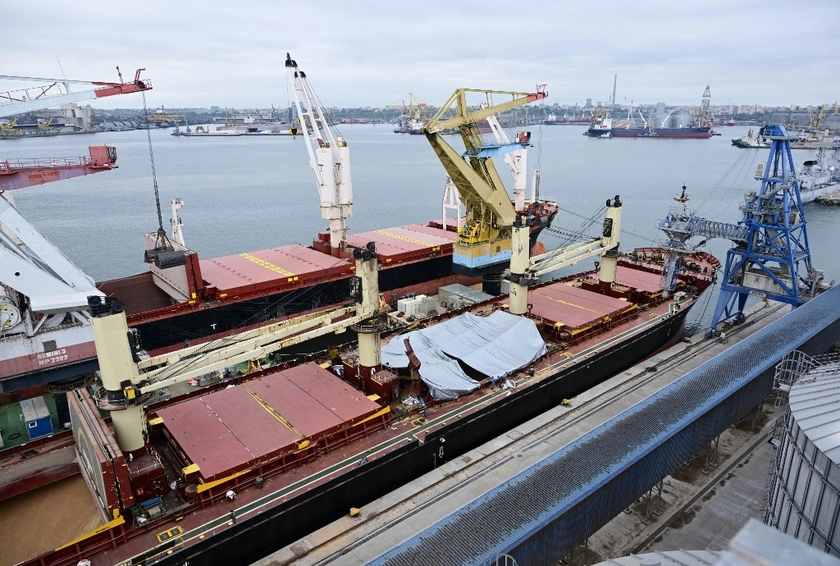
Per Ukrainian USF counts, as of Friday, July 17, Ukrainian drones have, as of launching Operation MoLochKa on July 6, hit a total of 159 Russian “shadow fleet” vessels across the Sea of Azov and Black Sea, of which 42 were hit when the strike campaign expanded into the Black Sea on July 15.
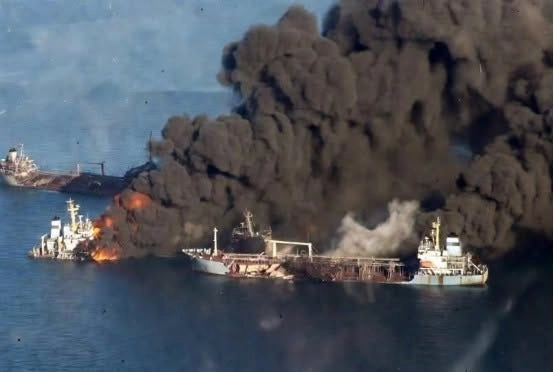
The single biggest strike against civilian shipping of the entire war, by either side, took place on July 15 – 20 vessels, including 17 oil tankers, two gas carriers and one ocean-going tugboat. For practical purposes, there is video documenting the fact of every strike, although it’s not clear how much damage was done in most cases.
In a few instances where the crew was foreign and in international waters and so not subject to Russian censorship, the most common damage seems to have been smashed bridges destroying navigation and communication equipment, and less common but still regular are fires set by drones hitting fuel or oil cargo bunkers.
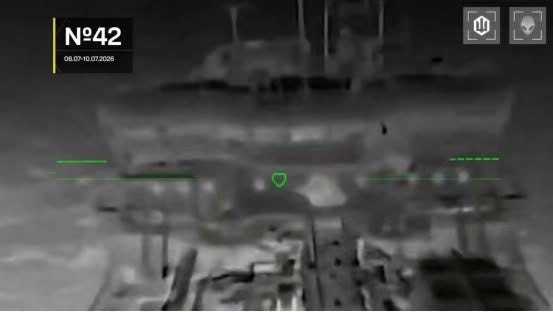
Ferries connecting Russia to Crimea are being targeted as well. On Saturday, drones hit the transportation ship “Volga” (“Vyatka”) and the ferry “Petropavlovsk,” which was under construction, and subsequent photographs (Ukrainian partisans or sloppy Russian internet, it’s not clear) show traces of large-scale fires and damage. These attacks were also by the SBU, which, as we have seen, frequently is tasked with high-priority targets needing destruction or disabling in the first strike.
As an aside, about half of Crimea (not the southern coast and not Simferopol) has been without reliable electricity for more than a week; much of the rest is on unpredictable rationing (authorities say generation is too low to make a predictable blackout schedule) of lights on for two hours and then off for six to eight hours. Pretty much any Ukrainian will tell you it’s not fun to live like that.
Because of the Ukrainian drone strikes, right now, automobile fuel is arguably the most expensive on Earth, and the running black humor joke in Crimea is that generators can’t fix it, because you need gasoline or diesel to run a generator, and most fuel stations are just closed.
This mayhem – or massacre, or catastrophe, or carnage, or bloodbath, or decimation, or slaughter – (English for some reason has a lot of synonyms for this) has been so bad, that on Saturday, Russia “temporarily” halted shipping through the Don-Azov Canal, so as not send too many ships into the Sea of Azov to sit and wait their turn to transit the Kerch Strait, and probably be attacked by Ukrainian drones at anchor.
To be clear: The Ukrainians have established maritime fire control over the Sea of Azov and the Black Sea northern approaches to the Kerch Strait, and to all appearances the air defense network the Russians spent years building to protect that choke point is demonstrably ineffective. If you have been following the news, you probably know it’s destroyed or so degraded that Ukrainian drones can operate in that airspace with impunity.
As we saw during June, road links via occupied south Ukraine from mainland Russia to Crimea are already fully under Ukrainian drone fire control; it’s to the point where the Russians are sending semi-trucks on tertiary roads and manning them with air defense gunners to try and get supply into Crimea through.
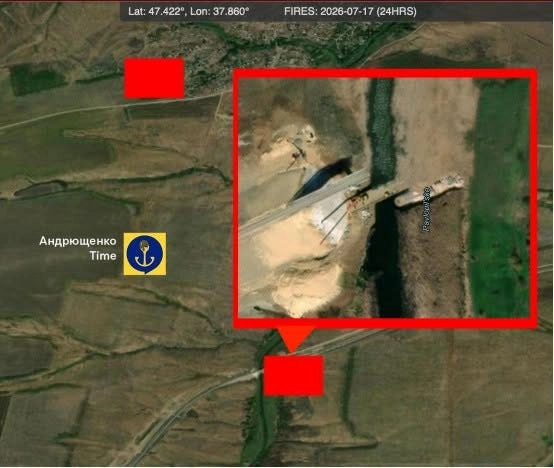
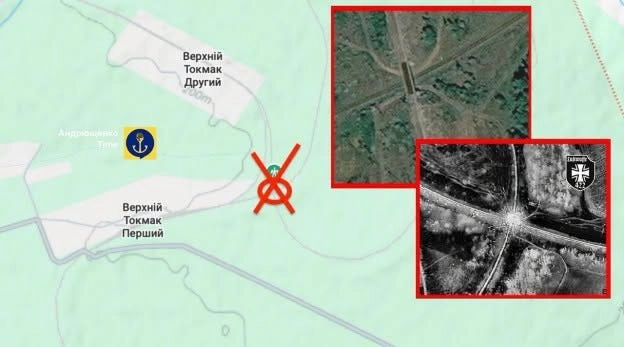
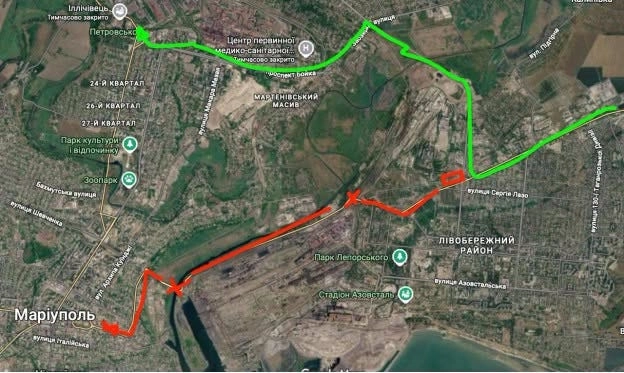
The road bridge across the Kerch Strait is, almost, the remaining functioning supply link tying Russia to Crimea. It seems like ferries are still operating rarely and I read that some trucks get through. But the Ukrainians haven’t stopped attacking road choke points and the critical point is this: The Russians really seem unable to stop the onslaught. If the Ukrainian drone supplies hold out, it’s very difficult to see how Crimea can stay a useful military base for Russia.
Brovdi, on Thursday, dropped the interesting tidbit that the Russian shadow counterpart of the USF, a Moscow insider/mercenary-linked outfit called Rubikon, got orders last week to pull a couple of hundred of it drone crewmen off strike duty for assignments as air defense units protecting key military sites and infrastructure. Under normal circumstances, a move like that would be so monumentally stupid (strike drone pilots take about six months to become competent and they aren’t interceptor drone pilots nor are they skilled anti-aircraft gunners), that one would assume Brovdi is making it up. But this is the Russian army.
As of Saturday morning, the Operation Molochka/USF count was 172 Russian ships hit: tankers, gas carriers, dry vantages, ferries, floating cranes and tugs. The latest Brovdi witticism is that the USF is not sinking these vessels and only putting them out of commission for months because, if sunk, it would harm the environment; for Ukraine, a smashed bridge or engine compartment in a Russian tanker is sufficient.
We have already seen anti-tank missiles go from critical battlefield weapon to obsolescence in this war. If this keeps up, how long is it until drones make anti-ship missiles obsolete?

Long-range strikes against Russia
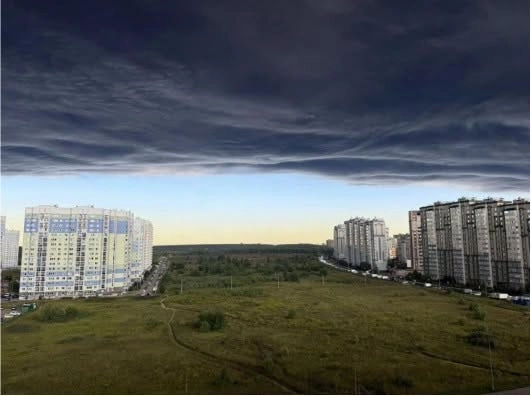
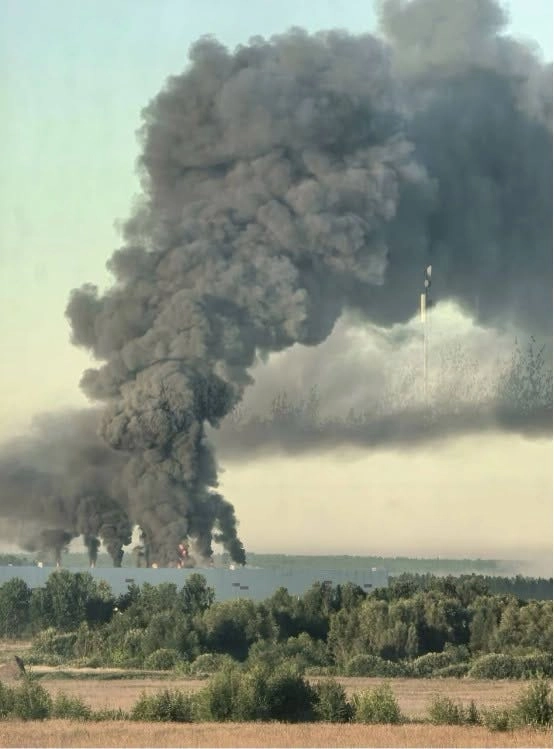
The high-profile strikes took place overnight Friday-Saturday; the Ukrainians flew to Moscow and attacked a giant civilian logistics warehouse and a fuel storage facility. The warehouse operated by Russia’s version of Amazon, a company called Wildberries, is the size of an entire village and about 10% of all retail cargo shipments in the entire Russian Federation flow through it. At least a half dozen hits, 26 people injured, fires visible in a Mordor-like sky for 50 kilometers (31 miles), absolute flood of illegal video of the strikes and the fires uploaded by Moscow social media users.
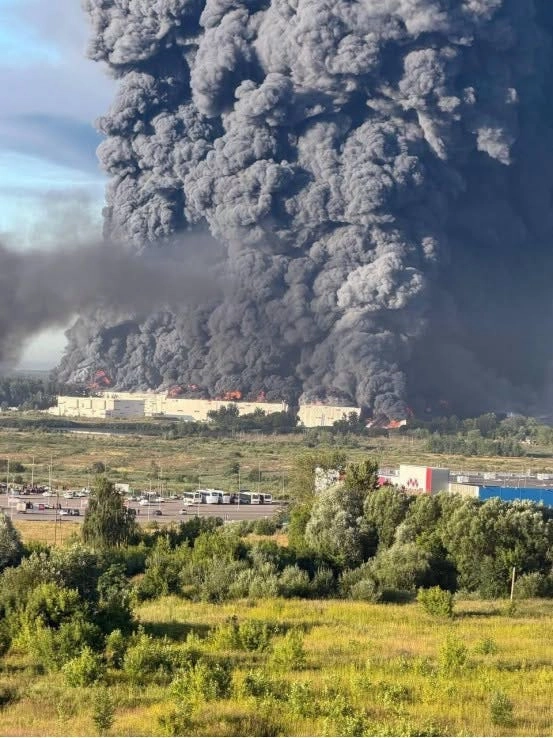
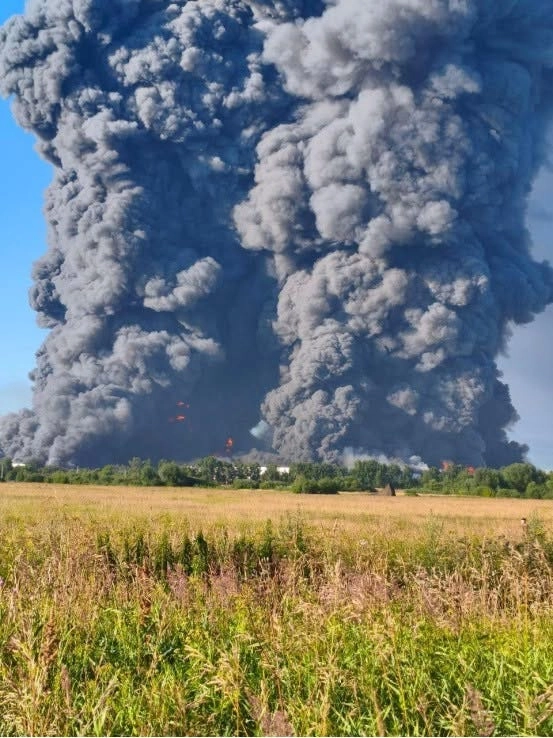
Another Wildberries warehouse/logistics center was attacked and set on fire in the Volga region city of Tambov. Seven people died, according to early reports. By midday, Russian state media was reporting police had opened a terrorism case against Ukraine, and its drone operators had participated in state-sponsored terrorism for attacking peace-loving Russian logistics warehouses.
Within less than two hours, the Ukrainian internet had fired back with TASS official statements praising Russia’s missile troops for blowing up logistics warehouses operated by Ukraine’s and possibly all of Europe’s most efficient private company, Nova Poshta. To date, Russia has blown up at least ten Nova Poshta warehouses, on the grounds that military materials, particularly drones and drone components, move through them.
Which is true; it’s well known in Ukraine that by far the fastest and cheapest way to get an item to the front is to post it to the closest Nova Poshta office, of which there are several thousand, including in pretty much any village with electricity no matter how close to the front. Honestly, it’s a fair go that Russia considers Nova Poshta a targetable piece of the Ukrainian war effort. But in Moscow, based on civilian panic and hue and cry, there seems to have been a common view that blowing up Ukraine is OK and not a problem, but blowing up Moscow is different and absolutely uncivilized and unacceptable.
The laundry list of the week’s long-range strikes, most of them, is this:
- Krasnodar,Port Kavkaz, fuel storage, SBU, July 13, 2026
- Moscow, UNK, July 13, 2026
- Crimea, Simferopol, Hvardiiske, SBU Pantsir, July 13, 2026
- Bashkortostan, Gazprom Neftekhim refinery, big fires, July 14, 2026
- Sevastopol/Balaclava, air defenses very active, power substation, July 14, 2026
- Sevastopol, power plant, July 14, 2026
- Krasnodar, Afipsky oil refinery, fires, July 14
- Kerch, ground fires, power substations, air base/rail hub, July 14, 2026
- Krasnodar, Gelendzhik, fires, July 14, 2026
- Moscow, UNK, July 15, 2026
- Krasnodar, fuel/energy infrastructure, July 15, 2026
- Saratov, vic. Engels-2 airfield, explosions, July 16, 2026
- Donetsk region, Shakhtarsk, oil storage, July 16, 2026
- Yaroslavl, explosion, fuel storage site, July 16, 2026
- Luhansk, big explosion, fires, July 16, 2026
- Berdyansk, industrial site, fires, July 17, 2026
- Crimea, Kerch, RR station, fires, July 17, 2026
- Crimea, Arabat Spit, troop quarters, July 17, 2026
- Donetsk, Hranitne, probable backup Kalmius bridge, July 17, 2026
- Crimea, Kerch, TES-1 oil terminal, fuel storage site, July 18 2026
- Moscow, Wildberries logistics center, multiple fires, July 18, 2026
- Moscow, Noginsk fuel storage base, multiple fires, July 18, 2026
- Tambov, Wildberries base Kotovsk, fires, July 18, 2026
- Berdyansk, military fuel site, July 18, 2026
- Crimea, Sevastopol, Hvardiiske airfield, aircraft parking, July 18, 2026
- Crimea, Feodosia, main power transformer station, July 18, 2026
Sure, Russia is winning, and Ukraine is just a punching bag.
Russia bombards Ukraine
Word is that the Zelensky administration has concluded Russia’s main effort for the next six months will be to destroy the city of Kyiv or at minimum make it unlivable. The crescendo of that operation will take place during the winter.
As such, attacks now are best seen, in that context, as preparatory strikes setting the stage for that campaign. It means hitting targets so that when winter comes, things are worse and if possible, impossible.
This is copied from the Air Force: On the night of July 14 (from 6 p.m. on July 13), Russia attacked with eight Iskander-M/S-400 ballistic missiles from the Bryansk region, two Kh-59/69 guided aircraft missiles (launch area – airspace of occupied Crimea) and 135 Shahed strike unmanned aerial vehicles (UAVs) (including jet), Gerbera, Italmas, “Banderol” loitering munitions and “Parody” type simulator drones from the directions: Orel, Kursk, Bryansk, Millerovo, Primorsko-Akhtarsk (Russia), Donetsk, Hvardiiske in Crimea.
Later reports were more specific about the ballistic missiles: it was anti-aircraft S-400s being pressed into a surface-to-surface role, not the more accurate and powerful Iskander-Ms. We read two weeks ago that Poland gave Ukraine five Patriot missiles and that possibly some other allied nations had chipped in with missiles of their own so Ukraine would have something to shoot back at the Russian ballistic missiles. I can confirm as an observer that yes, there were at least a couple of intercepts over the city, and by sound and light signature it did seem like the Kyiv air defense teams had found at least a few functioning Patriot missiles somewhere.
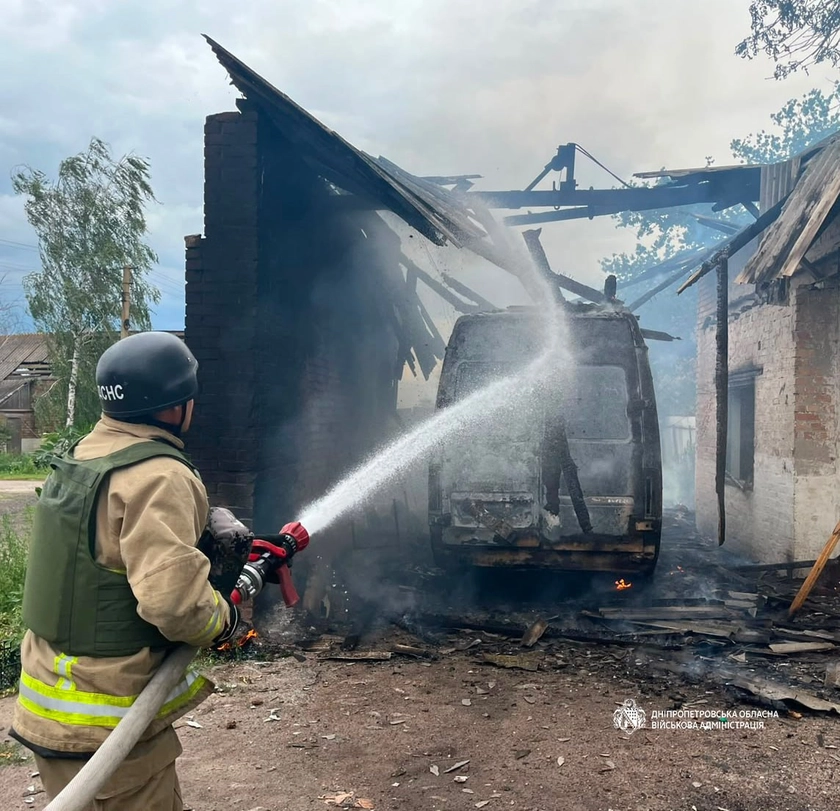
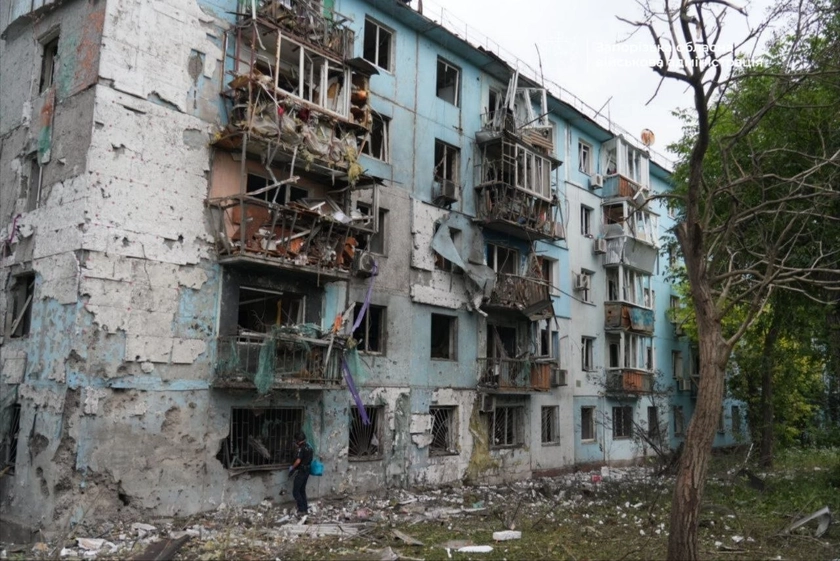
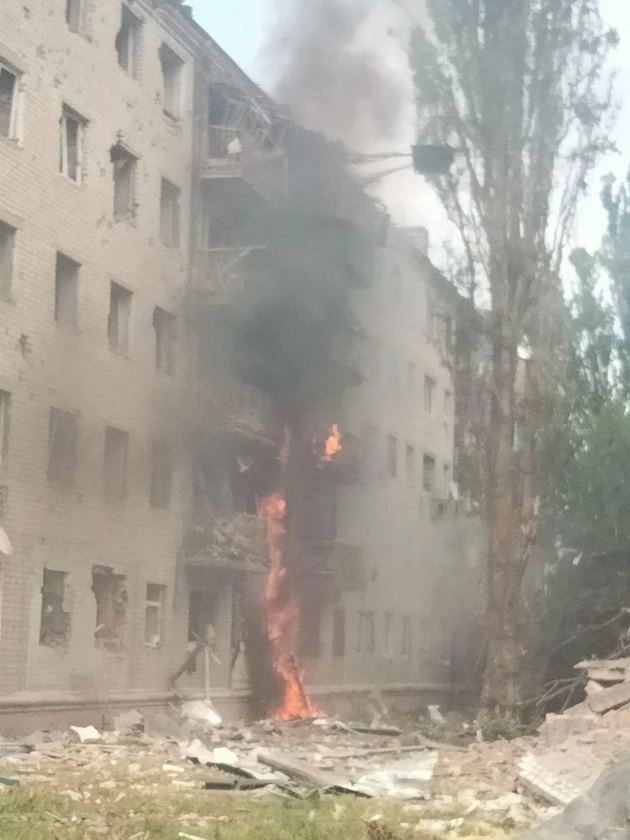
Overall, Air Force numbers: Ukrainian forces shot down/suppressed five Iskander-M/S-400 ballistic missiles, two Kh-59/69 guided aircraft missiles and 108 enemy Shahed, Gerbera, Italmas UAVs and drones of other types in the north, south, east and center of the country. One ballistic missile hit and 25 strike UAVs were recorded at 17 locations, as well as falling debris at 10 locations.
News in Russia
- According to Ukrainian media tracking developments in southern occupied Ukraine, the Russian occupation authority can’t find people to work in the local administration office. The source is a pro-Ukraine group called “Yellow Ribbon,” which, citing sources in Kherson, reports that due to personnel shortages and the unwillingness of residents to cooperate with the occupation authorities, the Russians have announced open competitions for management positions in the occupation administrations. Particularly, the Russians seem to be searching for a person to fill the job of deputy head of the occupation administration in Oleshky.This is a city that has been a humanitarian disaster, almost, for at least the past six months, because Russian administrators have abandoned it, so there is no power, no water but wells, not heating past open fires, etc.
- On the Russian recruiting front, per Ukrainian intelligence, the Russian Federation has almost certainly lost the ability to replenish military losses fully, the hard indicator of which is that as of July, with half of the year gone, the Russian military had fallen far short of the planned annual 409,000 inducted, with about 195,000 people signed up with 204,500 needed. In 2025 and 2024, reportedly, the Russians were signing about 1,200 men into service a day, now it’s down 15% and falling, and meanwhile the Ukrainian drone wall if anything, is becoming more effective.
- Also on the Russian recruiting front, this just in from Crimea: the Russian state has graciously declared citizens suffering from long-term blackouts the official recipients of assistance payments; it’s a couple of hundred dollars equivalent but better than nothing. HOWEVER, to collect one’s government assistance money for one’s household, one has to present evidence that all male members of the household (and female too if trained as a nurse or similar) are registered and in full legal compliance with the local draft board. Otherwise, you don’t qualify for blackout assistance money.
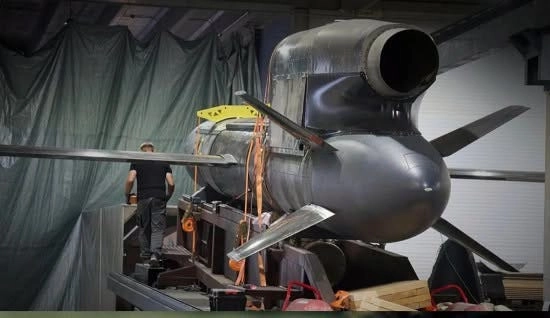
- Yet another scary Flamingo claim, but what if it’s true? Denys Shtilerman, co-director of the Ukrainian drone and missile company Fire Point, was talking to the media again and he said company production currently is three Flamingo missiles a day, and also, 200 long-range drones a day.Since we see 200-300 drones flying one way into Russia every night, OK, that’s credible. But we certainly aren’t seeing anything like 100 Flamingo missiles attacking Russia every month, not 50, not even 25. At best it’s maybe 10-15 a month and the evidence is they’re still working out the weapon’s bugs and how to use it, one time it works, one time they all get shot down, and usually it’s at least two weeks between launches. The Kremlin, of course, is the last agency on Earth to think of it, but the thing is, the Ukrainians have a very, very solid record of working at something for a long time, and finally getting it to work.I know the popular media is all about Ukrainian rapid tech iteration and fast tech upgrades, but really, where the Ukrainians gain an advantage is because they’ve been working at it for far longer than most countries at war would bother, and they are a lot more accepting of repeated failure as part of the path to eventual success than big countries. Obviously, the main reason for this is they don’t have much choice. Meaning – what happens not “if,” but “when” Ukraine gets to a point where it can launch 50-100 one-ton warhead missiles a month and effectively hit targets reportedly up to 3,000 kilometers (1,864 miles) inside Russia? This is not pie-in-the-sky, look at what’s happening to the Russian shadow tanker fleet right now.
Fedorov and Kool Generation out, old grumpy guys losing their hair in
This is against the grain of most reporting, so sorry. Most of you will have heard or read that Ukraine’s 35-year-old Western darling Defense Minister Mykhailo Fedorov quit after six months as Defense Minister, and according to his well-prepared post-resignation official statements, this was because, as Defense Minister, he wanted to make changes that General Syrsky opposed. The most salient change was that Fedorov wanted Syrsky to quit.
Fedorov’s version, besides that condition on which he “compromised,” was things like how to contract for military material for the AFU, how to choose vendors and sources, what kind of force the AFU needs to create to defeat Russia, and more generally, what’s Ukraine’s best strategy for defeating Russia.
In simple terms, according to Fedorov, what the AFU needs is maximum digitization, innovation, and development to the lowest level possible, maximum drone use, and as little use of humans as possible. The Fedorov vision for defeating Russia is a drone buzz saw on the front line and a drone/cheap strike campaign that would break down Russian fighting capacity and eventually demolish public support for Putin. The way Fedorov is framing it, he is against massed frontal attacks and heavy casualties and trying to defeat the Russians on the battlefield.
Syrsky has his critics, and I have been among them, but the man (and his staff) operationally are skilled, and they have repeatedly sought ways to win battles. Their basic assumption seems to be that as long as Russia seems to be able to gain ground and defeat Ukrainian forces, Putin can maintain the fiction that he is winning, and the war will never end. It is quite possible they don’t want to go down in history as generals that mostly were beaten in open battle by Russia; usually ego affects commanding general decisions.
In any case, the idea seems to be that to get to a safe ceasefire, Ukraine needs at least to demonstrate it can liberate its own territory and probably it must demonstrate it can inflict battlefield victories on Russia, because if Russia is perceived always to be winning by the Russian public, the Russian government will keep attacking Ukraine.
Primitively put, the Syrsky approach seeks to inflict battlefield defeats on Russia which will break Russian civilian support for the war, while the Fedorov approach seeks to contain Russia and break Russian civilian support for the war by making civilian life really unpleasant in Russia.
A corollary to that is that Fedorov was hired specifically to “fix” Ukraine’s manpower problem, and according to him that was impossible because the regional draft committees answered to Syrsky, not him, and so he couldn’t reform them, so they remained inefficient at best and corrupt at least sometimes. Zelensky said the continuing manpower problem and Fedorov’s “failure” to fix it was why he got canned.
The Syrsky version of that is, it’s really simple: draft-dodging is illegal, there’s a war on, law enforcers need to enforce the draft law. The unwritten but obvious corollary to THAT is, Fedorov either wasn’t able to get Ukrainian law enforcement to hunt down draft dodgers, or he wasn’t willing to.
If we are allowed to speculate, ego is part of why Syrsky thinks about defeating the Russian army on the battlefield, then we are also allowed to suspect a 35-year-old Gen Z cool guy politician worried about his personal political future would want to avoid getting a reputation for press-ganging 20–30-year-olds whose votes he will need later, into an army at war.
At this point I think the key bit is that generally the AFU seems to be backing the change (as well they might, people who fight usually don’t like having 35-year-olds who have never worn a uniform telling them HOW to fight).
Within hours of Fedorov’s ouster, no less than Denys Prokopenko, head of 1st Corps “Azov,” came out with statements accepting Fedorov’s getting sacked and reminding everyone the important thing is not musical chairs in Kyiv, but killing Russians. Ihor Obolonsky, commander 2nd Corps “Khartiya,” made a similar statement. I checked; their statements came out before they Zoom-met with Zelensky. Brovdi, in a pretty snarky Friday message, said he wasn’t even going to comment on the Fedorov brouhaha, could everyone please keep their eye on the ball, which is fighting a war against Russia?
Neither Obolonsky, nor Prokopenko, nor Brovdi are beholden to Zelensky or Syrsky, they are classic former civilians who became effective field commanders thanks to natural skill and charisma. Their message is consistent: Russia can be beaten, but it must be with focus and discipline, and whining and arguing about who should be the boss is counter-productive and childish. All have said, repeatedly, the AFU’s biggest problem is too many people wanting to be in charge and too few ready just to suck it up and be tough. My guess is this is why we don’t see them objecting about Fedorov.
Manufacturing and equipment Vive la France ! Vive la liberté ! Vive les armes françaises!
Enfin, vous y êtes, le dernier article, on July 14 – Bastille Day – there were patriotic celebrations and marches in France, Zelensky and Mrs. Zelenska were present, and Paris announced some pretty substantial French military support to Ukraine. One might dare even to call it “bœufy.”
It would not be French international military support, of course, were it not possible to observe noble French commitment to the principles of individual citizens and democracy, and to the universal value of civilized people that Cossacks should remain far from Paris; and calculated, pragmatic and probable reliably profitable moves advancing French geopolitical interests, employed simultaneously.
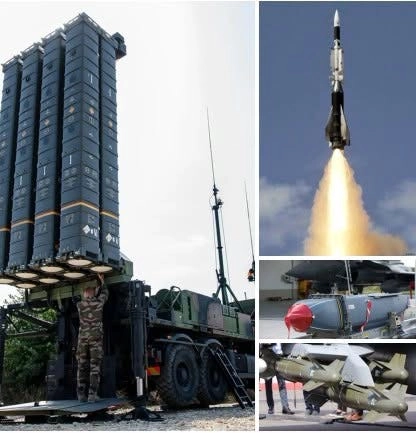
This is all big-ticket items: fighter jets, air defense systems, guided bombs, air-to-air missiles, and interceptor missiles. France has them, Ukraine will get them, and certainement there will be much joint manufacturing.
The details are in the link below, but the important point is that in mid-July France moved in a big way to become a major player in Ukrainian armament and re-armament, and the way it looks the French intent is to turn Ukraine into Europe’s version of Israel for the US, as a source of weaponry, with French running things and taking no more than a justifiably fair cut of the profits.
It will be interesting to see how the Germans, Belgians and British see it and what their plans are, but if the question is who jumped first, it was the French that just stole the march on Ukrainian arms manufacturing.
Reprinted from Kyiv Post’s Special Military Correspondent Stefan Korshak’s blog. You can read his blog here.
The views expressed in this opinion article are the author’s and not necessarily those of Kyiv Post.
The views expressed in this opinion article are the author’s and not necessarily those of Kyiv Post.
You can also highlight the text and press Ctrl + Enter