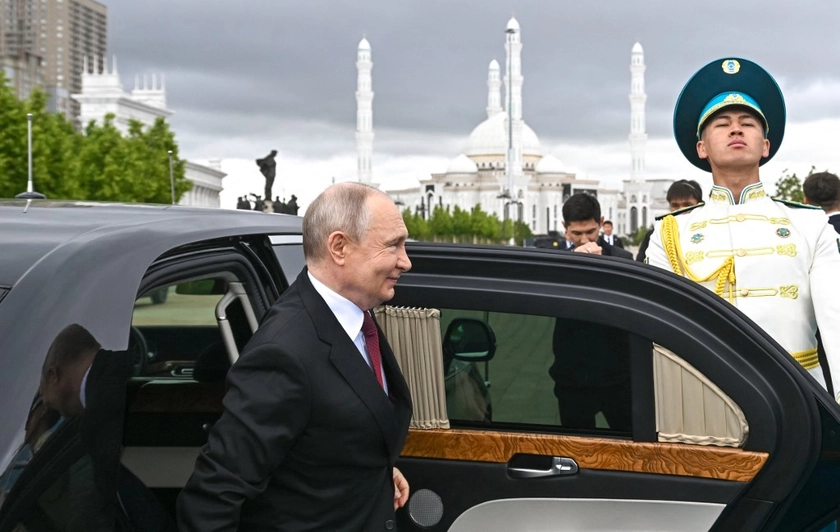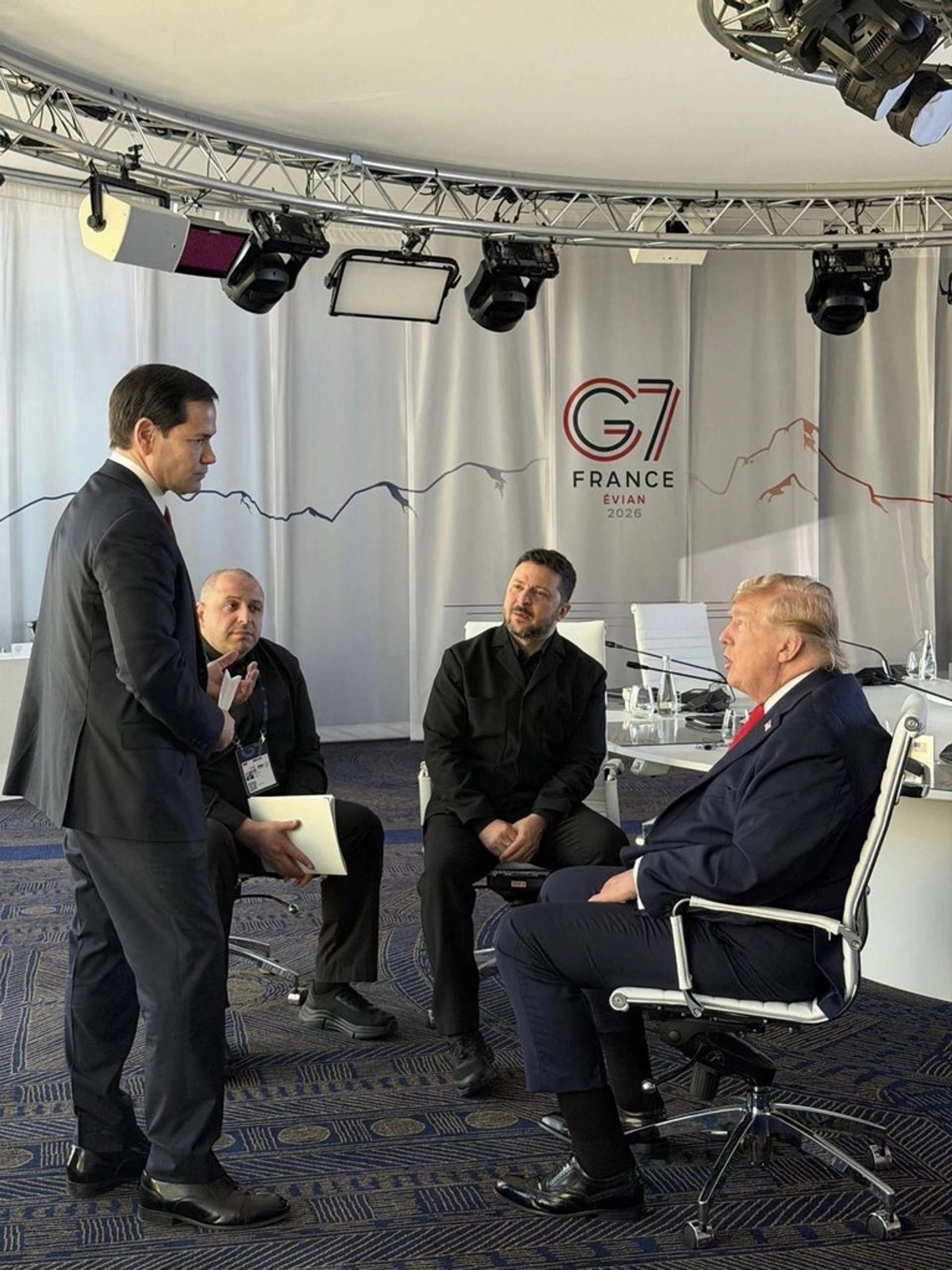
Despite President Donald Trump’s optimism at the G7 summit that progress may be possible toward ending Russia’s war against Ukraine, veteran Eurasia analyst Paul Goble warned that no major breakthrough appears imminent.
Trump arrived at the G7 summit in France after declaring he had held “very fruitful” conversations with both President Volodymyr Zelensky and Russian President Vladimir Putin, suggesting that “something can be done.”
JOIN US ON TELEGRAM
Follow our coverage of the war on the @Kyivpost_official.
Trading aid for demining
Behind closed doors, this optimism took the shape of a transactional diplomatic maneuver.
Politico reported, citing five European diplomats and officials involved in closed-door discussions, that Trump may be willing to support Ukraine and increase pressure on Russia in exchange for European help in demining the Strait of Hormuz. According to the report, Trump is seeking G7 military support to stabilize a framework ceasefire arrangement with Iran, while European leaders hope to secure stronger US backing for Ukraine in return.
German Chancellor Friedrich Merz said the discussions with Trump gave him “a certain optimism,” while other officials signaled readiness to help with demining only under specific conditions, including a formal US request and the consent of involved regional actors.
Although some in Europe may see this transactional approach as a potential opening, Goble warned that linking Ukraine diplomacy to Middle Eastern security arrangements does not address the core obstacles to ending Russia’s war.
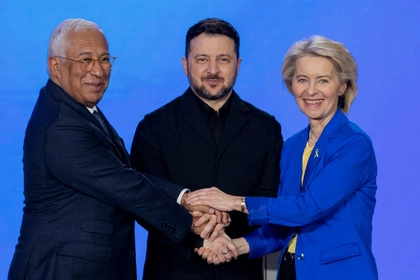
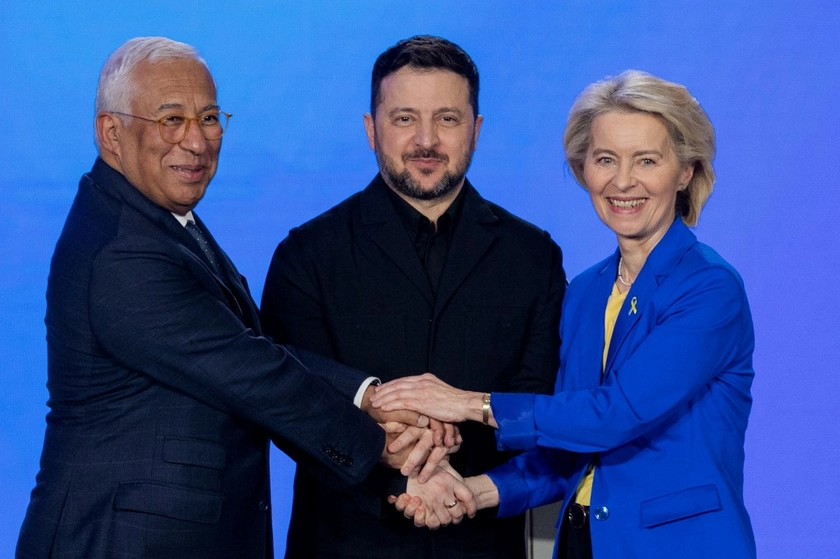
Zelensky, EU Leaders Discuss Timeline for Next Ukraine Accession Clusters
“We have to see where Mr.Trump comes down on Ukraine after the Iran track is resolved,” Goble said. “That matters, but it does not by itself solve the situation.”
Goble, a former US State Department adviser and longtime analyst of Russia and the post-Soviet space, told Kyiv Post that hopes for a swift diplomatic settlement remain premature. According to the veteran analyst, treating Ukraine support as part of a broader transaction ignores the deep and unresolved realities on the ground.
“I do not see us close to any breakthrough,” Goble said in an exclusive interview. “You have to be somewhat optimistic, or it would be hard to do anything.”
Fear and frustration grow inside Russia
Inside Russia, he said, some factions want Putin to adopt an even harder line, while others would prefer to see the war ended and “just get it over with.” Europe, meanwhile, is also divided between countries strongly committed to backing Ukraine and others that are more cautious about open-ended support.
“Europe is not a unified front,” Goble said.
Washington’s position, he added, remains difficult to predict because Trump has repeatedly shifted tone on Ukraine and Russia.
“President Trump has been on both sides,” Goble said. “On the one hand, he has been supportive of Ukraine. On the other hand, he has been supportive of Russia.”
Goble said limited agreements may still be possible, including on issues such as Black Sea transit. But he warned that treating such partial deals as signs of an imminent end to the war would be a mistake.
Putin unlikely to accept a US-hosted meeting
Zelensky has said he proposed meeting Putin at the G7 summit, but Moscow rejected the offer. He has also floated the possibility of a meeting in the US, an idea that would bring Washington and Trump more directly into the process.
Goble was skeptical that Putin would agree to such a format.
“I doubt Putin would come to the US now unless he saw a clear outcome in advance,” Goble said. “So I suspect that this is a stillborn idea.”
He urged caution in predicting any major diplomatic shift in the coming days or weeks.
Ukrainian drones bring the war home to Russia
For Goble, the most important change in the war is not happening at the negotiating table, but on the battlefield – especially through Ukraine’s use of drones.
He said Ukrainian drone strikes have transformed the psychological landscape of the war by bringing the conflict deep into Russian territory.
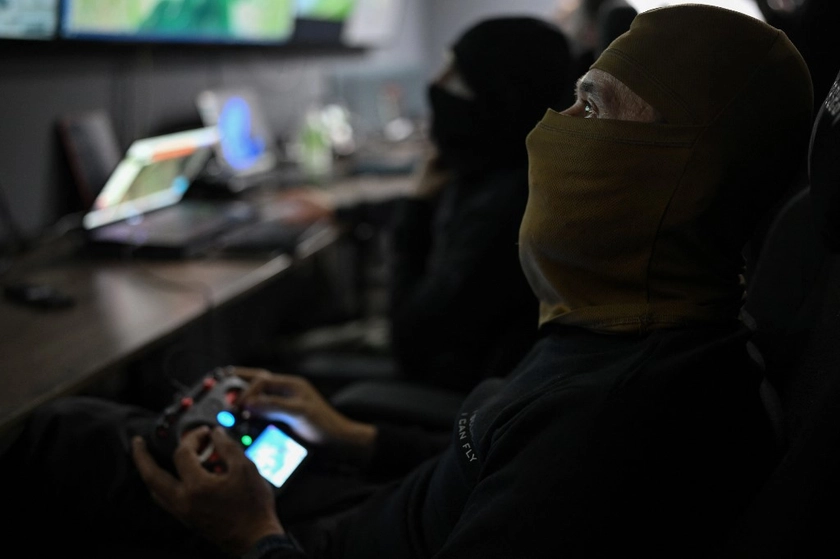
“The Ukrainians have pioneered the use of drone technology,” Goble said. “They’ve been able to hit any number of targets inside the Russian Federation. They’ve brought the war home.”
According to Goble, Ukraine’s drone strikes have shattered Russia’s sense of a safe rear, making the war increasingly visible to ordinary Russians.
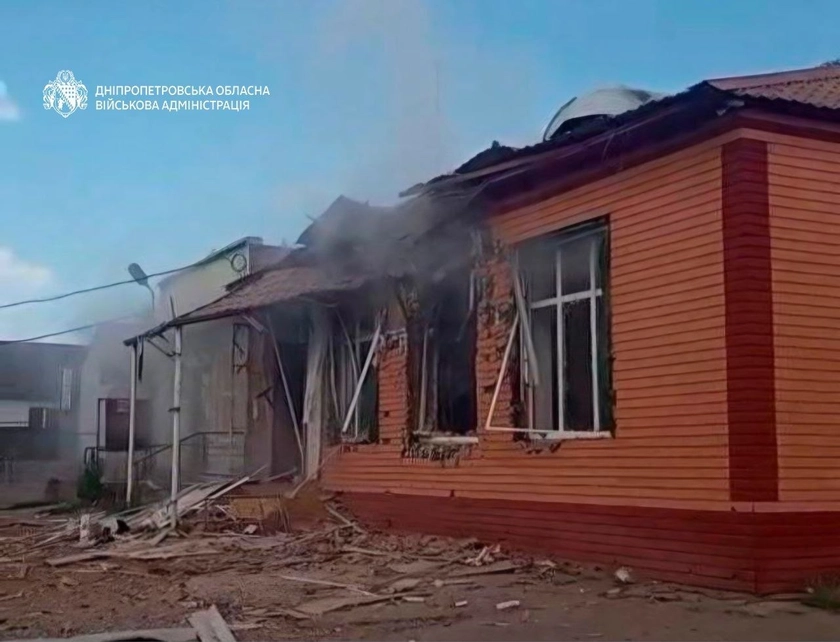
“Too many people can see too many pictures of drones hitting apartment buildings, oil depots, bridges,” Goble said. “That’s in the public eye. That’s what Russians see as the war today. They didn’t see that six months ago.”
Putin faces pressure to show victory
Goble said Putin’s recent public discussion of Ukrainian drones with Russian servicemen appeared to be an attempt to reassure both the military and the broader public.
“I think what Mr. Putin was doing was trying to calm the population and calm soldiers,” Goble said.
Goble argues the Kremlin is facing mounting pressure after Ukrainian strikes exposed vulnerabilities inside Russia.
“Mr. Putin is under enormous pressure to show some victory, to show some breakthrough,” he said.
That pressure, he warned, could encourage Moscow to launch more symbolic or punishing attacks against Ukraine.
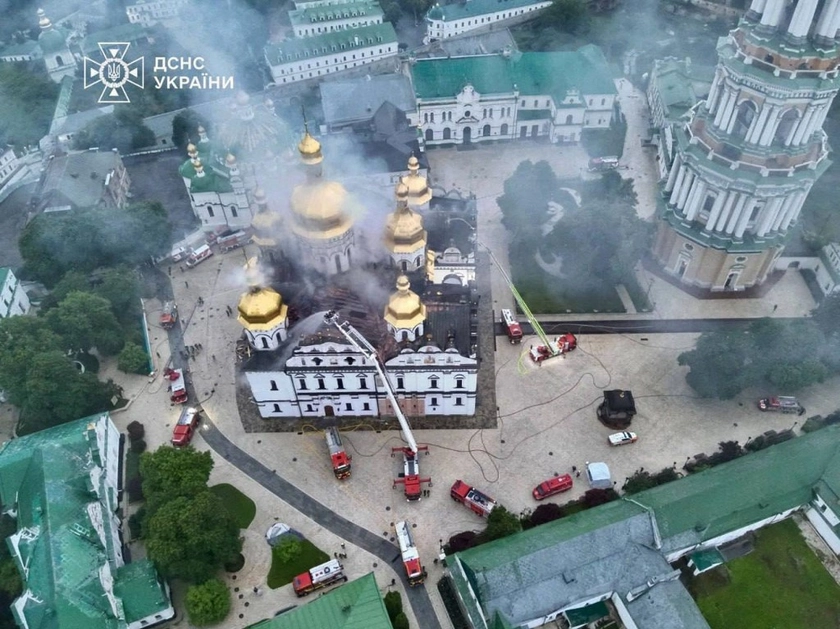
Asked about Russian strikes on Kyiv’s religious and cultural sites, Goble said such attacks may be intended to appeal to Russian hardliners who want visible retaliation.
“The harder-line Russians want something done to punish the Ukrainians, to make sure that it’s not just Russians who are suffering,” he said.
Spirit unbroken
Goble said Russia’s strikes have only deepened Ukrainian resolve.
“The Ukrainians have for months taken enormous punishment from Russian attack, and they’ve kept fighting,” he said. “It hasn’t broken the Ukrainian spirit. If anything, Ukrainians are more committed to resisting Russia today than they were five years ago.”
He said Putin’s invasion has produced the opposite of what the Kremlin intended. Instead of restoring Moscow’s imperial reach, he argued, the war has accelerated Ukraine’s separation from Russia and encouraged other former Soviet republics to move further from Moscow’s orbit.
“When the history of this war is written, it will be recorded that Mr. Putin’s invasion had the effect of driving the last spike through the idea of an empire centered on Moscow,” Goble said.
Putin’s invasion backfires across the post-Soviet space
Goble cited former US National Security Advisor Zbigniew Brzezinski’s famous argument that Russia ceases to be an empire without Ukraine.
“Well, it’s not going to get Ukraine back,” Goble said. “And Putin made that sure.”
Goble said Putin may have achieved more influence over Ukraine through economic pressure and incentives than through invasion.
“If Putin had not tried to invade Ukraine, but tried to buy them off with cheaper oil, with more gas, with all kinds of incentives, he would have gained much more of what he says he wants,” Goble said. “But he wouldn’t have been able to beat his chest about how strong Russia is.”
Instead, Goble said, the war has exposed Russian weaknesses, strengthened Ukrainian identity and pushed other post-Soviet states to take more independent positions.
“This has not been a triumph for President Putin,” Goble said. “This has been a massive failure, a massive geopolitical failure.”
Goble said the consequences are visible across the former Soviet space: some countries are removing Russian names, Turkic states are discussing a common alphabet, and Turkey is expanding its role in the Caspian region – all signs, he argued, of Moscow’s declining influence.
“What Putin says he wants to achieve and what he has actually done point in two completely opposite directions,” Goble concluded. “Sometimes, the actions you think will bring you closer to your goal end up driving you furthest away from it. That is exactly what has happened to Vladimir Putin since February 2022.”
You can also highlight the text and press Ctrl + Enter
Putin’s Worst Nightmare
Zelensky Reveals Intercepted Intel From Putin’s Desk