The big news last week (June 7-12) was the Ukrainian middle-strike campaign – which was already pretty punishing – gained momentum, especially in Crimea. The Ukrainian intent to degrade logistics to and from Crimea is now obvious. What they plan to do when they reach that objective, we’ll see. But that it is Ukraine with the initiative and not Russia, in that slice of the war, believe it.
The question is whether the Ukrainians can sustain the pace of attacks, and that is, how many drones are available now and how many for the rest of the summer. To a lesser extent, it’s a question of how many drone teams/pilots the Ukrainians can field. So far, the answers to that look like “yes,” but no promise.
JOIN US ON TELEGRAM
Follow our coverage of the war on the @Kyivpost_official.
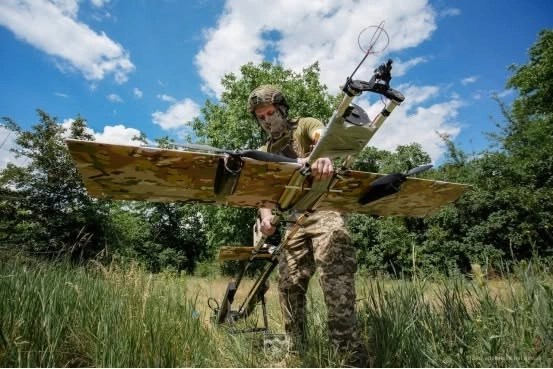
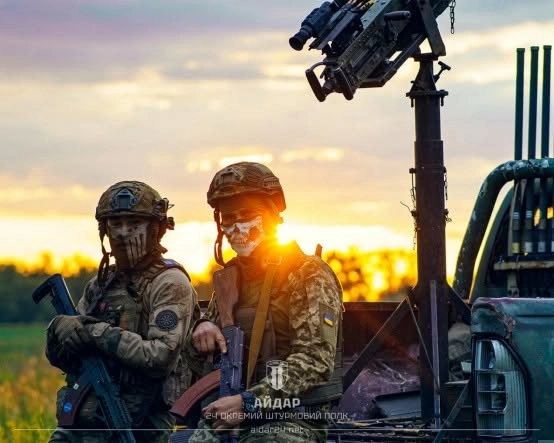
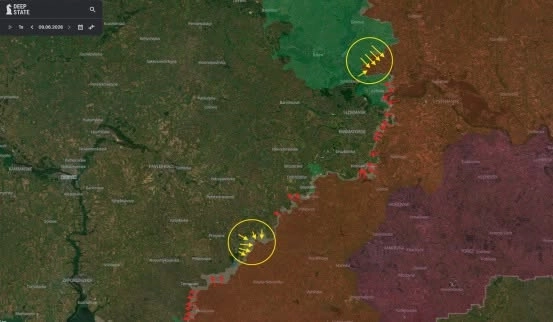
On the fighting line, the Russians appear to have made progress in their bid to take over Kostiantynivka, while the Ukrainians are advancing in the Kharkiv and Zaporizhzhia regions. By scale, the distances are minor.
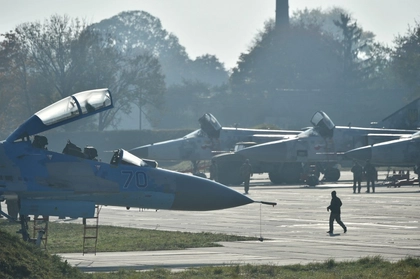
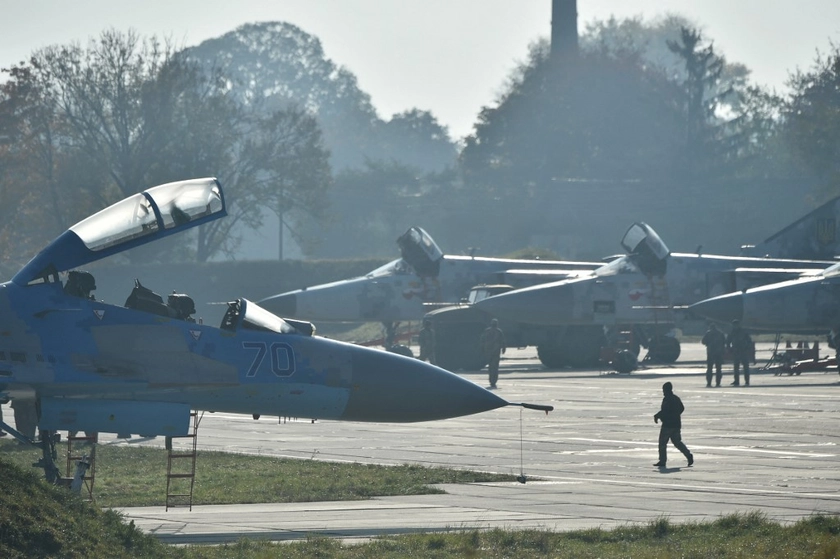
2 Ukrainian Pilots Killed as Su-24M Bomber Crashes During Mission in Khmelnytskyi
The front
Over the week, Russian forces appear to have filled in portions of the south and east of Kostiantynivka with additional infantry and strengthened their hold there. Also, pushes to the north and the south of the city advanced into a new line of farm fields and villages, so that right now there is a 2-kilometer (1.2-mile) gap between Russian forces trying to “surround” Kostiantynivka. Since this is not World War II, two kilometers is still a fairly substantial distance, for the Russians to close it completely, each “pincer” would probably have to advance another half kilometer or so and dig in or find cover sufficiently so that the Ukrainian drones don’t hunt them down. In the past, in similar situations, this kind of task has taken the Russian army two to six months. The Institute for the Study of War (ISW) writes that the Ukrainians have the rail station, and that’s a focus of the fighting right now.
Ukrainian ground strength in Kostiantynivka seems small, perhaps a company spread out in squad and section hides, plus there are still a few hundred civilians. Supply is only by drone, and escape is only on foot, in bad weather. So you can see where this is going: as long as the Ukrainian drones keep flying and the Ukrainian soldiers in the city stay alive, “defense” can continue for quite a long time, and since for the Ukrainians that means quite a long time of inflicting casualties on Russians on Ukrainian terms, this is a tactical situation the AFU technically likes. But the price is that the guys inside the city face a serious risk of getting killed, wounded, or captured. By and large, they are from the 93rd Brigade. This is a tough unit with an excellent record, but they aren’t immortal. A source in another battalion told me morale in the city is basically grim but defiant.
As for active Ukrainian operations, this week there was a flap that Ukrainian drones, supposedly part of the middle-strike campaign, had so swarmed the airspace above the Kinburn Spit – this is a strip of land into the Black Sea a few kilometers south of Kherson, Russia-held – that the occupying unit, allegedly 337th Airborne Regiment of the 104th Airborne Assault Division, had to abandon the place. No logistics. Trucks getting burned by drones, etc. Operationally, if it happened, this helps the Ukrainians by reducing Russian early warning capacity in that part of the Black Sea, plus it’s useful for the Ukrainians if they are thinking about amphibious operations in the area. The news went all over the Ukrainian feeds and some Z-bloggers picked it up, but I’m hesitant to say it’s confirmed.
A Ukrainian counterattack/mini-offensive seems still to be in progress, expanding control to the east of the fortress city Lyman, which has been right on the front lines since about March 2022, with the attacks seemingly under the command of 3rd Corps. The Ukrainian milbloggers are griping that it’s not easy to determine where troops are and are not, because there is a hard hold on publicizing drone video, and so the OSINT crowd can’t decide control of territory by watching a video and checking which side’s forces are being attacked. But at minimum, both Russian and Ukrainian sources are talking about small-scale Ukrainian advances here.
In the southern Hulyaipole/Stepnohirsk sector, likewise, the weight of reporting as I read it points towards continued fighting in the latter location with the Ukrainians progressing; this is slow house-clearing.
General Oleksandr Syrsky on Wednesday said that by his counts, Ukrainian tactical drones outnumber Russian drones about 1.5 to one right now and predicted the ratio will improve in Ukraine’s favor in the future.
Ukraine bombards Russia – the big long-range strike of the week
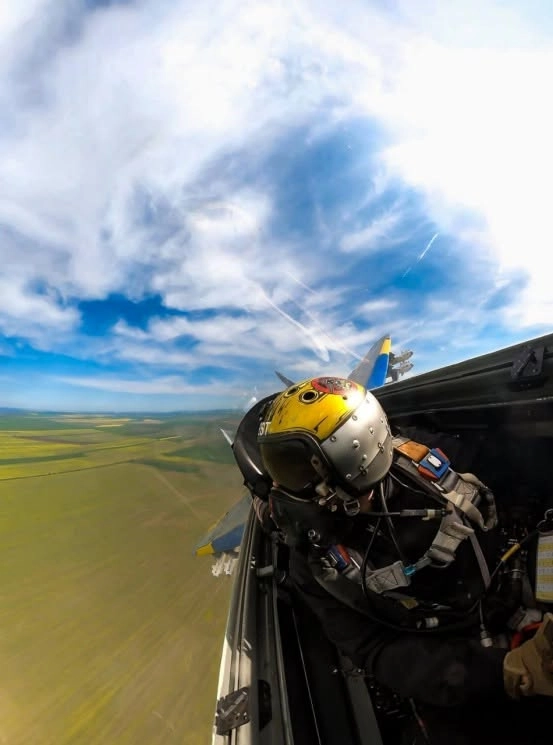
This is the second review that has split Ukrainian strikes against Russia into a “long-range” section and a “middle-strike” section. Over the week, long range, the Ukrainians, according to Russian counts, were launching strikes totaling 200-350 drones into Russia, at night. So, besides this review as an indicator of which side has the initiative, it’s very probable that last week, Ukraine launched more guided weapons into Russia-controlled territory than the other way around. This is a little artificial in that if you count glide bombs, the strike count for Russia goes up about 200 a week. But on the other hand, the Ukrainians have a vigorous middle-strike going on right now, flying, I bet, 1,000 sorties a week, and the Russians have zip in that category.
So, the takeaway is that if you count everything – missiles, long-range strike drones, aircraft-dropped bombs, and middle-strike drones – it is more than probable Ukraine is hitting Russia harder than the other way around. The fact that Russia’s military leadership has let a country one-fifth the size of Russia get to this point is about as clear an indictment of the quality of that leadership as you could look for.
As to the Ukrainian strikes themselves, without question, the most spectacular and potentially damaging attack was on Tuesday, when the Ukrainians launched five Flamingo missiles at a Russian military electronics plant VNIIR-Progress in Cheboksary. This is a prime military target manufacturing Russian guidance and navigation systems, including the Kometa module, which are used in Shahed drones, Iskander-M ballistic missiles, and Kalibr cruise missiles. Also, I read that the facility produces “UMPC modules for ceramic-coated aircraft bombs.” There was substantial anti-drone lattices and netting all around the building.
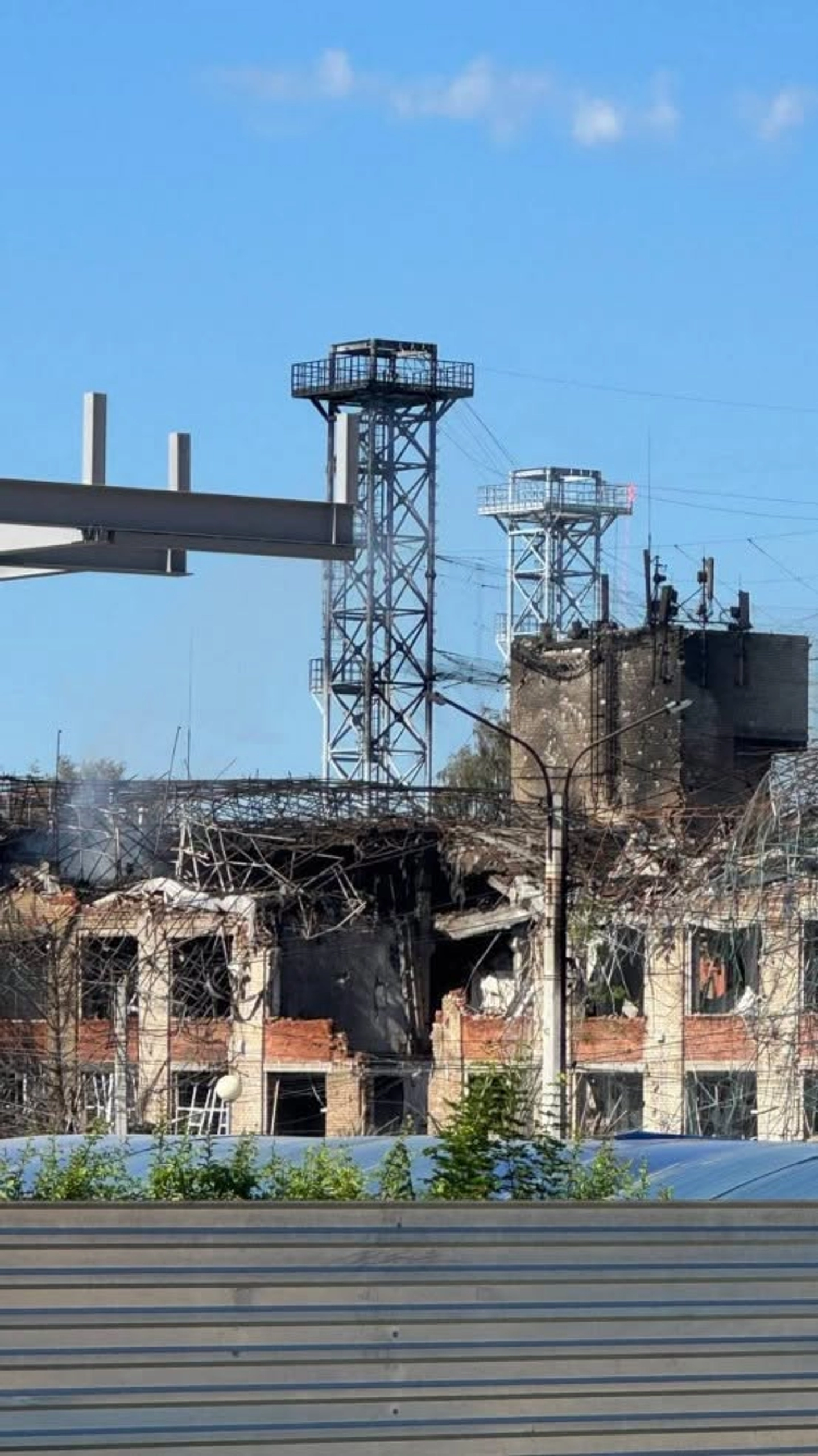
Cheboksary is about 1,100 kilometers (684 miles) from probable Ukrainian launch sites, and in the past, we have seen the Flamingo be inaccurate. This is because its guidance systems aren’t top-of-the-line and depend overly on inertial guidance, so the further the missile flies, the harder it is to hit what it’s aimed at. But if it hits, the warhead weighs a bit more than a ton (effectively, it’s an old aviation bomb repurposed), and there is nothing else as powerful in the Ukrainian long-range strike arsenal.
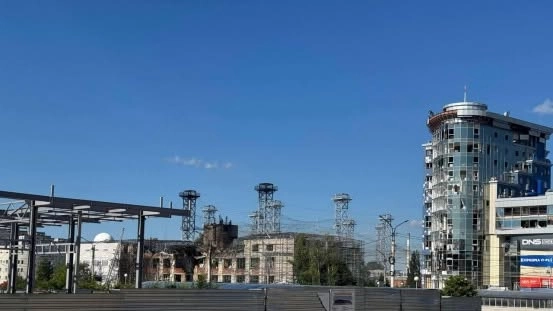
About sunrise, 5:40 a.m., the first missile hit the southern part of the production and administrative building of the plant. A Flamingo missile, fully fueled, weighs three tons and flies on the flat at 950 kph (590 mph), so the protective anti-drone netting didn’t do much to stop it. Interestingly, the missile was programmed to fly past the target and then come back and hit it from the east. It’s not clear if this was an attempt to fox air defenses or perhaps to allow the inertial navigation to settle. The second missile overflew the building about 40 minutes later and blew up in the street next to the building. No info on the other three missiles.
Damage was severe. A ton is a lot of explosive, and without question, this will affect manufacturing. But it comes down to how much critical tools or information wound up in the blast. But at minimum, this to all appearances wasn’t an experiment; it was an operational strike with a salvo of heavy missiles launched with a clear objective, and the battle damage assessment (BDA) was good.
Following the strike, there was some moaning and griping on Russian national television about how the barbaric Ukrainians have become so evil as to threaten and disturb the lives of peaceful Russians living deep inside Russia. The local internet, meanwhile, is griping that for the past week the authorities had shut down mobile internet, full stop, to prevent Ukraine from attacking Cheboksary, and it sure didn’t work. Now locals in Chuvashia are venting in two directions at once: eight days without mobile internet, and the strike happened anyway – meaning they lost access to information and timely shelter warnings for nothing.
Ukraine bombards Russia – other long-range strikes
It is amazing to me that none of this is news outside Ukraine.
- On Wednesday, Ukrainian sea drones found and attacked a Russian shadow tanker in the Black Sea, named West Horizon, causing damage done to the ship’s propeller and steering. Its transponder had been turned off. According to the General Staff, “The tanker was operating under the flag of Guinea-Bissau and was allegedly involved in transporting chemical and petroleum products on behalf of Russia.”
- On Wednesday, a Ukrainian strike – probably drones, just possibly an air-dropped glide bomb – hit an ammunition “warehouse” near the village of Belovskoe, Belgorod Oblast, Russian Federation. In fact, it was an open-air storage site with boxes of ammunition, like thousands of them, stacked on the ground. This touched off a massive initial explosion and a few hours of secondary explosions. The crater is visible from space, and the smoke mushroom went 200 meters (656 feet) into the sky.
A Belarusian “resistance group,” which, if we are honest, might also be the Ukrainian Security Service (SBU), put out a statement saying “partisans” assisted the Armed Forces of Ukraine (AFU) in carrying out the attack and that the crater was the size of a stadium. According to official Belarusian media, it never happened.
- Other targets hit by Ukraine’s long-range strike forces since Monday (last review went out on Sunday):
- Occupied Crimea – at least three fuel storage bases, air defenses pretty much daily, railroad infrastructure, and some kind of naval facility (Neptune missiles used here).
Novorossiysk – Sheskharis oil refinery
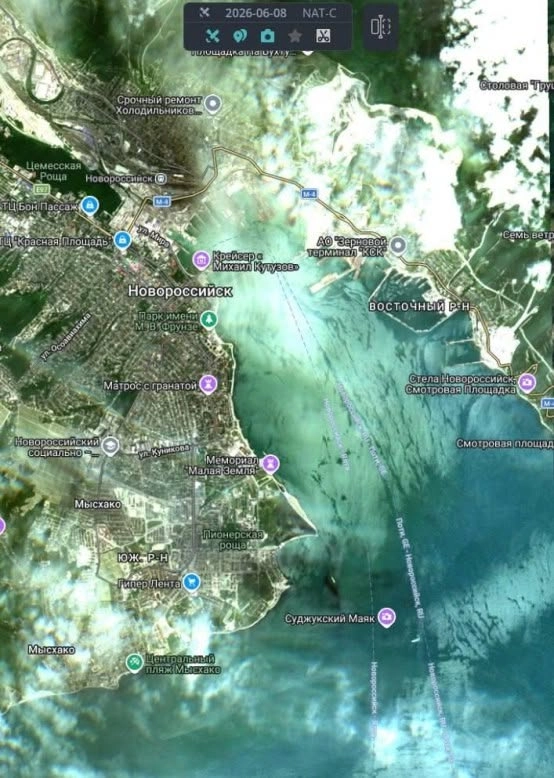
Saratov – Krasnoarmeyskaya oil pump station, Kuibyshev oil refinery
Volgograd – Krasny Yar pump station
Rostov, Millerovo – fuel storage site
Melitopol – train depot
Krasnodar – Afinsky refinery
Tatarstan – Nizhnekamskneftekhim petrochemical plant,
Samara – Togiliatti, petrochemical plant
Berdiansk, military site, Novopetrivtsi, fires (a place I have patrolled in).
Ukraine bombards Russia – middle-strike
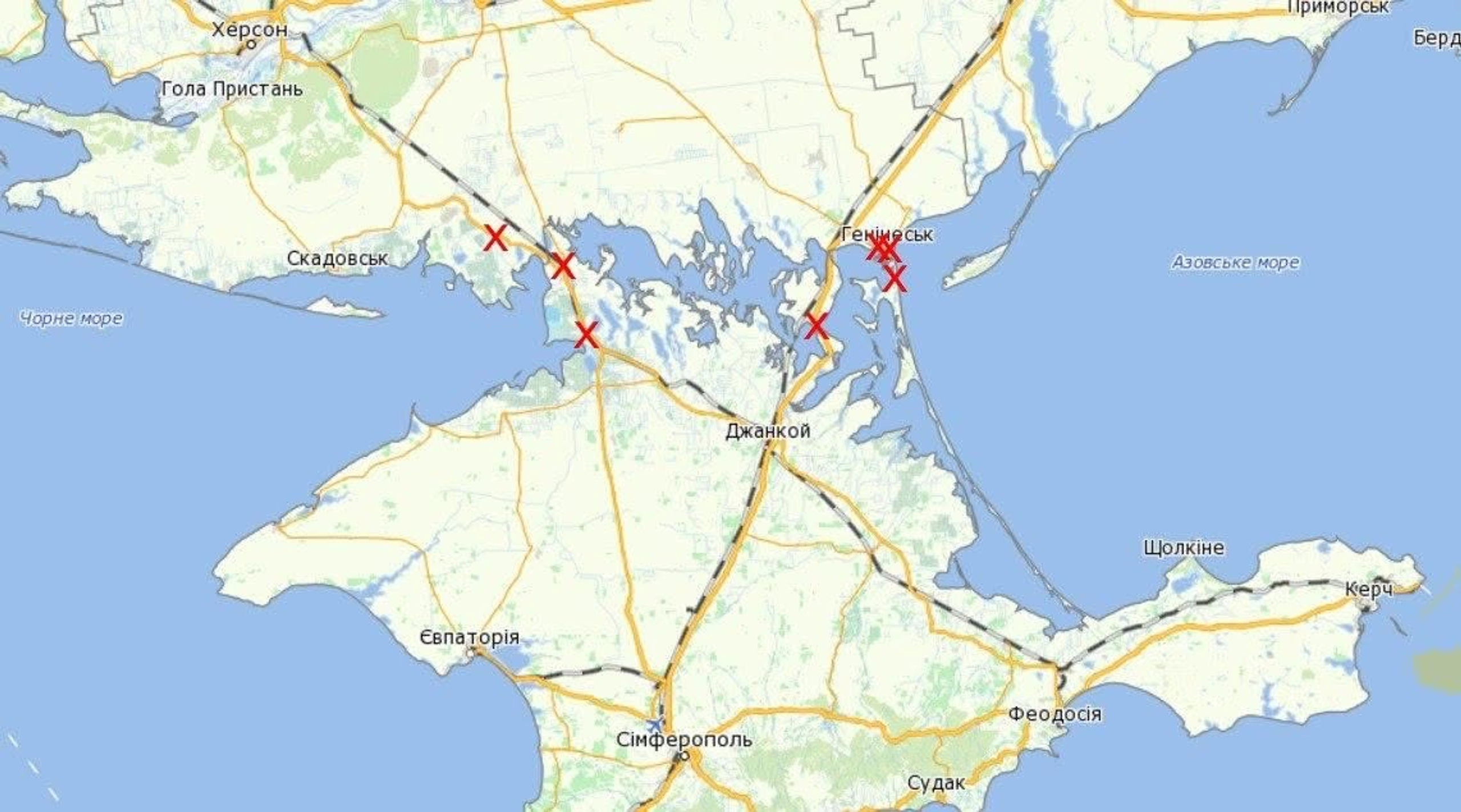
This is the biggest news of last week I would say. As you recall, the previous week, the Ukrainians over the weekend hit one of two major causeways connecting Russian-occupied Crimea to Russian-occupied southern Ukraine, near a place called Chonhar. This left for both civilian and military traffic one last usable bottleneck in and out of the peninsula from the north, the T2202 highway in the vicinity of the towns of Armiansk and Perekop. This route is farther west than the Chonhar route and so less preferable for Russian military columns and fuel trucks, because it’s a longer drive within the range of the Ukrainian drones.
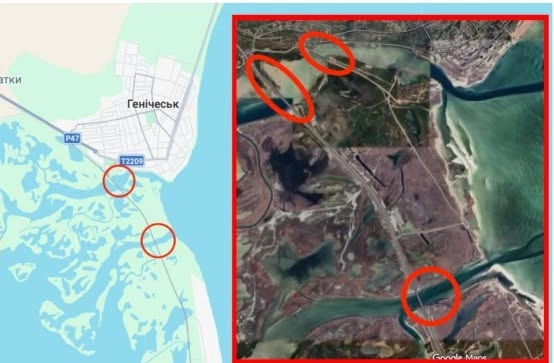
On Thursday, the Ukrainians took that link out. Emphatically. It was drones, seemingly dozens of them. The recordings are now public, and there are multiple holes in the roadway; authorities have admitted that traffic can’t go that way anymore. Reports are three bridges/spans/causeways were critically damaged. The strikes took place at about 6 a.m.
Footage of the strikes showed drones boring in, drones exploding, more drones boring in on roadway that already had holes blown in it, and drones boring in on dozens of trucks. Several reports said 50 or so. According to the Unmanned Systems Forces (USF), these were holding areas the Russian authorities had organized near Armiansk so trucks could quickly pass through the bottleneck. There is fake video of the trucks being burnt floating around the internet, but there are plenty of Russian social media reports confirming it was pretty horrific, no Russian air defenses, drones picking their targets, drivers running for cover, etc.
The Ukrainians credited the “joint multi-domain Falanga center of the 1st Separate Assault Regiment named after Dmytro Kotsiubailo,” CODE 9.2, and Alpha Center of Special Operations at the Security Service of Ukraine for carrying out the attacks.
This is another indicator that the Ukrainians believe they were successful; it is typical for the AFU to identify or add detail on sub-units possibly formerly not publicly known, when they want the public to be absolutely aware which part of the AFU helped out on the victory. Which is not to say I know the Falanga center ran the operation, but it would be characteristic for the AFU if that’s what actually happened.
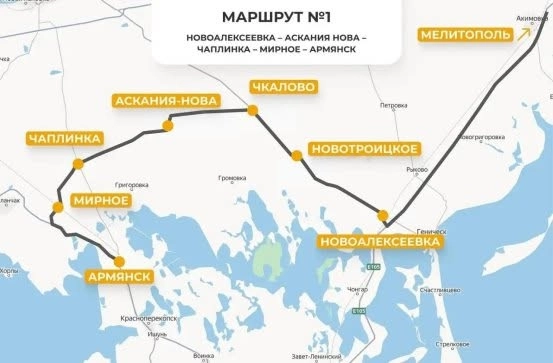
Crimea officials admitted “there is damage” and announced traffic would “temporarily” not use the Armiansk route in and out of Crimea. Much play was given to “45 Ukrainian drones shot down last night!” Subsequently, the Crimean occupation authority published a single functional route for drivers that uses back roads. I think I speak for the entire USF here, that in the future, that route will draw drones.
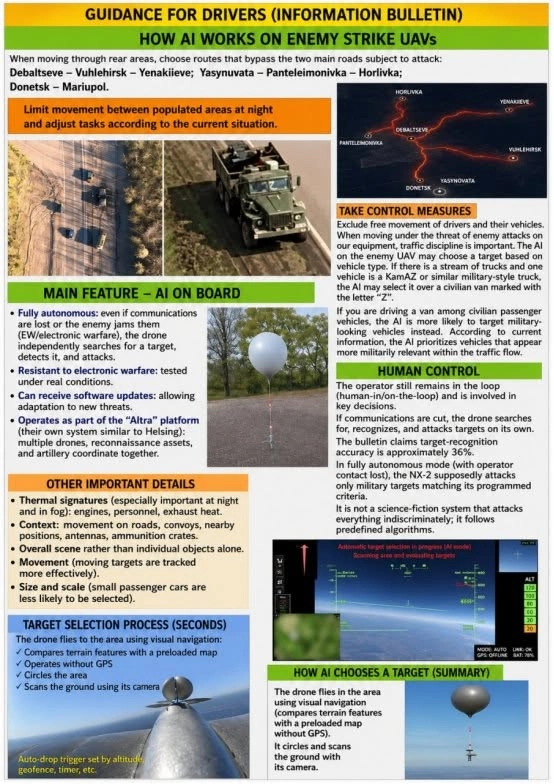
The primary Russian counter so far seems to have been to route all military logistics away from the main highways and to put critical items in civilian automobiles. The Ukrainian drones – so far – haven’t tended to attack. This has expanded the area that the middle-strike drone units have to observe. Two weeks ago, it was a few big highways; now it’s hundreds of kilometers of secondary and tertiary roads, and even those dirt roads with the black earth some of us remember so fondly.
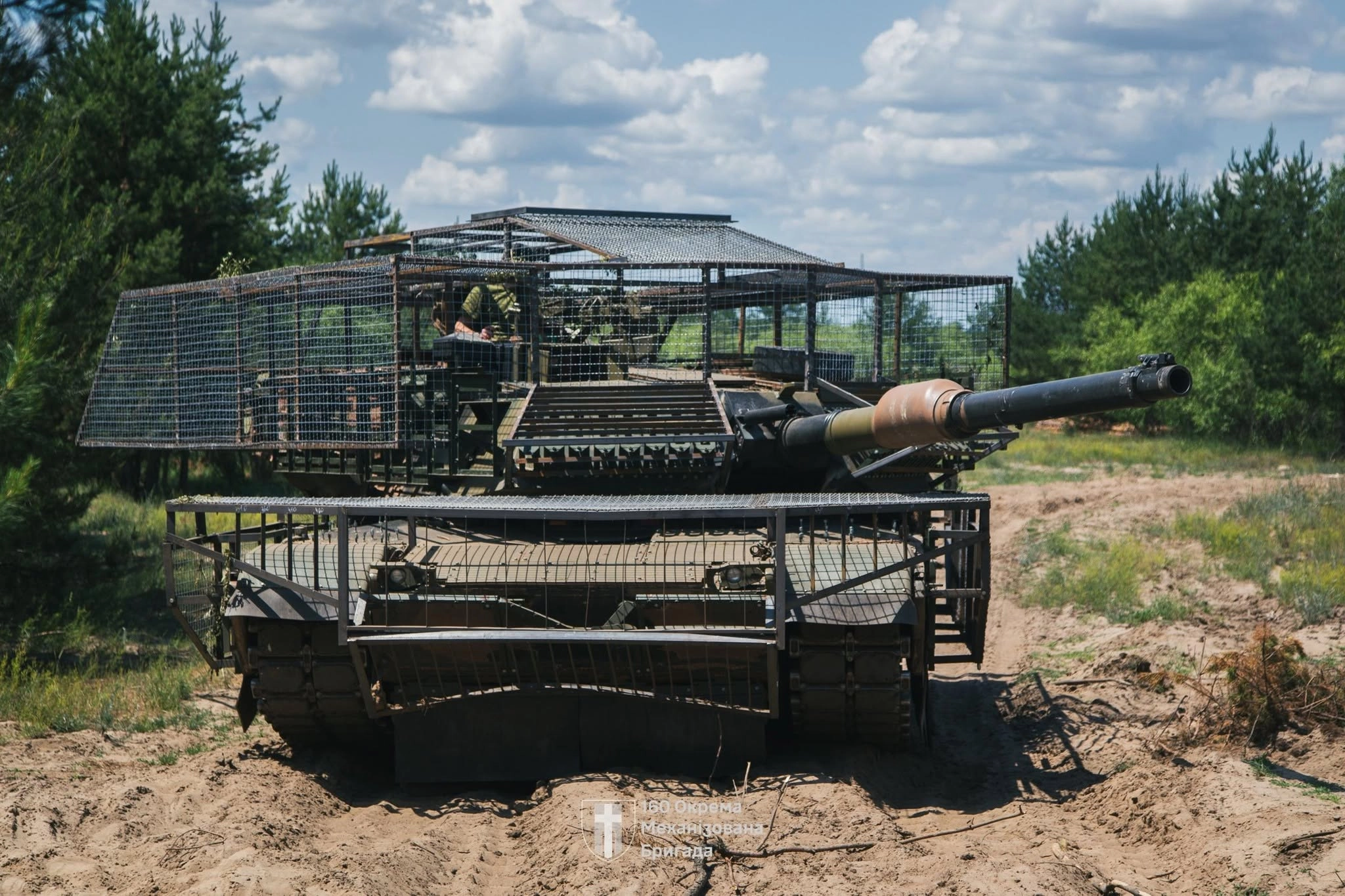
Other Russian measures have included (repeat) bans on the civilian population posting pictures of burning or destroyed freight trucks, and deployment of Russian interceptor drone teams to the region, but that probably is just pap for civilians, because if finding a truck moving on secondary roads in Donetsk region and Crimea is a challenge for a drone operator, think about how hard it would be to find a drone flying above that road network looking for something to attack.
According to limited information, the Ukrainians have identified and attacked truck consolidation points at these locations: Armiansk, Novoazovsk, Mariupol, Melitopol and Nikolske. The Russian Z-blogger crowd is averaging between depressed and appalled because, as bad as things are, the really unpleasant part is that there is no obvious way to redress the problem. The general opinion is that Ukraine has far more drones, more skilled operators, the numbers of both are increasing, and that the Russian leadership isn’t able to cope now, and the situation will be worse later.
Russian reaction to the Ukrainian strikes – long and short range
The very rah-rah Russia Z-blogger Aleksandr Kots, in a Thursday post, was so rattled he mentioned the unmentionable, which is that if Flamingos with their big warheads can hit an electronics plant in Cheboksary, then “There’s a feeling that preparations for an attack on the Crimean Bridge are underway right now. Alongside attempts to knock out our air defenses. Probably to coincide with some political date or event.”
The equally pro-Moscow Dva Mayora blogger Mikhail Polyakov was impressed enough by the Flamingo strike that he told his 1.1 million followers that it’s all well and good for Russian state television to make fun of the Flamingo manufacturer (Fire Point) and call it “good for nothing” but laundering money stolen from the Ukrainian government by President Volodymyr Zelensky and his gang, but – corruption or no corruption – the explosions in Cheboksary were real. Polyakov said he really wants to know how a giant three-ton missile flew more than 1,000 kilometers (620 miles) through Russian airspace and “the world’s best air defenses” weren’t able to stop it.
In the actual world of the real Russian economy, the tightening Ukrainian chokehold on Crimea is evident. According to tourist industry reports, the region has seen 30% to 40% cuts in reservations in the past two weeks, and tourism numbers are about one-third of what they were in 2025. If it lasts this summer, that will work out to the non-arrival of about 4 million tourists in Crimea this season, which would mean a hit to the annual region GDP of at least 10%, with the losses hitting small businesses and lower-skilled workers the hardest.
There is a video of a young lady calling herself a “Russian influencer” wandering the internet. She was upset that she went to Sochi but couldn’t promenade on the boardwalk because every time there is an air raid alarm, the police clear the beaches and make the holiday crowd stay inside. My guess is that’s more to prevent images of Ukrainian drones flying over the Russian summer resort public from reaching the internet, than protecting the lives of Russian citizens, but I’m biased against Russia messaging, so sue me.
German eyes in the sky
You may remember that in 2025, it was US strategy to force Ukraine to surrender to Russia by denying Ukraine access to US satellite intelligence.
This week, news came out that in 2025 the German government undermined that US attempt led by the Trump White House to strong-arm democratic Ukraine into handing over territory and citizens to authoritarian Russia, by contracting with the commercial satellite company Planet Labs to give Ukraine real-time commercial satellite imagery instead.
German taxpayers shelled out €240 million ($279 million) to keep the images coming, and as a result, Plant Lab’s Pelican satellites have been delivering satellite overflight imagery to the AFU. This seems to be a little bit of a scandal in Germany, because also in 2025, Germany announced it would spend $41 billion to create its own autonomous, low-orbit satellite network, so that Germany could avoid getting screwed by the Americans on satellite intelligence, as the Ukrainians did.
The scandal bit is that Planet Labs’ imagery provides the same thing, so in a way, the Planet Labs contract undermines the objective of an autonomous German low-orbit satellite network. Planet Labs is an American company, and its satellites get into orbit mostly via rockets launched by SpaceX, whose owner, Elon Musk, is quite unpopular in Germany if not politically toxic.
If you think what happened in Cheboksary was bad
Speaking of German high tech and aerospace, this week the CEO of Diehl Defence, Helmut Rauch, announced that his company is ready to sell Fire Point advanced missile seekers, which would make the missile, which at this point has some accuracy issues, a lot more precise.
Diehl is something like the German version of Raytheon. Rauch made the comments less than 48 hours after the Flamingo hit Cheboksary and the Progres plant, so interpret that however you want.
But before you do, last week Fire Point CEO Denis Shtilerman said that his company could start producing interceptor missiles in August that could shoot down Russian ballistic missiles, “provided” his company got access to interceptor technology and an infrared homing head is received from Diehl.
A Financial Times article this week reported Fire Point had already launched test versions of the interceptor missile, called the FP-7. x, and that flight tests were successful, but the thing missing is the seeker.
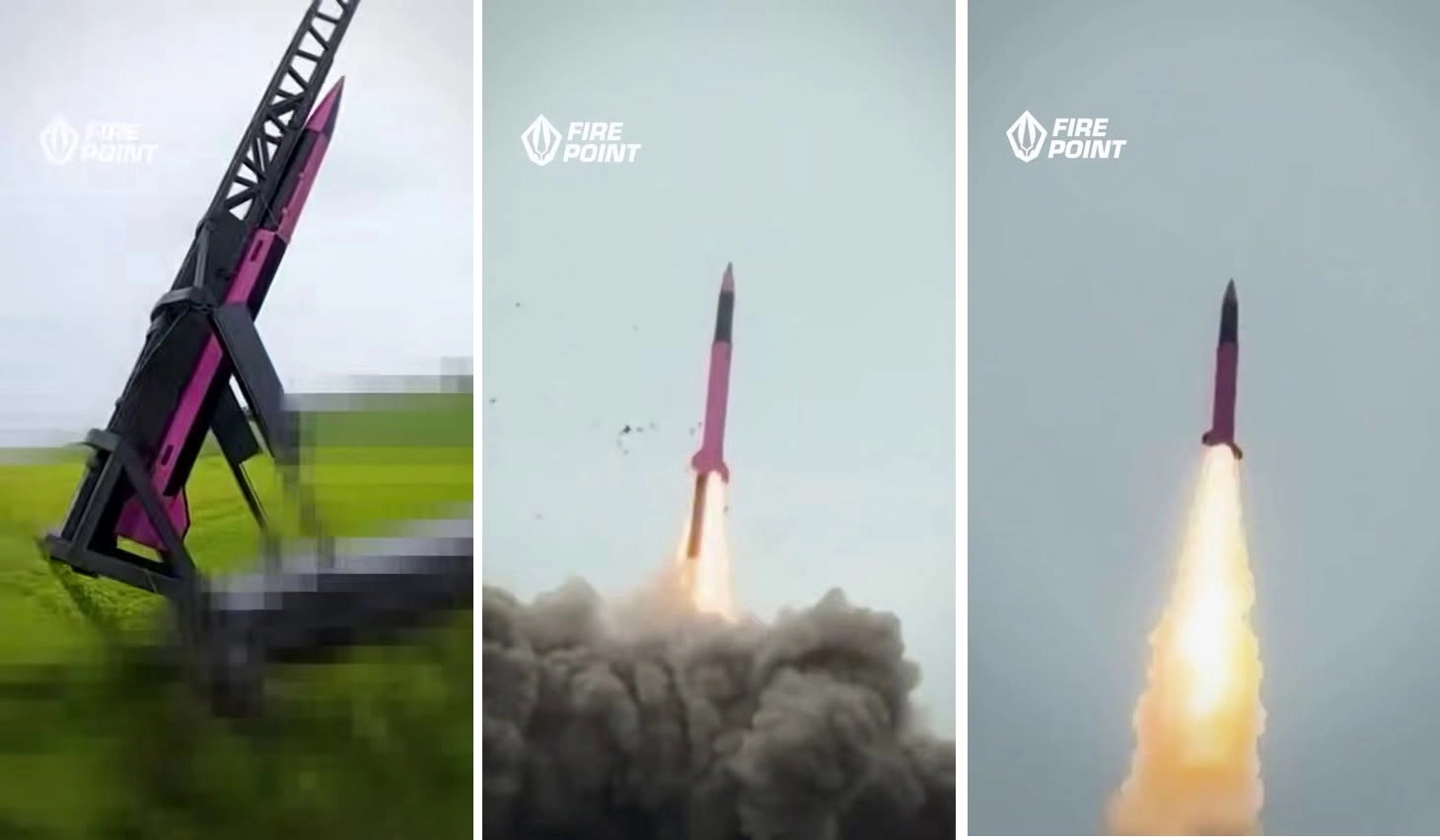
For those few of you who don’t remember, technology to produce a missile capable of intercepting a ballistic missile is hugely important to Ukraine, because the only missile that Ukraine has that can do that – the Patriot system’s PAC-3 – is produced by Raytheon and the US has repeatedly shut off PAC-3 deliveries to Ukraine on various pretexts, the most common being Ukraine wasn’t serious about peace with Russia or that US PAC-3 stocks were so low the United States can’t afford to share with Ukraine, so tough luck the Russian ballistic missiles are going to hit the Ukrainian homes and businesses.
It’s probably appropriate to note that Kyiv has formally and at least three times requested that Washington greenlight Ukrainian production of PAC-3 under license, a request the Trump administration has each time ignored.
The reported cost of a single FP-7 would be approximately $700,000, compared to $3-4 million for Patriot’s PAC-3. The first entire FP-7 system could be ready for field use in early 2027, the FT report said.
If you think a ceasefire will stop this kind of attack, think again
The point of this next item is the Eichmann factor. I contend that a ceasefire certainly won’t stop this, and I doubt a full peace would either, and so anyone thinking the fallout from the Russo-Ukrainian War can be swept under the carpet (mixed metaphor, sorry) in the coming years is sadly, sadly mistaken. The SBU is going to be hunting Russians considered guilty of war crimes against Ukrainians, and assassinating them when possible, for the next 80 years. Get ready.
The latest Putinist general to die was killed by a car bomb on Monday, in Moscow’s Balashikha, not far from the “26th Central Research Institute of the Russian Ministry of Defense and several kilometers from the Military Academy and the facilities of the Federal Protective Service.” The latter agency is responsible for protecting top-level Russian officials like generals.
Reports agreed the man killed was Damir Davydov, head of the Missile and Artillery Ammunition Supply Directorate of the Russian Ministry of Defense’s munitions and supply division GRAU. This is the main Russian organization responsible for supplying the Russian army with weapons and ammunition. So, you can see the Ukrainians are casting a wide net: to be targeted you don’t have to kill Ukrainians, you just have to have helped other Russians kill Ukrainians.
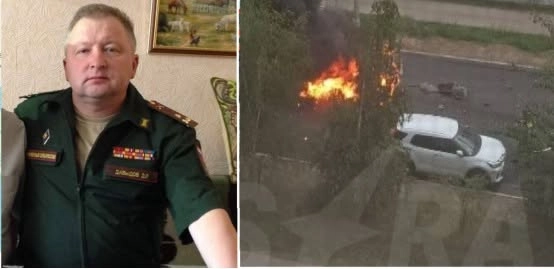
Some of you may recall that assassins killed Russian Lt. Gen. Yaroslav Moskalik in the same neighborhood last year.
NOTE: Some information platforms say it wasn’t Davydov but a general named Lt. Gen. Aleksandr Maksimtsev, Chief of the Main Staff and First Deputy Commander-in-Chief of the Russian Aerospace Forces, who was killed. The weight of reports was slightly in Davydov’s favor.
Either way, this isn’t vindictiveness; it’s reporting a pattern. The Ukrainians are intent on identifying Russian officials responsible for what the Ukrainians perceive as war crimes, and if circumstances are right, the Ukrainians see assassination as perfectly legitimate. This will complicate the peace process, but to be clear, if the Russians hadn’t invaded unprovoked in 2014 and 2022, Ukrainian agents (I assume, although technically it was a jealous lover or an unpaid loan shark) wouldn’t be murdering Russian generals in Moscow right now.
Reprinted from Kyiv Post’s Special Military Correspondent Stefan Korshak’s blog. You can read his blog here.
The views expressed in this opinion article are the author’s and not necessarily those of Kyiv Post.
You can also highlight the text and press Ctrl + Enter