Transliteration rarely makes front-page news, yet for Ukrainian, the alphabet you choose can speak as loudly as any editorial.
Hidden in footnotes and database fields, ISO 9, the international standard for transliteration, still forces Ukrainian words into a Russian mold. Every “Hryhorii” becomes “Grigorij,” every “Kyiv” risks vanishing from a search bar, echoing Moscow rather than Kyiv. Ukraine replaced that rule 15 years ago, yet publishers cling on. Letting go is painless, modern and an act of basic respect for the language.
JOIN US ON TELEGRAM
Follow our coverage of the war on the @Kyivpost_official.
For decades, many Western publishers relied on ISO 9:1995 when they needed to render Ukrainian names in Latin letters. ISO 9 aimed to be a single, reversible map for every Cyrillic alphabet, from Russian to Mongolian. That goal now feels as dated as a fax machine. The standard bends Ukrainian spellings to Russian pronunciation, clutters the page with exotic diacritics and, in the digital world, breaks search engines and web addresses. In short, it has outlived its usefulness.
Take the letter Г. In Ukrainian it is pronounced like the English h, yet ISO 9 forces it into g, because that is the sound the same character carries in Russian. The Ukrainian Ґ, which really does sound like g, is almost invisible in ISO 9; the 1995 specification lists it only in dealing with Macedonian. The results are absurd. A reader who sees Grigorìj instead of Hryhorii, is nudged, however subtly, towards a Russian ear. The problem is built into the bones of the standard of ISO 9 itself.
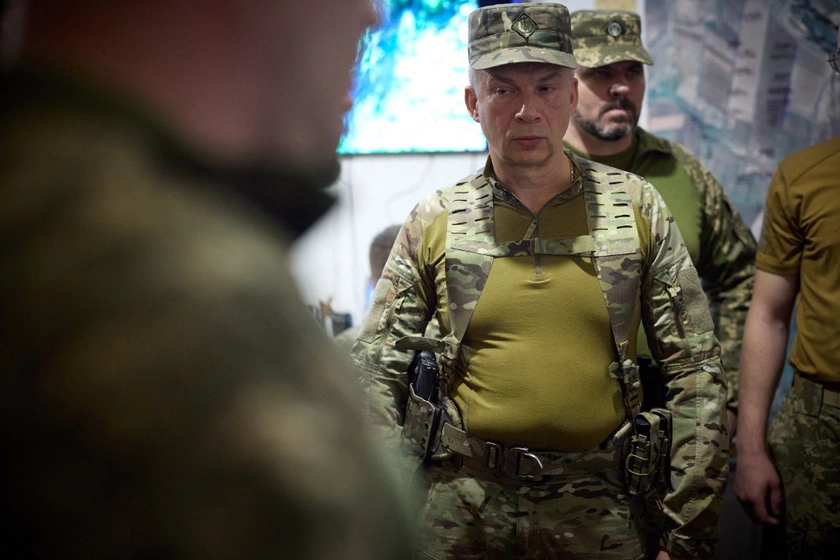
Ukraine’s General Syrsky: AFU Is Making Fair Progress vs Russia But No Victory Soon
Recognizing these flaws, the Ukrainian government introduced its own transliteration table in 2010. Cabinet of Ministers Resolution No. 55, “On Normalisation of Transliteration of the Ukrainian Alphabet by Means of the Latin Alphabet,” replaced ISO 9 in passports, road signs and official documents. The national system is mercifully simple: no accents, no carons, only plain ASCII (American Standard Code for Information Interchange). Г becomes H, Ґ becomes G, and Київ is unambiguously Kyiv.
International bodies followed suit. In 2019 the United States Board on Geographic Names and its British counterpart, the Permanent Committee on Geographical Names, jointly adopted the Ukrainian system, publishing their table as the BGN/PCGN 2019 Agreement. The United Nations Group of Experts on Geographical Names had already endorsed it. Once the official gazetteers changed, maps, atlases and airline booking systems fell into line.
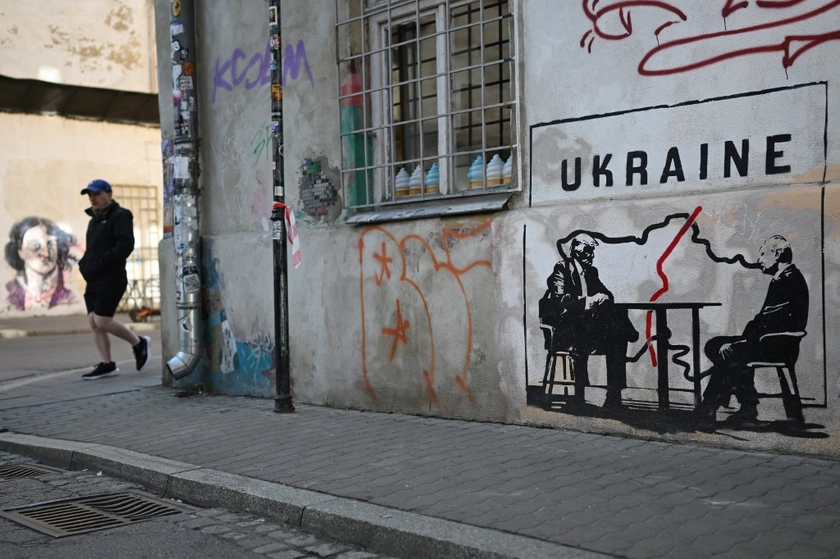
The shift reached popular culture through the Foreign Ministry’s #CorrectUA campaign, better known by its flagship hashtag #KyivNotKiev. Launched in 2018, the drive urged international media to abandon the Soviet-era spelling that persisted long after independence. The BBC, Reuters, The Economist and even The New York Times now write Kyiv, Odesa and Dnipro. Google Maps switched in 2020. What began as a linguistic tweak became an assertion of sovereignty: Ukraine’s cities would bear Ukrainian names, not Russian transliterations.
Yet ISO 9 clings on in corners of academia and librarianship. Some European library networks still encode Slavic titles with its diacritics. A handful of scholarly journals defend their choice on the grounds of “continuity”: earlier volumes were set in ISO 9, so newer ones must match. The logic is shaky. Within the same shelf one often finds monographs that ignore transliteration altogether, catalogues that follow the Ukrainian standard, and only the oldest titles in ISO 9. The supposed virtue of uniformity instead breeds confusion. When a reader meets Černenko in a footnote but searches a database that lists the same author as Chernenko, scholarship fragments.
Technology is another stumbling-block. ISO 9’s dotted and caroned letters expand the character set beyond the basic Latin range, creating headaches for databases and URLs. An online bookshop may treat Č and C as different entities, leaving a title invisible to casual queries. Email addresses cannot contain “č” or “ï,” so academics resort to ad-hoc spellings that undermine the very standard meant to aid clarity. The Ukrainian system, by contrast, sails through Unicode, QR codes and airline reservation screens without a hitch.
Some writers argue that ISO 9 is neutral because it maps letters, not sounds. That fails to convince. When one language, Russian, is taken as the default reference point for how Cyrillic letters should sound in Latin dress, neutrality evaporates. Language carries history. Every time Г is flattened into G, the reader hears a Russian echo and not the Ukrainian voice. In a war where Moscow insists that Ukrainian identity is an artificial construct, such echoes matter.
Adopting Ukraine’s own system is not an act of linguistic nationalism. It’s simple courtesy. Just as no one today insists on spelling München as Munchen or Łódź as Lodz, Ukrainians have the right to choose how they spell their names, especially as there is no real transition cost from previous systems and it is applicable to a QWERTY keyboard without adaptation or special characters. Modern catalogue software can batch-convert ISO 9 records while preserving the old form in a hidden index field. Publishers need only replace a handful of macros in their style sheets. Even scholars citing nineteenth-century works can keep the original ISO form in brackets, followed by the modern transliteration, satisfying both historians and search engines.
What, then, keeps ISO 9 on life support? Habit, mainly. The standard solved a real problem for bibliographers in 1995, and legacy databases are slow to change. But habit is a poor excuse in 2025, when every major map providers, newsrooms and government agencies have already moved on. Clinging to ISO 9 today is rather like insisting on writing Peking in a report on contemporary China: it signals that the writer is out of touch.
At a time when Ukraine is fighting for survival, it is a basic more than fair to allow it name itself on its own terms. Retiring ISO 9 for Ukrainian transliteration by private entities is a small but meaningful part of that struggle. The tools and rules exist, endorsed by Kyiv, recognized by the UN and wired into the world’s digital infrastructure. All that is missing is universal adoption. It is time, politely but firmly, to consign ISO 9 to the archives, alongside the card catalogues and microfiche readers it once served so well.
The views expressed in this opinion article are the author’s and not necessarily those of Kyiv Post.
You can also highlight the text and press Ctrl + Enter