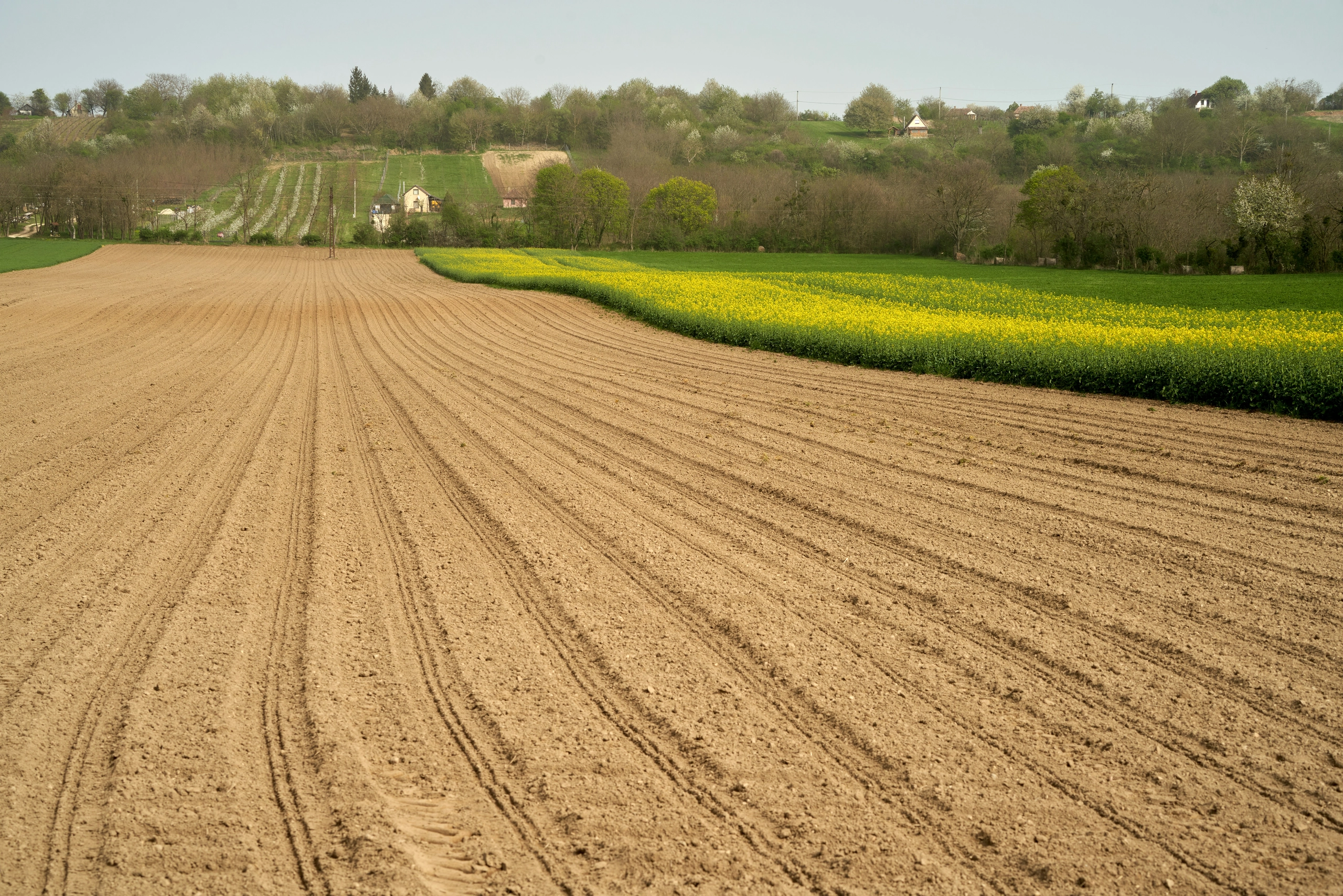
Amid war and global food insecurity, Ukraine’s farmers are doing more than surviving – they are rethinking the future of agriculture.
Alongside mighty agribusiness giants, a growing movement of independent producers and cooperatives is emerging as a strategic pillar for Ukraine’s recovery and Europe’s food resilience.
JOIN US ON TELEGRAM
Follow our coverage of the war on the @Kyivpost_official.
While integrated agribusiness companies are often perceived as dominating Ukraine’s agricultural sector, the actual landscape of the industry is much more complex and diverse.
Small and medium-sized farms continue to serve as the linchpin of Ukrainian agriculture
Most of them cultivate between several hundred and a few thousand hectares of land plots. Measured by European yardsticks, this is already considered a large enterprise. In the Ukrainian context, it is a solid mid-sized agricultural business – independent and not part of the large agribusiness conglomerate structure.
Who are agricultural holdings, then?
It is not determined solely by the size of the land bank. However, the local Ukrainian association qualifies as an agri-holding enterprise with land assets exceeding 10,000 hectares.
More significant for defining is that they are vertically integrated companies under a single parent structure, with centralized management, stable access to international financing, and established positions in export markets. According to local industry associations, the portion of such businesses is approximately 20-25% of the sector.
Trump Downplays Russian Drone Incursion into Poland as ‘Mistake,’ Drawing Sharp Rebuke From Allies
Other players include family farms and small households, often specializing in niche crops and special agricultural products sold both domestically and for export, particularly berries. A distinct group of so-called “single-owner” farms moved out of the gray zone due to the introduction of new tax rules in 2021–2022.
In addition, for many Ukrainian families, farming holds deep generational significance, even when it is not driven by economic necessity.
To truly understand Ukraine’s agricultural sector, one must look beyond business metrics and consider the thesis that food is a primary asset. Yes, it is. But at a deeper level, Ukraine’s Constitution defines land as the “main national asset,” but this is the official translation; the Ukrainian-language version uses a word with a deeper meaning – national wealth owned by the Ukrainian people, which shall be under the special protection of the state, and the state and local governments perform the function of manager strictly within the law.
This principle is rooted in Ukraine’s complex historical path, including forced collectivization and the accompanying dekulakization campaign, which effectively destroyed private land ownership, the Holodomor, decades of the Soviet kolkhoz system, and now, full-scale war.
These events have shaped legal frameworks and the deep emotional and cultural connection Ukrainians have to their land.
Moreover, the presence of diverse players is crucial for local communities, as they create jobs, contribute tax revenues, and drive competition for land lease payments – all of which help raise living standards in rural areas.
Finally, one must recognize that the Russian aggressor makes no distinction between small farmers, mid-sized producers, and extensive agricultural holdings. The losses of grain, equipment, and human lives are equally devastating. Often, farmers begin their day by clearing missile remnants from the fields before they can start any field work.
What role can agricultural cooperatives play in Ukraine’s recovery and in ensuring future global food security?
Despite Ukraine’s deep-rooted history as one of the key hubs for developing the cooperative movement – particularly in the early 20th century – its cooperative tradition was severely disrupted during the Soviet era.
Back then, independent agricultural cooperatives such as Maslosojuz and Silsky Hospodar were crucial in empowering Ukrainian farmers, providing them access to financial instruments, markets, and collective self-organization.
However, Soviet authorities forcibly dismantled these independent cooperatives, replacing them with collective farms (kolkhozy), erasing the country’s authentic cooperative legacy.
Since regaining independence, Ukrainian farmers have gradually rebuilt a legal and institutional framework for cooperative activity. Even within the constraints of imperfect legislation that still limits cooperatives’ full potential, successful examples have emerged, including the FUAC Agricultural Cooperative, which continues to operate and grow today.
The cooperative sector is approaching a significant milestone with the anticipated implementation of patronage dividends. This mechanism will allow profits to be distributed proportionally among cooperative members based on their turnover contribution and labor input throughout the financial year. This will create a more balanced and fairer economic model within cooperatives.
Beyond financial considerations, farmer consolidation into cooperatives is key to meeting the high standards required for agricultural products exported to the EU. Food safety, traceability, environmental sustainability, and strict certification requirements can be achieved much more effectively through cooperative models that pool expertise, harmonize standards, and bring small and mid-sized producers together under unified systems.
In this context, Ukraine’s agricultural production is poised to become a stabilizing force within the EU’s agri-food system while also making a critically important contribution to global food security – especially for vulnerable regions such as the Middle East, North Africa, and parts of Asia, where stable and affordable food supply remains a top geopolitical priority.
Upholding legal protections for agricultural producers in war zones: A constitutional framework
The full-scale Russian aggression has directly threatened thousands of agricultural enterprises, with farmers losing access to their assets in occupied or frontline territories.
On March 27, 2025, the Ukrainian Parliament passed Law No. 12148, “On Amendments to the ‘Final and Transitional Provisions’ of the Civil Code of Ukraine Regarding the Specifics of Lending and Financial Leasing during Martial Law,” with 273 votes in favor. On April 1, the law was sent to the President for signature.
According to Article 94 of the Constitution of Ukraine:
“The President of Ukraine shall sign such law within fifteen days from its receipt, accepting it for execution, and shall officially promulgate it or return to the Verkhovna Rada of Ukraine with substantiated and formulated proposals for reconsideration.
Should the President of Ukraine fail to return a law for reconsideration within the established period, such law shall be deemed approved by the President of Ukraine. It shall be signed and officially promulgated.”
Ukraine’s legal doctrine on this matter has been established for a long time. In 2007, the Constitutional Court of Ukraine confirmed in Decision No. 7-rp/2007 that if the President does not exercise the veto right within the constitutional timeframe, the duty of official promulgation of the law automatically passes to the Chairperson of the Verkhovna Rada, ensuring the legislative process is fully completed.
Although the current Rules of Procedure of the Verkhovna Rada do not contain detailed technical instructions for this procedure, this gap does not override the Constitution of Ukraine.
Regarding the above law, the issue extends far beyond individual farmers – it concerns the fundamental functioning of Ukraine’s constitutional order, the rule of law, and the trust of society, international partners, and financial markets in state institutions.
Subsequently, there may be public and expert discussions about the duration of the moratorium, support for affected farmers and creating conditions for them to utilize their experience and rebuild their agribusiness.
Debt collection moratorium: A risk or a necessary step for recovery?
A permanent freeze on financial obligations would inevitably disrupt the balance between protecting producers and safeguarding the stability of the financial system. It could weaken investor confidence and complicate the attraction of new financing.
However, today’s priority is different: to create conditions for economic recovery. In this context, a temporary moratorium on debt collection is not a threat – it is a necessary tool.
This is not about abandoning obligations, but about postponing the shock. Businesses – especially in the production sector – need breathing space to preserve jobs, restore supply chains, and maintain export positions. Simultaneously, the financial system will gain time to adapt, develop new market instruments, and attract domestic investors.
Conclusion
At this stage, it’s not about choosing between supporting banks or war-affected businesses. The task is to create a platform for Ukraine’s recovery, where both sectors play key roles. Agro-cooperation is the puzzle piece that helps align risks and opportunities for all sides.
The views expressed are the author’s and not necessarily those of Kyiv Post.
You can also highlight the text and press Ctrl + Enter