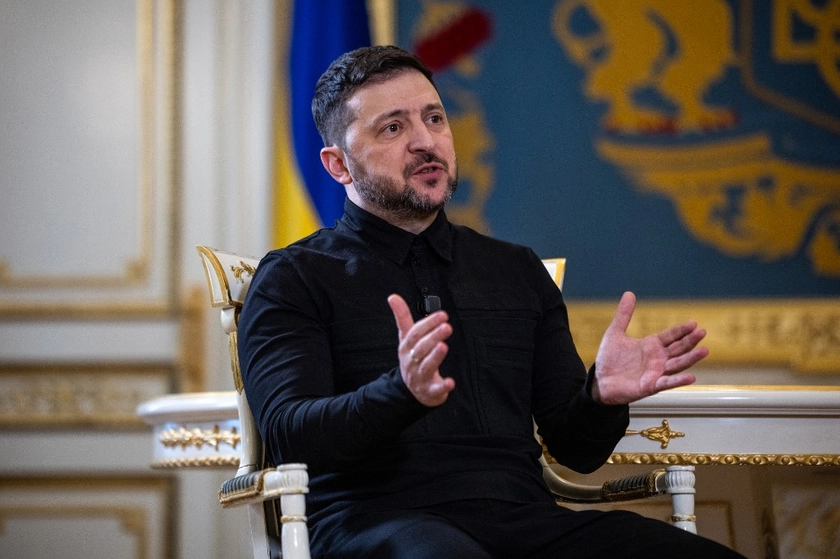
The major news event this week was dueling gatherings of bigshots – Putin was in Beijing discussing America’s demise and the multi-polar world, while Zelensky was in Paris discussing something suspiciously similar in force structure and deterrent intent to the IGB, and if you don’t know what that is, read on.
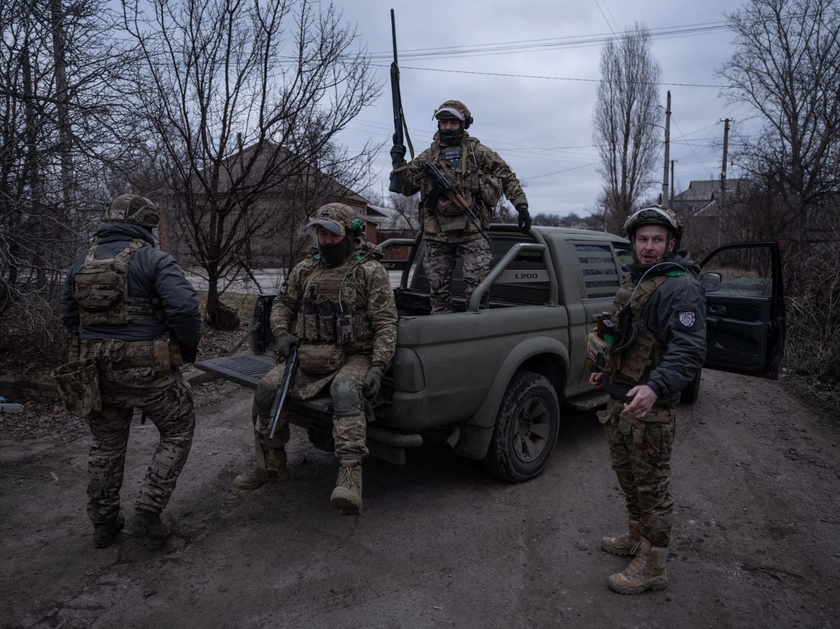
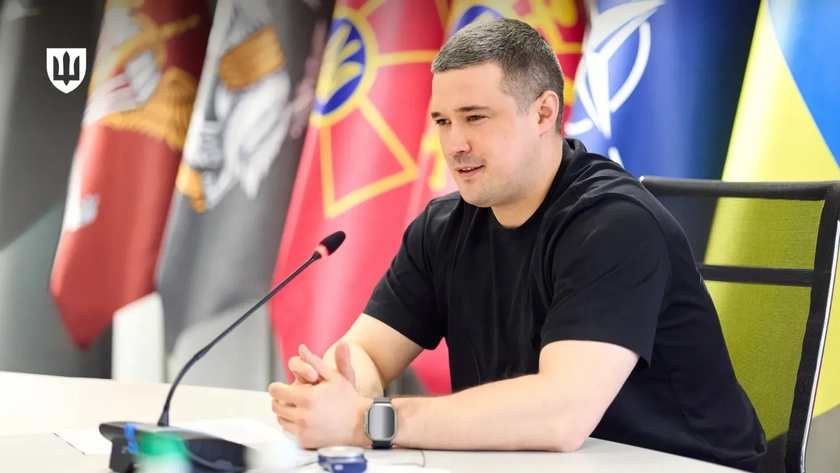
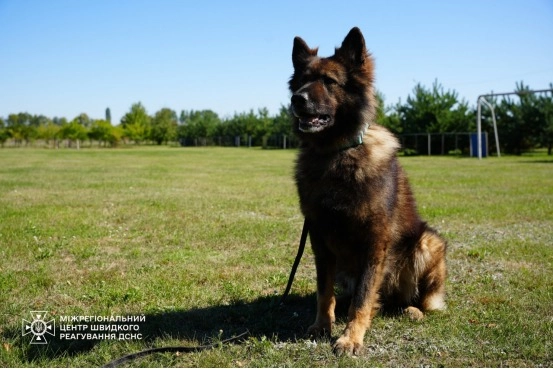
For reasons best known to them, there has been a surfeit of official Ukrainian military imagery, perhaps contracts are running out for the photogs, but in any case, there are some decent soldiers, so those are the first photographs. The captions give details, but the units are Azov National Guard, 24th Mech, 73rd Special Operations, 82nd Airborne Infantry, and 210th Assault Infantry. Also a mine-sniffing Aslatian in Ukrainian service.
The state of the front
Yes, the Ukrainian running counterattacks aren’t a one-off; it’s a pattern. They’re taking place in multiple sectors, and the tactics seem the same everywhere: a drone/artillery fight for dominance in a piece of the gray zone, and then skilled assault infantry moves in.
To be clear, compiled numbers for August show that by raw numbers, the Russians are still gaining ground much faster than the Ukrainians are taking it back. The OSINT community seems to think that in August, Russian forces occupied about 430 square kilometers (166 square miles) of Ukrainian territory. Over the same period, the Ukrainians seem to have taken back at least 35 square kilometers (16 square miles), but I’ve seen some reports saying over the week it was 70 square kilometers (27 square miles).
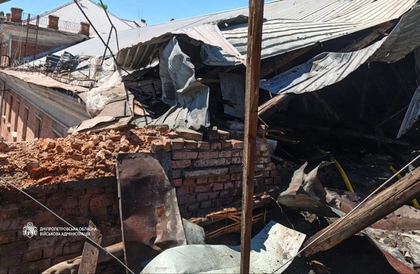
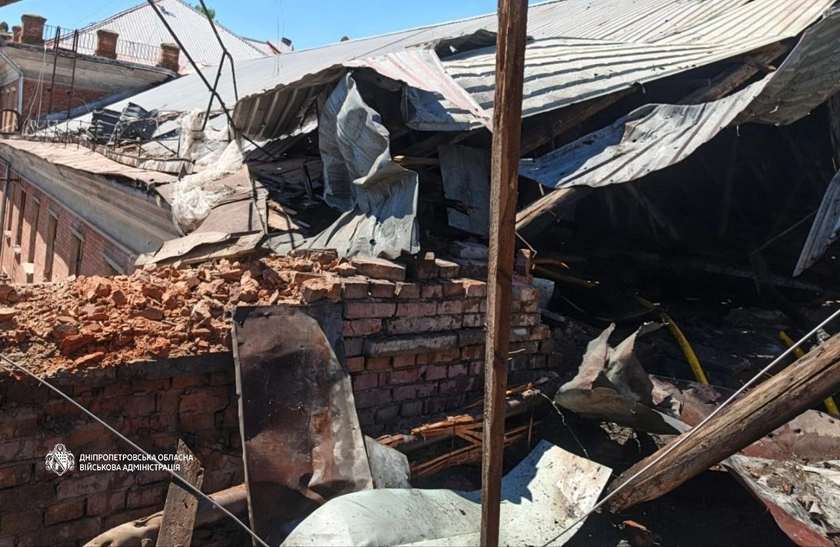
Russia Strikes 4 Districts in Dnipropetrovsk Region, Injuring 2
That being said, here’s a list of liberated villages this week (reverse order, dates may be off 24 hours in some cases):
- Fri – Boikivka and Zatyshki, Pokrovsk region, not confirmed
- Fri – Volodymyrivka, Dobropillia/Pokrovsk sector
- Fri – Katerynivka, Kostyantynivka sector
- Wed – Andriivka-Klevtsove, Novopavlikvka/Kurakhove (This is the N15 Highway)
- Wed – Novokoekomichne, Myrnohrad/Dobropillia sector
- Tues – Udachne and another village, Dobropillia/Pokrovsk sector, this by 425 Rgt Skeliya
- Mon – Hruzke, Dobropillia/Pokrovsk, this by the 93rd Brigade
- Sat – Myrne/ Kupyansk sector (possibly lost by Wednesday)
- Sat – Novoselivka, Lyman sector
- Sat – Moskovka, Kupyansk sectort
Which is pretty fair evidence the Ukrainians aren’t sitting passively, and also that the Ukrainians are still systematically reducing the Dobropillia pocket. Yes, there have been some videos of POWs. But always remember, the Russian list for the same week would be about three or four times longer.
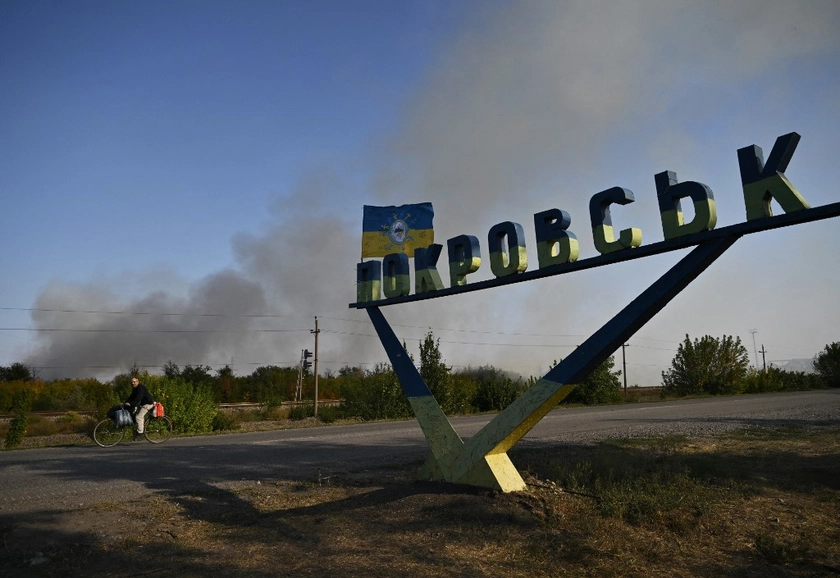
As to what’s coming next, this week saw a wave of reports and rumors that the Russians had concentrated 60,000, 80,000, or 100,000 troops in the Pokrovsk sector, for a big Autumn offensive to conquer the Donetsk region for good. Video of tank transporters moving along one of the city’s bypass roads surfaced, and also truck columns, and now the TikTok feeds are filling up with clips of Western experts like Jeffrey Sachs saying the West is doomed because Russia has allied with China and BRICS.
The phrase “the largest military regrouping since 2022” seems to be particularly popular. Even the spokesman for Ukraine’s Joint Forces Dnipro was pushing that message.
Also, more than a few of the rah rah Russia sites keep reminding readers that a suspicious number of seasoned Ukrainian brigades seem like they’re off the line and training and awarding each other medals and so forth, and just wait, the sneaky Ukrainians are going to launch a big offensive of their own!
At this point, my only comment is that we have seen “big offensives” in the works before. Lots of times. It looks like the Armed Forces of Ukraine (AFU) has sufficient shells and the drone units seem to be pretty upbeat in their reports. Me, I think that long-term, if you aren’t in Ukraine and don’t care much about the war, the line is going to look the same as it has for years: static.
Radar love
That’s the pop culture reference for this review. Who can name the group?
The big bombardment news this week was a little like the ground counterattacks news this week, i.e., what might have been a one-off may well be a trend. The HUR and SBU boys on Thursday and Friday – so one assumes the deadline was to make it all public before the weekened – have pumped out a new wave of reports and video attesting to the apparent decision by the Ukrainian special ops community that it’s now open season on Russian radars and electronic warfare systems, especially in Kherson region, Crimea, and south-west Russia/Rostov region.
If Ukraine had a giant, dangerous air force, this would be a textbook precursor for a major air raid on the Kerch bridge. Since Ukraine’s air force is definitely capable of hurting things but is anything but giant, and given that the Ukrainians seem to avoid single-service-branch operations as a matter of principle, we have to guess what the sneaky-deaky commando boys are up to. All this is probable, but at the end of the day, it’s guesswork.
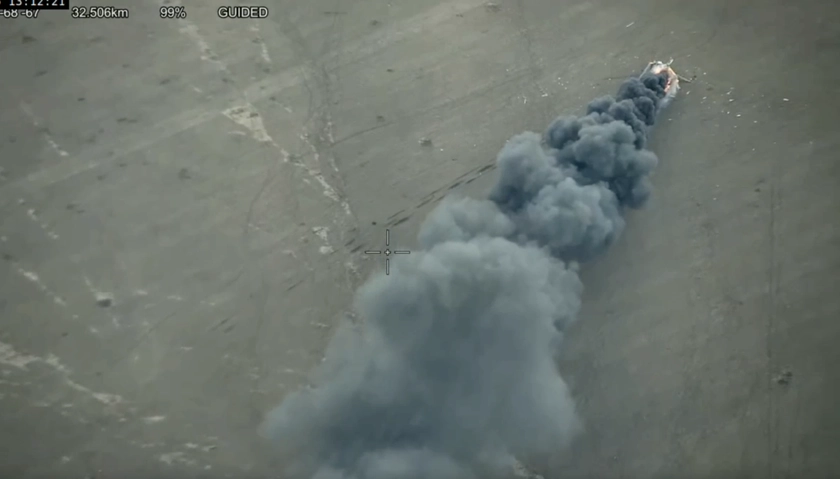
On Thursday, drones hit and pretty clearly smashed up a Russian 55Zh6U Nebo-U long-range air surveillance radar site in Rostov Oblast. NASA’s FIRMS orbital fire monitoring system picked up a major fire at the facility. This is an air defense site. I read the fires were burning for two passes of the satellite.
Earlier in the week, probably on Sept. 2, a 39N6 “Kasta-2E2” radar station in Anapa, Krasnodar Territory. This is about 280 km (174 miles) from a probable drone launch site.
Also, a video surfaced in the strikes on Sept. 1, which I referred to last week, now video is there showing HUR drones hitting a 48Ya6-K1 “Podlet” system and a 55Zh6M “Nebo-M,” system, both in Crimea.
Strike content published on Aug. 31, all credited to a HUR special ops unit called Prymary, all in Crimea:
- Utyos-T radar
- RT-70 radio telescope
- GLONASS radar dome
- MR-10M1 “Mys” radar
- 96L6-AP radar of the S-400 system
I realize that’s a lot of equipment, and I apologize for not going into detail on what each system does. You can trust me and say it looks exactly like Ukraine’s special ops is extremely busy destroying the Crimea air defense network, or you can Google all the systems yourself.
Generally, this is an acceleration and intensification of the destruction level of last week. If the Ukrainians keep to the pattern, once they get to a point where they feel the Russian air defenses are sufficiently degraded, we’ll see a big operation that will use surprise – a new weapon or tactic is extremely likely – to really hit something they want erased, as hard as possible.
So you can see how it’s pretty easy to say “Sure looks like they’re going to go after the Kerch bridge,” but there are lots of high-value targets in Crimea. As we have seen, the Ukrainians are pretty creative.
‘Traditional’ oil refinery strikes
It is an indicator of the direction the war is going that, already, the Ukrainians hammering Russian oil-processing capacity in a clear and statistically verifiable way doesn’t surprise us; they’ve been doing it a while, the Russians don’t seem to be able to stop them, and we intuitively assume the strikes will continue.
Which they did this week; oil refineries in Luhansk and Ryzan got hit on Thursday. Ryazan was a repeat strike. Big fires. The site, now burning, supplied Russia’s 41st and 20th combined arms armies. Here’s a readout of what oil and gas infrastructure – to wit, these are oil refineries – that have been hit in about the last 40 days. This list has been printed elsewhere; I repeat it here to give you guys an idea of how this bombardment campaign is ongoing. Pay special attention to the repeated strikes.
- Samara Region – Novokuybyshevsk, Syzran, Samara (three refineries, multiple strikes)
- Ryazan Region – Ryazan (repeated strikes)
- Krasnodar Territory – Afipsky (twice), Krasnodar, Sochi fuel and oil base
- Rostov Region – Novoshakhtinsk
- Saratov Region – Saratov
- Volgograd Region – Volgograd (twice)
- Bryansk Region – Unecha (twice)
- Stavropol Territory – Nevinnomyssk (nitrogen)
- Voronezh Region – Nikolskoye (oil pumping station)
- Ulyanovsk Region – Albashi (Albashneft refinery)
It sure looks like the Cold War and the IGB to me
This week saw another round of meetings based in Paris with most state heads participating remotely, Zelensky was present, where the European/Ukrainian ally security plan following a ceasefire was discussed. There were 30+ nations participating, and that’s a lot of national news industries publishing hints and rumors and comments, so by Friday, a pretty clear picture of what they were discussing had emerged.
We now have a much better picture of how the force would look, and critically, that picture is just as visible to the Kremlin and the White House.
We know that the Italians, Poles, Spaniards and Germans have said they wouldn’t deploy ground troops, and the Romanians are pretty doubtful as they are NATO’s main platform for Black Sea operations already.
I discount the Americans as Trump is making decisions, so rational planning cannot factor in the Americans until 2028. But we know that several other states, big and small – for instance, the Latvians, Norwegians and Swedes – are thinking about it.
We also know that several powerful states have said yes, we’ll put troops on the ground in some form: The Turks, the French, the British, the Belgians, the Finns, the Czechs, the Canadians and Australians, and even the Lithuanians and the Estonians (who border Russia and, between ourselves, would be better off keeping troops at home).
We know what NATO multi-national deployed ground combat forces look like. They are already deployed in Poland and the Baltic states. A NATO brigade is about 3,500 men, and we know that NATO forward-deployed in the Baltics and Poland are about 60/40 percent tooth/tail, with combat support like air defense and MPs subsumed into tail, along with admin and headquarters.
In other words, for every combat brigade “the coalition of the willing” might deploy to Ukraine, there would be about 1,000-1,500 more doing combat support, support, command and communications, and training. This works out to five or six NATO combat brigades deployed to Ukraine along with other troops in support, headquarters, air and naval operations and so on.
I will be the first, I think, to predict that if and when NATO ever gets on the ground, mission creep will be vicious as non-participating armies realize deployment to Ukraine will be paid not domestically but from a NATO kitty, and because the longer they are on the ground in Ukraine the more ways they will see they aren’t prepared to fight the Russian army.
But for starters, the math is pretty simple. The deterrent force that would be on the ground in Ukraine would be around 18-21 reinforced battalions. There would be big air support, but it would, for the most part, just rotate to Romania and become a bigger version of the Black Sea watch operation already in progress for more than a decade. NATO will always try to do things the way they have already done things.
With 27 countries interested and several of them big enough to field more than one battalion and maintain it in Ukraine, the ground force to me looks like a stretch for NATO now, but as time passes, capacity will increase. The easy prediction is one brigade each led by France, Turkey, Britain and Finland, with smaller nations sending battalion contingents to beef up those brigades or, less possibly, to form ad hoc multinational brigades of their own.
ADDITION: Saturday, British defense journal reports:
“Under current plans, the two-star (UK) military commander in Kyiv will be an Army office....it is currently planned that France and the UK will jointly provide the three star commanders. This will be reviewed once the detail of any ceasefire is known.”
This is enough to make some educated guesses. The foreign contingent in Ukraine will have a joint HQ that, in case of combat, would parallel and not be subordinate to the AFU command.
Within the foreign contingent, there will be two division-level HQ, each commanded by a 2-star, one French and one British. Each of these division HQ will have at least two brigades, one of “native” troops and one of associated troops. There might be three brigades. Or there might be a third “division” HQ.
For the British “division”, there would be one brigade of UK troops, and, at this point, it’s not for sure, but an ambition, one brigade with a battalion each.
Canadian/Australian/someone Scandinavian speaks fantastic English, probably the Danes. Were this “division” beefed up, I would expect the Finns/Swedes/Norwegians in a third brigade.
The French-led “division” would likewise contain three French battalions, plus at least a single Turkish brigade, plus a mixed brigade with the Belgians for sure.
A factor I’m not well-informed about is that, on paper, the Turks are more capable of fielding ground soldiers to this mission than any other NATO member, including the US, so I am not positive Ankara would just accept placing a brigade under French or British command. The Turkish interest is directly focused on Crimea, and were Turkey to position more than a brigade, I would expect it to be in the lower Dnipro River basin preparing opplans to overrun the Tavria steppe and the Perekop Ithmus, with or without the rest of NATO (but with the Ukrainians).
The way the US government conducts itself, one gets the impression that foreign policy needs no more than the attention span of a goldfish, but adult states think years and even decades ahead. A Turkish ground force presence in southern Ukraine directly affects Black Sea security; for Turkey, this is not a distant foreign conflict, this is national security. When Russian control of Crimea falls apart, it is absolutely in Turkey’s interest to have troops on the ground nearby able to influence events.
That’s a long way of saying I see the Turkish interest in participating in this force as well, beyond just doing Turkey’s bit for NATO.
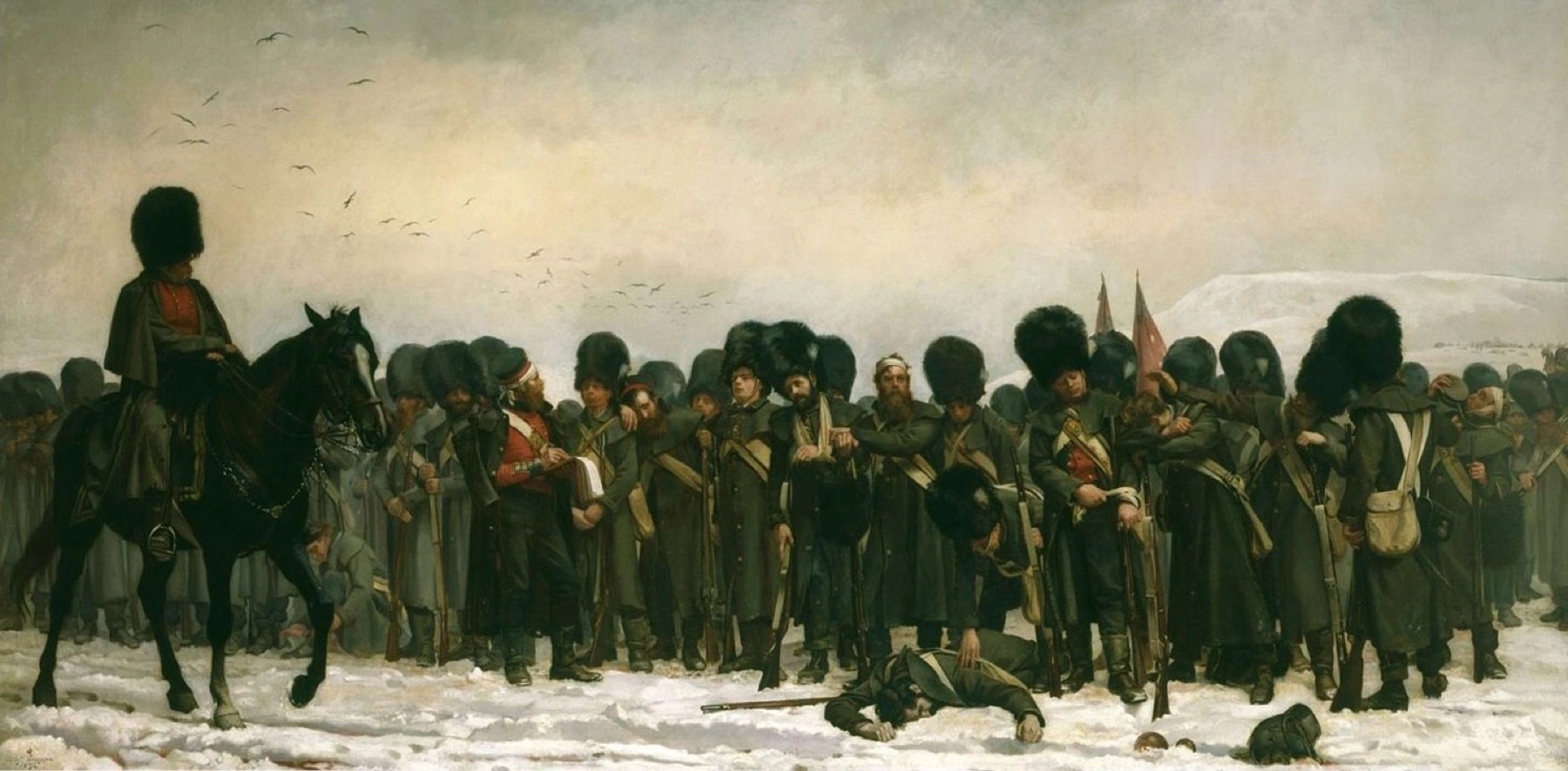
In the spirit of a return to a British-led coalition force deployed to Ukrainian territory, a painting by Lady Butler of some British Guards doing roll call after a Crimea battle.
To this old Cold Warrior, it all looks very familiar to the 1980s: Foreign troops sandwiched with local troops, the most combat-capable contingents deployed to the most dangerous sectors, annual practice beefing up the force in case of an emergency, and so on.
On Thursday, Putin was so rattled that he went up in front of a conference and said that Russia would never accept foreign troops on Ukrainian soil (I guess Russian doesn’t count in his mind), but if somehow they were to be there, they would become “legitimate targets for the Russian army.”
From the Russian perspective, obviously, this ground force is how the West intends to take territories stolen from Ukraine and, above all, Crimea away from Russia. The Kremlin will never see it as a deterrent force, but a force in place ready to dismember Russia the moment Russia weakens. Which is tough for them, but that’s the logic that will drive their decision-making.
Which brings me to the final point: This is an example of a missed opportunity and NATO leadership not understanding how to communicate with the Kremlin.
Why did not one head of state considering deploying troops to Ukraine, just one, simply say, “If our troops are attacked, let there be no mistake, they will defend themselves. We believe our men and women in uniform are more than capable.” It’s nothing but the truth. But to say the sentence, the politician has to honestly be ready to fight.
The fact that nobody said anything is a pretty good message to Putin, who made the threat. Maybe NATO’s soldiers are ready to fight. But the politicians who give those soldiers orders? Why didn’t they call him out? And THAT is how one encourages more aggression.
This was a prediction, now it’s just something that happened: Harvard wins
From time to time we’ve tracked the soap opera of the Trump administration stepping on the rake of entering into a legal dispute with Harvard, and this week a federal judge – she didn’t study at Harvard, she was from Boston – shot down the administration’s argument that Harvard is viciously and systemically antisemitic and therefore the White House can cut off $2 billion in federal research funding for Harvard University. The Feds sent their lawyers, Harvard sent their lawyers, and the Harvard lawyers won.
Anyone who knows anything about the legal profession in the US could have predicted this.
Google tells me the appeal venue is the First Federal Court of Appeals in Boston. There are ten judges, and three would normally hear the case. None of the judges is a Trump appointee.
Four judges on that Federal Court of Appeals went to Harvard, two went to Boston University, two went to Georgetown, one went to Yale, and one went to Suffolk. Seems to me the Feds would be better off admitting they’re beaten.
Power of Siberia and Russia pulls a rabbit out of its hat – Really? Again?
This is a speculative, “What if?” future history section that isn’t about the war per se, so it’s at the bottom so you can skip it if time’s an issue.
But, this week with the meetings in Beijing and Putin and Xi posturing about economic cooperation and the downfall of the West, delivered us “news” that those of us in the region actually are tired of: Once again, China and Russia have dusted off the old idea about building a giant, high-capacity natural gas line from Russia’s Altai region across Mongolia to Chinese Inner Mongolia and Manchuria, and once again a memorandum of understanding was signed and the state news agencies told us that’s it, Russia and China will now be joined at the hip with bottomless supplies of Siberian and Arctic natural gas. The name of the project is ”Power of Siberia 2”
There has been – inevitably – a wave of authoritarian state-promoted content about the pipeline, and plenty of western fanboys have picked it up, so as a public service here’s some basic information about the pipeline.
Just remember: The Russians have been trying to get the Chinese interested in the project for almost a generation.
What’s planned? Accounts vary, but in general it seems like this will be an extension of the Soyux-Vostok line with a capacity of 30, or 50, or 100 bcm (!) per year. For the record, the maximum bcm/year for all of Europe was in 2021: 155 bcm.
How much will it cost? No one knows, but the figures being kicked around are between $10 billion and $90 billion. The Nord Stream 2 pipeline is the most expensive gas pipeline in history; about 1,250 km, a lot of it underwater.
What’s the route? They haven’t decided. The problem is that Russia’s existing gas network connects up with China at the west end of Mongolia; the idea is to deliver gas to China at the east end of Mongolia, and there are multiple mountain ranges to overcome.
The way I read the map published by the Financial Times (FT), the proposition is somewhere between 1,500 and 6,000 kilometers (932 and 3,728 miles) of new pipeline needed, depending on the route chosen.
For the region, this is relatively easy terrain.
How long would it take? No one knows because the route hasn’t been decided on. However, I read the industry benchmark is that, given solid financing, it takes 12-18 months to build 100 km on flat terrain not requiring special engineering.
How will it be financed? No one knows, that’s not agreed on. All that’s happened is that a memorandum of understanding was signed to develop a plan for the project. Design and feasibility studies are already underway. So the Chinese and Russians have yet to negotiate profit split – and the last time they were in talks about this, it was failure to agree on profit split that torpedoed the talks.
Sounds like the gas price isn’t decided on either: Industry reports say Russia hopes to sell for about $200-$250/1,000 cbm, but it’s pretty clear China is in the driver’s seat and can shop around. US LNG from Alaska is about (my conversion) $250-300. Australian and Qatari gas is cheaper. Russian media is reporting the price will be “market,” whatever that means.
Is there any idea at all when this might be up and running? Gazprom says “sometime in the 2030s.”
How could Russia burn China on this deal? In general, make the Chinese pay for most of it and then play games with delivery volumes to jack up the price.
How could China burn Russia? Stick Russia with the construction bill and then shop for gas elsewhere. Continue shifting the economy away from fossil fuels so natural gas gets burned only if profitable. Putin, closing out his China trip, says gas through Power of Siberia 2 will be sold at market rates... with no “friendship discounts” for Beijing, despite what Western media keeps claiming. Of course, “market rates” in Beijing’s lexicon are a different animal, and the Chinese will try to drive them down toward their own domestic benchmarks.
Problems that could sink the project, outside of Russia’s and China’s control: The project needs Mongolia to stay stable and friendly to China, and incomes and education levels in Mongolia are rising, and the student/professional class is expanding. Tolerance of corruption without solidly improving living standards usually doesn’t last forever.
Currently, the pipeline itself would be well out of the range of Ukrainian drones, but, given the time frames, the Ukrainians will have about five years to extend the current drone max range from 1,800 km (1,118 miles) to 3,000 km (1,864 miles), which would be sufficient to hit the pipeline.
In the present gas market, Qatar – seriously – and Australia and the US – moderately – are quite capable of delivering gas to market cheaper than the price the Russians and Chinese agree to, and capturing market share for years before the Russian gas comes online.
Given the time frame of the project, odds are more than strong that a government hostile to Russia will take power in the US before construction even starts. US sanctions targeting the pipeline (which directly threatens US energy export earnings and reduces Chinese dependence on the US) would probably kill financing, and possibly access to key technologies for the project.
If that seems too speculative, on Thursda, they Washington Post ran a story pointing out much the same thing, including that all the great terms Putin said Russia had got, the Chinese actually haven’t yet agreed to. The FT talked to its Chinese sources and got the same feedback.
Bottom line: Hopefully, all the breathless headlines about Russia pivoting to China and saving the Russian economy are now in a better context.
First thing, there are strong arguments to believe this project won’t ever start. Second thing, even if it does, and it’s run professionally, it will take several years up to quite possibly a decade, and until the gas moves, that’s not a help but a drain to the Russian state budget.
Third thing, if Russian management of the project is corrupt, well, then the outcome is easy to predict.
Foreign assistance factoids from this week’s news
- Germany announces it will kit out four Ukrainian brigades, probably at one to two brigades a year
- Germany will help build Ukraine’s air force, scale not known
- The Danes will produce rocket fuel for Ukraine
- The Danes will help produce Flamingo cruise missiles (this is the Ukrainian V-1, more or less) for Ukraine
- The Danes will help Ukraine produce surface-to-surface missiles
- Macron just said Ukraine makes 50-60% of its war materials
- Ukraine announces Bohdana production is at a stable rate of one per day. Germany, Denmark and the Czech Republic have all been a big help here. This is probably the fastest artillery production on Earth, certainly the fastest in the free world.
- Speaking of fast, the Ukrainian special ops boys said they just built a Zodiac boat domestically that is way better than anything foreign; it costs $10,000 and can travel at 150 kph (93 mph). I’m not sure about that, but they published photos.
That was worth an Iskander-M? The Kremlin says “definitely yes and you can trust us”
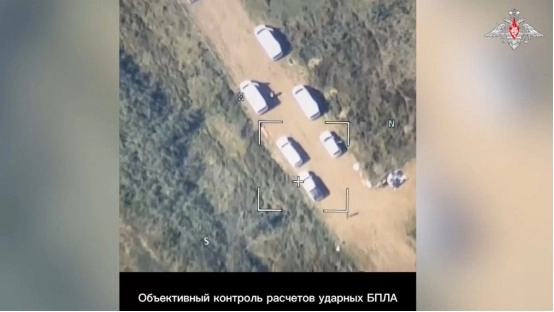
On Thursday, a Russian Iskander-M missile strike killed two humanitarian workers from the Danish Refugee Council and wounded eight others in the Chernihiv region. They were a demining team doing demining, and the vehicles were marked with Danish Refugee Council logos.
Russia’s Ministry of Defense claimed the site was prepared for long-range drone attacks. Image attached from the Russian MoD, you can decide if that looks like demining or drone site prep.
A window into the other two-thirds of the Black Sea Fleet
One of the Ukrainian “partisan” groups on Friday published images from Sevastopol military port showing a large landing ship rotting at the dock. According to the images and the group, this is a Project 1171 “Tapir” landing ship that has been anchored, with its superstructure covered with a camouflage net, for more than a year, and it’s not been to sea for more than two years.
However, the Russian navy moves it daily using tugs.
Most likely, the ship was put out of action during a big cruise missile strike on Russian navy warships in March 2024.
The point is, this ship is still carried on the Black Sea Fleet’s books, and according to some international observers, the vessel, which is an Orsk-class landing ship, is still a naval weapon affecting Black Sea security. But based on the picture, it’s a hulk and a write-off.
Latest chapter in the HUR vs. Orban war – parts pilfered from Hungarian Air Force MiGs
This is an excellent report from Radio Liberty. It seems Hungarian authorities have launched a probe into the recent disappearance of key components from eight MiG-29 fighter jets parked at Kecskemet military airport. The planes are decommissioned planes. It seems like electronic components and some weapons control systems were stolen. Hungarian authorities are seeking information about “unknown individuals who cut through the perimeter fence of the airport, drove onto the base, and gained access to the aircraft.”
There were about 20 Soviet-era MiG-29 at the airport. It is worth noting that Ukraine has a critical need for MiG-29 components and that Hungary supports Russia and its invasion of Ukraine, or more exactly, the Hungarian government says it supports “peace” with peace being Ukraine surrendering to Russia.
I think I am not alone in being certain this was a Ukrainian spy operation. What is funny is that if the Hungarian police get enough evidence, that’s a Ukrainian act of war, almost, against a NATO member.
But that would assume NATO as an organization is favorably disposed towards Hungary, which it isn’t.
In May 2025, Ukraine’s Security Service (SBU) announced the arrest of two Ukrainian citizens in Zakarpattia and accused them of spying for Hungarian military intelligence, and specifically for collecting information on local ground defenses, including S-300 missile systems, and assessing local sentiment regarding a potential Hungarian military incursion.
Ukraine said that was a hostile act, Hungary said it was all made up.
Last week, some of you will remember that Hungary declared the head of Ukraine’s drone forces a persona non grata, because he’s an ethnic Hungarian, yet his drone operators blew up Russia’s Druzhba pipeline, Hungary’s sole source of imported oil.
Reprinted from Kyiv Post’s Special Military Correspondent Stefan Korshak’s blog. You can read his blog here.
The views expressed in this opinion article are the author’s and not necessarily those of Kyiv Post.
You can also highlight the text and press Ctrl + Enter