I am back in Kyiv and just in time for the worst energy grid strikes since fall 2022. It’s been more than the normal week interval from the last review, so there’s lots of material to cover, but since not all of it’s fresh, I think better to concentrate on the strikes, at least for the beginning.
Russia’s Attempt to Kill Ukraine’s Power and Heating Grid
In general, the plan was a series of, so far, five heavy strikes starting when the weather really got cold, so starting in December, and either finishing in late January or still in progress, it’s just not February yet.
JOIN US ON TELEGRAM
Follow our coverage of the war on the @Kyivpost_official.
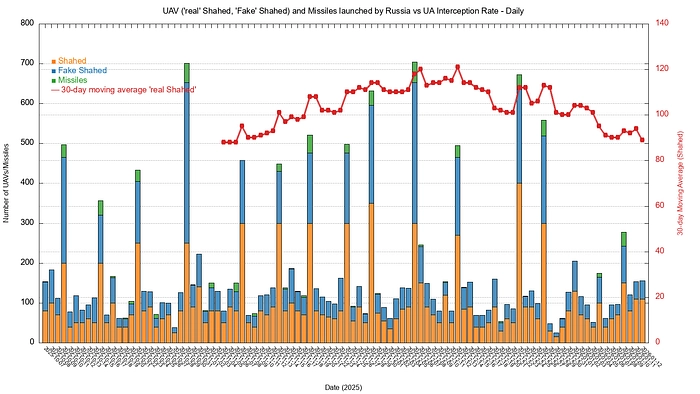
It’s not the most important thing but a key feature has been that for the first four attacks Ukraine very visibly had diminishing supplies of interceptor missiles, and in the fifth strike, they clearly had more. Here’s an article with details on that and the number of missiles and drones launched when, etc.
That “good” news notwithstanding, the bottom line of this big Russian bombardment campaign has been that the damage accumulated and repeat hits. The people the Russians were shooting at saw limited loss of public utilities with the first strike, but by the fifth, so on Jan. 20, it was very clear the strikes were piling up the damage. Effects as of Thursday, Jan. 22:
To kill heating in Kyiv for about half of the buildings for about 24 hours, and about a quarter of the buildings for two days so far.
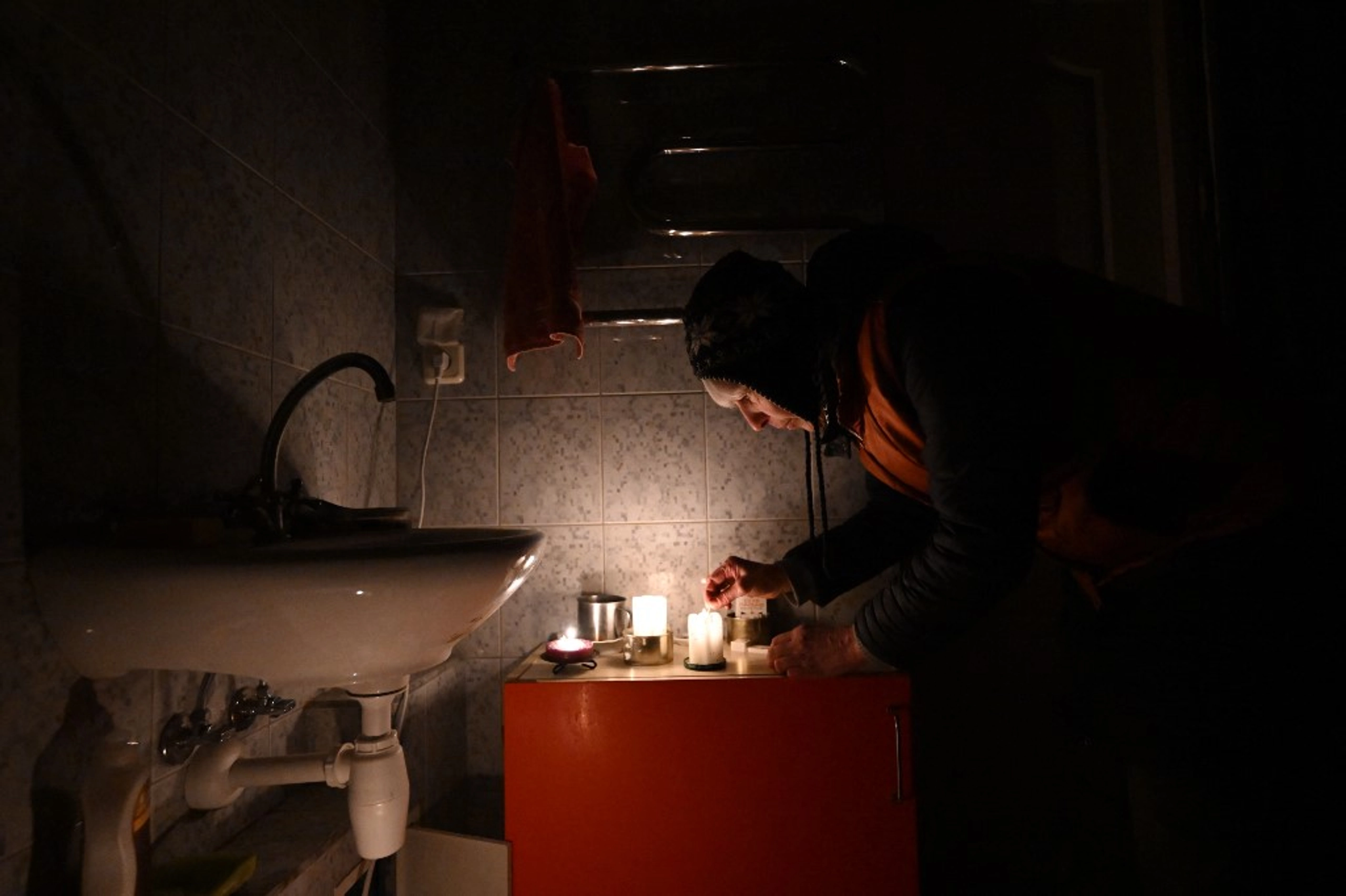
Worst power outages of the war since November 2022. The power company struggled to balance loads and distribute power and most people were without power and lights for at least 24 hours, many for 30-40 hours (my experience) and some for two days so far.

Ukraine's Banks Post Longest Credit Growth in 15 Years as Windfall Tax Threatens to Choke It Off
Metro, government, and emergency services continued to function, but at limited capacity
The three other cities the Russians seem to really dislike – Kharkiv, Odesa and Dnipro – suffered as well, but shutdowns weren’t quite as long as in Kyiv.
In those cities, as has not been the case in Kyiv for the past few days, authorities have generally managed to keep to a blackout schedule that basically rations electricity by time. For those of you who have never experienced it, yes, this sucks, but scheduled blackouts are far preferable to unscheduled ones. Particularly now in the fourth year of the war, when most people already have lights, candles, generators, blankets, water supplies, and so on to help them ride out the shutdown of utilities for several hours or maybe a day.
In Kyiv on Wednesday, authorities said they were getting the situation under control and promised they would invoke a “rigorous” blackout schedule, but the fact is that for the past week, there has been no blackout schedule in Kyiv, nor is there one for tomorrow.
This is the worst case I know of: In the Obolon district, in a high-rise, there has been no heating since Jan. 9, no water since Jan. 13, sewage is out, elevators are out, no word from authorities. Against this, the average one to two days without power seems not that bad…
Many of you will doubtless be worried that maybe Ukrainian morale will crack. Don’t worry, the Ukrainians are fine. Yes, there is griping by some that the power company seems either fearful of giving the public information, or more likely they just don’t have a handle on the situation.
Yes, Mayor Vitali Klitschko did say 600,000 people had “fled” the capital. This turned out to be a typical 21st century news factoid. What had actually happened is the mobile phone operators had counted the number of individual phone numbers not coming up on networks for more than 24 hours following the Jan. 20 strikes. As anyone in Kyiv will tell you, if your friend doesn’t have a reliable power source, he might just turn the phone off to save the charge.
There has been some finger pointing between the mayor’s office, the national government/Zelensky, and the power utility people about how come the electricity is off; maybe the transmission stations didn’t get armored enough, maybe the national government isn’t squeezing anti-aircraft weapons out of the foreigners efficiently enough, maybe the rules about air raid warnings are excessive because every time one is called lots of power utility workers have to leave the job site because they’re a government company so they can’t blow off air raid warnings like some civilians (ahem). But pretty much everyone understands it’s the Russians bombarding the city that need to be blamed.
My experience, the internet generally has worked. I use two providers (Lanet and Ukrtelekom), the second being a reserve service that runs on land lines. It has worked throughout, even when the entire city as far as I can see (I’m in a hi-rise usually) is as black as the heart of a Kremlin career climber. Lanet shut down it seems for a couple of hours, the last time that happened in 2022 it was because the reserve power source to their servers ran out of juice. Internet is communications and communications is public panic averted.
I really wish I could tell you stories about brave Ukrainians telling me to stick it to Mr. Putin, but honestly everyone is just coping a lot like if a city was caught in very bad weather for an extended time. Businesses work, cafes are open, people joke less, but the sense of humor is there.
If you want to feel sorry for people, well, I think it’s worse for the elderly and mothers in the apartment buildings that have to negotiate flights and flights of stairs, with a stroller or bad knees or something, in the dark, in the cold. It’s really a mean, nasty thing to force a Ukrainian Mama to drag about half her body weight up and down stairs so she can take her baby outside for some fresh air. The best bravery story I have for you, personally, is when I encountered one in my building try as I might the lady refused my help, her very friendly message was she was used to negotiating the stairs with a pram and bottles and purse and reserve winter clothes and everything else, thanks very much, kind of you, but no help needed.
If you want a hero story, OK, today at one of the power transmission stations on the river the tech guys ran down a water leak keeping the station from coming back online; it turned out a Russian weapon had cracked the base of the station and cooling water was draining out through the floor. It wasn’t visible from the outside, since the cracks were underneath big heavy equipment. The solution the Ukrainians came up with was to find skin divers to swim back and forth offshore of the station and (I assume there was dye) hunt for the leak underwater. It’s 12 degrees below zero centigrade in the middle of the day, snow and ice is everywhere, and hunting for water leaks, in river water, can’t go fast. Yet the power company found divers plural to do that job.
Also, we have learned something new in modern war: It turns out that yes, you can armor a power transmission station pretty well with reinforced concrete slabs, and yes, those slabs will really cut down the damage a Russian missile or kamikaze drone might cause. But, extra layers of super-heavy construction materials, that’s more masonry, where some problems won’t easily be visible.
There is basically zero talk about Davos, peace talks, Trump, Greenland and the Super Bowl.
Pretty much everyone in Ukraine has real life things to think about. If you say “peace process” to most anyone in Kyiv, you will get looked at like you are an idiot. The Russians are bombarding the city as hard as they can. What moron talks about a peace process? I’m not kidding, when Witkoff comes on the news, Ukrainians who know who he is laugh, it’s kind of a funny game to listen to find out what asinine, divorced-from-the-truth thing he’s going to say next (Today it was “Negotiations are going extremely well, peace is close”).
The Ground War Macro
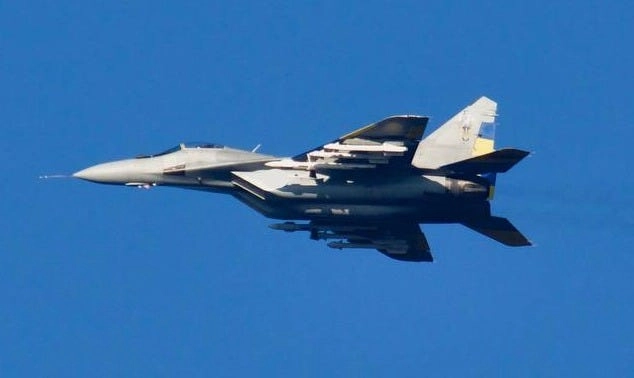
At the risk of using an overly predictable metaphor, I think it’s safe to say that, for the most part, it’s frozen. On the front, temperatures and wind already are severe enough that not only no one in their right mind would want to go out in the open, but a man outside and not prepared for that weather has an excellent chance of becoming a casualty the moment he stops moving. Maybe he won’t die, but he won’t be any good for fighting. Certainly, there are super-duper-power-trooper soldiers and units trained to deal with the cold weather; for the most part, the ones the Russians had are dead, and those still alive, the Russians are keeping away from the front.
The trend of Russian POWs is more of the same, but worse: felons, senior citizens, middle-aged men with big debts, foreigners from countries with living standards so low that Russia could be a place for them to earn, by their standards, decent money. This is not the material for resilient cold-weather troops, and even though the Kremlin keeps saying it’s winning, the fact is the daily engagement counts are down by about 30%, and days now go by when Russian forces, all 600–700,000 of them in Ukraine, across the entire front, manage maybe the gain of two farm fields. And often that’s not confirmed.
It is still possible to say “the Russians are still advancing in Ukraine” – just barely. But it is a whole, whole lot more accurate to say: “About 99% of the time when the Russians try and advance in Ukraine, they get stopped cold, often with very severe casualties.”
From the perspective of a person watching the fighting daily, in detail, it’s very obvious the Ukrainians have fought the Russians to a standstill and that almost always a Russian soldier ordered to attack won’t advance Russian control, he’ll just get killed or wounded. You really can’t take any other conclusion from the way the fighting is going. Maybe the pace will pick up when the weather warms (and after the snow and ice melt), but right now, well, again, frozen.
The Ground War Micro
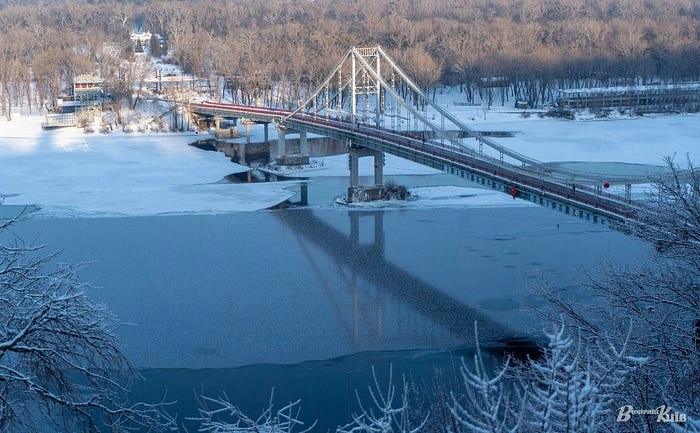
Kupyansk — Yes, the Ukrainians control it, the Russians were lying. This is absolutely confirmed. This is a definable Russian defeat that probably no one in the West will hear about, or if they do hear about it, care. I saw a report that the Columbian Legion (4th Bn/Khartiya Brigade) has been doing some of the building clearing, and that in that capacity they hoisted a (Ukrainian) flag in front of the Kupyansk city hall.
Pokrovsk — It’s now three months since it supposedly was taken over by Russian forces, actually, it’s still split with the Russians controlling the north and the Ukrainians the south. Both sides are hiding in bunkers and the war equals attacking each other’s supply, usually by drone, moving to forward positions.
Huliaipole — Fighting continues inside the city. There are signs of Ukrainian assault infantry slowly clearing more terrain. What is much more clear is that, same as in Pokrovsk, Dobropillia and Kupyansk before, the Russians seem to be better at scoring a quick gain than getting support and supply to the forces that did that. From the Russian news feeds, the reports are consistent and predictable: “Our heroic boys have no food or ammo because the evil Ukrainians keep blowing up/mining the supply.”
Along those lines here’s a window on the Russian side, among the milbloggers and limited unit media feeds, the topic of flag-planting-for-show is now no longer a taboo topic (I assume because of the Kupyansk scandal and all the egg on Putin’s face about that) and the general trend of the discussion is that planting a flag for drone-recorded media content is almost always a top-down operation ordered by Russian state propaganda.
However, and I think this makes sense, there is another reason. Yes, there are any number of evil, vicious, inhumane Russian combat unit commanders, but there is also a percentage that feels responsibility, is not happy about idiot orders from higher, and tries hard not to waste soldier lives. These commanders, I read, are just as, if not more likely to fake capture of a place by sneaking in a couple of men for a short flag-raising session, than the brown-nosers, because once created, the video will make higher command back off, they’ll never check, and then no soldiers die in a big attack to capture and hold a place swarming with Ukrainian drones. If at some point higher command demands further “advances,” all that requires is another relatively safe “flag patrol” because, after all, the lines are porous. And if the lie gets exposed later, it can always be written off with “Well, we killed all the Ukrainians when we were there, but we can’t be expected to keep them out forever.”
France and American Intelligence
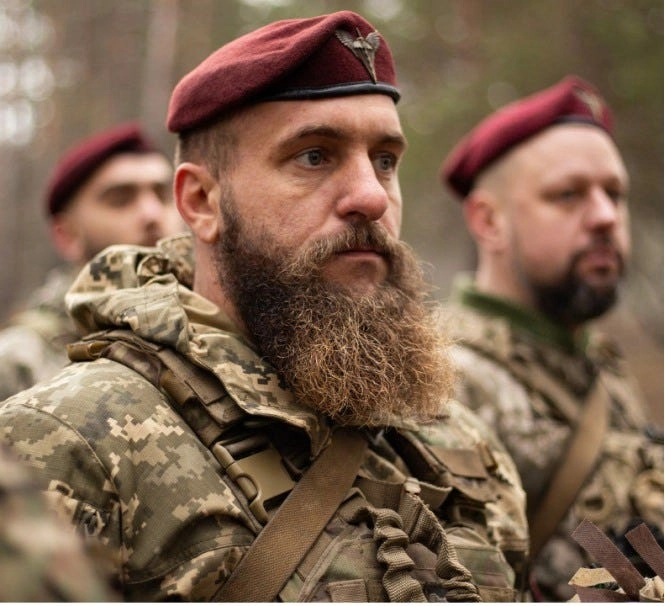
We have a better picture of what intelligence the Americans give Ukraine, thanks to French President Emmanuel Macron. Last week, check the date, he said, “Where Ukraine was overwhelmingly dependent on American intelligence capabilities a year ago, today two-thirds are provided by France. Two-thirds.”
This is very useful because France’s collection capacities aren’t the same as the US’s and so, when in the future we hear the Americans have (again) cut Ukraine off from intelligence feeds, we can understand better what that does and doesn’t mean.
Bottom line, Ukraine is about two-thirds more resilient to the US acting like a pack of jerks, but there are still ways the US absolutely can screw Ukraine on the intelligence front.
The main thing France brings to the table, is France’s own autonomous satellite constellation, notably the Composante Spatiale Optique (CSO) system, which provides very-high-resolution optical and infrared imagery (day/night capable). I read the third satellite launched (successfully) in March 2025, and the upshot of that is that if France is willing to provide it, Ukraine could get real-time, very high resolution of pretty much any piece of ground in Russia or Ukraine, which is exactly what Ukraine needs for deep strike targeting.

The thing is, it’s not all of what Ukraine needs. In simple terms, US satellites do the same thing, but they also hoover up electronic signals like radar emissions, and they intercept, and thanks to the NSA, decode phone conversations and data transfers. So, if the French satellite spots the Russian air defense system, très bien, but if it’s hidden and won’t be spotted unless its radar gets switched on, then America sitting on that intelligence will make it that much harder for the Ukrainians to hit the Russian radar.
This also has an impact on Ukrainian air defense and air operations as one of the things the Americans do obsessively is collect data (wave lengths, bandwidth, emitter power etc.) on air defense radars, and on their operation, so if a Ukrainian F-16 doesn’t have software with the latest updates on Russian air defense electronic signature, then there can be a hole in the F-16; its electronics might not be able to detect the latest Russian radar for instance.
But the flip side of that is, of course, every time the Ukrainians get their hands on a Russian cruise or ballistic missile and take it apart, the Americans would consider that absolute priority information, and shutting Ukraine off from F-16 electronics software updates would be a pretty effective way of preventing hard information and even actual components from the latest Russian missiles from reaching the Pentagon. In a normal world, the militaries would just trade the information, of course.
As I write this, it seems like the intelligence is being transferred, and the main leash the Americans seem to have is either playing games with what they “allow” the Ukrainians to hit in Russia with US weapons, or, whether they “allow” Ukraine to hit targets detected by US intelligence.
I have it on excellent authority, now from three sources, that the Ukrainians, as a matter of practice, don’t trust US intelligence fully and pretty much always will only attack something identified by US intelligence if they get a second source.
There is always the discussion of whether the US has a giant human spy network or if the US sucks at human spies because why bother, just intercept all the phone calls and data transfers, but I think it’s safe to say the French probably don’t have much of a spy network in Russia as well. But on the other hand, we know the Finns and the Germans also give the Ukrainians satellite overflight imagery.
So, bottom line, if the Americans decide to jump up and down and “screw Ukraine” to prove to themselves that they really are a superpower, it would be an intelligence loss for the Ukrainians, but as we have seen, not a death blow.

Russian Ull Bidness and the The Great Tanker Hunt and the Wonderful Russian Economy
This is best described in a series of factoids:
- Russian Urals oil is now below $40/barrel (bbl) for the first time in five years
- Russian exporters are discounting some oil to $26-28/bbl just to get buyers
- China, as of 2026, ended purchasing of Russian electricity; they now make more than they need.
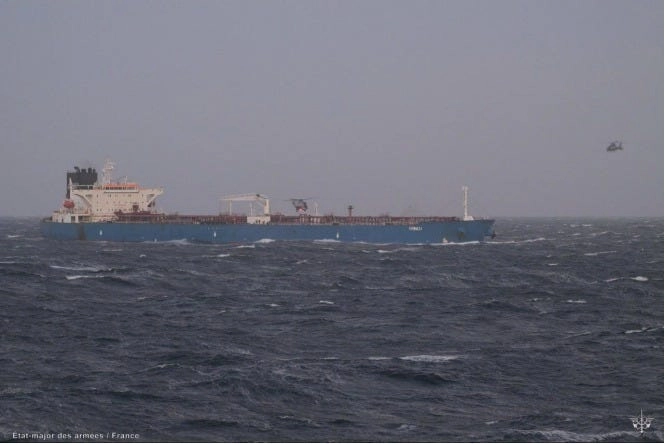
- As I write this, in the past month, we have seen at least eight Russian shadow tankers boarded and captured by the US.
- Some predicted this would start WWIII, but in fact, the Kremlin is pretending it isn’t happening.
- Ukraine, in the last month, hit at least six shadow tankers that we know about. Russia said that was bad.
- Bloomberg: Russian oil earnings over 2025 are down 25%.
- About 2/3 of Russia’s regions are in deficit, taking in less tax money than they need to cover state costs. A worst case would be the Russian region Khakassia, which appears to have run out of money so badly that it no longer can afford to pay salaries for police, teachers, and social workers.
- According to *official* Russian government numbers, the war boom is over, and the economy has flat-lined; growth for 2025 was 1%. Cynics would suggest Rosstat is probably lying and the real situation is worse, by a lot.
- About 35% of the Russian GDP isn’t productive; it’s for the military.
- The Russian national budget has the worst deficit since 2020, and unlike the Americans, the ruble isn’t a world reserve currency people want, so they can’t just print money to cover the deficit.
- “Official” inflation (5.6-5.8%) is at least half and by some measures only 1/3rd of consumer good inflation running at 12-18%.
The Ukraine Strike List
It never really gets reported outside Ukraine, but for the record, the Ukrainians are hitting Russia daily, there has been no letup, not for holidays, not for weather. Two to four sites hit every 24 hours, now for the past six months, every.single.day. So yes, the power is off a lot (actually it came back on as I wrote this…LATE ADDITION – And it was cut off again before I finished it), but, rely on it, the pain is going both ways.
294.Caspian Sea, Lukoil platforms (3), Jan. 11
295.Nobvocherkessk, GRES power station, fires, Jan. 12
296.Mariupol, total blackout, cause unclear, evening, Jan. 12
297.Lipetsk, UNK ground target, evening, Jan. 12
298.Rostov, heating plant on fire, cause UNK, Jan. 12
299.Taganrog, Atlant-Aero drone/military manufacturing site, Jan. 13
300.Leningrad region, compressor station, Jan. 13
301.Crimea, Gvardeyske, oil base likely, Jan. 13
302.Rostov, Elmis fuel processing factory, Jan. 14
303.Kuban, Nevynommysk, Azot? arms factory, Jan. 14
304.Orenburg, power transmission station, Jan. 14
305.Caspian, two tankers at berth, Jan. 15
306.Orsk, power transmission station, drones?, Jan. 15
307. Stavropol, Nevinnokissk, chemical factory, Jan. 15
308.Ryazan, Jan. 16
309.Berdyansk, power transformer station, Jan. 16
310.Melitopol, power transformer station, big fire spike, Jan. 17
311.Krasnodar region, Yeisk, power transformer station, possible break-down, Jan.17
312.Tuapse, Jan. 18
313.Bryansk, partisans claim transformer station blown up, Jan. 18
314.Saratov, oil refinery, Jan. 19
315.Saratov, Engels air base, air defense active, Jan. 19
316.Orlov, power station, Jan. 20
317.Crimea/Dzhankoi, airfield/air defense?, Jan. 20
318.Krasnodar?, falling interceptor missile?, apart. Bldg hit, Jan. 20
319.Saratov?, Afipsky oil refinery, falling S-300, Jan. 20
320.Belgorod, TeTs, possibly jet drones, Jan. 20
321.Krasnodar region, Taman port, Tamanneftegaz fuel loading terminal, Jan. 20
Reprinted from Kyiv Post’s Special Military Correspondent Stefan Korshak’s blog. You can read his blog here.
The views expressed in this opinion article are the author’s and not necessarily those of Kyiv Post.
You can also highlight the text and press Ctrl + Enter