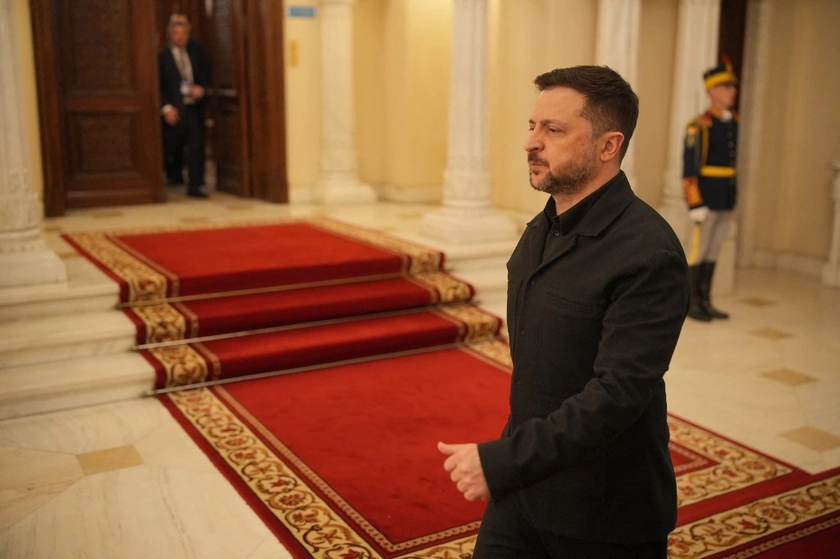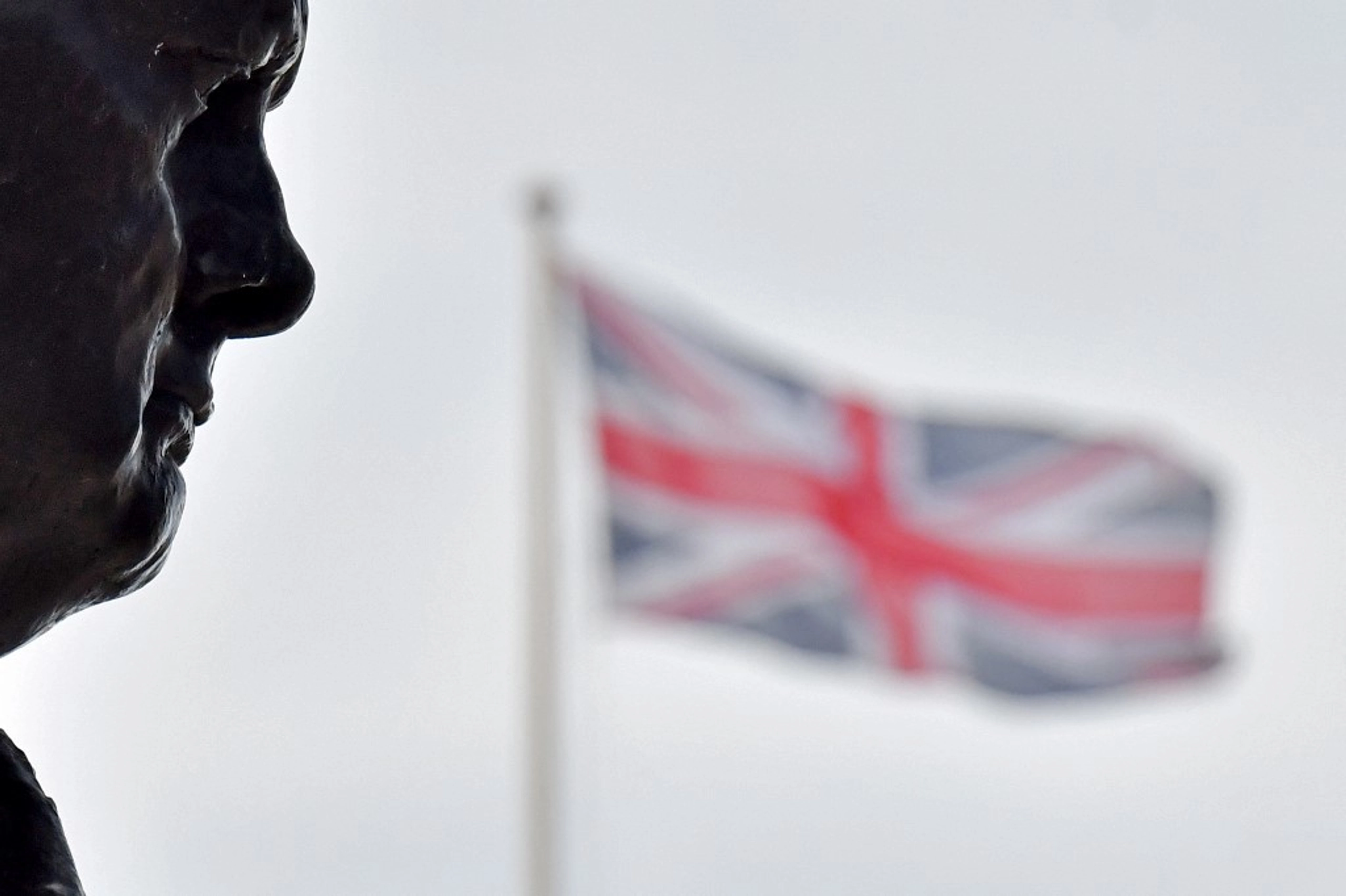
Ukrainian opinion polls show that President Volodymyr Zelensky remains highly respected. Ukrainians appreciate his patriotism, courage and diplomatic skills. Yet the same opinion polls suggest that in a runoff against an alternative candidate, today, General Vitaliy Zaluzhny, Zaluzhny would win. Observers often draw parallels with the defeat of charismatic British war hero Prime Minister Winston Churchill in July 1945 after the war had ended.
So far, the parallels look plausible. War heroes make many important decisions, and some are not appreciated. But a patriotic nation keeps quiet as long as the war lasts, because they see that their earnest leader works hard doing whatever he can. After the war, however, people want change. They raise concerns about which they have said little during the war, and they want the government to take care of many neglected issues.
JOIN US ON TELEGRAM
Follow our coverage of the war on the @Kyivpost_official.
In Britain in 1945, the Labour Party won the parliamentary elections in a landslide, and the labor government carried out a radical left-wing reform policy with large-scale nationalization, social welfare reform, and decolonization. None of this is likely to be an issue in Ukraine, because the world has changed so much and Ukraine’s concerns are very different. Ukraine needs a completely different policy agenda.
Today, it is difficult to fathom how different economic policy was during World War II. The state ruled supreme. All countries had extensive price controls, rationing and currency controls as well as far-reaching protectionism, while fiscal policy was loose and monetary policy run by the government. State procurement was a major part of the war economy.
Zelensky: Russia Shifts Donetsk Capture Deadlines – Now at 15 Attempts
In many countries, the communists were strong after the war, and they demanded far-reaching nationalization for ideological reasons. Many other parties, not only social democratic parties but also many center-right parties, thought that state ownership was the future. In December 1944, the Labour Party conference adopted a resolution to transfer to public ownership land, heavy industry, banking, transport, fuel and power. Most of this was done soon after labor formed its government in 1945. Nationalizations were more far-reaching in France and Italy, which both suffered from large communist parties. France even opted for communist-inspired state planning.
Today, however, few believe in the benefit of public ownership of large enterprises and nobody in intrusive state planning. Yet the extensive postwar nationalizations were not easily undone in spite of the damage they had caused to economic efficiency and innovation because strong bureaucracies and trade unions protected the status quo. The force and stubbornness of Margaret Thatcher were required to start turning this process around in the 1980s.
Ukraine suffers from even greater problems with its far too many large state-owned enterprises: They are hotbeds of corruption. Today we know how to deal with such problems. The whole policy agenda has changed. Nationalization is no longer seen as a cure, apart from in very particular cases, but a bane. Big state conglomerates need to be broken up to facilitate competition; each of the novel state-owned companies needs to get adequate corporate governance with independent professional directors and independent auditing; after elementary restructuring, the state-owned companies should be privatized. Meanwhile, Ukrainian entrepreneurs should be encouraged to start new enterprises and foreigners should be attracted to pursue direct investment.
But privatization is not sufficient. The rule of law needs to be imposed. Fortunately, Ukraine has a sound system of anti-corruption institutions that can pursue this important policy.
Another major plank of the postwar labor policy in Britain was social policy. In 1942, the liberal Lord Beveridge had presented a report on social insurance, which covered the whole range of social issues – full employment, housing, social security, a national health service, education, etc. The postwar labor government adopted his policies and implemented them. These policies were a novelty at that time but have become standard European policies, which Ukraine has embraced since long. They always require improvement, but they are no crossroad today.
It was the labor government that ended British rule over India (which Churchill strongly wanted to maintain), but that issue has no relevance for Ukraine.
Instead, Ukraine lives in a very different international environment between aggressive Russia and friendly Europe. Ukraine’s obvious interest is to integrate with Europe and receive as much support from Europe as it needs to be able to continue to stand up to Russia. The EU poses many conditions, but it has also much to offer. Its main demand is the rule of law, which is also a dominant Ukrainian popular demand.
The common idea that President Zelensky, just like Churchill, might lose an election after the war has ended in spite of his heroic achievements, sounds plausible, but Ukraine needs a completely different policy agenda than the British labor government pursued in 1945. Ukraine’s preconditions are not the least similar and our understanding of economics has evolved greatly. The biggest differences are the presence of a friendly Europe and a hostile Russia.
The views expressed in this opinion article are the author’s and not necessarily those of Kyiv Post.
You can also highlight the text and press Ctrl + Enter

Russia Hit by 660-Drone Overnight Barrage Targeting Moscow, Crimea and Key Military Sites