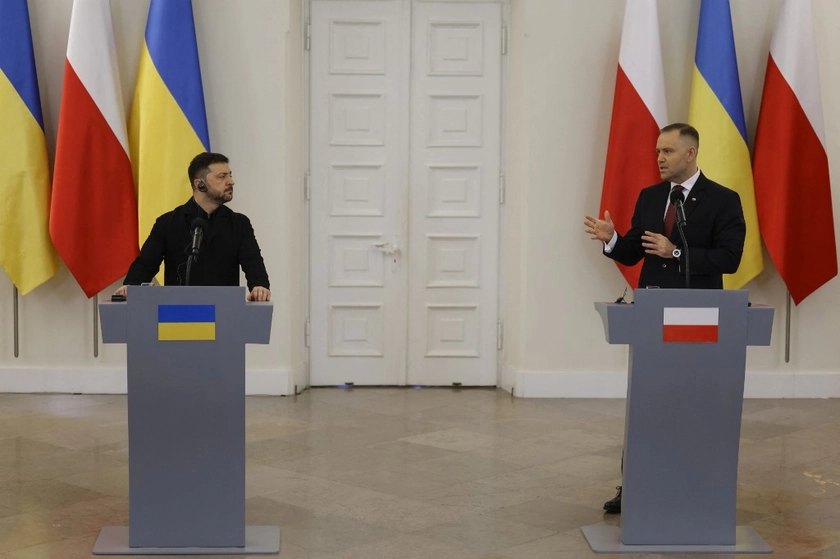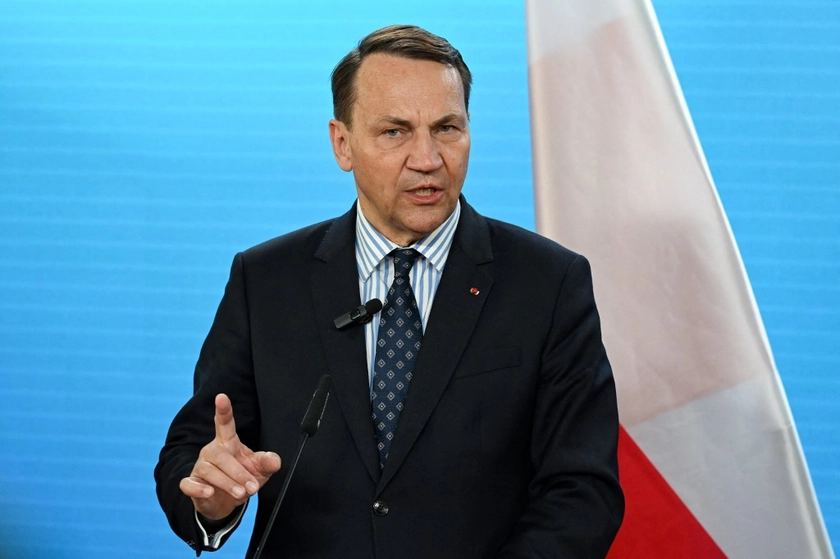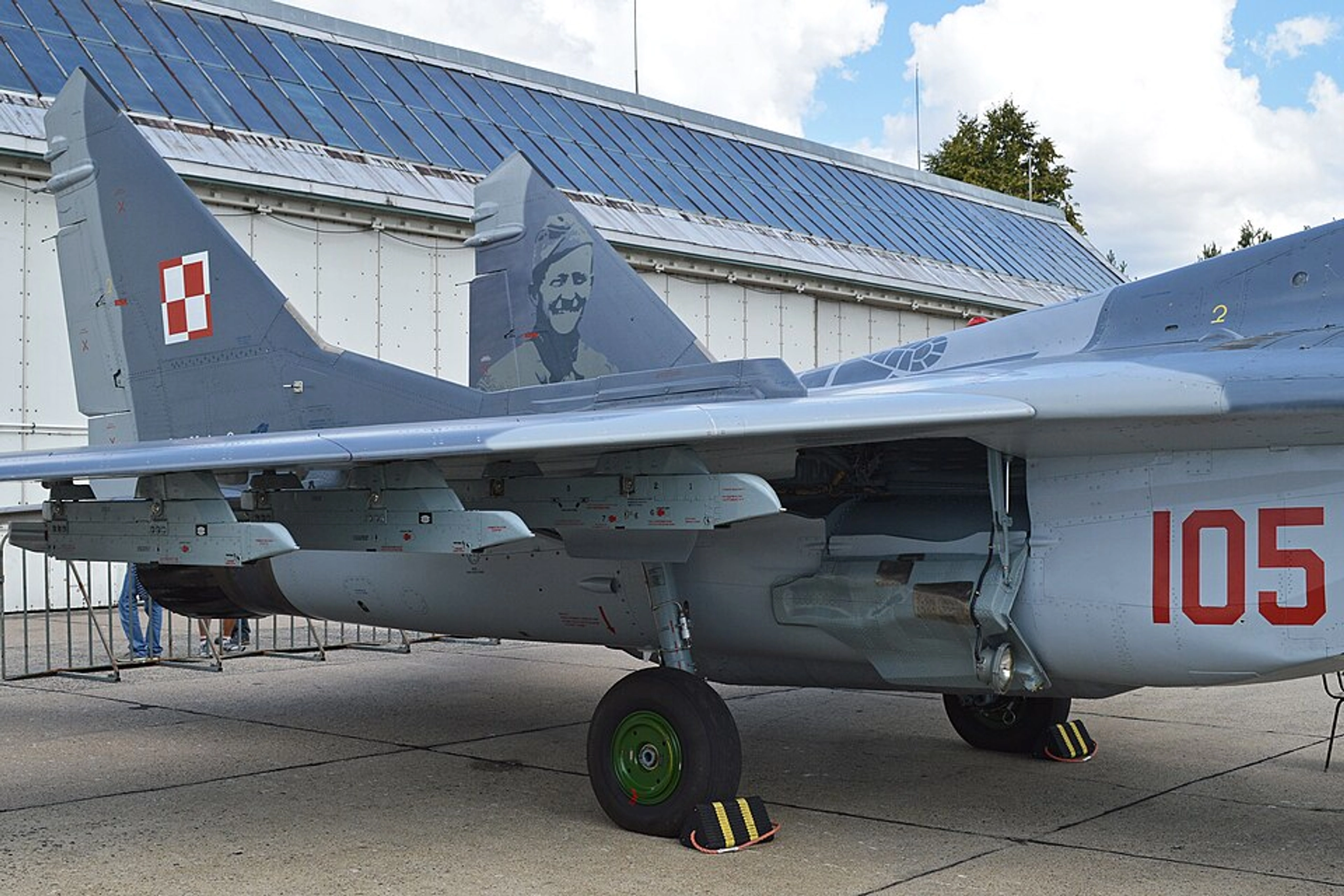
Poland’s Defense Minister Władysław Kosiniak-Kamysz on Monday said his government would not hand over fighter aircraft promised to Ukraine because Kyiv is refusing to share its advanced drone technologies with Warsaw and other allies.
Kosniak-Kamysz, leader of Poland’s conservative Polish People’s Party (PSL), announced the effective cancellation of up to 14 aging MiG-29 fighter airframes from the Polish Air Force, in an evening broadcast of the news program Gość Wydarzeń, for Polsatnews.
JOIN US ON TELEGRAM
Follow our coverage of the war on the @Kyivpost_official.
Responding to an interviewer’s question about Polish-Ukrainian military cooperation, Kosniak-Kamyz said his government, in talks with Ukraine, had suggested tying the aircrafts’ transfer to Ukrainian deliveries of drones to Poland, and to the transfer of Ukrainian drone technologies to Poland’s military and industry.
“I proposed, I think, a very partnership-based approach. MiGs for drones,” Kosniak-Kamyz said. “The Ukrainians initially accepted this and didn’t implement it, so there are no MiGs for Ukraine because there are no drones or drone capabilities for Poland.”
Since Russia’s 2022 second invasion of Ukraine, Poland has been one of Kyiv’s most committed and energetic backers, having sent the Ukrainian Armed Forces (AFU), to date, about $5 billion worth of military equipment, including hundreds of tanks, helicopters, and artillery systems. In spring 2023, as part of that assistance, Poland turned over to Ukraine 14 unused Soviet-era MiG-29 fighters, whose communications and electronics had been partially upgraded to NATO standards.
Ukraine Receives First €3.9B EU Defense Loan Installment
Talks since then to hand over to Ukraine another batch of non-upgraded MiG-29 aircraft (potentially 11 single-seat fighters and three two-seat trainers) stalled, in part, because of disagreements between Warsaw and Kyiv on who would pay to fit out the obsolescent aircraft with modern equipment.
The Ukrainian state-run news agency Hromadske, in a Tuesday report, said that the cancellation probably affected six to eight MiG-29 fighters that had been written off by the Polish military and were to have been transferred to the Armed Forces of Ukraine (AFU) by the end of 2026.
Kosniak-Kamysk said that Ukraine’s government had agreed to give Poland drone know-how and “partially share” advanced drone technology but, “they [Ukraine] withdrew from these arrangements.”
Poland remains a staunch ally of Ukraine, but assistance between the two countries must go both ways, and Ukraine has world-class drone technologies that can help Poland, he said.
“Unlike the previous government, we don’t just say we’ll subsidize [Ukraine], but we expect the principle of solidarity. The principle of solidarity – you help, but also, if your partner sees they can support you, can show you new solutions, you share that information,” Kosiniak-Kamysz said.
The AFU-linked news channel Operativny ZSU on Tuesday confirmed disagreements on which side might pick up the tab for aircraft upgrades, and the Ukrainian disinclination to share unique-to-Ukraine military drone technologies had been factors in killing the MiG-29 airframe transfer, but cited the airplanes’ “unsuitability for combat in modern war” as another reason the AFU chose not to go forward with the deal.
Ukraine’s Air Force operates a mix of 1990s-era F-16 fighters donated by Norway, the Netherlands, and Denmark, according to open sources, numbering about 21 aircraft. Along with those NATO hand-me-down warplanes, Ukrainian combat pilots fly a few MiG-29 and Su-27 fighters dating back to the late Soviet era, and from time to time, one or two Cold War-era Su-24 bombers, all left over from Ukraine’s days as a Soviet republic.
Slovakia and Poland, collectively in 2023, turned over to Ukraine 27 partially upgraded MiG-29 fighters, which Ukraine found unsuitable for air defense and interception work but suitable for dropping jury-rigged NATO-standard bombs or missiles. Because of years of intense combat operations, only a few of those aircraft are thought to still be flyable. On June 27, Ukraine lost at least two MiG-29s in a single day, one on the ground to Russian drone strikes and one to a long-range air-to-air missile.
In late May, Ukraine and Sweden signed an agreement for Ukraine to receive up to 36 fully modern Saab Gripen C/D fighter jets in a donation/purchase deal worth close to $3 billion, with first deliveries in early 2027. Designed specifically for combat operations against the Russian Air Force and equipped with state-of-the-art radars and missiles, the Saab Gripen outclasses any aircraft currently operated by the Ukrainian Air Force, and by technology is almost a half century more advanced than the old MiG-29s Ukraine now won’t get from Poland.
In 2023, the AFU, faced with a shell supply deficit and artillery unable to shoot for lack of ammunition, turned to small tactical drones as a way to keep fighting against Russia. Ukraine’s drone technologies and military drone units expanded at a rapid pace in the following years because of a partial US halt to military support in 2024, followed by a near-total cut off of US military support in 2025.
Currently, the AFU’s drone forces are the world’s biggest and most capable. About two of every three Russian soldiers killed or wounded, or major military systems destroyed on the Ukrainian battlefield, are from a drone attack, according to AFU official counts. In NATO exercises in Estonia and Sweden in 2025 and 2026, small Ukrainian drone teams invited to battle training “destroyed” conventional tank and armored infantry units opposing them, with no “losses” suffered by AFU drone pilots and technicians.
Tactical drones purpose-built to meet battlefield needs, the capacity to manufacture seven million drones of various types in a year, advanced long-range drones built of modern composites adapted to penetrate modern air defenses, and a combat-tested corps of drone pilots and operators, and the training and maintenance infrastructure to support them, are the mainstays of Ukraine’s drone forces, military analysts say.
Political tension between Poland and Ukraine has flared up in recent months over World War II conflict between the two groups, including mass murders that have been controversial among historians in both countries for decades. Catalysts for the dispute’s becoming a fracture point in usually friendly Polish-Ukrainian relations include the election of conservative/right-wing historian Karol Nawrocki as Poland’s president in August 2025, and a Kyiv decision to award the honorific “Heroes of the UPA” to a special operations headquarters unit in May 2026.
Politically, most center-right Poles consider the World War II-era group the Ukrainian Insurgent Army (UPA) responsible for the mass murders of ethnic Poles in 1943-1945.
Ukrainians across the political spectrum consider the UPA, which fought against both the Red Army and the German Army, to be a band of exemplary patriots who were battling for their country’s independence much as the AFU is fighting against the modern Russian armed forces today.
You can also highlight the text and press Ctrl + Enter

Poland Rejects Mediation in Ukraine Dispute