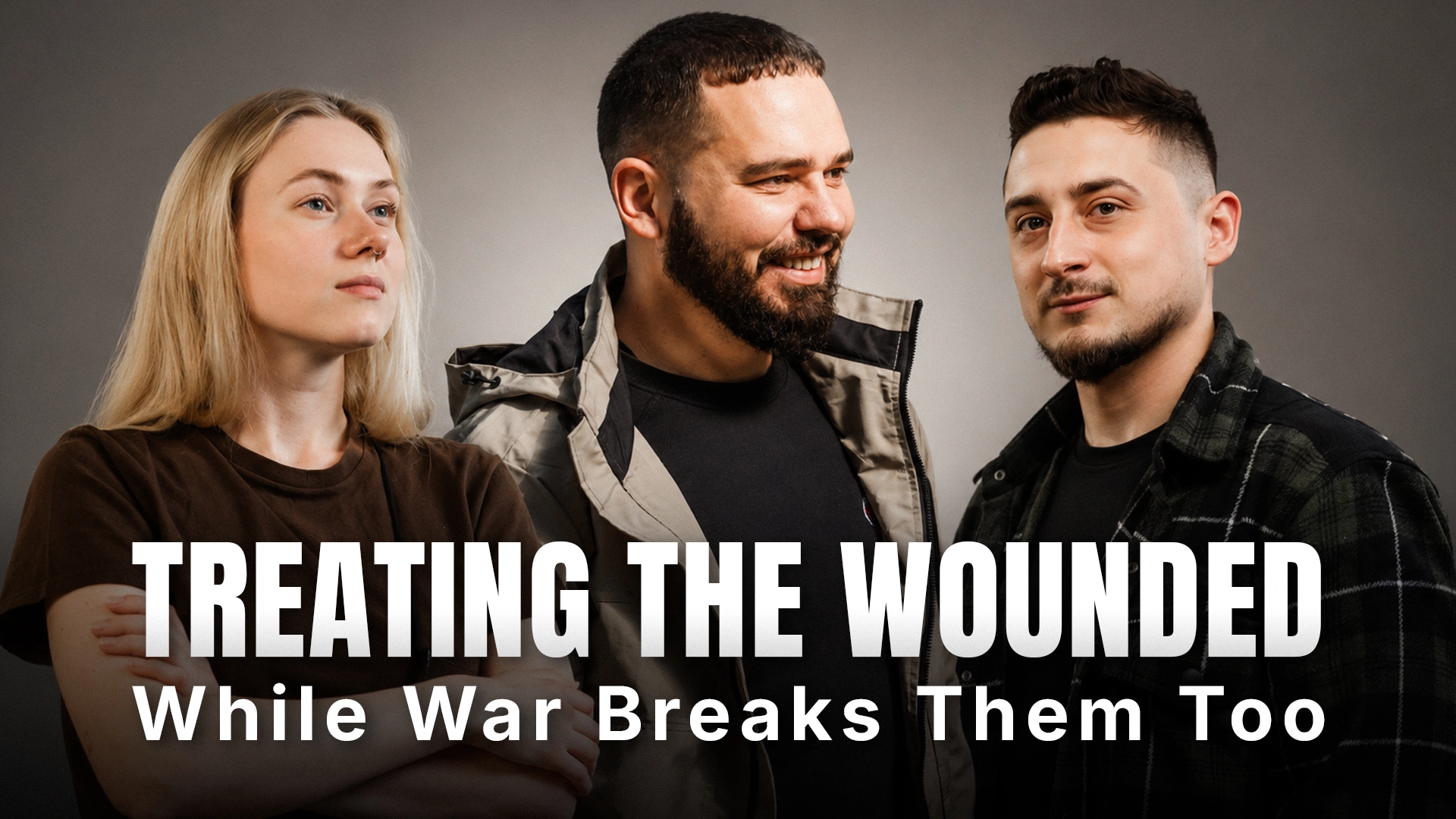
A fragile blonde combat medic who joined the army after losing her fiancé in Irpin. A young paramedic who refused to stand aside while his country fought for survival. A battlefield medic who treated a wounded Russian soldier because, despite everything, saving lives remained his duty.
These are just some of the people brought together by the Repower Foundation’s recovery program in the Carpathians – a rare space where Ukrainian frontline medics can briefly step away from war, process trauma, and remember what life beyond the battlefield feels like.
JOIN US ON TELEGRAM
Follow our coverage of the war on the @Kyivpost_official.
Since 2022, Repower has organized recovery programs for nearly 2,000 Ukrainian military medics and doctors in Ukraine, Sweden, Denmark, and Spain.
Elena: grief turned into purpose
At first glance, Elena Olenivska hardly fits the stereotype of a frontline combat medic. Fragile and strikingly beautiful, the blonde medic carries herself with calm restraint. But beneath that calm lies a story shaped by devastating loss.
Elena joined the military after her fiancé was killed in Irpin on March 5, 2022.
“That’s all,” she said, when asked what motivated her to enlist.
Her mother urged her to leave Ukraine and go abroad. But even she eventually understood there was no stopping Elena.
“She sat in the kitchen in front of me and said: ‘I’m trying to persuade you here, but I understand that you’ll return on foot,’ then stopped.”
Ukraine Arrests Former Russian-Installed Crimea Energy Minister in Kyiv
Elena returned briefly to Chernivtsi but felt completely disconnected from civilian life. Walking through the city, she realized she no longer shared anything with the people around her.
“I don’t know what these people are about, and I have nothing to do with these people. And we have nothing in common.”
Soon, through a chance connection, she met Kateryna Halushka from the Hospitallers – a Ukrainian volunteer medical battalion that has been active in the Russian-Ukrainian war since 2014, providing frontline medical aid in the Donbas. The unit delivers first aid, home medical care, and evacuates wounded Ukrainian soldiers from the most dangerous combat zones.
One conversation changed everything. Kateryna mentioned she needed a paramedic for her crew. Elena, whose first education was in paramedicine, agreed almost immediately.
She considered joining an assault unit instead, imagining the dramatic arc of dying heroically in battle. But she ultimately rejected that path with unusual clarity.
“It would be nice, bright, but very short. Everyone would write about me – what a beautiful romantic story. And they would quickly forget.”
Instead, she chose the harder path: staying alive and being useful.
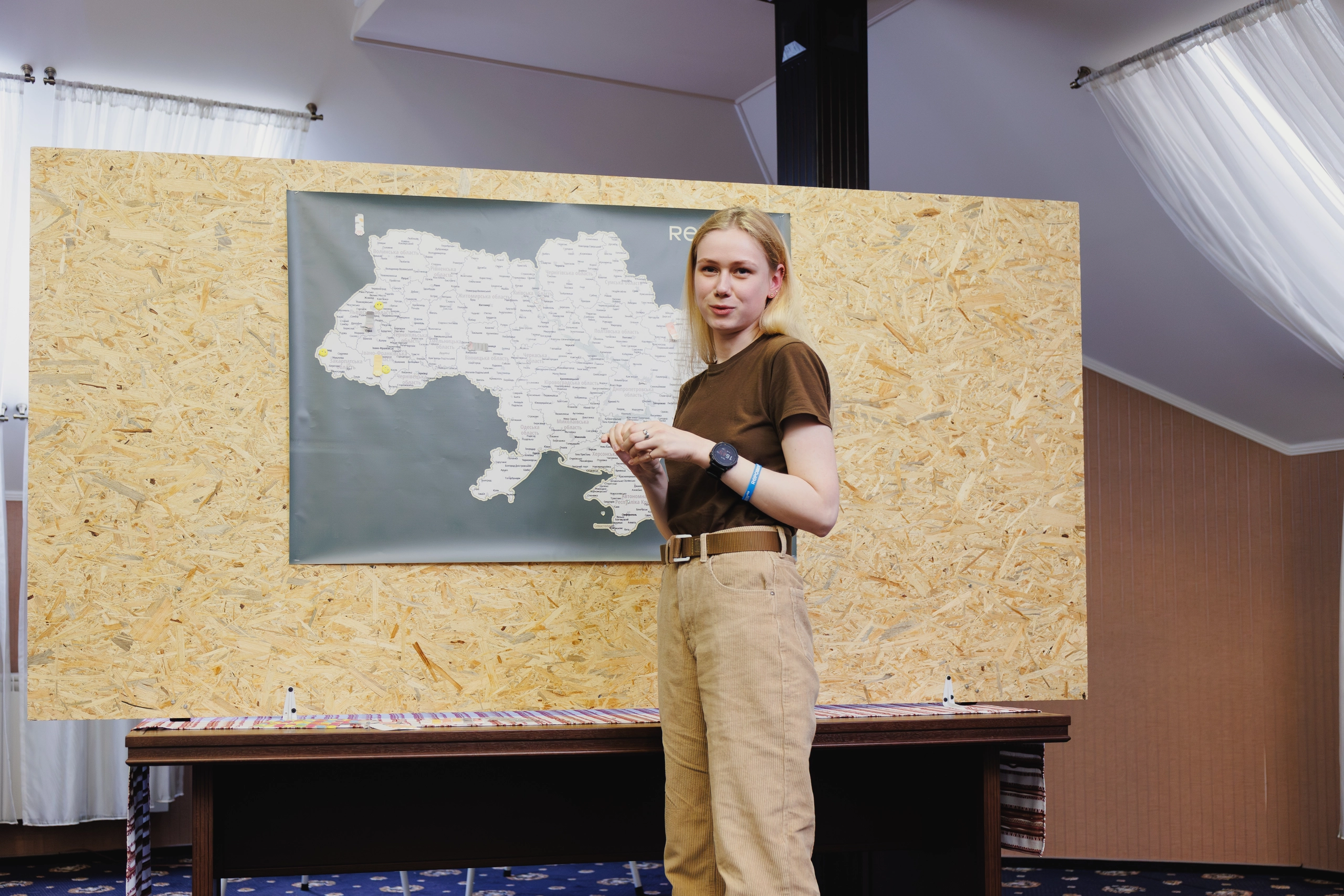
Since then, she has worked across a vast stretch of the front, from the Chernihiv region to the Zaporizhzhia region, with her first rotation near Avdiivka remaining especially vivid.
For Elena, every day at war is its own challenge – not only because of shelling or evacuations, but because military life forces people from radically different backgrounds into an intense, closed environment where cooperation is non-negotiable.
What Repower gives her is not necessarily safety in the literal sense – a concept she no longer fully believes in.
“With the methods by which we are currently waging war, what I realized most was that the issue of security does not exist.”
Instead, she values something more realistic: a safer emotional space. For her, healing happens not primarily through psychologists or formal exercises, but through conversations with people who truly understand.
“The truth is in dialogue,” she said.
A therapist can offer tools, she added, but fellow soldiers can offer something equally important – lived experience.
“Another soldier will say, ‘I had such a sh**show, but I dealt with it this way.’ And you’re like – maybe I’ll try that too.”
Ivan “Ivo”: the medic who refused to stand aside
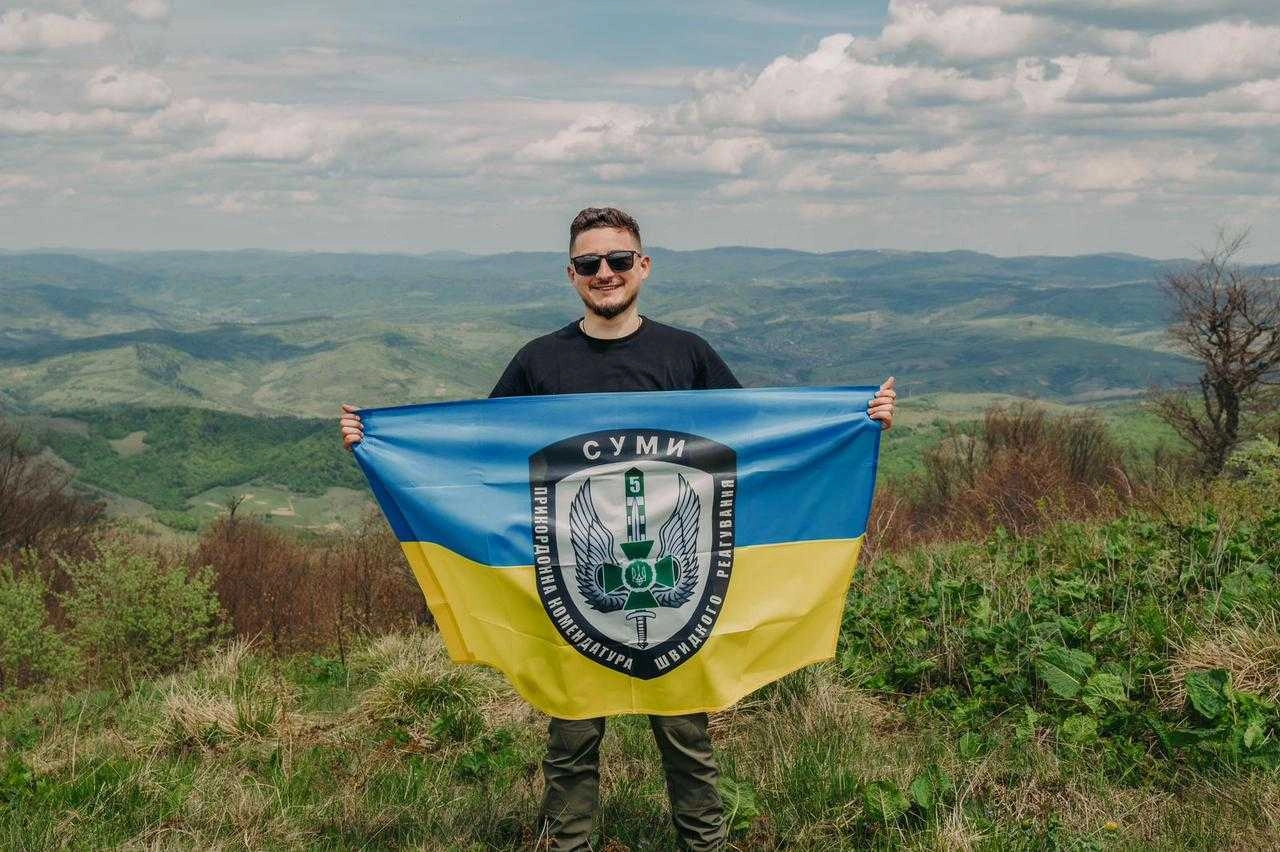
Ivan “Ivo” joined military service with the State Border Service in 2019, shortly after graduating from medical college. He was young – very young by battlefield standards – but he already knew he did not want to remain a bystander.
His uncle served in Ukraine’s Armed Forces (AFU) and fought in the Joint Forces Operation, leaving a deep impression on him.
“I realized that I also had to do something for this country,” Ivan said. “Everyone can stand aside, but not everyone can take on responsibility. I decided that I would not be everyone.”
Since the start of the Russian full-scale invasion, Ivan has fought in some of the war’s most intense sectors: the liberation of Sumy, the 2022 Kharkiv counteroffensive, the Lyman-Kupiansk axis, and later the Kursk direction.
Now serving near the Sumy-Kursk sector, he leads a medical evacuation team responsible for pulling wounded soldiers from armored vehicles to stabilization points or hospitals while providing life-saving care en route.
The greatest challenge, he said, was overcoming fear – especially the fear of making mistakes. When you are young, he said, mistakes are often seen as part of growing up. But war offers no such grace period.
“When you are a doctor, and also in the army, and also during war, a mistake can cost someone their life.”
That pressure, paradoxically, became his strength.
Ivan said he takes pride in one fact above all others: throughout his evacuation work, not a single serviceman has died in his arms.
“And this, in my opinion, is a big victory for me personally and for my team.”
For him, one of the most painful experiences is losing comrades. Sometimes he does not witness the death directly – he simply hears a radio message or sees a notification in a military chat.
“When you hear over the radio – or read in a chat – ‘Corsair 200,’ [200 is military code for killed in action] it’s a deeply unpleasant feeling.”
Still, he believes medics cannot allow grief to interfere with saving the living.
“You have to keep yourself focused, because the death of one cannot stop you from helping those who are still alive. You will no longer help the dead, but you always need to help those who are wounded or still alive.”
Modern drone warfare has made his job dramatically harder. Russian drones now reach much deeper behind the line, and fiber-optic drones are especially dangerous because traditional detection tools are becoming less effective.
As a result, evacuation routes are increasingly restricted, often forcing teams to move wounded soldiers long distances on foot or via robotic platforms.
Repower, Ivan said, helped him regain psychological balance. After his first recovery program, he returned transformed.
“I came back a completely different person.”
He said the experience taught him how to process stress constructively – something he now passes on to his team.
“Stress is our friend who is always with us. You can’t get rid of him, but you can come to an agreement with him.”
Serhiy: saving an enemy
Serhiy Zhuravlyov, currently serving with Ukraine’s 44th Mechanized Brigade, became a soldier on the very first day of Russia’s full-scale invasion.
Having graduated from medical college – now an academy – and being liable for military service, he received a call on the first day of the invasion informing him that he had been mobilized. At the time, he was taking his family to his mother’s village.
Since then, Serhiy has served in the Chernihiv region, the Donetsk region, and Russia’s Kursk region.
Recalling the Kursk Offensive, Serhiy said his unit did not arrive at the beginning of the operation. Instead, they encountered retreating Ukrainian forces and, as he described it, “there was such disarray, it was difficult.”
“We lost people, and some were captured. People who should not have been taken prisoner – including signalmen and officers.”
Describing his most difficult experiences, Serhiy pointed to events in 2023 during his first combat engagement, which he said was a major psychological shock.
He was serving as a medic during a counteroffensive operation when casualties began arriving suddenly.
“I couldn’t reach everyone because the situation was extremely tense. I helped those I was able to, as best I could. We did what we could.”
It was also during this period, he said, that he first encountered captured enemy soldiers. One of the most emotionally complex moments was treating a wounded prisoner with broken legs.
“On the one hand, it’s the enemy, I understand, but on the other hand, I’m a doctor, and I know I have to try to save them because they’re part of a prisoner exchange fund.”
That decision carried practical weight too. Medical supplies at the front are precious, and he had to use expensive consumables from his own pack on someone fighting for the other side.
“You save these consumables because you suddenly need to save your fighters.”
Yet he did it anyway.
Another deeply painful memory involved an observation post hit by shelling. He had just gone to rest when fellow soldiers rushed in to tell him there had been a strike. Two soldiers died, including one who had just become a father.
Serhiy also spoke about the constant stress of battlefield uncertainty, describing communication checks and the fear and anxiety of losing contact with positions.
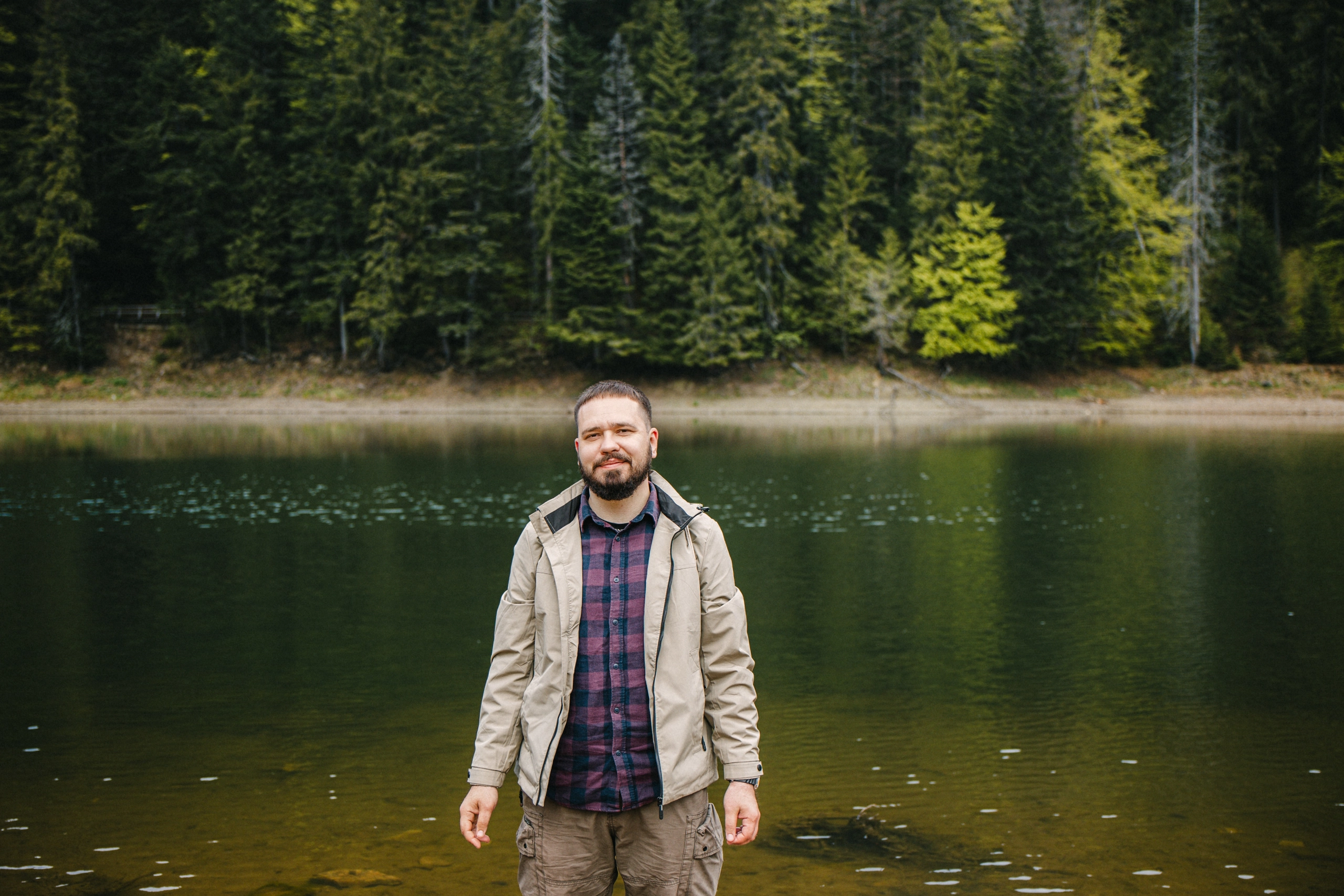
That is why Repower mattered so much. In the Carpathians, Serhiy climbed mountain peaks and experienced something rare: there was physical strain, but no moral burden.
Usually, he said, everything in a combat zone feels oppressive.
As he put it, it felt easier because “it was only physically difficult,” while mentally he could rest, knowing there was “zero responsibility” in that moment compared to combat conditions.
You can also highlight the text and press Ctrl + Enter
Russia Hit by 660-Drone Overnight Barrage Targeting Moscow, Crimea and Key Military Sites