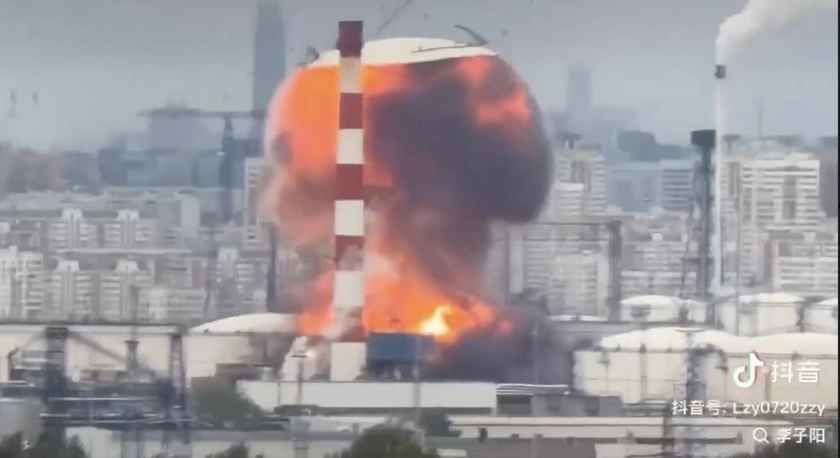
Ukrainian air defenses protecting homes and businesses across the country face increasingly effective Russian missile and kamikaze drone strikes, where shortages of a critical US-made interceptor missiles have opened a dangerous opening in Ukraine’s skies, a top defense ministry official said on Sunday.
Kremlin strategists are shifting from tactics of massed strikes by dozens and even hundreds of cruise, ballistic and hypersonic missiles intended to overwhelm Ukrainian defenses, to using focused strikes employing smaller numbers of missiles but accompanied by dozens of drones upgraded to be less visible on radar, senior Air Force spokesman Yury Ihnat said.
JOIN US ON TELEGRAM
Follow our coverage of the war on the @Kyivpost_official.
Recent Russian ballistic missile attacks have hit cities either simply lacking sufficient missile systems to defend themselves or targeted a metropolitan area where there aren’t enough interceptor missiles to handle the incoming Russian strike, as was the case during Sunday’s attack against the capital Kyiv, Ihnat said.
“Russia launched six ballistic missiles at Ukraine [on Sunday]. Of them, five attacked Kyiv and the surrounding region. Unfortunately, of those ballistic missiles [Ukrainian air defenses] only managed to destroy only one. The rest hit, unfortunately,” Ihnat said.
Ukrainian media has reported that, following an emergency 90-missile delivery sent to Kyiv by the outgoing US Democratic government in January 2025, Ukraine has received no further Patriot missiles – the only weapon in the Ukrainian inventory capable of shooting down a ballistic missile.
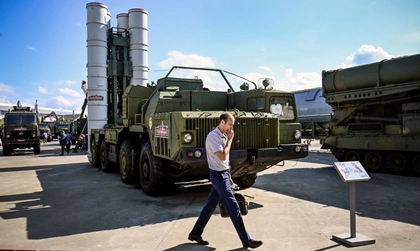
Moscow Expands Air Defense Sites in City Parks
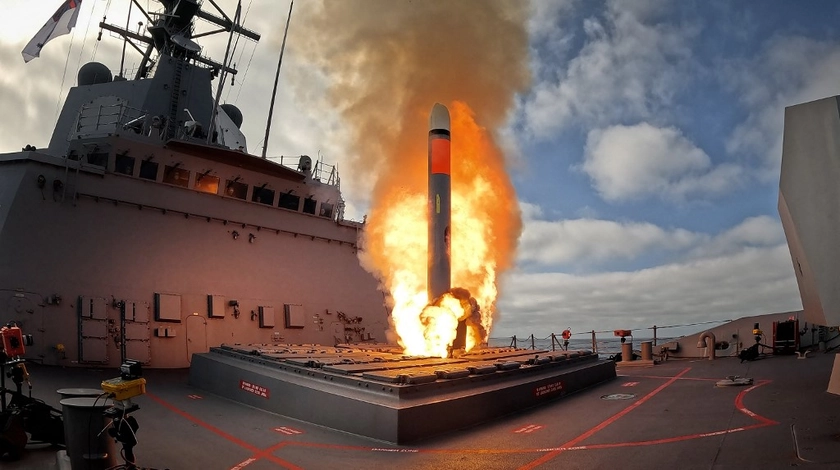
In May 2023 the missiles, made by Raytheon, made headlines by destroying an incoming “hypersonic” missile, for the first time ever by any weapons system in combat. In November 2024 Ukrainian Patriot operators scored one of the most decisive air defense victories of the entire war, picking off nine near-hypersonic Kinzhal missiles and Russia’s most-advanced Zirkon hypersonic missile in a single night.
But air defense technology is constantly changing, and past success is no guarantee of the same result in the future, Ihnat said.“As the war progresses, the enemy is modernizing its means of air attack [UAVs, cruise and ballistic missiles], which, in turn, complicates the work of our air defense, including for Western systems,” Ihnat said in a statement. “As for the Patriot anti-aircraft missile system, this unique system is capable of operating against aerodynamic targets [aircraft, cruise missiles] within a radius of up to 150 kilometers (94 miles), but against ballistic missiles only within a radius of several dozen kilometers! It is impossible to protect large territories from [Russian] ‘ballistics’, because we do not enough Patriots to do that.”
“The enemy is modifying its missiles and drones, and Ukraine is passing information on this to Western partners to improve anti-aircraft systems,” Ihnat said.
In February Ukrainian news platforms reported that North Korean missiles obtained and fired by Russia since mid-2024 had improved in accuracy thanks to installation of Russian guidance systems a generation more advanced than those built by Pyongyang.
The nuclear-capable KN-23 and KN-24 missiles Russia got from North Korea, were initially unable to get within a kilometer from its intended target. By late 2024 the miss distance was brought down to 50-100 meters, the Reuters news agency reported citing South Korean defense intelligence officials.
Kyiv Post reported in late November that Russia had also upgraded its Kh-101 cruise missiles with stronger guidance electronics and a more powerful warheads.
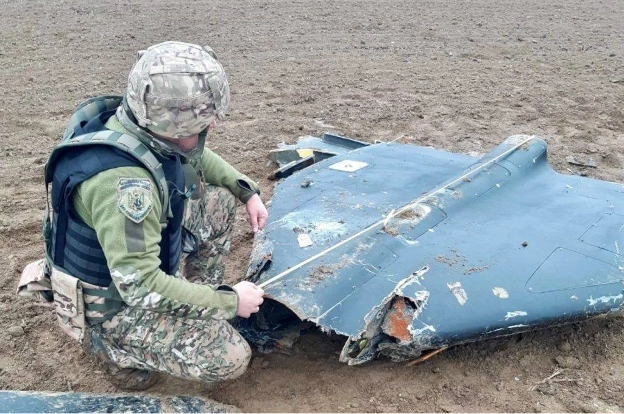
The most common Russian strike weapon against Ukraine, the Iran-designed Shahed-136 kamikaze drone, has seen almost continuous upgrades since its introduction into combat in early 2023. A refrigerator-sized flying wing is normally launched in packs of five relatively cheap drones against which Ukrainian air defenses had initially to deploy expensive anti-aircraft missiles sometimes costing ten times more than the drone they needed to shoot down.
Ukrainian air defenders then began to counter the Shahed threat with some 80 self-propelled Gepard anti-aircraft autocannon vehicles donated mostly by Germany, and hundreds more anti-aircraft cannon and heavy machine guns the Ukrainians mounted on pickup trucks deployed to places frequently attacked by the Russian drones. To this the Ukrainians added a nationwide acoustic sensor network using artificial intelligence (AI) to pick out the sound of incoming drones, geo-locate their locations and pass the data to gun teams.
The initial Russian response was to paint drones dull black so they would not show up so easily in search lights, and then to improve the drones’ computerized control system so they could fly lower and change direction more often.
In late December Ukrainian intelligence teams found that Shahed manufacturers had shifted from aluminum-plastic construction to carbon fiber, probably to lighten the aircraft and decrease its radar signature. Over 2024 the combat payload of a Shahed drone was increased from 50 to 90 kilograms (110 to 200 pounds) of explosives, and its range increased by about 140 kilometers (87.5 miles), thanks to a more efficient engine and lighter components according to pro-Russia media.
Once they became aware of the Ukrainian network of acoustic sensors were listening for Shahed drones, Russian engineers modified their drone motors so the aircrafts’ audio profile would be different to the sounds the listening system was programmed to detect. Ukrainian engineers countered by building AI into central processors capable of discriminating changes to the sound signature in the Russian drones.
Ukraine’s HUR military intelligence agency said in an April 7 statement that engineers taking apart recently shot-down Russian drones found chips made by the US companies Texas Instruments and Linear Technologies inside the aircraft. They were part of a Controlled Reception Pattern (CRP) antenna which allows the drone to receive electronic instructions despite Ukrainian electronic warfare attempts at jamming.
The primary chip in CRP antennae for kamikaze drones attacking Ukraine are manufactured by China’s Beijing Microelectronics Technology Institute. Ukrainian military intelligence also has for the first time found Indian electronics inside Russian drones, specifically a clock buffer - in layman’s terms, an electronic data separator - manufactured by India’s Aura Semiconductor.
US sanctions ban export of American high-tech products like the Texas Instruments and Linear Technologies chips found by the Ukrainians inside the Shahed to Russia, but Moscow has found it relatively easy to bypass the sanction by importing the chips through intermediate countries. Excepting their own national security priorities, neither India nor China limit the sale of high-tech products to Russia.
You can also highlight the text and press Ctrl + Enter