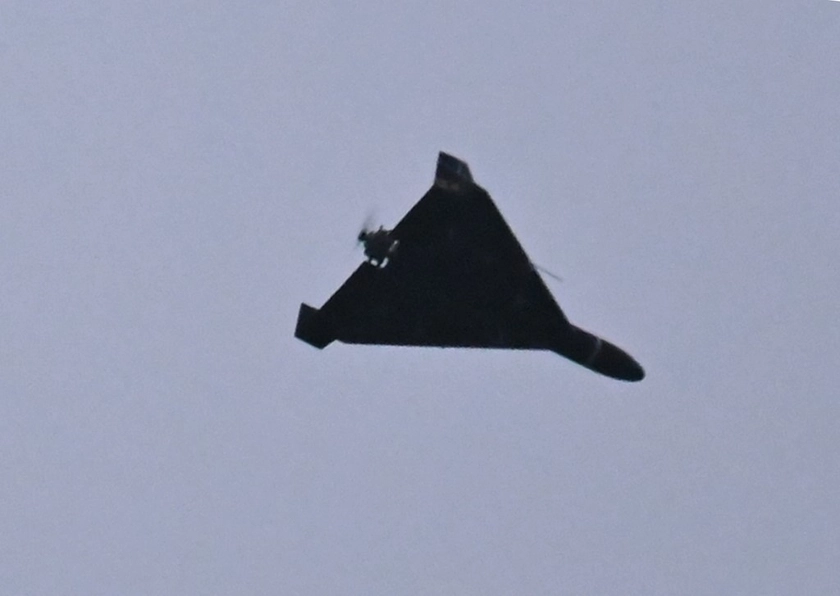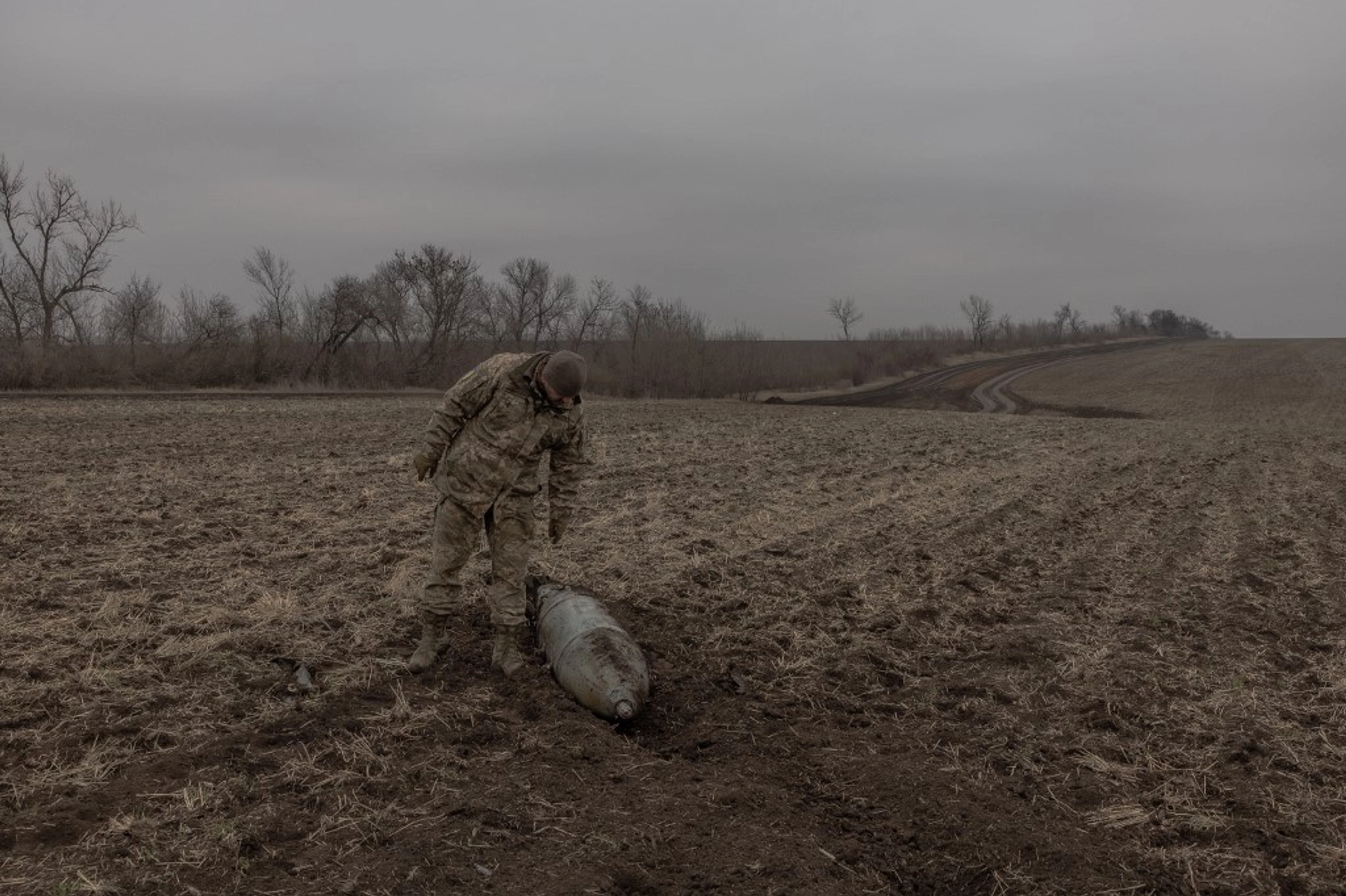
The Armed Forces of Ukraine (AFU) is fielding in quantity a new piece of electronics kit able to turn Russia’s deadly precision-guided glide bombs into dumb munitions that miss by dozens of meters, Ukrainian military information platforms reported on Wednesday.
An article in the defense and security journal Militarniy confirmed earlier reports by other media and frontline troops that Russian glide bomb attacks against AFU positions had become less accurate and that it was likely because the AFU had developed and was fielding an effective counter to the Russian weapon.
JOIN US ON TELEGRAM
Follow our coverage of the war on the @Kyivpost_official.
Russia’s Air Force in the first two years of the war suffered heavy losses trying to make close-in air strikes against heavily armed Ukrainian air defense networks armed with NATO-standard hand-held anti-aircraft missiles like the Polish-made Grom and the UK-manufactured Starstreak, and backed up by even more capable vehicle-mounted weaponry like Germany’s IRIS-T SLM and Norway’s NASMS.
In Spring 2023, the Russians began wide use of an attachment for its guided bombs called a “Unified Gliding and Correction Module” (UPMK, Russian: Унифицированный модуль планирования и коррекции.”
After the bomb is dropped, the module swings out stubby wings and control ailerons to guide the munition to a target in a glide.
Russian pilots found that if they dropped the glide bombs from great height, they could launch the bombs from well outside the range of Ukrainian air defenses. This gave the Russian Air Force the ability to pound Ukrainian ground defenses almost with impunity. By early 2024, the UPML kit was in mass production.

First EU Ukraine Loan Payment Drops Drone Financing
Relentless Russian glide bomb attacks helped Kremlin forces blast Kyiv’s troops out of fortifications sometimes held for years, most notably in the Donbas city of Avdiivka in February 2024. Kyiv’s troops had held positions there since 2014.
The Militarniy article cited comments made by Nico Lange, a Senior Fellow with the Transatlantic Defense and Security Program at the Center for European Policy Analysis (CEPA), to The Economist magazine, identifying the Lima system as the technical counter developed by Ukraine to UPMK-equipped Russian air-dropped bombs.
Per that report, the Lima system transmits corrupt guidance data and simultaneously tries to jam sensors inside the Russian UPMK bomb kits, making it difficult for the bomb’s electronic brain to compute its location and flight path using the Russian Federation’s satellite navigation network, called GLONASS.
The longer the incoming bomb is in the air approaching the Lima transmitter, the more error is introduced into the UPMK navigation computations, making the Russian bomb increasingly less accurate the further away it is dropped from the transmitter, the report says.
The Israeli military observer Yigal Levin said of the Lima system in Tuesday comments: “Innovations have made Ukrainian electronic warfare technologies the most advanced…One of the recent successes was the Lima jammer, which disorients the guidance system of Russian glider bombs.”
The popular pro-Russia military information platform Dva Mayora, on Tuesday, confirmed the Lima system’s presence on the battlefield to its 600,000+ subscribers: “The system uses intelligent jamming algorithms enhanced by AI. Reports say this has significantly reduced the frequency of (Russian) glide bomb strikes in combat conditions, indicating its high effectiveness.”
Germany’s Bild magazine, in a March 21 article, identified the Ukrainian company Night Watch as the Lima manufacturer and reported the system exploited security gaps in software, called Kometa-M, running the bombs’ precision guidance systems. Bombs losing contact with the GLONASS satellite navigation system fall back on inertial guidance, but the Lima system attempts to interfere with the guidance system by introducing fake flight data into the bomb’s onboard computer, that report said.
According to the Militarniy report, the US precision-guided bomb system, the Russian KAB bombs’ copy, called JDAM, has a circular probable error of 1–5 meters (3.3-16 feet). The KAB bomb, if solely guided by its inertial system, will miss a target by an average 13 meters (42.7 feet) after 38 seconds of flight, and by 30 meters (98 feet) or more after 100 seconds of flight.
Ukraine’s UNIAN news agency in March likewise reported that the Night Watch Lima system was reaching the field and, where deployed, was effective.
“The Ukrainians were able to create an electronic warfare system that made Russian guided bombs extremely inaccurate, and therefore ineffective despite their great power,” a March 23 analysis said. “After the deployment of the electronic warfare system, the accuracy of bombing first began to decline, and then, realizing the ineffectiveness of this method of destruction and the impossibility of achieving the set goal, the enemy stopped bombing rear facilities altogether.”
In February reports, it first reached Ukrainian military media that the AFU was fielding a jamming system that was able to shift a Russian guided glide bomb from its path. Per those reports, a new ground-based transmitter was able to break the link between the KAB bomb and the GLONASS satellite system. Details were not made public, nor was the manufacturer identified.
In the first three months of 2025, Russian air forces launched a total of 10,577 guided bombs against Ukrainian targets, about one-quarter of the 40,000+ guided bombs Kremlin forces have dropped in combat since Russia invaded Ukraine in February 2022. According to UNIAN, the Russian Air Force, thus far in the war, bombed Ukraine most intensively in September 2024, dropping 900 bombs a day.
The scale of military bombardment unleashed by the Kremlin against the AFU has been, by many measures, massive. American strike planners counted about 9,300 laser-guided bombs launched against ground targets during the six-week 1991 Desert Storm campaign in Kuwait and Iraq, and exactly 19,938 precision-guided air-dropped bombs or missiles expended in combat during the US’s 2003 invasion of Iraq.
You can also highlight the text and press Ctrl + Enter

Attack on Moscow Oil Refinery: Putin Under Pressure?