The Ministry of Social Policy clearly understands the danger of a mass exodus of men from Ukraine – which could occur if restrictions on movement are lifted as part of preparations for elections.
“We must make Ukraine a better place to live. This is what the government is working on today,” said Deputy Minister of Social Policy, Darina Marchak, last week.
JOIN US ON TELEGRAM
Follow our coverage of the war on the @Kyivpost_official.
She promised to expand the social housing program, create attractive jobs with good salaries, and improve the comfort of urban spaces in populated areas with new bike paths, parks, cozy embankments, and so on.
When dozens of smaller cities have been destroyed and the industrial zones of larger ones have been flattened in Russian attacks, statements like this sound utopian, but they could be perceived as part of the current government’s election campaign, and we can expect similar statements from other ministries and departments.
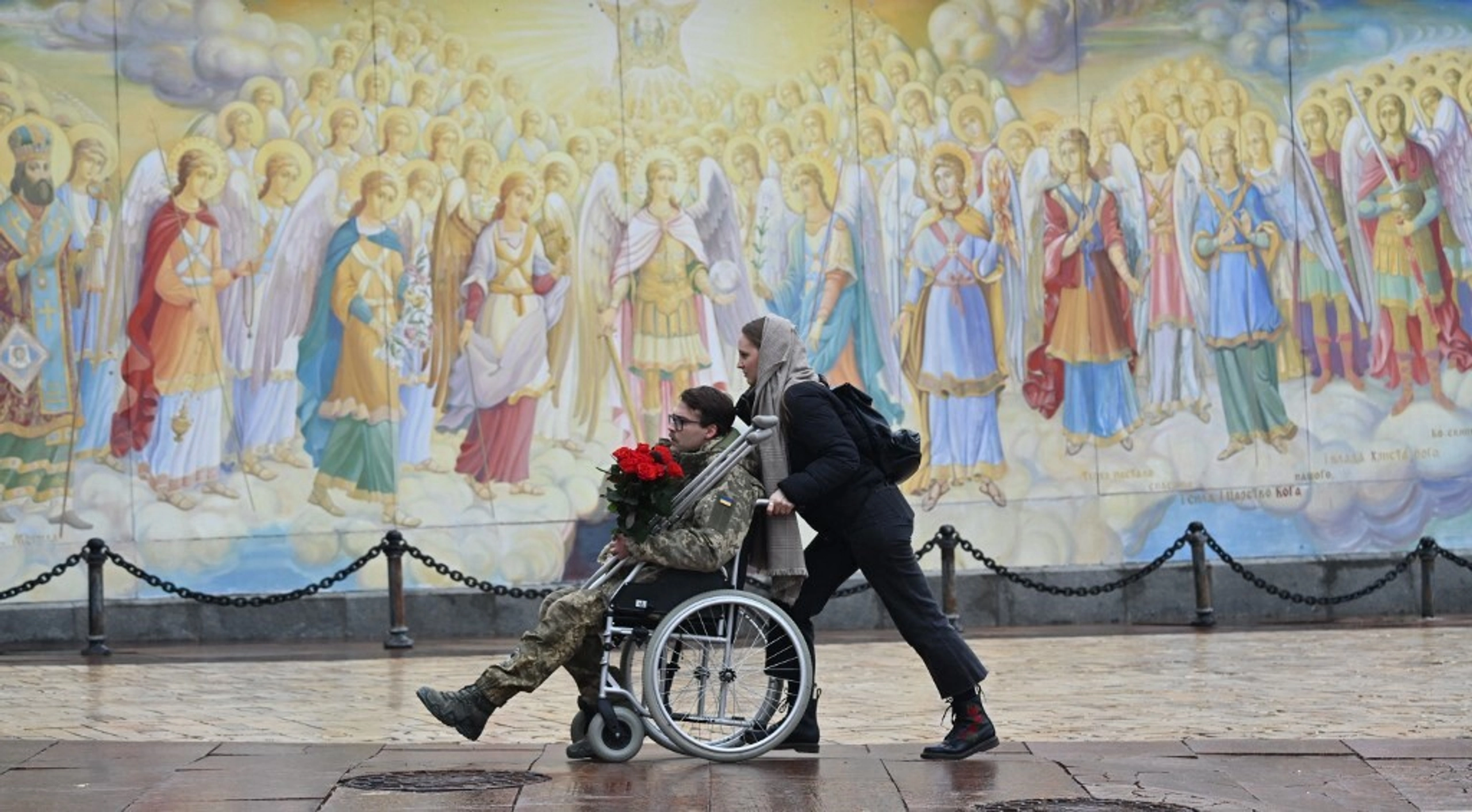
The non-governmental organization “Kyiv School of Public Administration” recently launched a campaign to recruit students for a free online course called “Veteran’s Spouse.” It is designed for the spouses of veterans who have returned from the war as well as the spouses of active military personnel, missing-in-action persons, and the widows and widowers of fallen soldiers.
The course has a broad vision, including psychological support for veterans and their families, instruction on state medical support programs for veterans and family members and state programs aimed at getting veterans back into civilian work.
Intent in Plain Sight: the Politics of a UN-Recognized Genocide
Although all this is organized by a non-governmental educational organization, the course materials stress the government’s responsibility for providing support for veterans and their families and, therefore, this initiative, which is clearly useful for Ukrainian society, also has the flavor of an election campaign gambit. Even the list of lecture topics contains an axiom about trust in the government and authorities.
Has this reactivation of political life distracted Ukrainians from what is going on at the front? Not yet. Opposition leaders have not declared their readiness to stand for election and the vague expectation of elections remains unconnected with thoughts of a political power struggle.
Volodymyr Zelensky’s only real competitor is military General and Ambassador of Ukraine to Great Britain, Valeriy Zaluzhny, and he continues to repeat that elections should be held only after the end of the war.
Now, Ukrainians must juggle thoughts of elections with those of a new large-scale Russian offensive that, according to military experts, will last six to nine months and allow the Russian army to advance along the 1,000-kilometer-long (620-mile-long) front.
One of the sections of the front where military action is expected to intensify is the Sumy region in northern Ukraine, on the border with the Kursk region. Evacuation of residents from border settlements has been going on for several weeks.
Meanwhile, the Central Electoral Commission has announced that Ukrainian refugees abroad will vote, not by mail or electronic voting, but at polling stations created in areas with the largest concentration of Ukrainian citizens.
How and where the Sumy region residents who are currently being evacuated will be able to vote is unknown. Moreover, according to the Central Electoral Commission, 56,000 voters who, before the war, lived in the city of Bakhmut in the Donbas – destroyed by the Russian army – still live at their pre-war addresses.
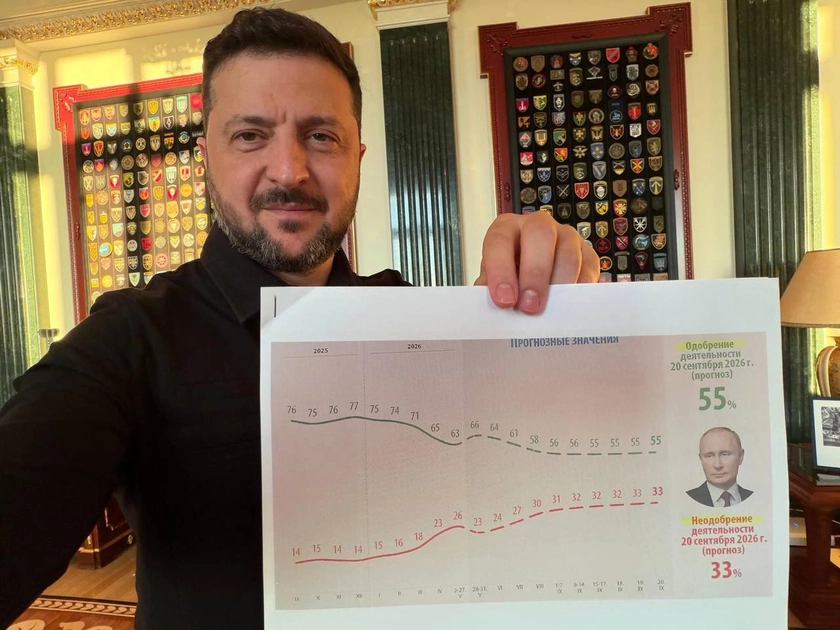
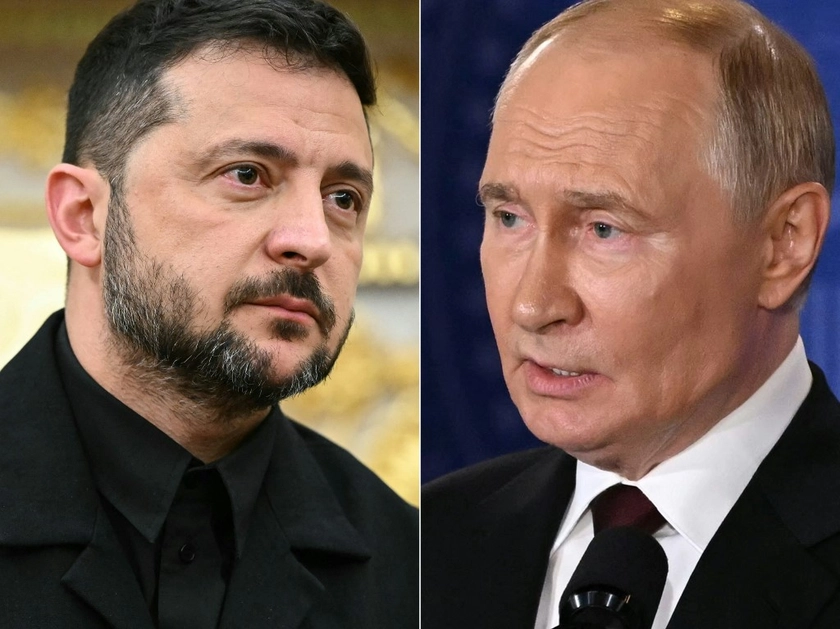
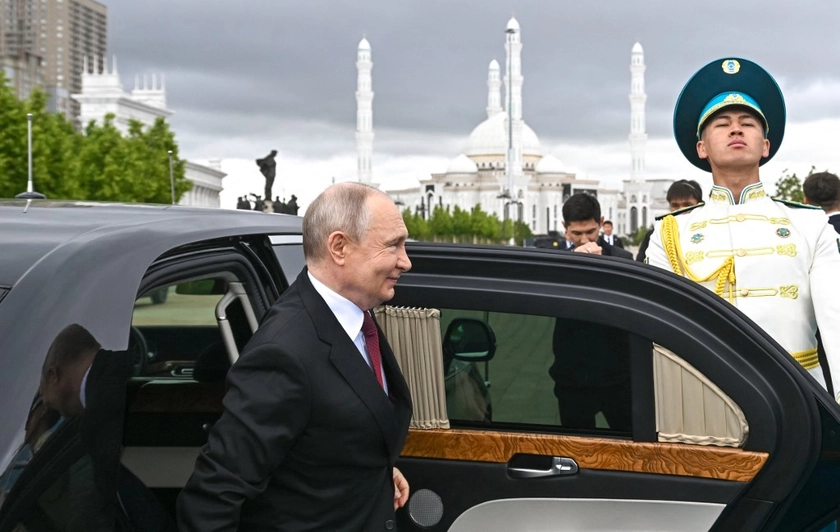
Putin regularly repeats that negotiations with Zelensky are pointless because the president of Ukraine is not legitimate. Even President Trump is tired of hearing this. Zelensky still has very strong support among Ukrainian citizens – about 60%.
Putin probably understands that the chances of victory for any other presidential candidate are minimal, but perhaps he hopes that elections could plunge Ukraine into political chaos and further destabilize society.
Suggestions about holding elections raise many questions which have no answers, at least for now. These elections may turn out to be either a positive historical precedent or a reason for endless legal proceedings and further accusations of illegitimacy.
Meanwhile, in Russia
In Russia, all political statements by President Volodymyr Zelensky and other Ukrainian politicians are being followed with great interest and commented on ironically. At the same time, Russian propaganda is working hard to create new myths about the invincibility of the Russian army and Russian “hero” soldiers.
An iron pipe has unexpectedly become a new symbol of Russian military courage. We are talking about the pipe through which Russian soldiers secretly entered territory held by the Ukrainian army in the Kursk region.
A year ago, the Russians carried out a similar operation during the battle for the city of Avdiivka in Donbas. Then, about 150 Russian soldiers crawled two kilometers through an underground cast-iron pipe with a diameter of about one meter and were able to capture a district of the city.
In the recent piece of pipeline “heroism,” which took place during battles for the Russian town of Sudzha in Kursk region, about 800 Russian soldiers were sent behind the Ukrainian army through a 15-kilometer-long (9-mile-long) pipe. Many Russian soldiers suffocated on the way, but enough of them reached the other end and entered into battle with the Ukrainian army.
The Russian command has awarded medals to 112 participants in this operation named “Stream.” Why the remaining 700 participants were not awarded medals is unknown, as is the number of Russian soldiers who died inside the pipeline – perhaps it was 112!
On March 25, in Yekaterinburg, on the territory of the Orthodox Church of the Savior on Spilled Blood, a 16-meter (53-foot) “model” of this pipe was installed as a monument to the courage of the Russian military. Believers who come to church services are offered the opportunity to crawl through this pipe – to feel like a Russian soldier.
There is no doubt that Russian children will soon read about “The Feat in the Pipe” in their school history textbooks. These textbooks are one of the reasons our eastern neighbor will continue to be a threat to Ukraine, even after this war. However, the danger posed by children who are being brought up to hate their western neighbor does not much occupy Ukrainians, who are more concerned about when military action will end.
The views expressed in this article are the author’s and not necessarily those of Kyiv Post.
You can also highlight the text and press Ctrl + Enter
Putin’s Worst Nightmare