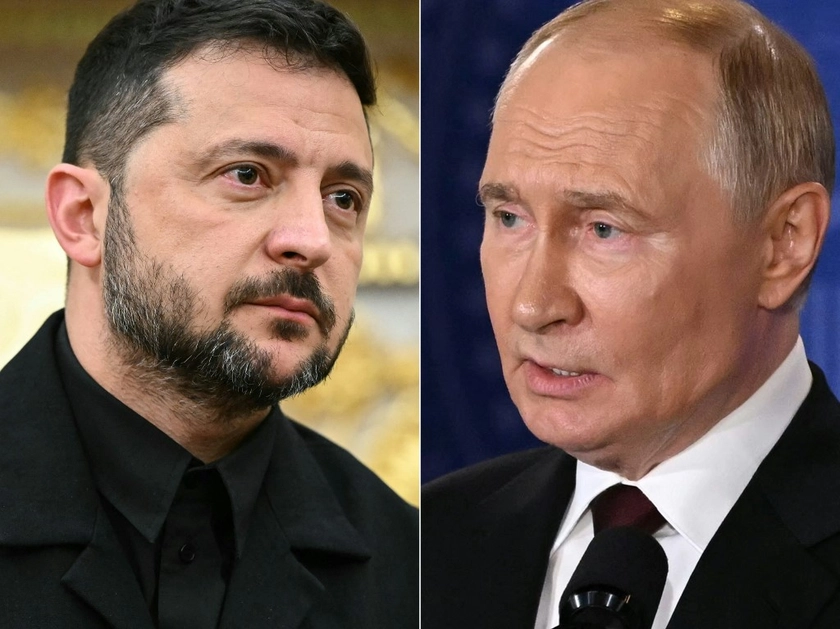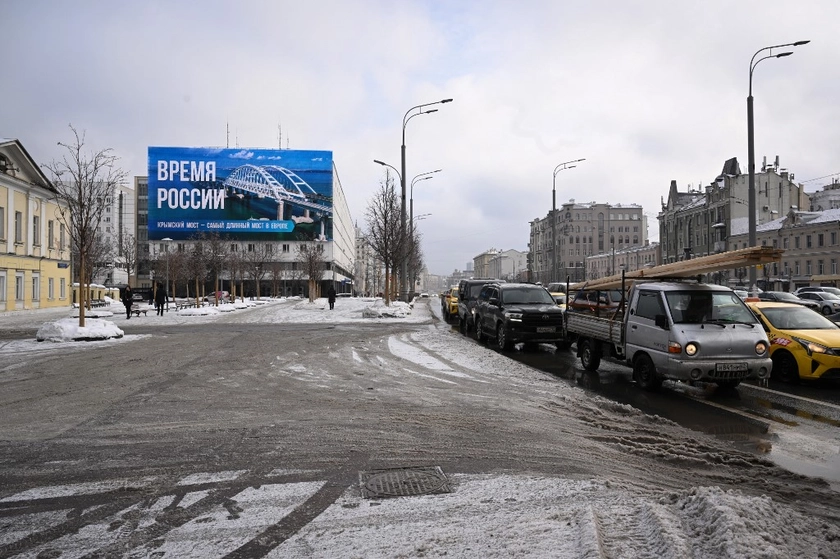
The Kremlin’s strategic tradecraft of hyperreality construct – the designed condition of indistinguishability between fiction and reality – has become one of its most potent tools in modern warfare. Known as maskirovka, this tactic relies on propaganda and deception to inflate perceptions of Russian power and obscure its vulnerabilities.
The sudden unchallenged collapse of the Syrian regime, once a cornerstone of Moscow’s influence in the Middle East and a key Russian protectorate, underscores a profound global humiliation for Russia, revealing a stark impotence that contradicts its self-proclaimed role as a dominant geopolitical power. Paired with the assassination of a senior general in the heart of Moscow and the persistent failures in Ukraine, these events beg a critical re-examination of the Kremlin’s vaunted narrative of invincibility.
JOIN US ON TELEGRAM
Follow our coverage of the war on the @Kyivpost_official.
Since its full-scale invasion of Ukraine in February 2022, Russia has consistently distorted perceptions of its military prowess and the war’s progress. From the beginning of the invasion, the Kremlin has presented a narrative of swift victories and minimal losses, contrasting with reliable, independent assessments. Russian state media has routinely downplayed Ukrainian resistance and exaggerated Russian military successes, creating a parallel reality for domestic consumption and international intimidation.
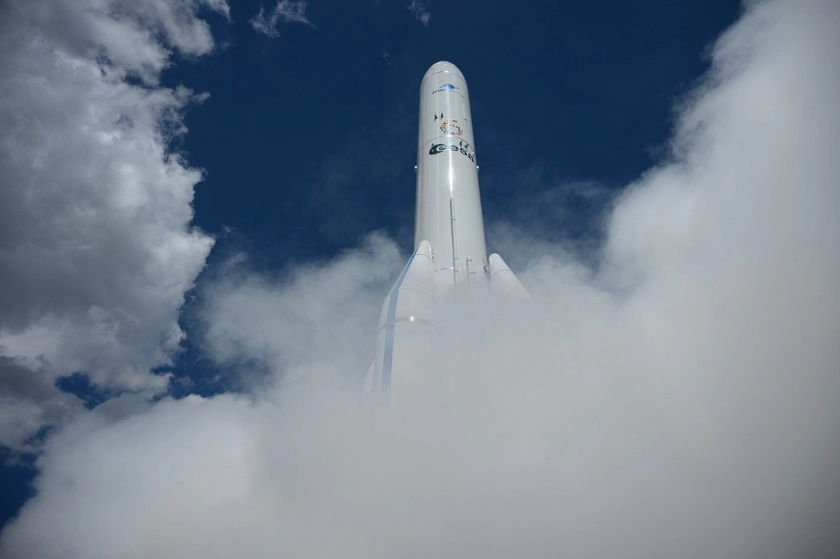
Germany Warns of Russian Orbital Nuclear Threat
A striking example is the Kremlin’s portrayal of the Battle of Kyiv in the early stages of the war. Despite failing to capture the Ukrainian capital and suffering significant losses, Russian propaganda painted the withdrawal as a strategic “goodwill gesture.” This penchant for military failure is a continuation of a long-standing Russian tradition of inflating military capability through propaganda.
Historical parallels: Soviet propaganda vs reality
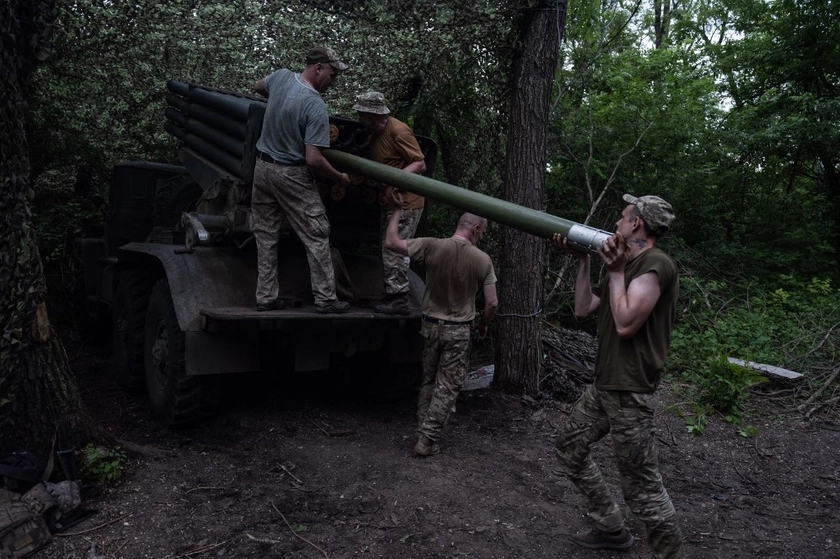
When confronted in the physical theatre of combat, the Russian military often defaults to brute force tactics where human life, especially Russian, is expendable. British Defence Intelligence assesses that as of Nov. 22, 2024, 700,000 Russian personnel have been killed or wounded since the onset of the war, with Russian troops currently averaging 1,600 killed in action per day. Perhaps Putin’s most significant success in the Ukraine war was preventing a Russian own goal with the containment of the 2023 failed coup.
“A lie told enough times becomes a truth” is a quote attributed to Lenin. It is also attributed to Joseph Goebbels. In reality, it belongs to the English writer Isa Blagden, confirming the Lenin quote as false, thus proving the validation of the statement itself, demonstrating that propagandists often fool even themselves. Everything is not always as it seems.
The image of the Russian military as a formidable and invincible force is one of the most successful propaganda myths perpetuated by the Kremlin. This serves not only to bolster the morale of its own citizens but also to intimidate Russia’s adversaries. It allows the Kremlin to justify war in ways that resonate with historical Russian narratives and drum up domestic support. For example, claiming to protect Russian-speaking minority populations beyond its borders, or exploiting antisemitism and invoking “de-Nazification.” In 2014, President Putin presented his seizure of Crimea as a “peaceful reunification,” obscuring the violations of international law.
The mind is the pre-eminent of all battlefields. Everything is perception.
This tradition of military propaganda dates to Soviet times. Joseph Stalin was renowned for airbrushing from the records those who fell from grace. And during the 1939-40 Winter War against Finland, Soviet propaganda grossly misrepresented the conflict’s reality, painting a picture of inevitable victory against a weak opponent. The outnumbered and outgunned Finns offered a formidable resistance. A single Finnish sniper named Simo Häyhä killed 505 Soviet soldiers in 110 days. Soviet losses were so significant that it exposed the Red Army’s glaring weaknesses to the world – a humiliation so profound that it emboldened Hitler to believe that invading the Soviet Union would be as simple as to “kick in the door.”
More recently, the concocted image of Russian military invincibility was dented in 2018 when Russian forces faced off against US soldiers in direct combat for the first time in a century. In the Battle of Khasham, 30 US commandos and supporting air power decimated a force of 500 Russian mercenaries and pro-Syrian government troops.
Putin’s background in the KGB has shaped his preference for covert operations over direct confrontation. He responds to those who challenge his ideologies with state-ordered executions, as seen recently across European capitals. The Kremlin always initially denies involvement. It later receives the FSB assassins with a red carpet, a hug, and a medal on their return to the motherland in prisoner swaps.
Calling Putin’s nuclear bluff
Kremlin activities beyond Ukraine increasingly reflect a psychological strategy of constant intimidation. Regular incursions by Russian planes into NATO airspace, with Sweden being a recent example, underscore ongoing efforts to test international resolve. This reflects a psychological strategy of constant intimidation and Kremlin self-logic that the more often a redline is violated, the more the perception of its existence can be challenged. When all other intimidation methods fail, the Kremlin often dangles the nuclear card, akin to a deranged person threatening to pull the grenade pin inside a crammed elevator.
Russian Foreign Minister Sergey Lavrov recently declared that the Biden administration’s decision to allow Ukraine to use US-made weapons to strike Russian territory was a “qualitatively new phase of the Western war against Russia,’ and that they ‘will react accordingly.” Moscow has now published a new nuclear doctrine, stating that any attack on Russia by a non-nuclear state, aided by a nuclear state, will be considered an act by both parties. But this nuclear saber-rattling is believed by few of Ukraine’s allies understanding that its primary objective is manipulation and deterrence projection. As Putin understands it, the West is increasingly calling his bluff. This in turn is creating a rise in the risk of escalation, calculated or accidental, in order to maintain the psychological dominance advantage, and thus is escalating the very danger he aims to avoid.
After the 2014 Russian invasion of Crimea, Merkel and Obama discussed that Putin may not be in touch with reality. The fact that Putin went largely unchallenged suggests that perhaps it was the other way around. What we allow to become real in the metaphysical mind inevitably manifests in the physical world. Putin, whose subterfuge taking of Crimea “without a single shot being fired,” demonstrates that he masters this concept well.
Acme of skill
Sun Tzu referred to the defeating of an enemy without fighting as the acme of skill. He recognized the cognitive domain as the high ground, being as important as any other military capability. Indeed, the mind is the pre-eminent of all battlefields. Everything is perception.
As cognitive sovereignty is rapidly emerging as one of our generation’s greatest national security challenges, the world must learn to fight ideologically, militarily, and cognitively by pre-emptively maintaining information superiority to counter totalitarian and autocratic regimes’ hyperreality mind gaming. Winning the cognitive battle means reclaiming the narrative and demonstrating that reality, not propaganda, dictates the course of history.
Originally published as a peer review article in academic journal The Australian Journal of International Affairs by under the title “Challenging the Kremlin’s Hyperreality Construct.”
You can also highlight the text and press Ctrl + Enter