The reality of war in Ukraine is one of success stories, but also one of trial and error. The evolution of small unmanned aerial systems (sUAS) and other robotics has forced nation states to reassess major combat operations and their approach to all-domain warfare.
The long tail of the acquisition process is without question not the answer, as the lessons learned from this conflict reflect innovation, improvisation, and a “get it done” attitude at the edge and in all aspects of acquisition and manufacturing process that eventually comes together as a viable tool of war in the form of a first-person attack or reconnaissance drone.
JOIN US ON TELEGRAM
Follow our coverage of the war on the @Kyivpost_official.
Take, for example, the non-stop media reporting flow of articles about all things drones and robotic efforts that seem to overtake the news cycle of every new day. The fact is that the nations of the world have awoken to a new reality, and Ukraine is at the forefront, necessitated by pure survival. Ukraine, unlike its counterpart, has every aspect of society focused on the war. Shops, big and small, all produce something that supports the team at the zero line. This effort, along with extensive crowdsourcing inside and outside of Ukraine, keeps the small unit arm of action in the fight, which, in the absence of large-scale major combat operations (MCO), is where Ukraine has reached parity with Russia.
Crowdsourcing is a relatively new idea and term associated with the digital domain and the instant-communication world we live in. The idea is essentially to obtain material and services from those willing to participate and give to the cause. Much of crowdsourcing is attained through social media and digital communications platforms, but in this case, it is also a matter of national survival.

Trump Downplays Russian Drone Incursion into Poland as ‘Mistake,’ Drawing Sharp Rebuke From Allies
The incredible length to which the forward-deployed team goes to put a functioning system into the field is nothing short of amazing, and nation states should pay attention.
Let’s take a look at how this all happens, walking through the steps of the acquisition of the drone frame to flight and mission execution.
Improvising at the edge
The true evolution of small unit tactics has emerged in the Russ-Ukrainian War. This conflict has shown that decentralization of combat operations was a must in a conflict zone that spanned thousands of kilometers along the eastern border of Ukraine to Russia.
In a country where systems and training hamper military logistics, units at the front require harvesting, small manufacturing, or “do it yourself” operations, personal connections, networks, and crowdsourcing to build capable kits that can be used in a war fought with small drones.
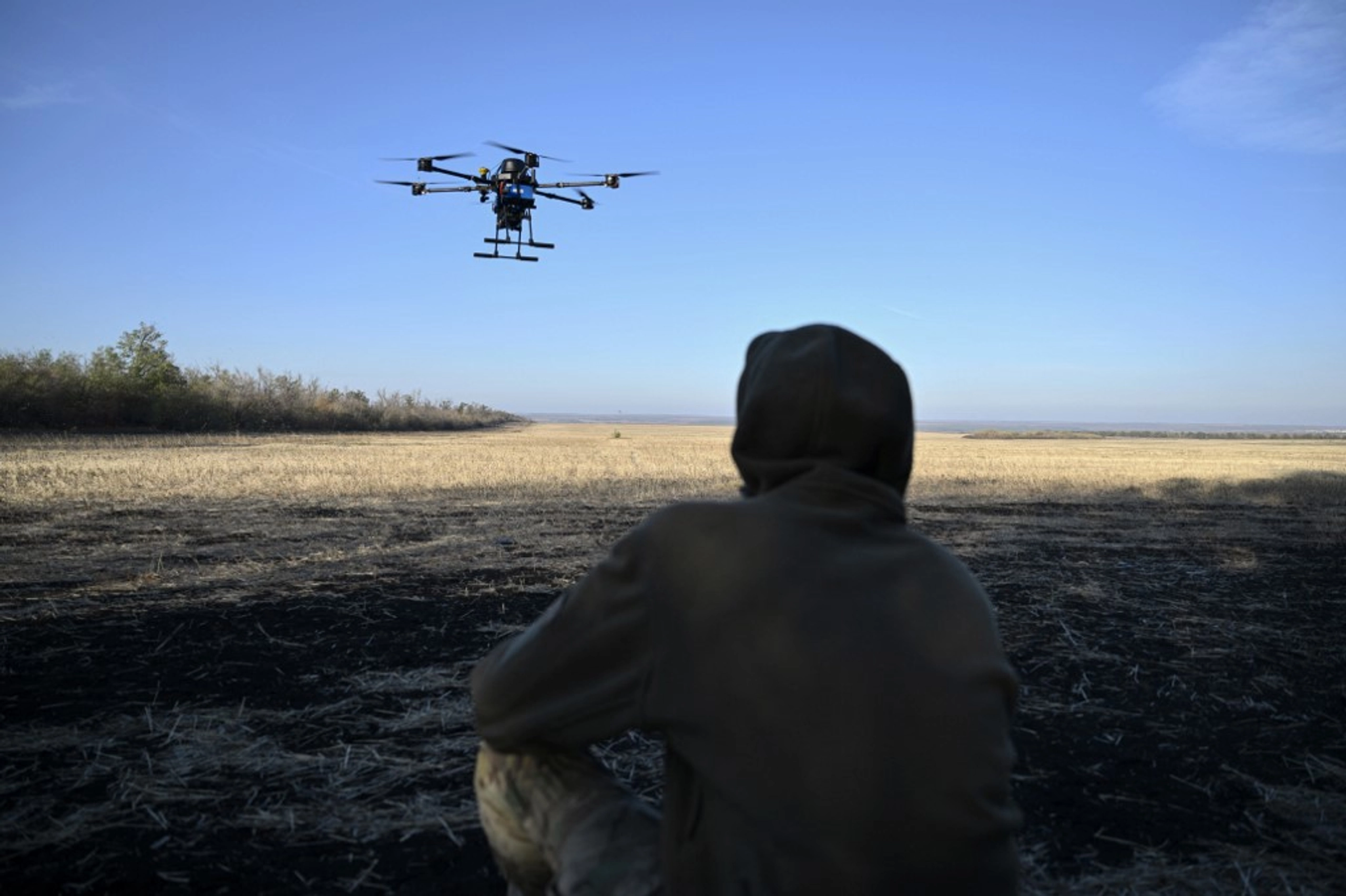
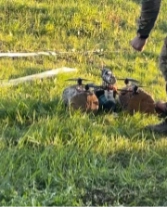
Let’s start with the drone itself. These platforms, as seen in the photo below, are built and packaged throughout Ukraine. They are normally shipped in boxes of six-ten to small units in a location off the zero line, where they can be inspected, tested, and purpose-configured. The quality and cost of this platform development far exceed what the West provides, as the Ukrainians, out of necessity, have become a top small drone maker in the world.
These platforms are shipped in a quadcopter form factor that is open to onsite configuration based on the need and mission. They can be used as FPV or reconnaissance drones, and quite often, a shipment is configured for both.

Harvesting
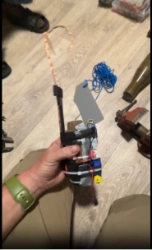
As the need for drones grows, so does the need for munitions to go with them. In many cases, these small formations harvest material to make explosives for their attack platforms. This material is readily available in a war zone with few to no rules of engagement. Unexploded ordnance, mines, and mortar rounds are all ripe for use. It is very common for these teams to break open and harvest the TNT, melt it down, and configure it into a canister that is outfitted with a copper shape charge. The photos below give an example of the process.
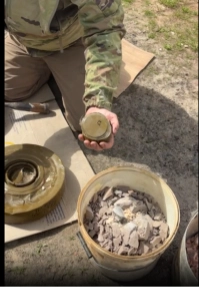
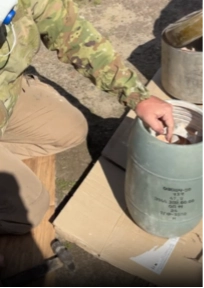

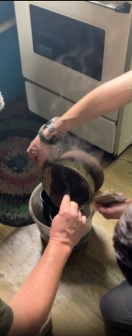
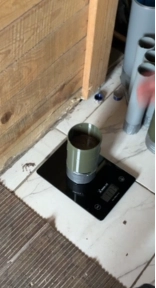
After the explosive is formed, it is then outfitted with a hand-shaped copper cone. This technique is being done throughout Ukraine, oftentimes personally funded by the team itself, working with craftsman who provide the material and service at their cost. It’s a system that functions on need and the goal of a Ukrainian victory. Before this was done in small manufacturing shops, it was being done at the team level with crude tools. The picture below shows the component for the cannister above.

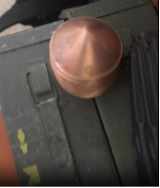


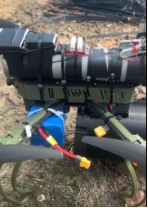
The final product: initiator, batteries, fiber, explosive, and detection
This DIY manufacturing and assembly process is finalized with a ready-to-test and go-to-combat product. Over the years of this conflict, it remains a fact that continuous learning, creativity, and innovation are paramount to survival and success. As all the components come together, the final phases are completed with initiators, batteries (a key to the operation), fiber to defeat capable Russian electronic warfare (sourced from specific areas of the world), fiber repair kits, and the explosive.
Lastly, these operations and forward positions need tested and proven man-portable detection tools. Since the war has evolved into a “dark drone” environment, active sensors like radar combined with acoustics are needed, but in form factors that make sense for small teams. Protecting the launch position is as critical as putting the drone into action. Countermeasures as simple as netting, signal cloaking camouflage, Kevlar blankets, and shotguns give the team a fighting chance.
As the adage goes, “war is the mother of innovation.” But this conflict has also proven that the human spirit rises when the need for preservation presents itself. The small drone teams that are combing the battlefield in Ukraine like swarms of bees are only getting stronger and more sophisticated as time goes by.
It would be prudent for US leaders to understand this reality and equip service members with the ability to “innovate at the edge!” This will require advanced portable tool kits, mobile 3D printing capability, ready and easily accessible common products and stocks, active sensors for detection, and knowledge of these lessons learned.
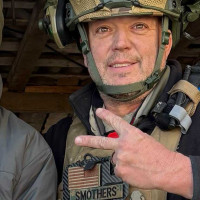
Troy Smothers is the owner of Drone Reapers, a Marine Corps and Utah National Guard Veteran, and observer of the Ukraine War.
You can also highlight the text and press Ctrl + Enter