France and Poland on Friday signed a treaty committing both sides to mutual assistance in the case of an attack by an aggressor, strengthening ties between the EU heavyweights in the wake of Russia’s invasion of Ukraine.
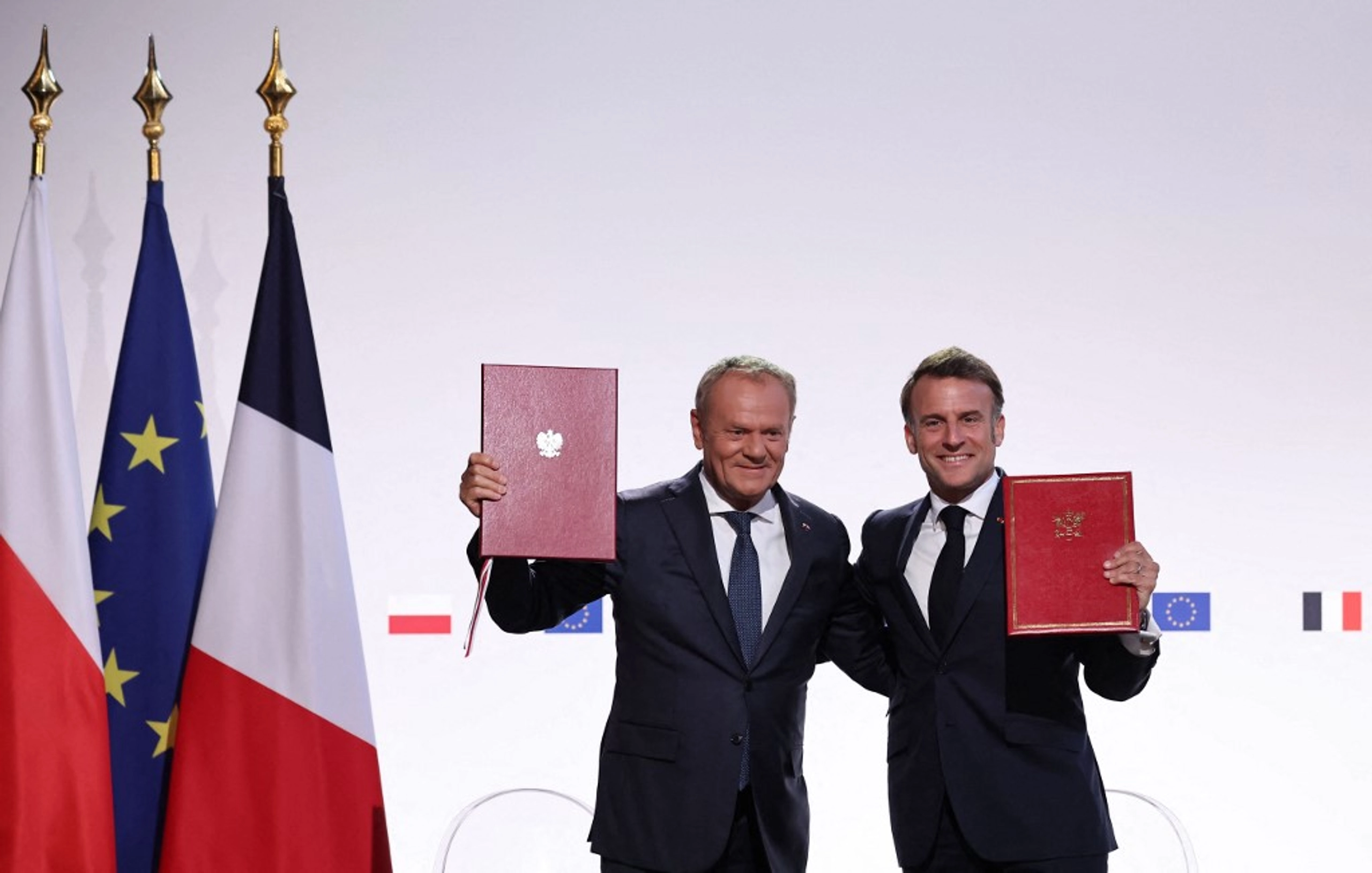
The deal was signed in France’s eastern city of Nancy by French President Emmanuel Macron and Polish Prime Minister Donald Tusk, both among the strongest European backers of Ukraine following Russia’s 2022 full-scale invasion.
JOIN US ON TELEGRAM
Follow our coverage of the war on the @Kyivpost_official.
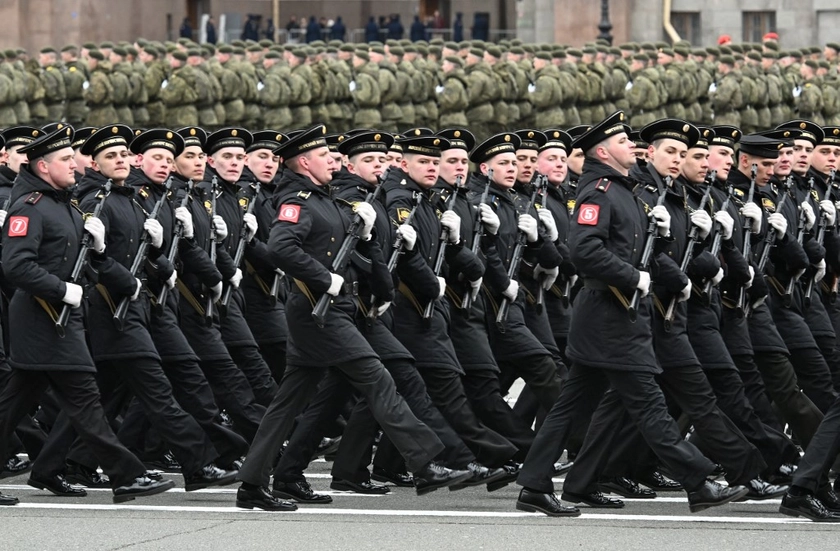
Condemning Vladimir Putin’s comments at a Moscow military parade marking 80 years since the defeat of Nazi Germany in World War II, Macron said that the Russian leader was “on the side of war, not peace.”
The text of the friendship and cooperation treaty, seen by AFP, states: “In the event of armed aggression on their territories, the parties shall provide mutual assistance, including by military means.”
Macron emphasized that one of the key aspects of the treaty was a clause on “mutual defense” while insisting this was in addition to the protections already offered by NATO and the European Union.
“It does not substitute for NATO or EU,” Macron said alongside Tusk, adding it: “reinforces what already exists today.”
He also suggested troops could mobilize quickly.
“I have no doubt that yes, such a deployment would be possible in the face of aggression and if the worst were to happen.”
Tusk earlier hailed the “mutual security guarantees” clause tackling what happens “in the case of an attack against one of our countries.”
Zelensky Confirms Abramovich Came to Kyiv in May, Carried Messages to Putin Including Ceasefire Offer
Macron, who leads the EU’s only nuclear weapons power, also implied that France’s atomic arsenal could be part of such assistance.
“The interests of our main partners are integrated in deciding what our vital interests are,” he said.
Such protection is of immense interest to Poland, which has a land border with Russia’s exclave of Kaliningrad and has repeatedly warned that it too could be the target of Russian aggression.
‘War not peace’
But with the United States, backed by its European allies, proposing an unconditional 30-day ceasefire between Russia and Ukraine, Macron painted a bleak picture of Putin’s interest in peace.
“President Putin is on the side of war, not the side of peace. The belligerent comments that he made, the reality of every day, only underline that,” he said.
Ties between France and Poland have tightened since Tusk, a former European Council president, became prime minister in late 2023, ending years of rule by the conservative Law and Justice (PiS) party.
Such partnerships have grown all the more important after US President Donald Trump made clear Europe should do more to ensure its own security.
Analysts say NATO member Poland could have the EU’s biggest army in the next decade.
The Polish army will have 216,000 troops in 2024, according to NATO data, already more than the French (205,000) and German (186,000) armies. It aims to reach 300,000 troops by 2035.
‘Brings shame’
The location and timing of the treaty’s signing in Nancy were also loaded with symbolism.
Nancy is part of the eastern Lorraine region, ruled in the eighteenth century by the deposed Polish king Stanislaw I, who was also the father-in-law of French King Louis XV. Nancy’s main square is named Place Stanislas in his honor.
Tusk and Macron also showed off their alliance on the very day Putin hosted the Red Square parade with guests including Chinese President Xi Jinping and Robert Fico, the prime minister of EU member Slovakia.
Without naming Fico directly, Tusk said that attending the parade “brings shame.”
Poland is also gearing up for presidential elections on May 18 where a nationalist candidate backed by the PiS will challenge the pro-European Warsaw mayor who has the support of Tusk, amid warnings of the risk of a Russian disinformation campaign.
You can also highlight the text and press Ctrl + Enter