A poem bequeathed to us by the epically gloomy Canadian seer-singer Leonard Cohen ends with the words: “Oh, and one more thing / you aren’t going to like / what comes after America.”
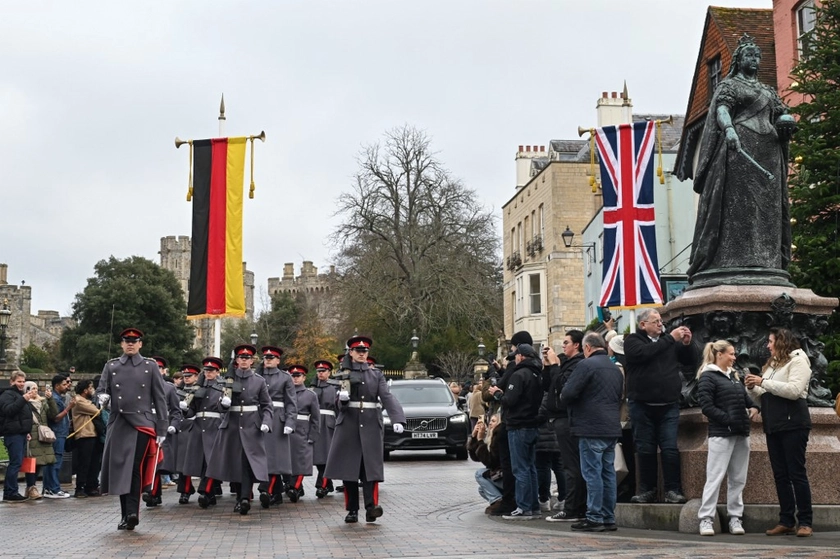
As we pass the 80th anniversary of the end of the Second World War in Europe, every day brings further evidence that a remarkably long-lived US-led international order is over. Everyone is now scrambling to work out what might succeed it. A new multi-polar order? Spheres of influence? A worldwide version of the 19th-century Concert of Europe? By far the most plausible answer, however, is a prolonged and dangerous period of global disorder.
JOIN US ON TELEGRAM
Follow our coverage of the war on the @Kyivpost_official.
Of course, there never was a golden age of universal liberal international order. But across large areas of the world, in Europe, Asia, and Oceania, there was a security and economic order led by the “liberal leviathan,” as the Princeton scholar John Ikenberry dubbed the post-1945 US. This order, which reached its zenith at the beginning of this century, has been declining for some time, partly because of the “rise of the rest,” itself facilitated by US-led globalization, and partly due to America’s hubristic self-harming.
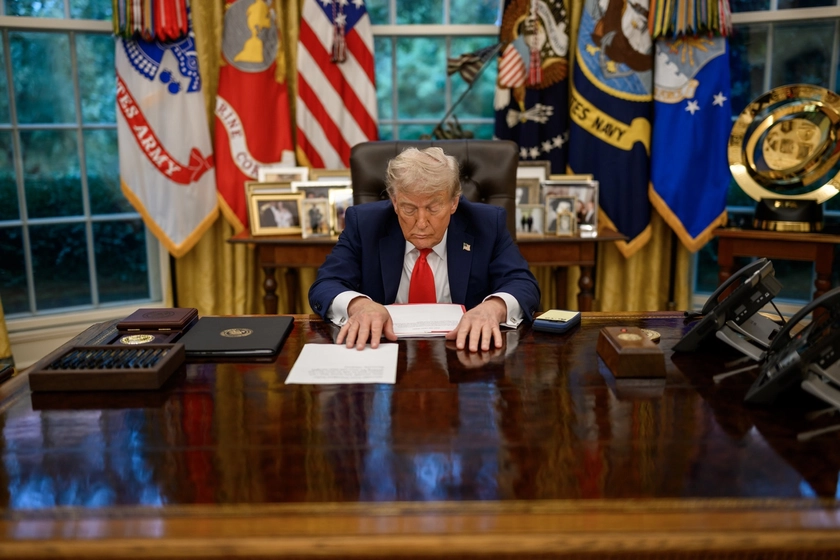
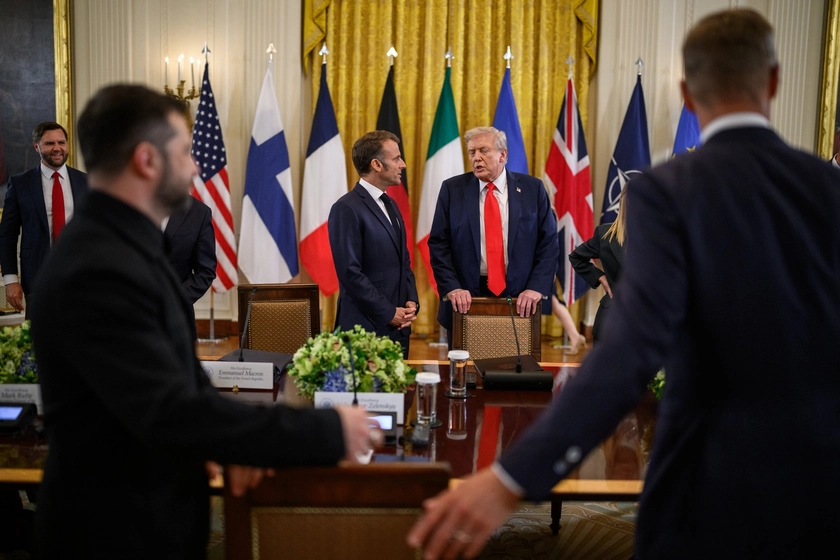
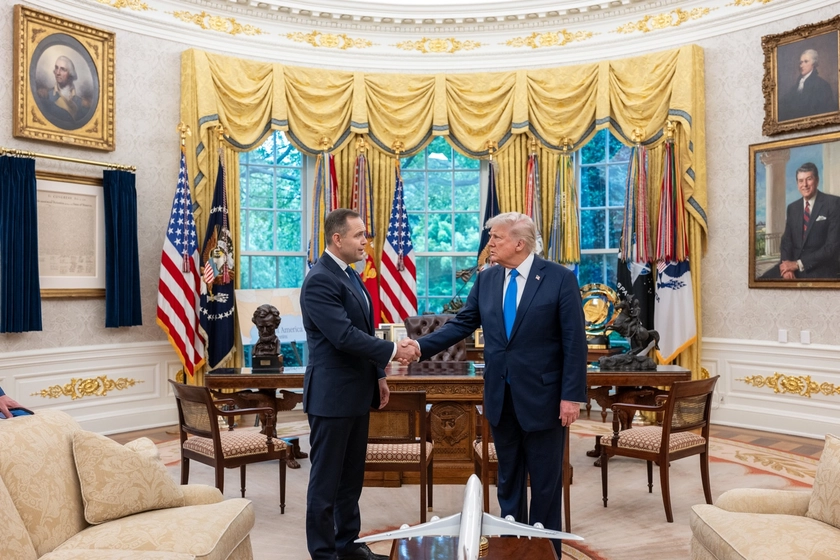
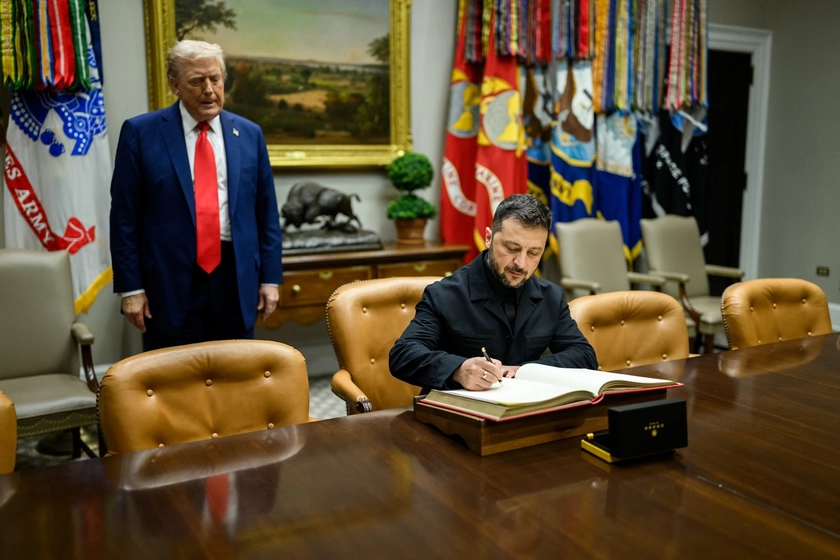
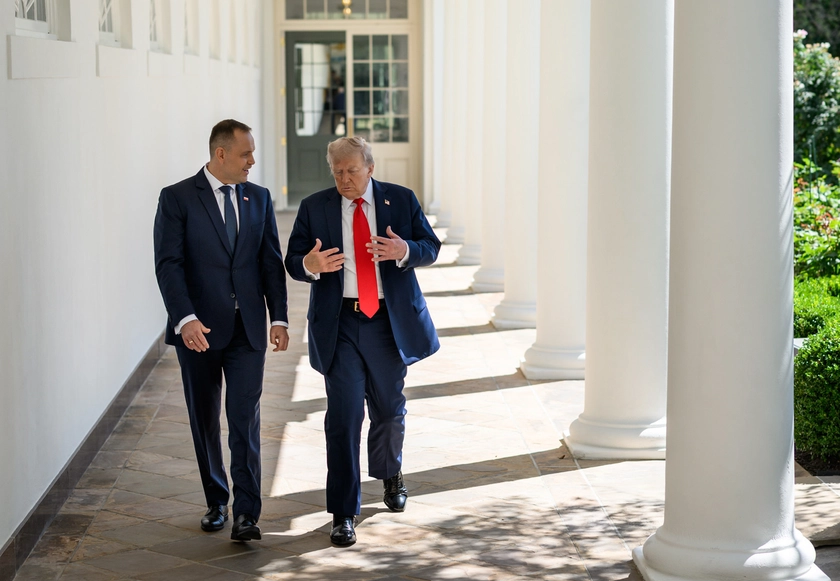
President Donald Trump is now tearing down what remains of the edifice with unparalleled speed and recklessness. Even in the unlikely event that American democracy emerges unscathed from four years of Trumpian revolution, so far as relations between the US and its allies are concerned, it will be “never glad confident morning again” (to quote Robert Browning’s “The Lost Leader”).
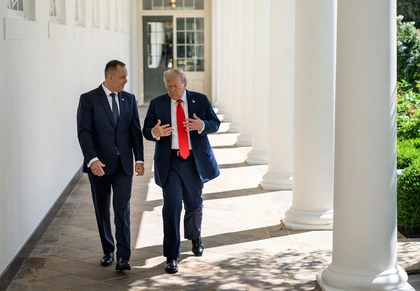
Trump Downplays Russian Drone Incursion into Poland as ‘Mistake,’ Drawing Sharp Rebuke From Allies
With three or potentially even four significant wars now raging (Ukraine, Gaza, Sudan, nuclear-armed India and Pakistan facing off over Kashmir) and trade-stopping three-digit tariffs between the world’s two largest economies, who can doubt that we’re currently in a period of dangerous disorder? Some still hope that we will emerge from it fairly soon, either by a miraculous restoration of the former order or by the creation of a new one. Well, let’s hope, but here are several good reasons to doubt it.
Even if a rising superpower (China) and a relatively declining superpower (the US) are not fated to fall into the “Thucydides trap” a nd go to war, periods of great power shifts almost invariably bring increased international tensions. The leaders of China and Russia have just marked the end of the European part of World War II by meeting in Moscow to reaffirm their partnership against the West. Xi Jinping even equates the “arrogant fascist forces” defeated in 1945 with today’s “unilateralism, hegemony and bullying.” (Guess whose?) Russia now has a war economy, and Vladimir Putin is bent on restoring as much as he can of the Russian empire. Narendra Modi’s India has its nationalist ambitions and an obsessive enmity towards Chinese-backed Pakistan.
Besides these rivalrous great powers, there’s an array of middle powers such as Turkey, Brazil, and South Africa. Strikingly, these countries often see opportunities in the new disorder. They can align with one great power for one purpose, another for another, all the time advancing their own goals. Meanwhile, small states like those in the Gulf can play with and between all the big powers, like the Egyptian plover bird, which flourishes by cleaning the detritus between crocodiles’ teeth.
For 80 years since nuclear weapons were dropped on Hiroshima and Nagasaki, the taboo on their use has held. But as the world watches a major war being waged by a nuclear-armed Russia against Ukraine, a country that voluntarily gave up its Soviet-era nuclear weapons in 1994 in return for security assurances from the US, UK and (blackest comedy) Russia, the fragile dam against nuclear proliferation seems likely to burst.
South Korea, agonizing over what Russia has promised North Korea in return for substantial military support against Ukraine, has an active debate about acquiring nuclear weapons – and the technology to do it. The subject is on many minds in the Middle East, as that region teeters between a nuclear-armed Israel and a nuclear-threshold Iran, while Europeans are beginning to feel they need their nuclear umbrella.
Meanwhile, a continued technological revolution generates new dimensions of geopolitical rivalry, including control over data, software, and communication networks. AI, in particular, brings the danger of a new arms race, more unpredictable than the Cold War’s nuclear one. If China can surprise the US with a DeepSeek, why could it not secretly develop a Deep Strike? Continued population growth and climate change will exacerbate competition for resources and pressure for mass migration.
To be sure, there are countervailing forces. China has an obvious economic interest in preserving an open world trading system from which it has been the biggest single beneficiary. Even the most opportunistic middle powers must fear that disorder will become a total breakdown. There are encouraging signs of a liberal fightback in Canada, Australia, and Europe. Pope Leo XIV promises to “build bridges” on a troubled earth.
Nothing in history is inevitable. Yet those of us who believe in the never fully realizable ideal of liberal international order will be well advised to assume that the melancholy Cohen was right. We should actively prepare for a protracted period of global disorder.
This commentary is reprinted with the author’s permission from the Financial Times, where it first appeared online on 9 May and in print on 10 May 2025.
The views expressed in this opinion article are the author’s and not necessarily those of Kyiv Post.
You can also highlight the text and press Ctrl + Enter