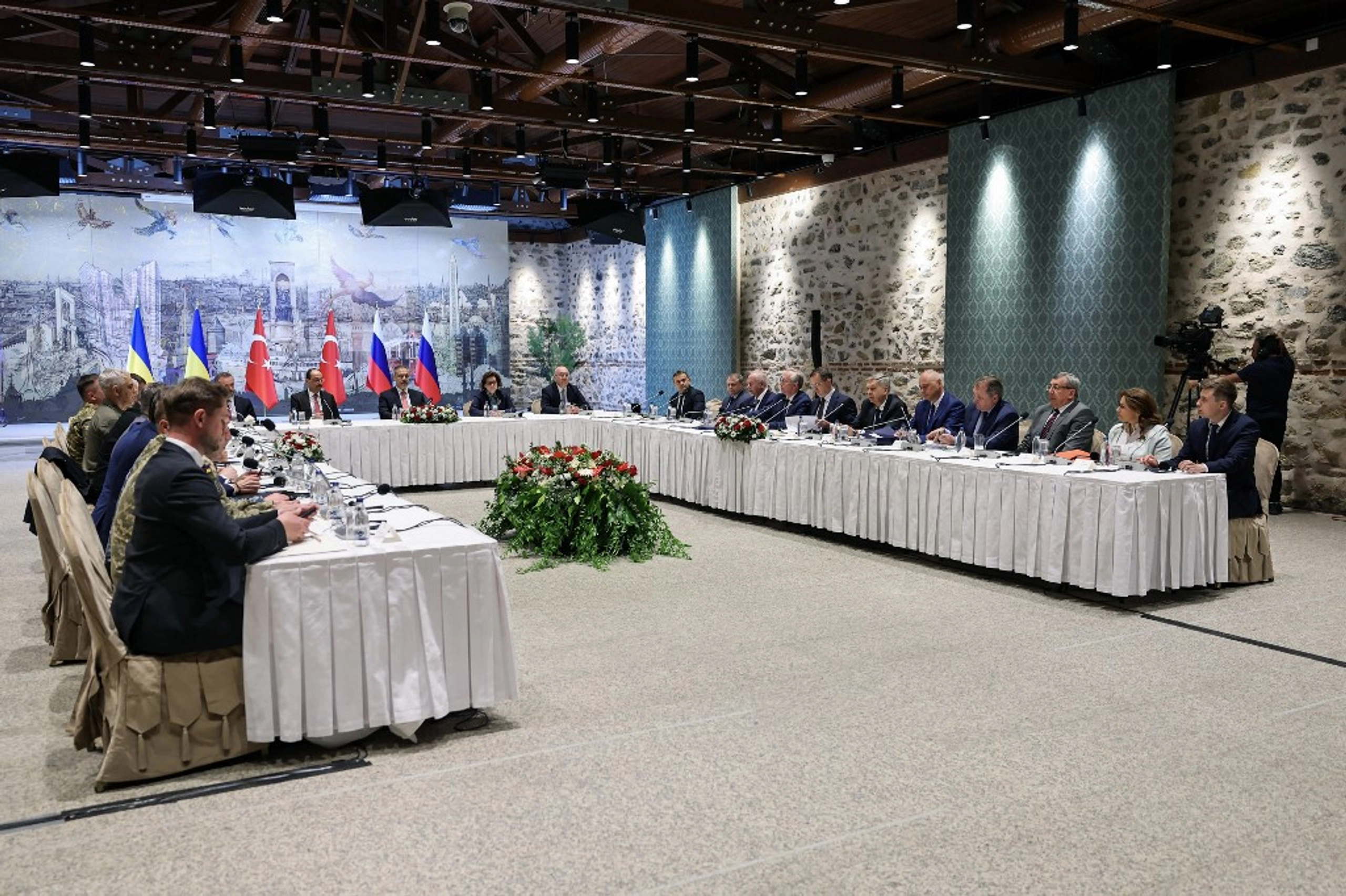
The recent Istanbul meeting between Ukraine and Russia demonstrated the futility of any attempts to pursue serious peace discussions with the current Kremlin regime.
Ukrainian President Volodymyr Zelensky’s bold move to arrive in Istanbul and call for face-to-face talks with Russian President Vladimir Putin, which was rebuffed. Moscow instead sent a second-grade delegation, which highlighted yet again of Moscow’s continued use of a strategic smokescreen masquerading as a readiness for peace talks intended to weaken Western support while it continues its war.
JOIN US ON TELEGRAM
Follow our coverage of the war on the @Kyivpost_official.
The Russian delegation’s harsh remarks and ultimatum demanding Ukraine’s complete military withdrawal from four Ukrainian regions (Donetsk, Kherson, Zaporizhzhia, and Luhansk), even before to begin a ceasefire discussion, further demonstrate the Kremlin’s unwillingness to pursue any form of peace settlement. In particular, the words of Vladimir Medinsky, head of the Russian delegation, that Moscow was ready to fight as long as necessary to secure Ukrainian territory underlined its clear intention to continue the invasion.
While an agreement on prisoner exchange is a positive step, it is not sufficient. Given the Kremlin’s continuing plans to take over at least four regions minimally and potentially the entire country, there appears to be no pathway towards a broader settlement.
Poland Calls Zelensky's National Pantheon Plan an ‘Escalation’
Western leaders must begin to judge the Kremlin by its actions, not its words, and plan accordingly. Russia has been ramping up military production, particularly of missiles, drones, and artillery shells across the country. In December 2024, the Russian government approved one of its highest military budgets since Soviet times for 2025. This included new and planned production facilities for military equipment, particularly more destructive and precise missiles, and long-range optical-fiber drones that can penetrate Ukraine’s territory up to 30 kilometers (18.75 miles).
The Kremlin’s ambitious drone development plans are especially notable considering their scale and potential impact in the near future. Putin’s directive calls for up to 4 million drones to be produced this year, and 1.5 million drone operators to be trained by 2030. Those are clear indicators the regime is preparing for an increased offensive in Ukraine, rather than signs of genuine preparedness to negotiate.
A call to ensure continued aid to Ukraine
It seems unlikely that the continuation of communication between Ukrainian and Russian delegations will lead to any potential peace deal in the aftermath of the Istanbul talks. Putin’s refusal to engage directly with Zelensky and the subsequent increased attacks against critical infrastructure reveal the Kremlin’s true posture.
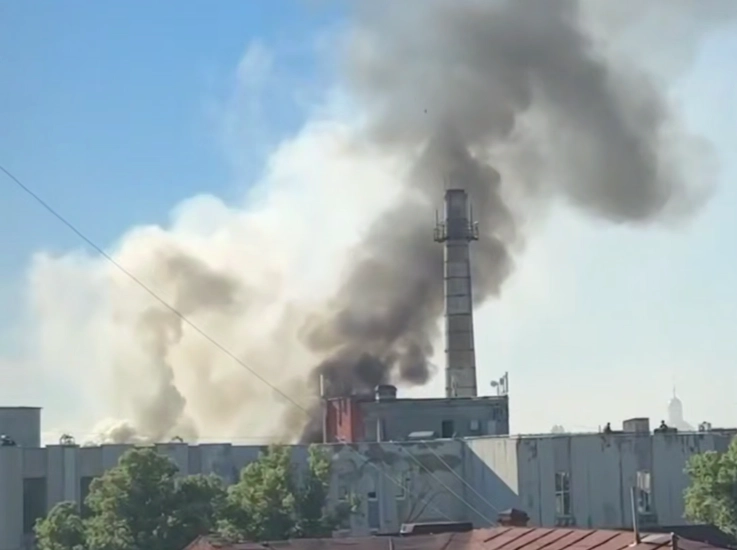
While Europe was watching Eurovision, the Kremlin launched massive drone and missile strikes across Ukraine, primarily targeting Kyiv and its surrounding region, resulting in several civilian fatalities and injuries as well as damage to residential buildings and critical civilian infrastructure.
In light of this, Western leadership must focus on increasing military aid to Ukraine. This should include deeper military collaboration with Ukraine, sustained delivery of artillery and ammunition, and the expansion of training for Ukrainian soldiers.
Ukraine’s armed forces continue to face severe ammunition shortages, which have minimized artillery firing rates and prevented effective countermeasures against Russian advances. Yet, the pace of aid delivery, especially of artillery and ammunition, has slowed in comparison to last year. Sustained and accelerated delivery is now essential to counter Russia’s growing offensive in the eastern and southern parts of the country.
While the Ukrainian defense sector has experienced a 35-fold increase in its production capacity, from $1 billion in 2022 to $35 billion in 2025, only about one-third of this capacity is currently used due to limited state funding and difficulties in securing international funding. Investing in Ukraine’s defense production can provide numerous economic and security benefits for Ukraine and the EU, which is seeking to step up its defense industrial base through the newly announced ReArm Europe Plan. This is especially crucial in light of the growing risk of decreased US aid.
Proactive approach in addressing Russian hybrid threats
The West should also proactively focus on responding to Moscow’s assault on democracy and liberal values aimed at undermining support for Ukraine and Euro-Atlantic unity. To this end, the EU and NATO should actively pressure the Kremlin to raise the costs of its conventional and hybrid aggression.
This includes launching offensive cyber operations, disrupting Russia’s shadow fleet, and intensifying information operations to counter Russian propaganda in Europe. Additionally, Western leaders should discuss potential ways of implementing information campaigns targeted at Russians residing in Russia and elsewhere to increase pro-Western support among Russians.
Conclusion
The Istanbul talks demonstrated that the Kremlin is unprepared to engage in any meaningful peace process. Instead, Russia is expanding its military capabilities while escalating attacks across Ukraine. In this context, Western governments should prioritize sustained military assistance, investment in Ukraine’s defense industry, and coordinated efforts to counter the Kremlin’s hybrid threats. Delays in support will only bolster Russia’s position and prolong the war in Ukraine.
The views expressed in this opinion article are the author’s and not necessarily those of Kyiv Post.
You can also highlight the text and press Ctrl + Enter