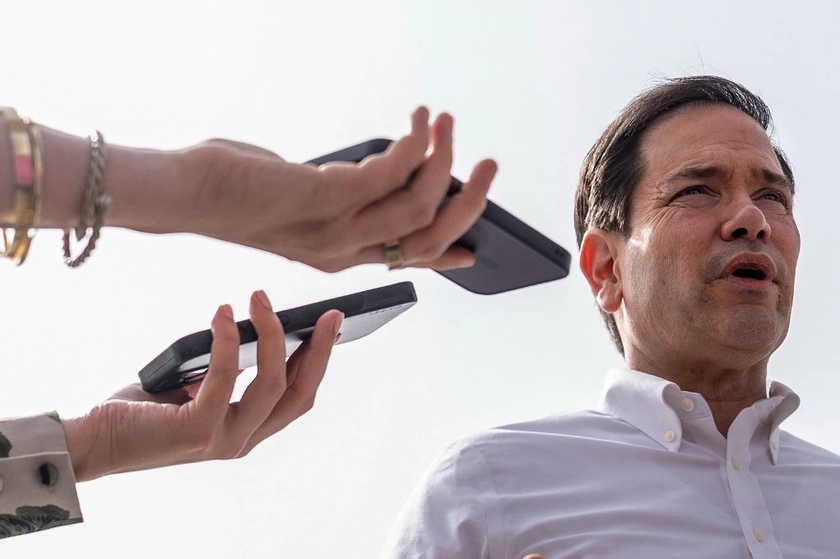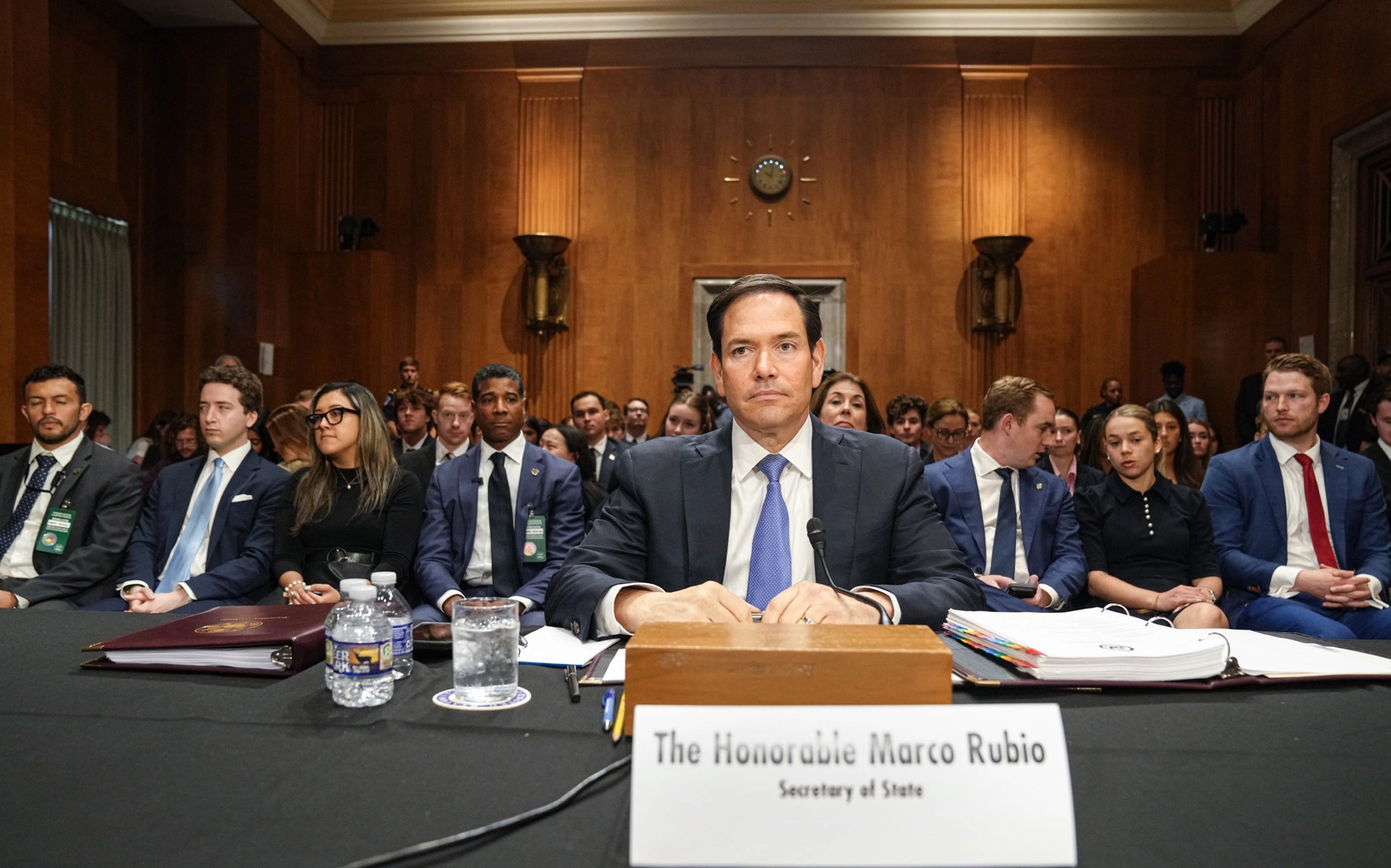
WASHINGTON DC – US Secretary of State Marco Rubio insisted on Tuesday that President Donald Trump has made “no concessions” to the Kremlin, dismissing criticism of the administration’s Ukraine policy, and said the administration is working to bring more air defense missile systems to Kyiv.
Rubio, who had just returned from a Ukraine-focused Europe trip Monday night, spent most of his Tuesday testifying before the Senate Foreign Relations and Senate Appropriation Committees as lawmakers grilled him over the current US administration’s Ukraine policy.
JOIN US ON TELEGRAM
Follow our coverage of the war on the @Kyivpost_official.
Sen. Jeanne Shaheen (D-NH), the top Democrat on the Foreign Relations Committee, blamed President Donald Trump for being too deferential to Russian President Vladimir Putin in his bid to bring about an end to the war in Ukraine.
“Putin is playing for time, and he’s playing this president like a fiddle,” she said. “The longer he plays it, the more opportunity he has to gain territory in Ukraine and the harder it’s going to be to get him to the table,” Shaheen added.
“Because President Trump has given away our leverage, Putin doesn’t feel pressured to agree to a ceasefire in Ukraine,” the senator emphasized.
Rubio shot back, saying that Putin “hasn’t gotten a single concession.”
“When Vladimir Putin woke up this morning, he had the same set of sanctions on him that he’s always had since the beginning of this conflict, and Ukraine was still getting armaments shipments from us and from our allies,” the top diplomat said.
Ukraine Welcomes US-Iran Deal, Sees Chance for Peace Push
In the meantime, he explained that Trump thinks threatening sanctions would only cause the Russians to stop talking. “It’s crucial to maintain dialogue and compel them to come to the negotiating table,” he added.
The core problem of the war in Ukraine, Rubio went on to emphasize, “is this: Russia wants something it doesn’t have and has no right to – and Ukraine wants something it can’t win back militarily.”
Rubio’s first appearance before the senators also came just a day after Donald Trump’s two-hour-long phone call with Putin, which did not yield any breakthroughs on a ceasefire or talks to end the fighting.
In the meantime, he told senators that Moscow had pledged to send the US “terms for what they would require in order to reach a ceasefire.”
“It’s our understanding that the Russians are going to write up terms for what they would require in order to reach a ceasefire that then would allow broader negotiations... We await those terms, and then we’ll have a much better understanding about Mr. Putin’s calculation once we see what those terms look like,” he said.
Rubio also cited last week’s talks in Istanbul between Russia and Ukraine that ended in an agreement to swap one thousand prisoners of war from each side as a positive step, but said, “What we haven’t seen yet it moves toward peace.”
When pressed by his former colleagues on the Trump administration shifting away from arming Ukraine against the Russian continued military offensive, Rubio pushed back, saying that while the White House hasn’t yet decided whether to approve new military aid to Ukraine, it has also not stopped weapons deliveries to Ukraine.
He insisted that Ukraine urgently needs additional Patriot air defense systems, but the US and its allies face shortages. “We can’t produce them quickly enough,” he said, adding that ammunition is consumed faster than it can be replenished.
He added that the US is working closely with NATO allies that have Patriot batteries to arrange their transfer to Ukraine.
When pressed whether the administration acknowledged the broader geopolitical implications of Russia’s war, particularly the link between the Ukraine conflict and potential instability in the Indo-Pacific region, Rubio agreed, while also adding that the war in Ukraine diverts Western attention and resources away from deterring more significant threats in Asia.
Democratic and Republican senators have also pushed the top diplomat for more sanctions on Russia.
In response to the lawmakers’ criticism of the Trump administration’s disengagement policy, Rubio pushed back by stating, “I see some of the foreign ministers, including individuals from Ukraine, more than I’ve seen my own children, and I talk to them at least three times a week.”
“We are engaged in the world, but we’re going to be engaged in a world that makes sense and that’s smart,” he added.
On Wednesday, Rubio is scheduled to return to the House side of Congress for another marathon hearing before relevant committees on the administration’s foreign policy.
You can also highlight the text and press Ctrl + Enter