Ukraine’s military is doing better than battlefield statistics of Russian casualties, equipment destroyed, may lead you to believe, as much of the war is going on away from the front lines, in what Ukraine is doing in executing a better Grand Strategy than corrupt Kremlin generals can apparently conceptualize.
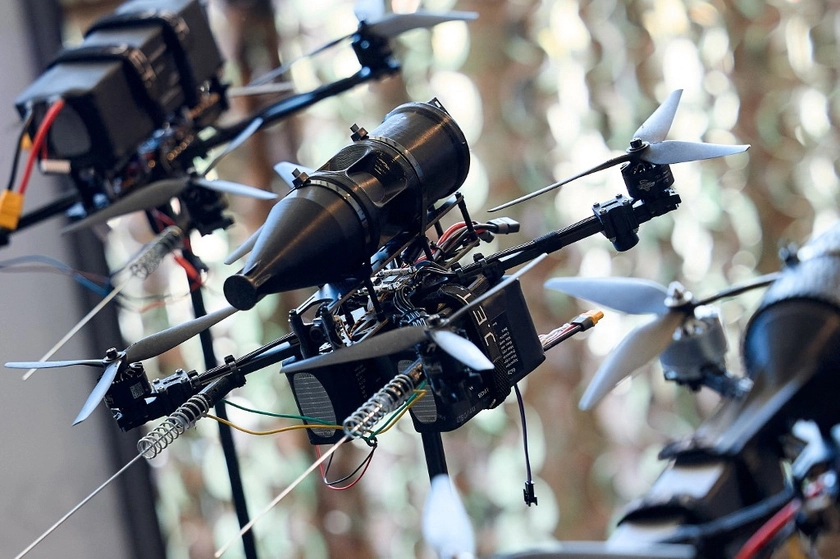
An overnight strike by Ukraine behind enemy lines, along with partisan activity and information sharing from allied aerial surveillance over the Black Sea, illustrates how Kyiv is not just inventing new drone tactics on the front lines, it is mastering Grand Strategy any nation should be expected to implement across the border into the aggressor nations industrial targets, if not artificially and unilaterally limited.
JOIN US ON TELEGRAM
Follow our coverage of the war on the @Kyivpost_official.
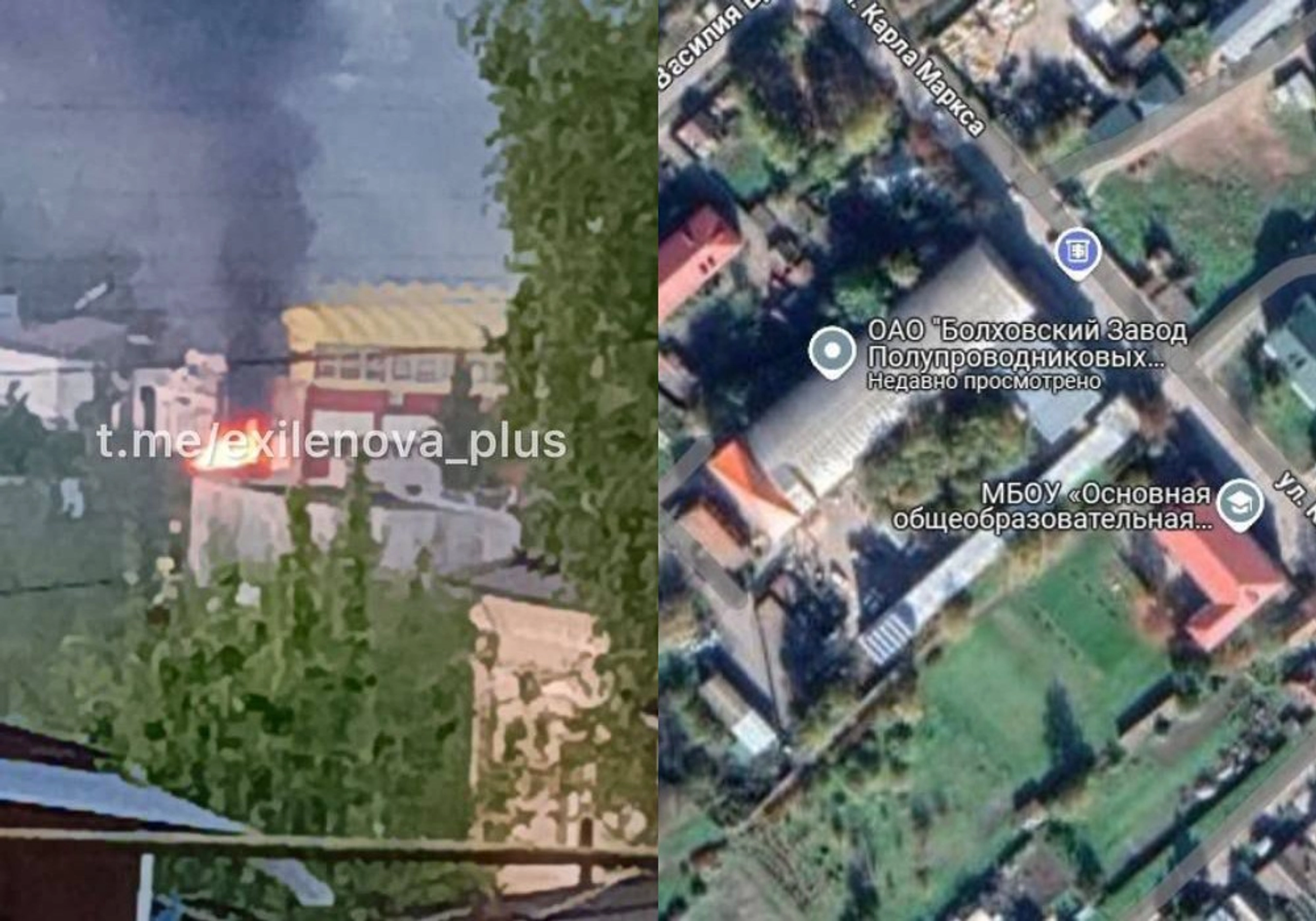
In the early hours of Wednesday, May 21, the Bolkhov Semiconductor Device Plant (BZPP) in Russia’s Oryol region came under attack residents reported hearing a series of loud explosions, and drone activity was observed in the area.
Regional Telegram channels had warned that the “night would be loud,” and by morning, reports began to surface of a possible strike on the Bolkhov plant as part of an air attack. The Oryol region is located northeast of Ukraine, approximately 170 kilometers from the nearest Ukrainian border.
Telegram channel Exilenova+ published footage of the strike, reportedly filmed by eyewitnesses. Local online communities complained about explosions near the facility, with many users confirming that the night had indeed been restless.
The Illusion of a Peace Deal for Ukraine
Oryol region governor Andrey Klychkov claimed that 37 drones were shot down over the region. He stated that as a result of a “massive enemy drone attack” in the town of Bolkhov, several private residential buildings and the Bolkhov Semiconductor Plant were damaged.
He added that “work is underway at the scene to eliminate the consequences of the attack,” and that there were no casualties.
The Bolkhov Semiconductor Device Plant, located in the town of Bolkhov about 55 kilometers from Oryol, is a key facility in Russia’s military-industrial complex. It develops and manufactures electronic components for radio-electronic equipment, including microchips, semiconductors, indicators, microassemblies, and so-called “eternal batteries” used in military systems.
The plant’s products are used in communication, control, electronic warfare, and simulators for tanks and missile systems. BZPP cooperates with the Suzirya concern and other defense industry entities.
The plant is under international sanctions, but it continues to work actively: up to 3 million devices are manufactured annually and about 700 employees are employed.
Meanwhile, residents of Russia’s Tula and Ryazan regions also reported loud explosions following drone strike alerts. Around 11:20 p.m., six blasts were heard in the city of Aleksin, Tula region, followed by widespread disruptions in mobile communication and internet access.
Roughly 50 minutes later, at least four more explosions were heard in Ryazan region. At the same time, Kaluga Airport – located west of Tula region – temporarily restricted the arrival and departure of aircraft, according to Russia’s Federal Air Transport Agency.
On the morning of May 21, Russia’s Defense Ministry claimed that between 8:00 p.m. on May 20 and 4:05 a.m. the next day, its air defense systems allegedly intercepted and destroyed 127 Ukrainian fixed-wing drones.
As of the time of publication, Ukraine had not commented on its possible involvement in the overnight attacks.
Within the context of Russia’s full-scale war against Ukraine, Ukrainian forces strike military targets on Russian territory as part of its politico-military Grand Strategy, as hinted at by Carl von Clauswitz and delineated by B. H. Liddel-Hart, and applied to this situation by Ukraine’s National Institute of Strategic Studies (NISS) and in a recent article by the Ukrainian NGO Come Back Alive Center (CBACenter).
These operations aim to reduce the enemy’s combat capabilities by targeting supply depots, equipment, and defense industry infrastructure. Strategic facilities such as factories, airfields, oil depots, and logistics hubs are often in the crosshairs, though Ukraine does not always officially confirm its role in such attacks.
You can also highlight the text and press Ctrl + Enter


Putin’s Worst Nightmare