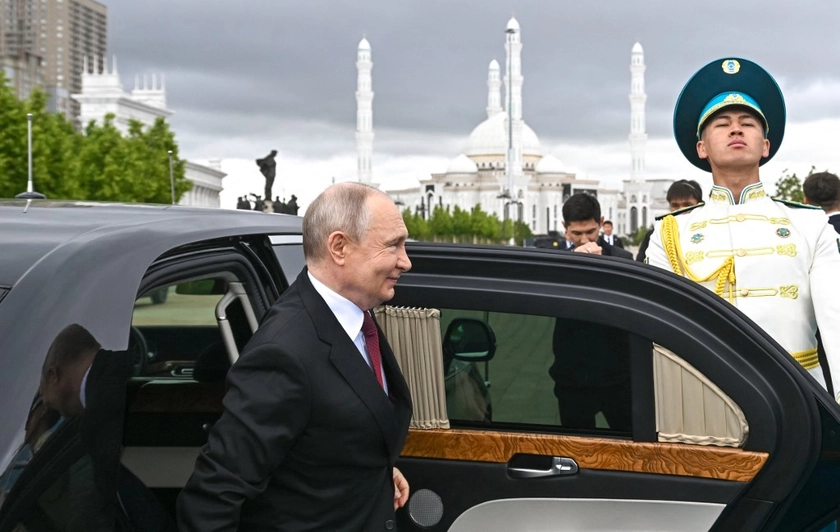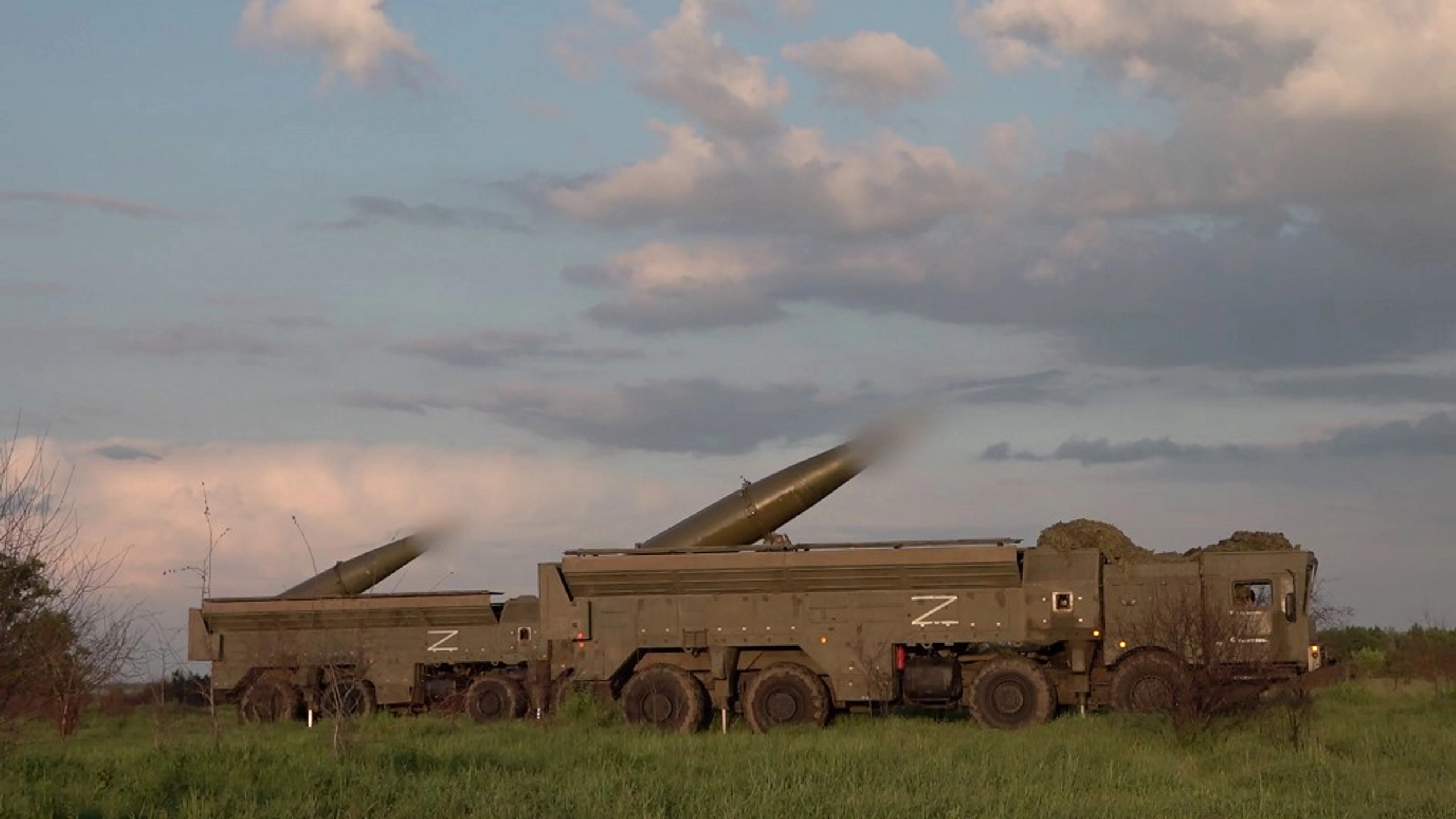
Colonel Richard Kemp, a former British military commander, has warned that Russian President Vladimir Putin could resort to tactical nuclear weapons in response to Ukraine’s recent deep-strike operations, including Spiderweb.
He assumes that the West may be “powerless to stop this holocaust.”
JOIN US ON TELEGRAM
Follow our coverage of the war on the @Kyivpost_official.
In an article for the Daily Mail, Kemp speculated that Russia has suffered “far more badly than the Kremlin ever believed possible,” and that a retaliatory nuclear strike could now be on the table.
“There will be retaliation. The Russian president, afraid more than anything of appearing weak, cannot be seen to let such a devastating attack go unanswered,” he wrote.
Kemp argued that Putin might now calculate the use of a tactical nuclear device – as opposed to a large strategic bomb – could demonstrate strength and force Kyiv into surrender.
“The appalling reality is that such a calculation might be right.”
He outlined four possible nuclear scenarios that Moscow could consider:
- A strike on a Ukrainian military concentration near the front lines.
- A nuclear attack on a Ukrainian airfield, potentially killing covert NATO personnel.
- A strike on a nuclear power station, risking environmental catastrophe worse than Chernobyl.
- A direct hit on a major city like Kyiv or Odesa.
“The death toll would reach hundreds of thousands,” he said. “And even then, Putin might believe that NATO would not respond in kind. He could be insane enough to think that this would win the war for him at a stroke.”
Kemp further argued that Western nuclear deterrence has eroded since the Cold War, leaving little in the way of an effective response.
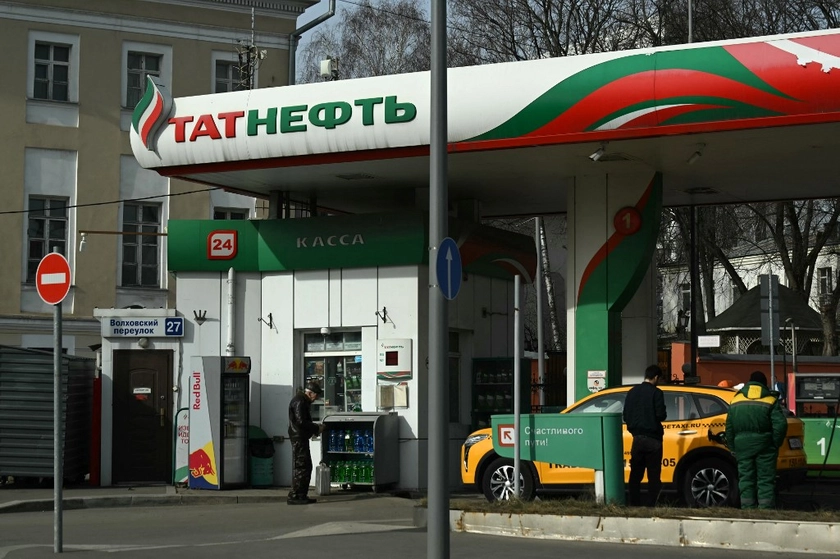
Russian Oil Giant Limits Fuel Sales Nationwide After Ukrainian Strikes
“Europe does not have an effective nuclear deterrent,” he wrote. “Our only nuclear option now is the Doomsday weapon... and Putin knows we will never provoke that.”
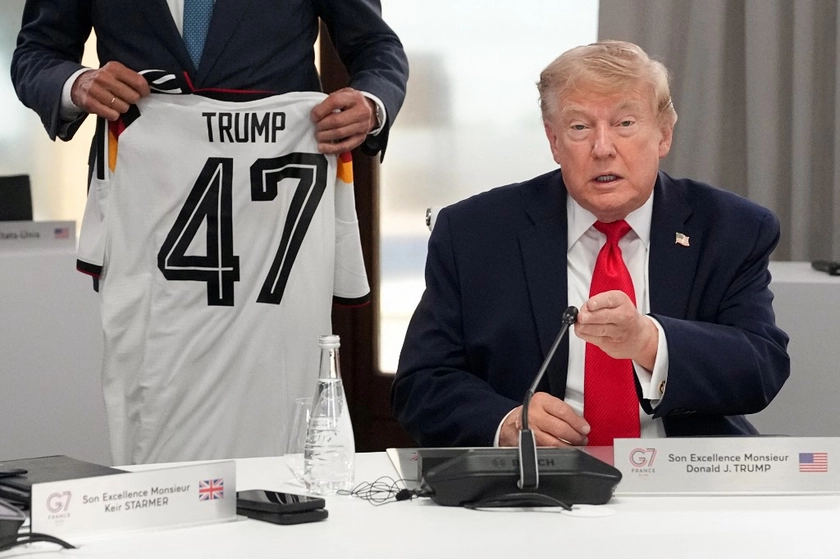
While France still maintains some tactical nuclear capabilities and the US has warned Russia not to use nukes, Kemp expressed concern that the Kremlin might gamble on Washington’s restraint – especially under a Trump administration.
“America has repeatedly warned that it will not tolerate the use of tactical nukes by Russia... but Putin could well decide it’s a risk worth taking.”
He added that any Western retaliation might provoke broader war.
Notable Ukrainians, such as Andriy Kovalenko, head of the Center for Countering Disinformation under Ukraine’s National Security Council, have already responded to recent Western media discussions about the nuclear threat.
“Right now, all the talk about the nuclear threat in the West in the media is only beneficial to Russia,” Kovalenko wrote on Telegram. “Because nuclear scare stories are part of the fear propaganda that they have always used to scare Western societies in order to achieve their goals without war.”
Kovalenko argued that if the Kremlin were ever to seriously consider a nuclear strike, it would ultimately cause more harm to Russia itself. The entire world is united against the use of nuclear weapons, he said, and Russia’s economy is still heavily reliant on energy exports.
“I believe that it is not worth helping the Russians in the propaganda of fear with nuclear weapons for the sake of traffic in the media. Calm down,” he added.
The comments came in the wake of Operation Spiderweb, launched on June 1 by Ukraine’s Security Service (SBU), which saw drones strike four Russian airfields simultaneously – Belaya, Dyagilevo, Olenya, and Ivanovo.
The operation was one of the largest drone attacks since the full-scale war began. According to Ukraine’s SBU and General Staff, the strikes resulted in the destruction or damage of 41 Russian strategic aircraft, including Tu-95MS, Tu-22M3, Tu-160 bombers, and A-50 airborne early warning and control planes. Moscow’s estimated losses were pegged at $7 billion.
The recent Ukrainian drone attacks on Russian strategic airfields have significantly increased the risk of escalation in the conflict, according to Keith Kellogg, the US president’s special representative for Ukraine and Russia.
Speaking to Fox News, Kellogg said that the strikes targeted key elements of Russia’s nuclear triad – land-base, submarine-launched and strategic bomber-launched warheads – a move that could heighten the potential for retaliation.
“When you attack an opponent’s part of their national survival system, which is their triad, the nuclear triad, that means your risk level goes up,” he said. “You’re not sure what the other side’s going to do.”
Kellogg pointed to unconfirmed reports of a Ukrainian strike on the headquarters of Russia’s Northern Fleet in Severomorsk, noting that if true, Ukraine would have hit two legs of the triad – long-range bombers and the naval component – calling it “a very bold attack.”
He stressed that while the physical damage to Russia’s nuclear-capable aircraft was significant, the real impact could be psychological.
“It’s not so much the damage you do on the triad itself… but it’s a psychological impact,” Kellogg said.
He added that Ukraine’s message was clear: “We can play this game too. Ukraine is not lying down on this.”
Kellogg warned that the current trajectory could lead to what he personally deemed to be “unacceptable” levels of risk and push the war to a far more dangerous stage.
“We’re trying to get to a position where the risk levels are not going so high that this thing will expand – and take us where we don’t want to be,” he said.
You can also highlight the text and press Ctrl + Enter

Putin’s Worst Nightmare
Zelensky Reveals Intercepted Intel From Putin’s Desk