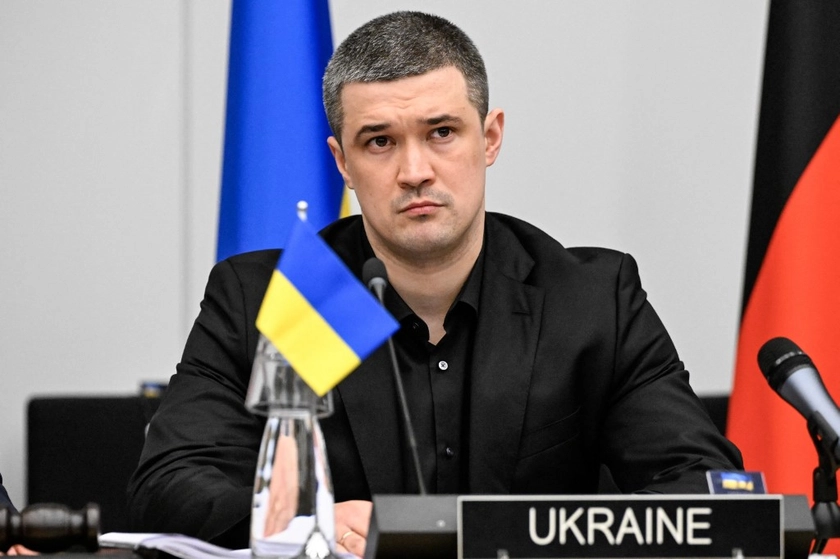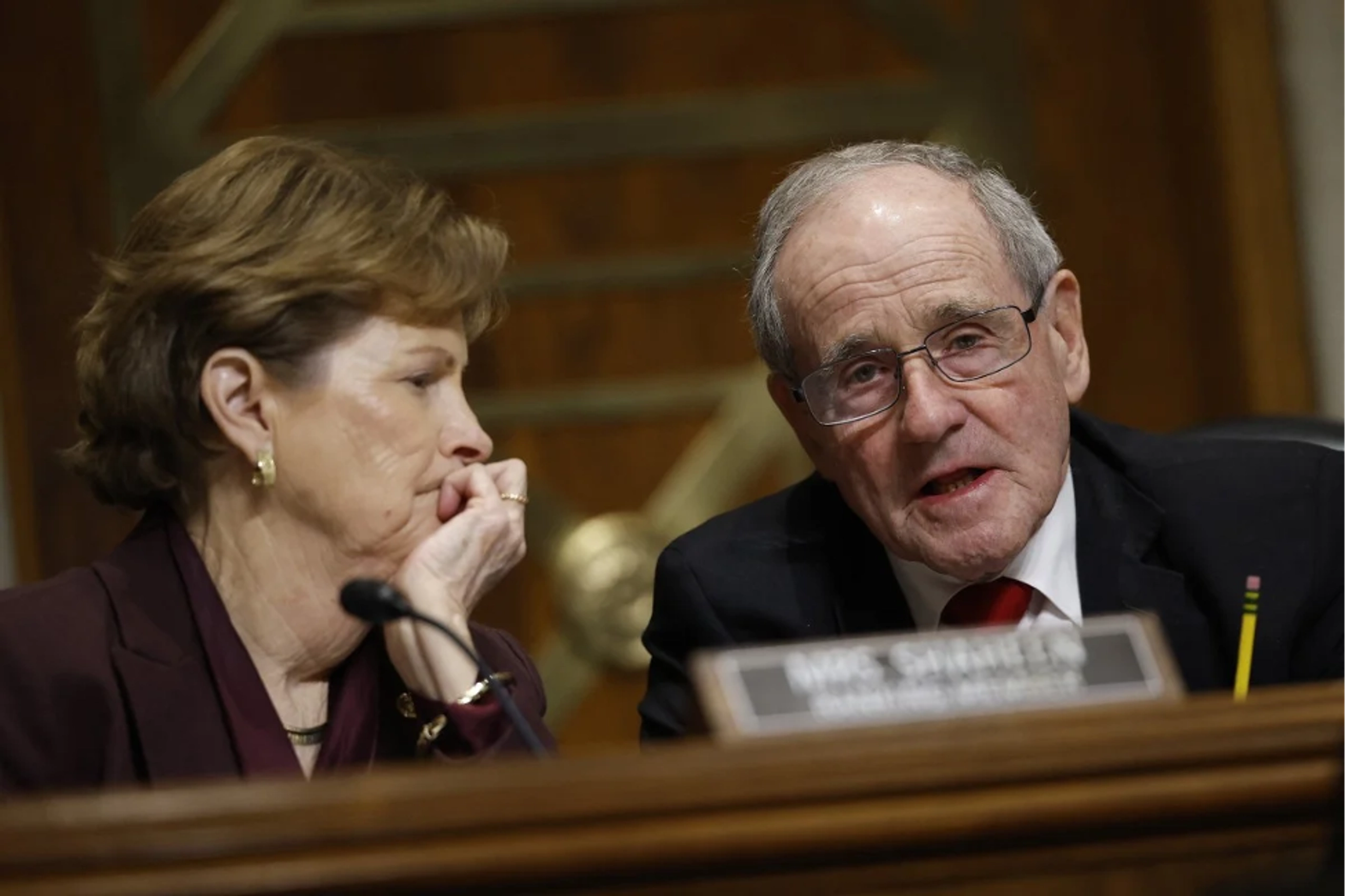
The leaders of the US Senate Foreign Relations Committee (SFRC) on Tuesday offered rare bipartisan support for NATO ahead of next week’s leaders meeting next week to discuss ways to boost European capabilities in the face of Putin’s growing appetite to use military force in the continent, Kyiv Post’s Washington correspondent reports.
The NATO summit, set for June 24-25 in The Hague, comes as the US is seen to be retreating from taking primary responsibility for Europe’s protection. Members of the Trump administration have warned their European counterparts that major changes in US troop rotations are imminent even as they seek to reassure Washington’s commitment to the Alliance.
JOIN US ON TELEGRAM
Follow our coverage of the war on the @Kyivpost_official.
Some alliance members – notably the Baltic countries, which are trying to “Putin-proof” themselves – are not convinced and have been urging NATO to further support Ukraine amid Russia’s full-scale invasion.
Republican Senator Jim Risch, (R-ID) the chairman of the SFRC, says the US is going to continue to support NATO “in every way we can.”
“Russian President Vladimir] Putin seems to never miss an opportunity to make a mistake, and the mistakes he’s made has actually done a lot to strengthen NATO, not the least of which is to add two new members in the now considerably longer border of his with NATO,” he told a Senate a full committee hearing on the organization.
Ukraine Regained Battlefield Initiative but Needs More Aid to Keep It – Fedorov
Regarding the Baltics, Risch said he personally met with them right after the invasion of Ukraine to assure them that the US will “not allow one square inch of NATO ground to be given up – not one square inch.”
Senator Jeanne Shaheen (D-NH), the top Democrat on the committee, emphasized the need to continuingly increase pressure on Putin to end the war in Ukraine.
“We are all on the eastern flank now,” she said, quoting NATO Secretary General Mark Rutte.
“The reality of this shared vulnerability is clear,” Shaheen, who is also the co-chair of the US Senate NATO Observer Group went on to add: “If Putin wins in Ukraine, he will not stop there. He’s already sent troops into Belarus and threatens the Balkans, the Baltic states and the Black Sea. And Russia’s ambitions also continue to play out over our own borders – through the Kremlin’s repeated attacks on our financial institutions and energy infrastructure.”
“As Senator Risch has rightly said, the NATO alliance is ‘the most successful political and defensive organization that’s ever been on the face of the planet.’ I agree with that,” she said.
In the meantime, Shaheen went on to criticize the Trump administration’s continued refusal to lower the price cap for Russian oil sanctions at the G7. “It would have put more pressure on Putin. I think Congress needs to act,” she said, citing pending Senate legislation that would put in place additional sanctions on Putin.
“I also think that we shouldn’t stop there, and NATO membership should be on the table for Ukraine,” she added, arguing that Ukraine’s membership would serve to strengthen the alliance.
“They have the largest army in Europe, the most experienced army in Europe at this point. We’re developing cutting-edge countermeasures based on Ukraine’s real-time experience against Russian systems,” she said.
“We should not forget the power of alliances in taking on adversaries like Russia or Iran or others,” Shaheen concluded.
Other Senators, including Jeff Merkley (D-OR) and Chris Van Hollen (D-MD) also questioned the impacts of the Trump administration’s stated opposition to Ukraine’s NATO membership and urged for policy change.
You can also highlight the text and press Ctrl + Enter

OPINION: The New Line Kyiv Quietly Built Into NATO
EU Investigates von der Leyen Over Zelensky Chat