From the Editors: The following is an important statement published on 20 June in The Guardian in support of the position of an eminent colleague, Fiona Hill, denounced recently by Russia-appeasers as a “war monger.” Kyiv Post’s UK born and educated Chief Editor, Bohdan Nahaylo, is one of the many signatories. We are republishing the letter in its original British format for the record.
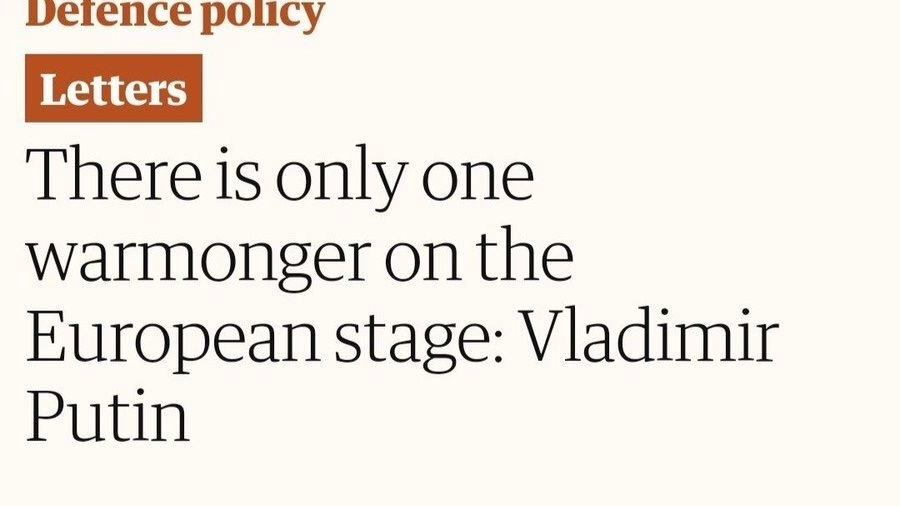
There is only one warmonger on the European stage: Vladimir Putin
JOIN US ON TELEGRAM
Follow our coverage of the war on the @Kyivpost_official.
Experts on Russia, Ukraine and international security respond to a letter that criticized Fiona Hill for her assessment of the Russian threat to Britain
On 13 June, the Guardian published a collective letter concerning Russia’s war and attacking Dr Fiona Hill, the chancellor of Durham University and one of the principal authors of the UK’s strategic defence review. As UK-based and/or British-educated experts in matters pertaining to Russia, Ukraine and international security, we voice our profound disagreement with the letter by Robert Skidelsky, Richard Balfe, Anthony Brenton, Thomas Fazi, Anatol Lieven, Ian Proud, Geoffrey Roberts, Richard Sakwa and Brigitte Granville.
They say that Dr Hill represents “the warmongering mood of official Britain.” But there is only one warmonger on the European stage, and that is Vladimir Putin. It is neither a “false premise” nor a “mad conclusion” to argue that Putin’s invasion of Ukraine has the goal of restoring Russia to the status of a world power, and that the departure of the US would leave Russia “the dominant military power in all of Europe.” In reality, governments and independent experts from across Europe, ourselves included, have reached conclusions very similar to Dr Hill’s, as they are supported by empirical evidence – not least by Putin’s own overtly stated aspirations.
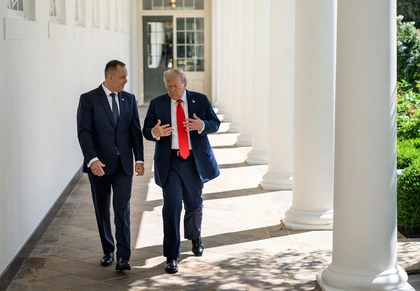
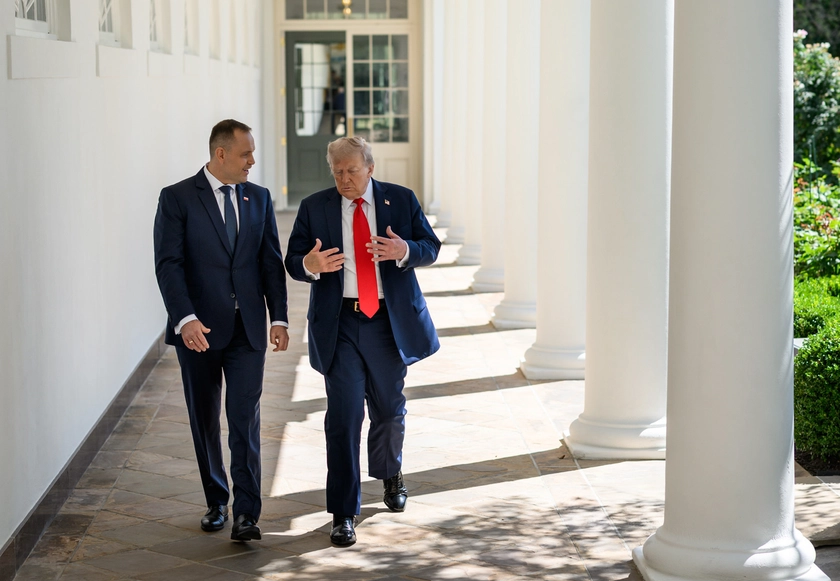
Trump Downplays Russian Drone Incursion into Poland as ‘Mistake,’ Drawing Sharp Rebuke From Allies
One wonders what “precautions” the signatories would advise Britain to take in the event of a US pullout from Europe. The once – and perhaps still – friendly contacts in Russian officialdom that some of the letter’s authors maintain will not help.

Roy Allison School of Global and Area Studies, University of Oxford
Timothy Garton Ash Faculty of History, University of Oxford
Anders Åslund Stockholm Free World Forum, Sweden (DPhil Oxford)
Rostyslav Averchuk VoxUkraine, Kyiv (BA Oxford)
Jaroslava Barbieri Russia and Eurasia Programme, Chatham House, London
Ian Bond The Centre for European Reform, London
Laurie Bristow Ambassador to Russia 2016-20, Cambridge, UK
Maksym Butkevych Principle of Hope Foundation, Kyiv (MA Sussex)
Edward Hunter Christie Finnish Institute of International Affairs, Helsinki (MSc LSE)
Ruth Deyermond Department of War Studies, King’s College London
Sasha Dovzhyk INDEX: Institute for Documentation and Exchange, Lviv (PhD Birkbeck)
Marta Dyczok Western University, London, Ontario (DPhil Oxford)
Julie Fedor The University of Melbourne, Australia (PhD Cambridge)
Emily Finer School of Modern Languages, University of St Andrews
Rory Finnin Faculty of Modern and Medieval Languages, University of Cambridge
Lawrence Freedman Department of War Studies, King’s College London
Mischa Gabowitsch Johannes Gutenberg University of Mainz, Germany (BA Oxford)
Ian Garner Pilecki Institute, Warsaw, Poland (BA Bristol)
Keir Giles Russia and Eurasia Programme, Chatham House, London
Paul Goode Carleton University, Ottawa, Ontario (DPhil Oxford)
Thomas Grant Wolfson College, University of Cambridge
Samuel Greene School of Politics and Economics, King’s College London
Agnia Grigas Atlantic Council, Washington, DC (DPhil Oxford)
Hubertus Jahn Clare College, University of Cambridge
Polly Jones Faculty of Medieval and Modern Languages, University of Oxford
Ivan U Kłyszcz International Centre for Defence and Security, Tallinn (IM Glasgow)
Amy W Knight Independent Scholar, Summit, New Jersey (PhD LSE)
Natasha Kuhrt Department of War Studies, King’s College London
Taras Kuzio National University of Kyiv-Mohyla Academy (PhD Birmingham)
Simon Lewis University of Bremen, Germany (PhD Cambridge)
Klara Lindström Stockholm Centre for Eastern European Studies (BA Oxford)
Bobo Lo Independent international relations analyst, Brighton, East Sussex
John Lough Russia and Eurasia Programme, Chatham House, London
Edward Lucas Centre for European Policy Analysis, Washington/London
Orysia Lutsevych Russia and Eurasia Programme, Chatham House, London
Claudia Major German Marshall Fund of the US, Berlin (PhD Birmingham)
Luke March School of Social and Political Science, University of Edinburgh
Daria Mattingly Department of History, University of Chichester
Michael McFaul Stanford University, Palo Alto, California (DPhil Oxford)
Jade McGlynn Department of War Studies, King’s College London
Bohdan Nahaylo Kyiv Post Chief Editor, Kyiv/Barcelona (BA Leeds)
James Nixey Conflict Studies Research Centre, Shrivenham, Oxfordshire
Phillips O’Brien School of International Relations, University of St Andrews
Olga Onuch School of Social Sciences, University of Manchester
Ingerid M Opdahl Institute for Defence Studies, Oslo (PhD Birmingham)
Carolina Vendil Pallin Royal Swedish Academy of War Sciences, Stockholm (PhD LSE)
Peter Rutland Wesleyan University, Middletown, Connecticut (BA Oxford)
Gwendolyn Sasse Humboldt University of Berlin, Germany (PhD LSE)
Anton Shekhovtsov Central European University, Vienna (PhD UCL)
James Sherr Russia and Eurasia Programme, Chatham House, London
Oxana Shevel Tufts University, Massachusetts (MPhil Cambridge)
Iryna Shuvalova Faculty of Humanities, University of Oslo (PhD Cambridge)
Timothy D Snyder University of Toronto, Ontario (DPhil Oxford)
Joanna Szostek School of Social and Political Sciences, University of Glasgow
Maximilian Terhalle Hoover Institution, Stanford, California (MA SOAS)
Nikolaus von Twickel Centre for Liberal Modernity, Berlin (MA King’s College London)
Andreas Umland Stockholm Centre for Eastern European Studies (PhD Cambridge)
Adam Ure Lvivski Consulting, London (PhD UCL)
Fredrik Wesslau Stockholm Centre for Eastern European Studies (BSc LSE)
Sarah Whitmore School of Law and Social Sciences, Oxford Brookes University
Andrew Wilson School of Slavonic and East European Studies, UCL
Kataryna Wolczuk School of Government, University of Birmingham
Stefan Wolff School of Government, University of Birmingham
Mychailo Wynnyckyj National University of Kyiv-Mohyla Academy (PhD Cambridge)
Yuliya Yurchenko School of Accounting, Finance & Economics, University of Greenwich
The original of this joint letter, published by The Guardian on June 20, can be seen here.
You can also highlight the text and press Ctrl + Enter