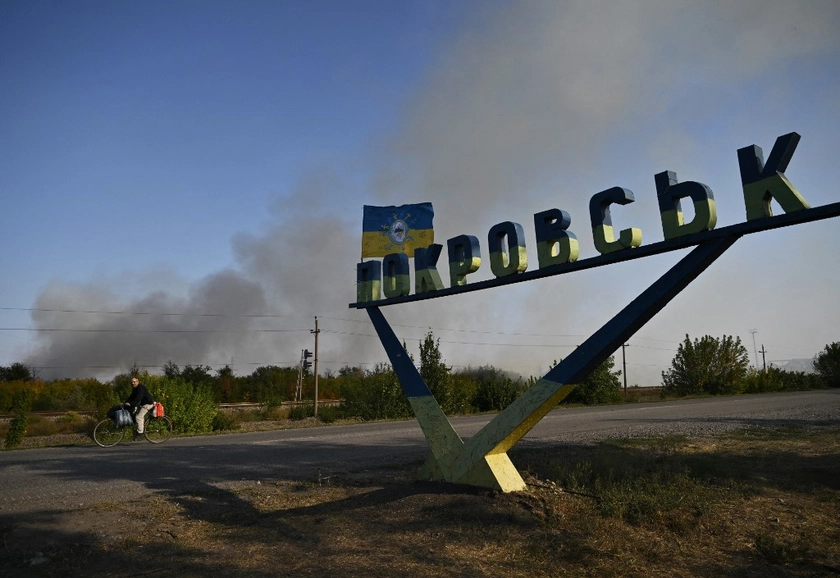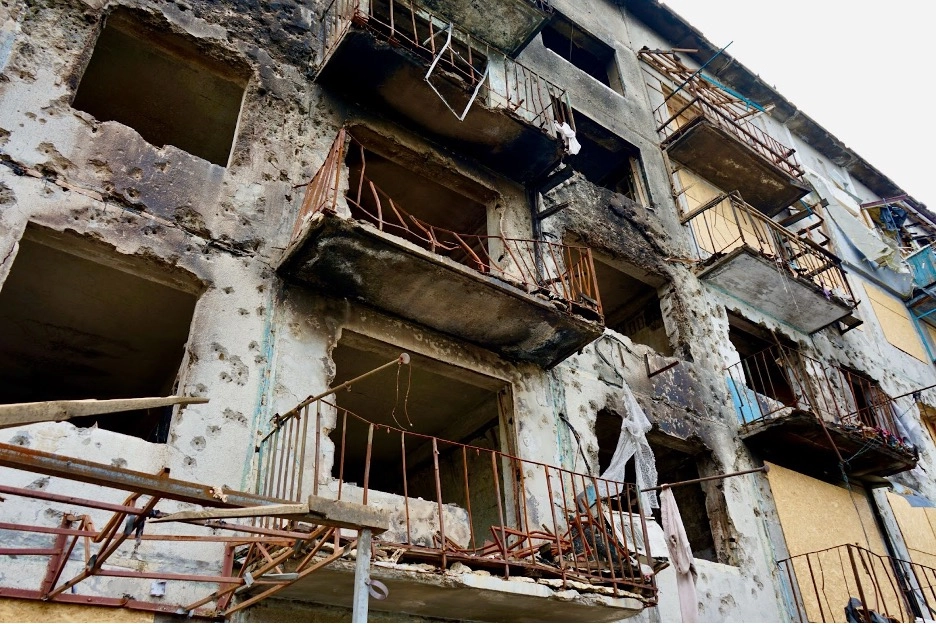
OUTSIDE POKROVSK, Ukraine – Critics said Pokrovsk would fall to invading Russian forces last year – but it hasn’t.
It holds.
JOIN US ON TELEGRAM
Follow our coverage of the war on the @Kyivpost_official.
The cost of that resilience is steep: constant artillery fire, drone assaults, exhaustion that gnaws at both the mind and body of the tens of thousands of soldiers manning its defenses. And somehow, they continue to hold the line.
But that defense comes at a high price. Relentless pressure. Exhaustion. Blood. Here, just kilometers from Russian lines, Ukrainian soldiers have held their ground – and learned from the mistakes that cost them strongholds like Bakhmut in past battles.
This is a story about how Ukraine fights now – not only with drones and trenches, but with medics saving lives, engineers rewriting drone firmware in basement workshops, and soldiers who refuse to give up a single meter of ground. In Pokrovsk, we saw it all.
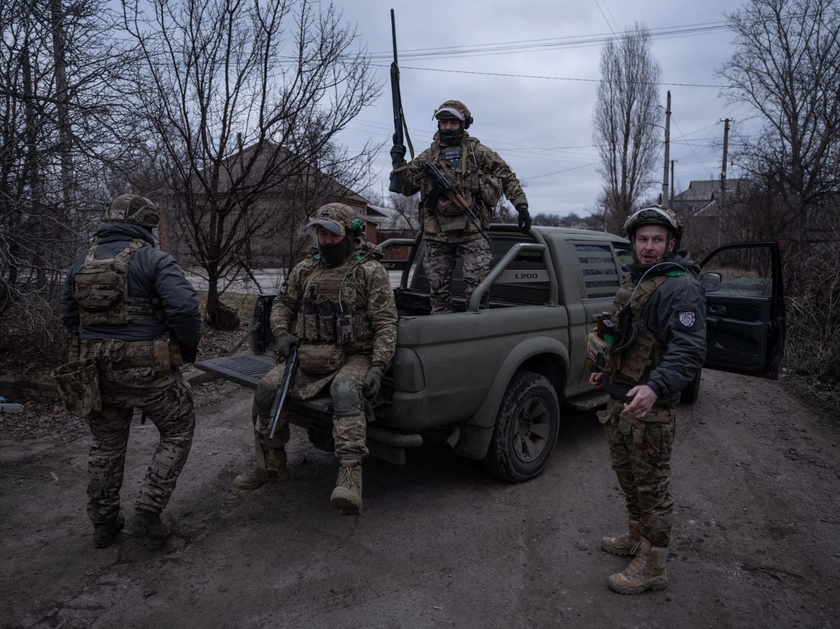
Today, multiple Ukrainian units are dug into the trenches protecting Pokrovsk – including the First Separate Assault Regiment. In April, they were promoted from a battalion to a regiment for their exemplary service on the eastern front, where they have held the line for years.
Kyiv Post spent several days with the soldiers of the First Assault Regiment last month – during Russian President Vladimir Putin’s false ceasefire for Victory Day – to get a look at the current state of the war from the perspective of the soldiers enduring the fighting every day.
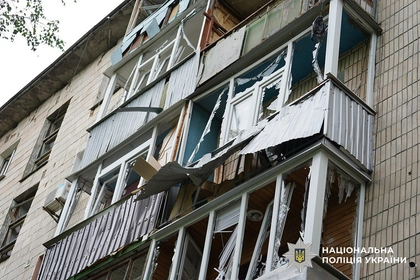
Modified Russian Drone Strikes on Sumy Injure 11
A different battlefield
“We’re fighting on a new battlefield,” said Dmytro Filatov, a veteran of some of Ukraine’s toughest battles who was recently promoted to regiment commander of the First.
He spoke with Kyiv Post at a fortified command center just outside Pokrovsk, where he allowed us to observe how Ukrainian forces function on today’s front. “This isn’t Bakhmut.”
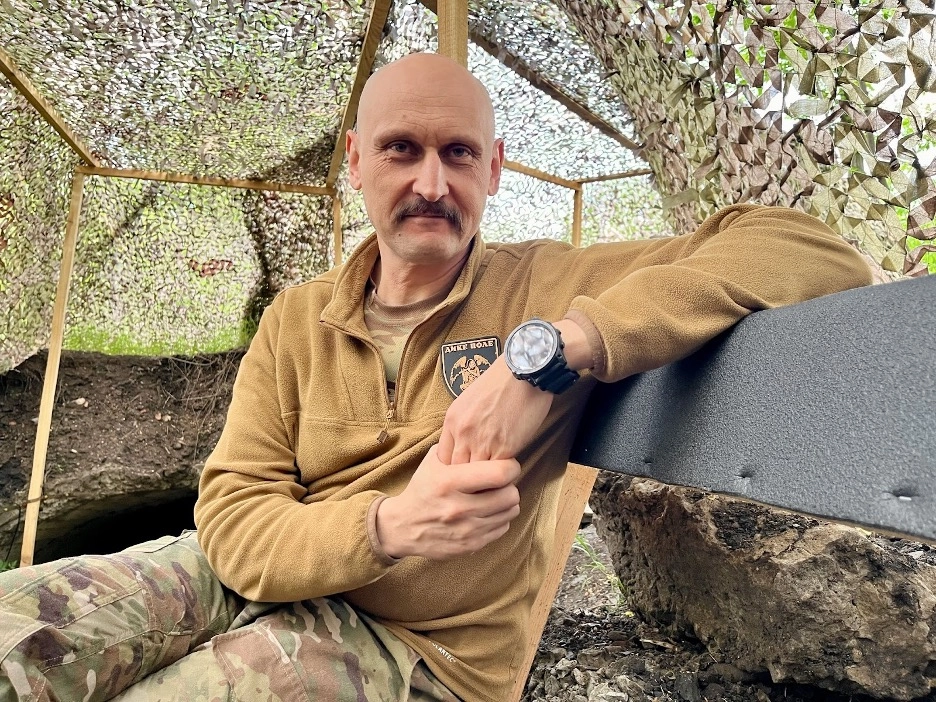
He would know. He fought there too. “Bakhmut – there was no time. No fortifications. No high ground,” he said. “We were under them.”
It was a costly lesson – a city ground down to dust, with Ukrainian troops outmaneuvered and outgunned by a Russian army that had both the terrain and time on their side. In Bakhmut, even elite units were left exposed.
Pokrovsk is different, Filatov said. This time, they have learned.
“This position – it’s been held for months,” the commander said. “And we hold it still. We’ve prepared. We’ve planned. We’ve adapted.”
You can see it in the landscape. Deep trenches cut through the black soil, reinforced with timber and camouflage netting. Anti-tank obstacles and decoy emplacements dot the surrounding fields. Unlike in Bakhmut, where the city was ultimately encircled, Pokrovsk’s defenses have been methodically layered.
Ukrainian commanders say it’s no longer about massive, sweeping advances. It’s about endurance.
But it’s still an exhausting war with no real end in sight.
Even during what was supposed to be Putin’s Victory Day “ceasefire” – announced by Moscow in April – the attacks never stopped. The buzz of drones and blasts of artillery fire could be heard from Filatov’s command post nonstop throughout the 72-hour period.
“Since the morning, we are fighting,” Filatov said about the first day of the supposed pause. “Two to six attacks per day.”
The human cost
If Filatov is the one holding the line, 28-year-old Kostiantynina is the one holding lives together behind it.
She’s the chief medic of the First Separate Assault Regiment and oversees a team of 26 front-line medics who support nearly 2,000 soldiers spread across a stretch of the eastern front that’s under near-constant attack.
Her job begins where the explosions land.
“We provide assistance. Evacuation. Stabilization,” she told Kyiv Post, seated at a makeshift desk in a reinforced command shelter where medical kits were stacked shoulder-high. “We take care of about 2,000 people.”
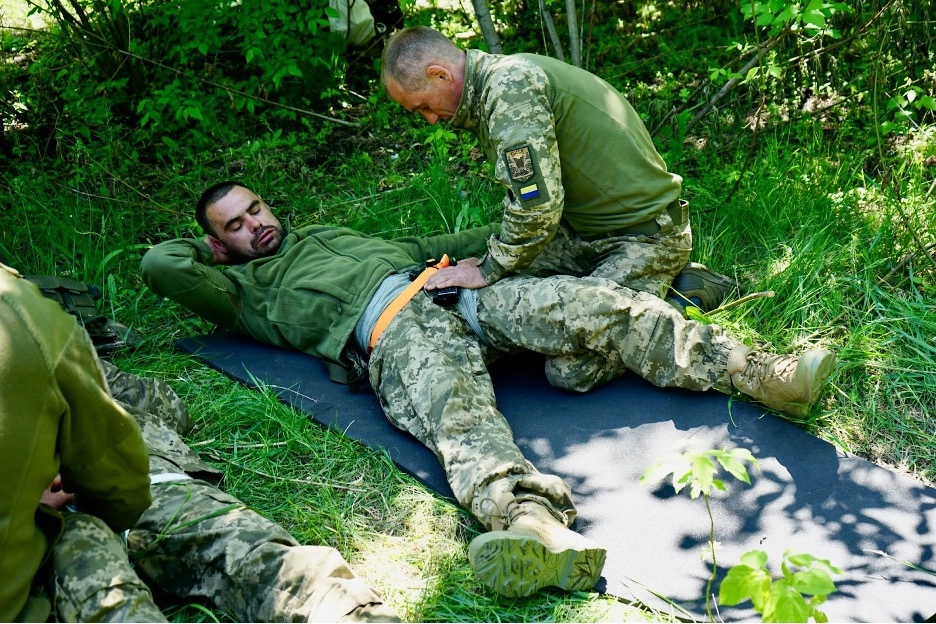
This war looks different than it did two years ago. Landmines, drones, indirect fire – they’re seeing more amputations, more head trauma, more cases that push the limits of their field gear and training. “Bullet wounds have become rare,” she said. “Now most injuries are blast trauma from drones.”
But what keeps her going on even the longest, bloodiest of days isn’t just the joy of saving a life. It’s seeing the will of her people.
“The biggest surprise… is their desire to live,” she said, describing seriously injured soldiers walking kilometers through enemy lines to reach safety. “They don’t give up. They just ask – ‘Where should I go next?’”
That kind of resolve shapes everything in Kostiantynina’s world, including how her team operates. There’s no rank when someone’s bleeding out. Everyone steps up – men and women, veterans and newcomers. Everyone gets the same assignments and takes the same risks. “We are equal here,” she said. “No difference.”
And to those watching from afar – the skeptics, the disengaged, the ones who say it’s not their fight – she has a message. “Come and see for yourself.”
Why they keep fighting
Pokrovsk may be holding, but that could change in an instant.
Munitions and equipment shortages are a daily reality. Ukrainian forces are rationing every round, every drone, every battery charge. “We don’t fire unless they fire,” the regiment commander said. “We want to save our ammunition.”
When asked what Ukraine’s military needs most, Filatov didn’t hesitate.
“First of all – air defense. Not for us, for the civilians,” he said.
And on the battlefield? “We need Bradleys… tested by time,” he said. “We use them with respect.”
Bolstered air power capability is also on his shortlist. “F-16s give us dominance in the air.” He explained that it was the few F-16s already in Ukraine’s arsenal that enabled the AFU to launch a counteroffensive into the Kursk region of Russia last year – securing a major strategic victory for Kyiv.
Still, weapons alone won’t win this war. Global market policies could play a bigger role in ending the war than any arms package. “Economic pressure is the most efficient way to fight Russia,” Filatov said. “We don’t ask for everything,” Filatov said. “We just ask for what can make a difference.”
Filatov has no illusions about the stakes. And no patience for Western ambivalence.
“The fact that people still believe what Putin says makes me smile,” he said with a hint of disbelief. “Putin is a manipulator. Europe still sees him as a president. We see a dictator.”
That gap – between how the war is seen from abroad and how it’s lived here in the trenches – shapes everything.
Because in places like Pokrovsk, the war isn’t theoretical. It’s not about shocking tweets or empty peace summit declarations.
It’s about survival.
You can also highlight the text and press Ctrl + Enter

Attack on Moscow Oil Refinery: Putin Under Pressure?