WASHINGTON DC – A top US defense analyst sounded the alarm about regional and global consequences of allowing Russia to claim victory in Ukraine, arguing that any “bad peace” imposed on Ukraine could usher in a new age of European conflict.
Michael Cecire, a defense and security researcher at RAND, a Washington-based think tank that often does studies for the Pentagon, last week warned a bipartisan group of lawmakers that Russia, according to a number of assessments by European allies, “may be able to launch an attack against NATO within the next 5-10 years.”
JOIN US ON TELEGRAM
Follow our coverage of the war on the @Kyivpost_official.
“That’s something I think we all have to be thinking about when we’re looking at the cost of a bad peace,” Cecire said during a hearing organized by the Helsinki Commission, a congressional body with a focus on Europe and Eurasia.
“I see a Europe that is under strain and under attack. Ukraine is the front line, but the entire region is under threat and buckling,” Cecire told lawmakers.
“The potential consequences of the Russian invasion of Ukraine and Russian, as well as Chinese, efforts to push U.S. influence out of Europe are troubling, but they can be countered,” he added.
Speaking to Kyiv Post on Tuesday, Cecire recalled that European leaders and intelligence chiefs have repeatedly assessed that Russia may be able to launch an attack against NATO within the next 5-10 years – including NATO Secretary General Mark Rutte.
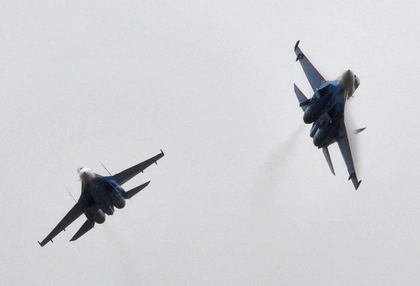
Moldovan Company Illegally Exported Fighter Jet Parts to Russia
These assessments are based on several factors, Cecire explained:
“First, Russia’s ongoing campaign of sabotage, cyber attacks, and hybrid/non-linear operations against European states.
“Second, Russia’s ability to sustain and regenerate its forces despite significant losses in Ukraine, which by some estimates already top one million casualties.
“And third, Russia’s maximalist demands for not only de facto dominion over Ukraine and broader swaths of Europe, including rolling back protections for several existing NATO member states,” he said.
RAND (founded in 1948 and whose name derives from “research and development”) is a non-profit think tank that receives funding from both public and private sources: from the US government and universities to private endowments and charitable foundations.
It has long been regarded as a non-partisan entity, while Trump-loyal MAGA mouthpieces in recent years have decried it as starting to lean left.
Cecire went on to highlight that Russia has also threatened direct war with NATO.
“While the experience with Ukraine suggests that Russia may not be in a position to launch a massed, combined arms campaign against a NATO state immediately, it could engage in hybrid actions to test and potentially undermine alliance unity,” he said.
Cecire recalled that Russia’s buildup and full-scale invasion of Ukraine in February 2022 was likely intended as a rapid, hybrid decapitation operation. “That operation failed, which has led to years of attrition warfare,” he told Kyiv Post.
During his testimony before the Helsinki Commission, Cecire highlighted the potential threats to European security and US national interests should a “Russian peace” be imposed on Ukraine, with a focus on the potential risks to Moldova specifically.
He said a Russian military victory – or a Moscow-oriented ceasefire – in Ukraine would “almost certainly see Russian ambitions metastasize into Moldova and beyond.”
“Russia could physically and directly threaten Moldova, yes, but it might not need to. It could reinforce Transnistria, play a more overt role in other vulnerable regions of Moldova that it has long cultivated, particularly the Russian-speaking Turkic region of Gagauzia, and employ the full range of its political and economic leverage over Moldova—potentially cutting the trade of goods and electricity between Moldova and Ukraine,” he said.
The results could allow Russia to heighten threats against Romania, a valuable NATO ally, and into the Balkans, and elsewhere in Central and Eastern Europe, Cecire said.
He added: “The precedent would be stark. Russian aggression would be seen as on the march, and rightly so. In Moldova, Ukraine, and Georgia, Russia will have successfully strategically decapitated three EU candidate countries, and it would be better able to redirect its considerable hybrid operations and military power in the region.”
Cecire said that, should Moldova’s sovereignty be compromised, Chinese interests would also likely accompany Russia’s.
“Russian aggression in Ukraine and Europe is financially and materially underwritten by the People’s Republic of China, which has been engaged in major geo-economic efforts in Eastern Europe and the Black Sea region in recent years – investing in strategic transit infrastructure and telecommunications systems, and erecting a web of strategic partnerships,” the analyst concluded.
You can also highlight the text and press Ctrl + Enter

Attack on Moscow Oil Refinery: Putin Under Pressure?