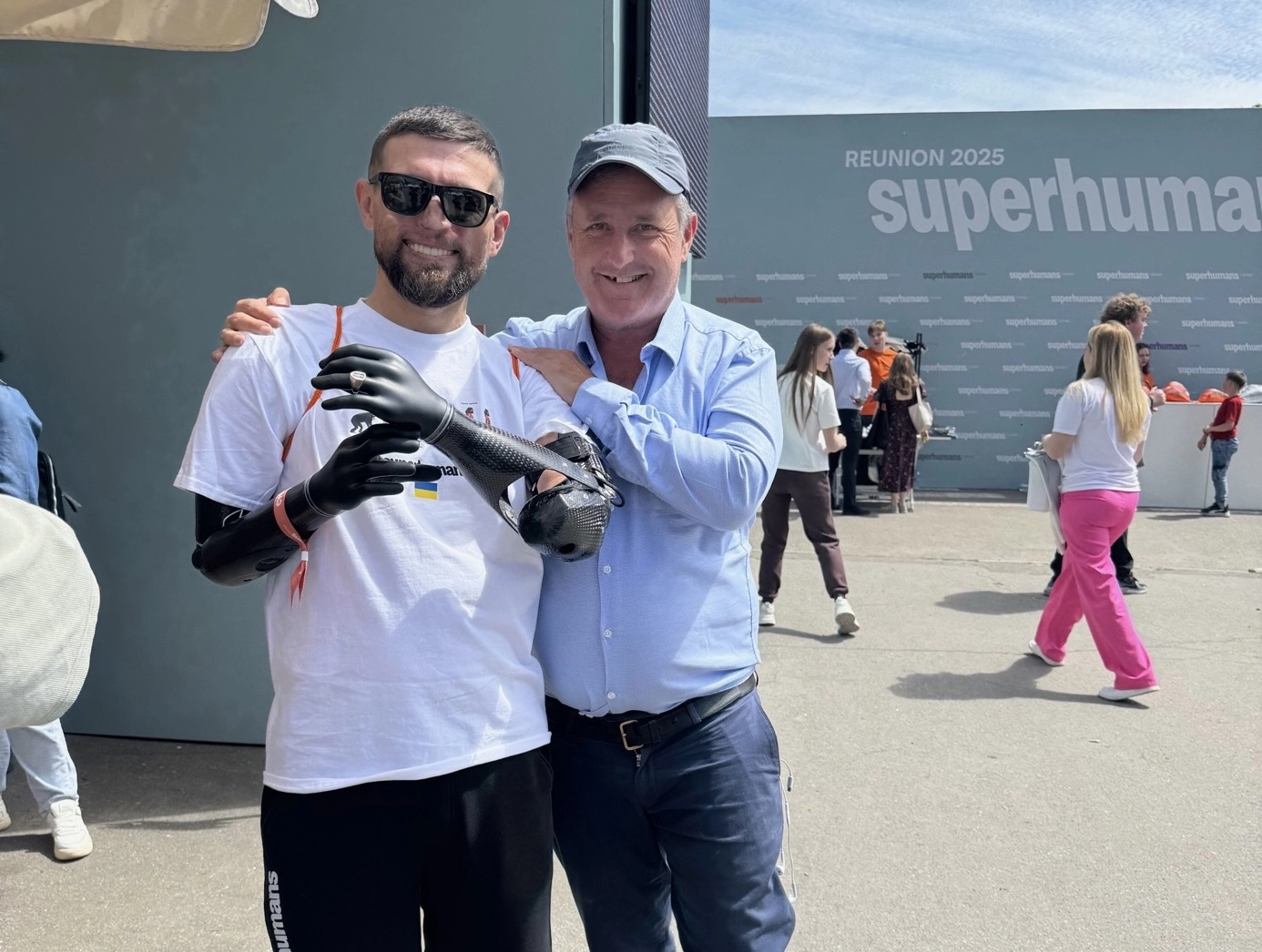
Attending a party for 250 war amputees, each missing one, two or even three limbs, as I did in Kyiv on May 31 is a stark reminder of war’s toll. I’ve gotten to know Max, a platoon leader in Ukraine’s elite 82nd Airborne, who lost a leg to a mine in November 2023. I helped sponsor his rehabilitation. He arranged the invitation.
These men aren’t seen as victims. In Ukraine, they are called Superhumans, a term that reflects a bold psychological and physical rehabilitation effort to help amputees return stronger. With music, laughter and defiance, the term felt accurate.
JOIN US ON TELEGRAM
Follow our coverage of the war on the @Kyivpost_official.
Australia’s contribution to Ukraine’s defense has quietly surged to A$1.5 billion ($975 million USD), according to government figures, most recently with the commitment of 49 M1 Abrams tanks. On May 19, President Volodymyr Zelensky announced that the first Australian tanks had arrived and were already deployed at the front.
While there’s still room to do more, Australia is now the largest non-NATO military donor to Ukraine’s war effort. That’s no small feat. Yet most Australians would struggle to name the figure, let alone explain where the aid is going or who it’s helping.
The gratitude on the ground is real. When I met former Prime Minister Scott Morrison at the Black Sea Security Forum in Odesa on May 30, his first visit to Ukraine, Ukrainians lined up to shake his hand. “More than just for the Bushmasters,” one said, “I want to thank him for how much his leadership mattered at that critical early time.”
Trump Downplays Russian Drone Incursion into Poland as ‘Mistake,’ Drawing Sharp Rebuke From Allies
Ukraine’s ambassador to Australia, Vasyl Myroshnychenko, told me: “Ukrainians will never forget Australia. I am forever grateful to the Australian Government and its people for their support.”
Many of our fellow Australians are already in the fight. Ignoring them means diminishing ourselves.
And yet back home the efforts barely register.
But a less-told story is that of the estimated 100 Australians in key civilian roles on the ground in Ukraine and the 40 more serving directly in Ukraine’s armed forces.
Despite a “Do Not Travel” directive from the Australian government and the absence of an open embassy from February 2022 until a partial reopening in January 2025, these Australians have stayed or found their way in to do extraordinary work in a grinding, dangerous war.
Rachel Lehmann from Hobart stayed in Kyiv despite a Department of Foreign Affairs and Trade directive to leave at the time of invasion. “I don’t like giving in to bullies,” she said. She is head of pastoral care for 150 students at the British International School. She described chaos, martial law, and missile attacks. “When I leave my kids for a trip out of Ukraine, that’s when the stress kicks in.” Her story, like many others, hasn’t made headlines, but it should.
Robert Potter from Adelaide is perhaps the godfather of Australian civilian efforts in Ukraine at the strategic level. Since November 2022, his Australian-led team has trained Ukraine’s intelligence and defense personnel in advanced cyber operations, with measurable battlefield outcomes. “We’ve trained over 500 people in person and thousands online, including wounded veterans whose military experience translates powerfully to cyber,” said a group representative. The initiative, run with veteran training company WithYouWithMe, is entirely self-funded. “Everything we do in Ukraine is out of our own pocket.”
And Francis Farrell from Parramata is a Kyiv-based war reporter. “It’s not only Ukraine,” he told me. “It’s the future of Europe and the entire understanding that large countries cannot simply conquer smaller neighbors and get away with it. Being a journalist, communicating Ukraine to the world, is what I was meant to do.”
Bruce Edwards, Australia’s Ambassador to Ukraine until December 2023, now leads partnerships for HALO Trust, the world’s largest landmine clearance NGO, employing over 1,600 Ukrainians. “I was in Mykolaiv and Kherson three weeks ago and in Kharkiv last week,” he told me. “Witnessing the destruction to property, lands and lives is heartbreaking but brings home the need for our work.”
There are many others: Asher Robinson, organizing volunteer networks over 500 active volunteers; Andy Wilson, developing technology to improve Kharkiv’s air defense; and callsign Dingo, assembling drones near the front.
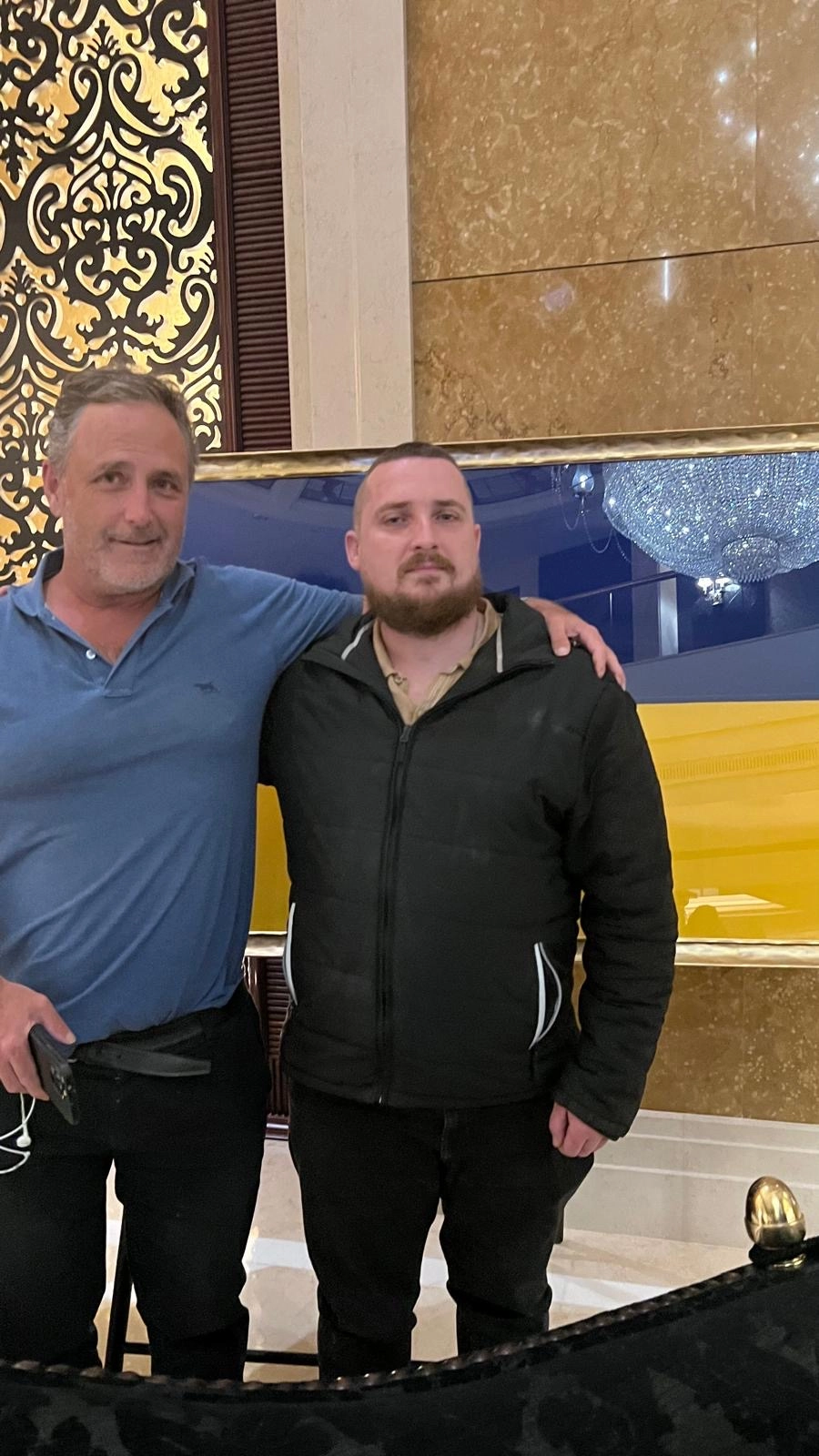
Australian soldiers are spread across the 1,500-kilometer front, not in one unit. All volunteer. Ukrainians say Australians are known for their humor and aggression on attack. I spoke with several of the 40 or so serving in the Ukrainian army. A common reason for joining: desire to kill Russians after witnessing atrocities. “It makes your skin crawl to see what’s been done,” said one. “They come because they are blood hungry, but they stay because they love the country,” said callsign Merlin. “You’re treated really well if you’re a good soldier and an asset to the unit, which most Aussies are, because of how well known we are for fighting and not caring much when someone’s shooting at us,” said callsign Spook. The killed in action number is 10.
These aren’t mercenaries or thrill-seekers, but Australians who believe this war matters and whose sacrifices have gone largely unnoticed at home.
It should concern us that their contribution is invisible in our national story. While we debate foreign headlines, many of our own citizens: unarmed civilians, volunteers and frontline fighters, are already in the fight. Ignoring them means diminishing ourselves.
What’s missing is recognition. These Australians are risking everything for a cause we officially support. They deserve more than quiet admiration. They deserve national honor.
The views expressed in this opinion article are the author’s and not necessarily those of Kyiv Post.
You can also highlight the text and press Ctrl + Enter