The war in Ukraine has dramatically changed the previously held wisdom on the defensive posture adopted by NATO and its allies, how the future battlefield will look, and how any future war will be fought. The threat to the home base, long considered only vulnerable to intercontinental nuclear missiles, is now just as likely to come from conventionally armed long-range cruise missiles and drones.
The case in point, Denmark, decommissioned its ground-based Raytheon MIM-23 HAWK medium-range surface-to-air missile capability in 2005 in favor of a concept that saw its armed forces focused on expeditionary missions as part of NATO operations.
JOIN US ON TELEGRAM
Follow our coverage of the war on the @Kyivpost_official.
While this is still a feature of much of its planning and its equipment programs, the ongoing aerial assault on Ukraine by Russia has led to a decision to rapidly acquire a much-needed missile shield – after all, Copenhagen is only around 500 kilometers (310 miles) from Russia’s Kaliningrad exclave.
Having concluded this shortcoming needs to be urgently addressed, Denmark has allocated around $600 million to acquire short-range air defense systems to protect civilian population centers, critical infrastructure, and potential military targets over the next two years.
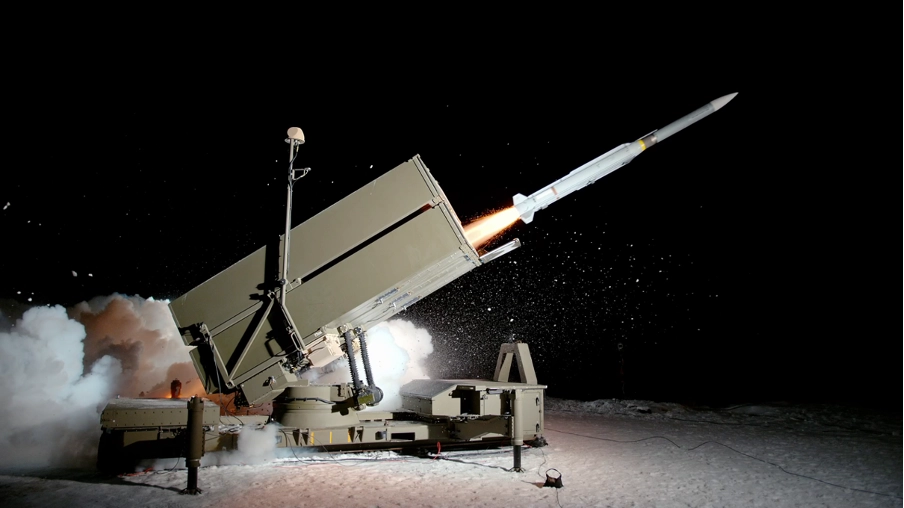
It will buy Germany’s IRIS-T system from Diehl Defence and the MBDA French MICA-VL system. In addition, it is said to have struck a deal with Norway to lease the Kongsberg NASAMS (National Advanced Surface-to-Air Missile System). The terms agreed will cover the actual costs of Norwegian training, maintenance, and logistic support and may lead to a purchase of systems in due time.

You Realize How Valuable Life Is When Death Feels Possible Every Day
This procurement is said to be only a temporary, short-term fix while Denmark works on a permanent, long-term solution to its air defense needs, a process which is planned to be completed by the end of 2025. Ground-based air defense will be integrated into an overall air defense network that will include ship-based and fighter aircraft carrying missiles.
As part of its territorial protection plans, for the more than 1,400 islands from which the country is formed, Copenhagen sought to purchase four Saab GlobalEye AEW&C (Airborne Early Warning and Control) aircraft – the updated version of the ASC 890 AEW&C aircraft approved for transfer to Ukraine in May 2024. The aircraft would allow Denmark to conduct simultaneous air, sea, and land surveillance operations with detection ranges for both low- and high-altitude targets in excess of 450 kilometers (280 miles) from an altitude of 10.6 kilometers (35,000 feet).
Having signed up to NATO’s demand for alliance members to increase their overall defense spending to 5% of GDP by 2035, Copenhagen announced in February that it would increase its defense budget by DKK 50 billion ($7 billion) over the next two years – bringing defense expenditure to 3% of GDP with the bulk being spent on equipment and weaponry.
You can also highlight the text and press Ctrl + Enter

Putin’s Worst Nightmare