We met with Tonya Samoilova at the Kyiv Post offices shortly after she climbed Kangchenjunga – the third highest mountain in the world – the “woman killer.”
It was a conversation that impressed me as a journalist and as a man. It is not often that you get the opportunity to meet and talk openly with someone as bright as Tonya. The title “The Woman Who Stopped the Wind on Everest” came to mind unbidden during the conversation.
JOIN US ON TELEGRAM
Follow our coverage of the war on the @Kyivpost_official.
Here is our interview with perhaps the greatest female climber in the history of Ukraine – Tonya Samoilova – enjoy!
KP: Let’s start from the beginning. How did you get into climbing? And why?
TS: I got into it accidentally in 2018. On my first climb, which was on Kilimanjaro, I suffered a lot. Probably because I simply didn’t know what altitude was, how it affects the body.
After that first climb, I came home and said that I would never go to the mountains again.
However, that’s when some kind of magic happened. This feeling calls you “there” again and again.
And so, a year later, I went to climb my second mountain, and then, by 2021, I had climbed three peaks – all of them low. By low, I mean only around 6,000 meters (20,000 feet).
That’s how I started my mountaineering journey, without any idea where it would take me.
KP: How did you get to Everest?
TS: That dream [to climb Everest] crept in after the third peak. Back in October 2021, my thoughts about climbing Everest were in the long term, maybe in ten years.
Trump Downplays Russian Drone Incursion into Poland as ‘Mistake,’ Drawing Sharp Rebuke From Allies
But six months later, I was climbing Everest.
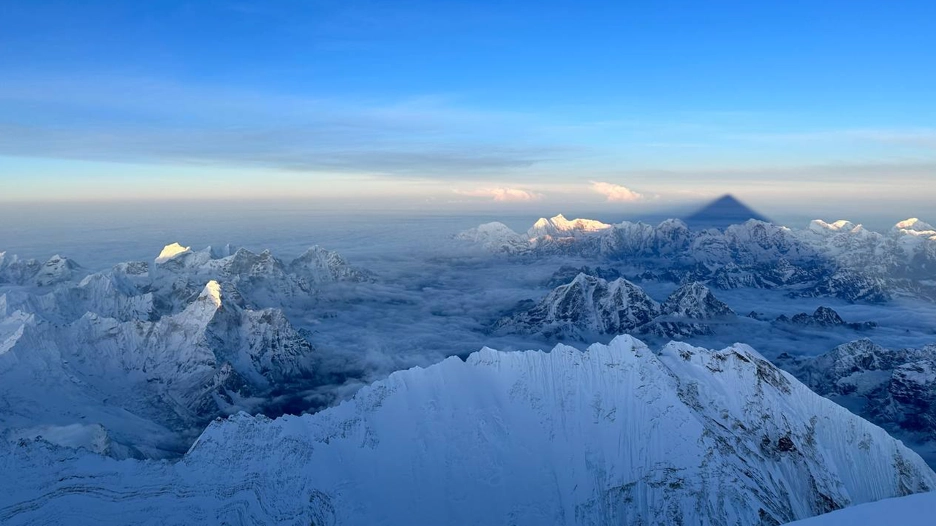
KP: Your first Everest. How was it?
TS: Basically, I went there only so that no one else from Ukraine would have to go. At that time, the full-scale invasion had already begun, men couldn’t leave the country, and Ukrainians were canceling their planned climbs.
It happened that on the day of the start of the large-scale aggression, Feb. 24, 2022, I was in Mexico, climbing Mexico’s highest volcano, Pico de Orizaba. After that, I planned to climb Kilimanjaro again. I flew to Africa, but I didn’t return to Ukraine at that time. Then I helped my sister and her little child leave Ukraine. Nerves, nerves, you understand.
And after this, I flew to Nepal, where I was supposed to go trekking. The Nepalese owner of the company I was traveling with said, “Go to Everest.” Those were the days when the whole world learned about Bucha, and Ukraine was everywhere.
And I climbed Everest! For the first time! For myself! For Ukrainians! For all of us.
Let me remind you that at that time, several groups of Russians were climbing the mountain. Plus, there were probably several Russians scattered among other groups. Did the Russians make it then? How many of them made it? I don’t know, but at that time, about 400 people were climbing at the same time.
Statistics say that about 60% of those who start climbing Everest reach the summit in a season. But that doesn’t matter – what matters is that I raised our flag on top of the world.
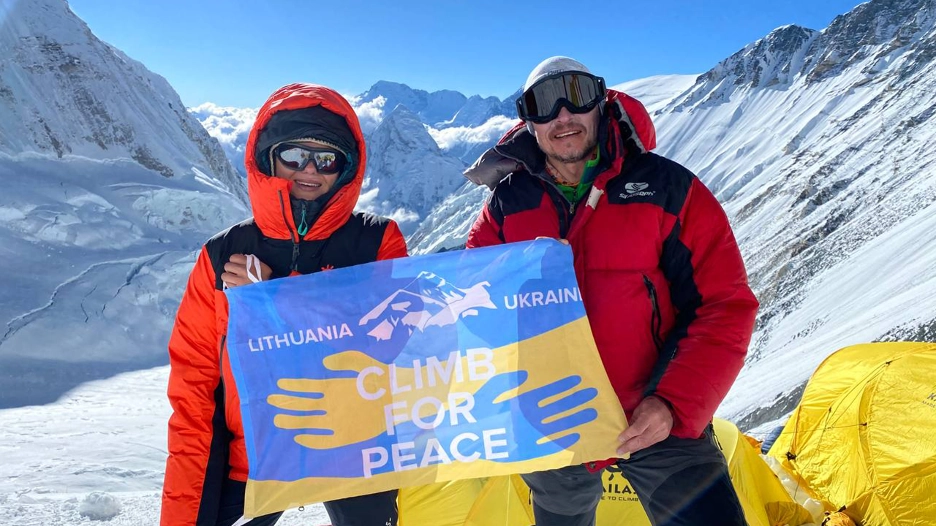
In general, “my Everest” is closely related to the war – climbing Everest at that time, in the first year of the war, was my mission.
I also carried a lot of Stand with Ukraine flags with me. There were a lot of them everywhere, remember?
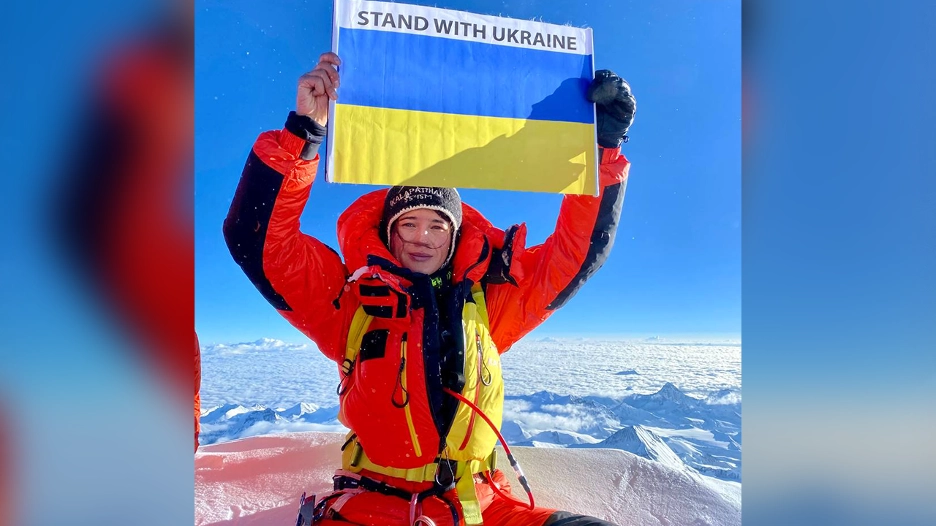
When people from other groups found out that there was a Ukrainian woman, they came to the camp specifically to support me, to see me.
Many of them asked me for our flag so that they could take it to the summit too. And I gave it to them.
KP: What did you feel “there,” at that very moment?
TS: How does a person feel when they stand on top of the world? The first thing I thought was, “Is this really me? I did it!” I remember recording a video for my family and just repeating, “I did it! I did it!”
KP: When were your feelings stronger? After the first, second, or third Everest?
TS: When were my emotions stronger? Well, the second Everest was the hardest for me. It was my most emotional summit because I was climbing with COVID.
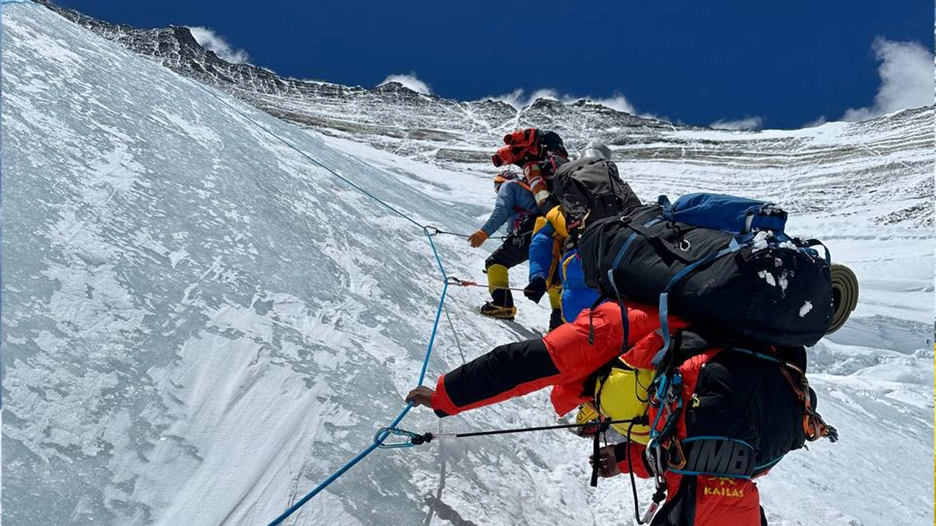
That’s when I made a video with our flag. This video is historic because it was the first ever filmed from a drone on Everest.
And it’s symbolic that it was with the Ukrainian flag. And it was at a time when Ukrainians really needed it. I saw a huge response afterwards.
Everything was against that shoot at the time. The weather was against us because it snowed heavily the night before our ascent, and there was a strong wind during the climb. But then [when we had already climbed up and it was time to film the flag – Ed.], the wind just died down. It was as if it had been done especially for us. And the drone took off.
KP: ... and about the third Everest... Can you tell us about that?
TS: I climbed the third Everest against the backdrop of the COVID-19 pandemic. In general, the third Everest was part of a so-called traverse, which is when a climber climbs two “eight-thousanders” in one day.
So, first I climbed Everest, and then, very quickly, Lhotse, which is the peak next to it...
The main feature of this climb was that I was completely aware of every step I took on the route at every moment. That is, I didn’t just climb but also had time to look around and see and feel the beauty around me.
KP: And now, what are you trying to convey about Ukraine? What is your main message?
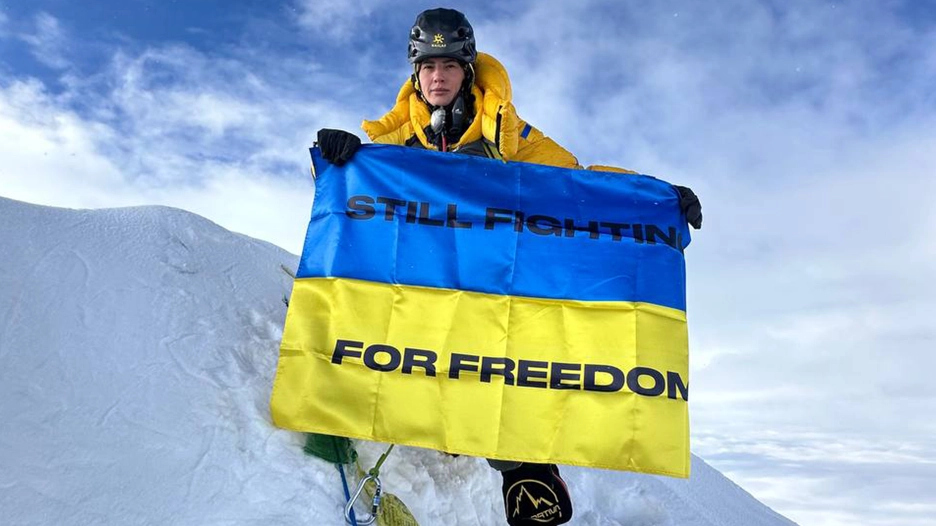
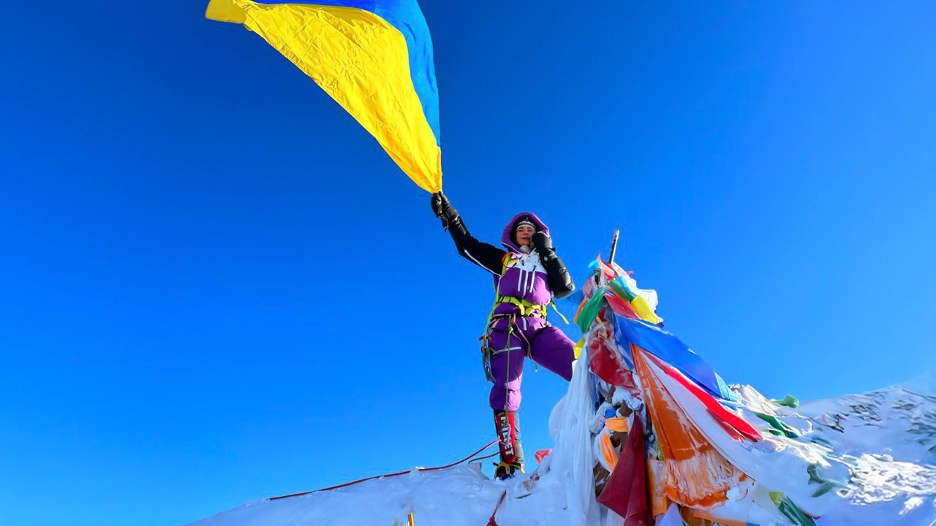
TS: On my second attempt at Everest, I had one goal – to plant our flag there. And it had to be bigger than any other. People need to know that we are here, we are invincible. We are here. Undefeatable.
KP: What was the hardest thing in your life? Are there any moments that you remember as high points, critical moments?
TS: There were two moments when I realized that this could be the end, yes.
Once it was on K2 [Chogori, the second-highest mountain after Everest]. Then, after reaching the summit, we were descending to the fourth camp and got caught in a whiteout [a snowstorm where visibility is less than a meter ahead].
And we got lost. And then at some point, when our oxygen was running out and we were walking around with the Sherpas, they just sat down on the ground. I asked them, “What now?” and they replied, “Nothing, we’ll wait.”
The monsoon season was approaching, it was the last weather window, and I thought to myself, “How am I going to die?” My first thought was how upset my family would be.
The second time it happened was here, on Kanchenjunga. I ran out of oxygen, and my spare tank was empty. I was already at an altitude of 8,500 meters (28,000 feet), where you can’t survive without oxygen. You can’t even descend without oxygen.
That is, if you take it off and stay there, you get pulmonary edema, cerebral edema, and that’s it, death. And at that altitude, we started to change, with about an hour and a half left to the summit.
In short, it was the hardest climb I’ve ever done. And I’m sitting under a rock thinking: what? Well, what next? And I started to panic. My friends were passing by, and I told them: “I don’t have any oxygen. I’m out of oxygen! I don’t have any oxygen!”
At that point, I had already taken off my mask and had completely lost feeling in my feet and hands. And I’m just sitting there, completely clueless about what to do next. I realize I can’t go down.
I turned to the group leader and asked, “What should I do?” He replied that there should be a cylinder at the top. So we decided that one of the Sherpas would give me the rest of his oxygen, descend, and I would go to the top with his cylinder. At the top, we finally found the promised tank, and I descended with it.
KP: What about your future plans?
TS: Next, I want to climb another “eight-thousander,” of course – there are fourteen of them in the world, and I’ve only climbed six. In general, of course, like every climber, I want to climb them all. There are people like that, but not many [Comment: just over 40 people have conquered all 14 of the world’s “eight-thousanders.”]
KP: Are there any Ukrainians among them? No? So, you want to be the first?
TS: Of course, I do! But! I’m not going to make any predictions right now because I need to recover. My health is my top priority right now. First recovery, then the next eight-thousander, and only then other plans.
KP: ... and now about you. What defines your identity?
TS: I have always been a fighter for freedom. In high school, I took part in the first Orange Revolution. It was a breath of fresh air for me. Then I joined the Revolution of Dignity and was on Maidan. The feeling of freedom and freedom as a value came from my father.
KP: How has alpinism changed your life?
T.S.: Completely! How exactly? First, I realized that I could do a lot of things. I realized that the human body, my body, is capable of so many things if you expand the boundaries of your own consciousness first.
Everest gave me this feeling – if you are ready, then you have to go all the way. Face your fears. That’s where I realized that I could do a lot.
Actually, just like everyone else around me. It’s just that many people don’t realize it. They live constantly with their own little and big fears. But you just have to let go and do it.
If it doesn’t work out, then it doesn’t work out. If you don’t try, you’ll never know.
KP: And one last question. Please tell us, who is Tonya Samoilova?
TS: She is a small but very strong girl who believes in the best. I always believe in the best, I believe in people. And moreover, I believe in my own strength.
You can also highlight the text and press Ctrl + Enter