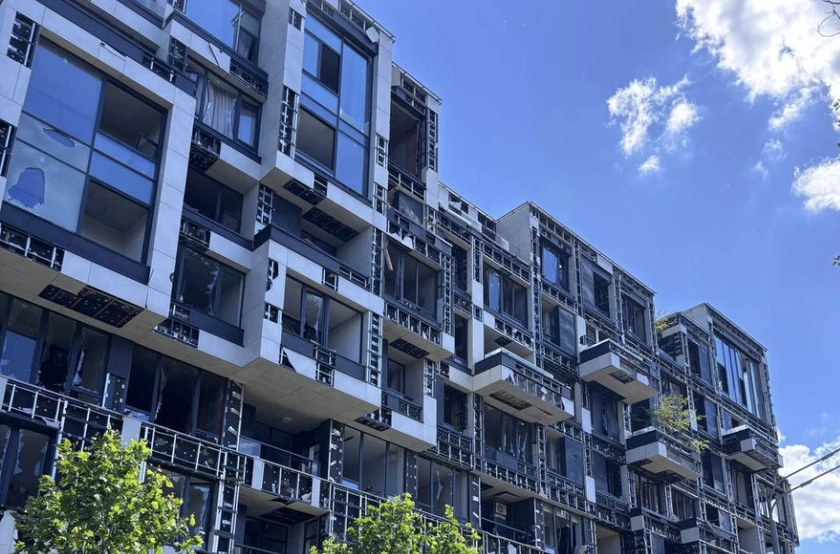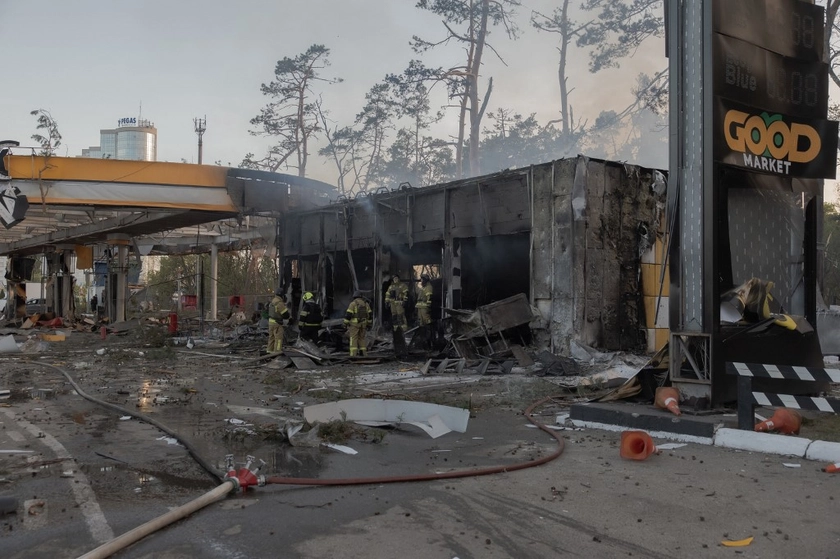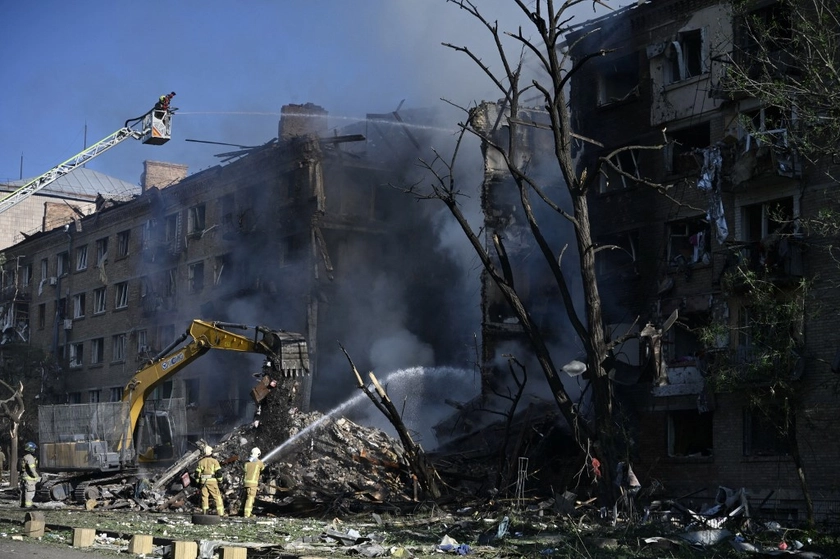
The seventh Ukraine Recovery Conference (URC 2025) once again brought together top international officials, experts, and donors to discuss and coordinate a large-scale recovery program for the country.
The high-level gathering resulted in over €10 billion in pledged support and more than 200 agreements, memoranda, and declarations in various sectors, including energy, infrastructure, economy, education, defense, and social protection.
JOIN US ON TELEGRAM
Follow our coverage of the war on the @Kyivpost_official.
The conference also saw the launch of more than 20 interregional and intermunicipal partnerships between Ukrainian communities and international cities and regions, aimed at fostering local-level recovery.
Here’s a breakdown of the key outcomes and what they mean for Ukraine’s recovery path, prepared by the Institute of Analytics and Advocacy.
Economy, Business, Industry
- The Ministry of Economy, the NBU, and the EBRD signed a memorandum on a new platform supporting women entrepreneurs, aiming to improve access to finance, overcome gender barriers in lending and align Ukraine with the international WE Finance Code.
- Ukraine’s Ministry of Finance, the National Bank of Ukraine (NBU), the Ministry of Economy of Ukraine, the National Securities and Stock Market Commission, and the European Bank for Reconstruction and Development (EBRD) signed a memorandum that should create a unified market infrastructure for capital markets in Ukraine, from trading to clearing, settlement, and securities custody.
- €30 million ($35 million) of Dutch aid will support projects by Dutch companies implementing recovery initiatives under the Ukraine Partnership Facility (UPF).
- The Ukrainian Ministry of Economy signed a memorandum with three leading Italian financial institutions (CDP, SACE and SIMEST) to attract export‑credit finance in the industrial, energy, transport, and construction sectors.
- Ukraine and Italy signed two agreements to support farmers in the Odesa region: one launching the Pro.UKR project for cooperative development and technical modernization; the other, worth €6 million ($7 million), for reconstructing irrigation systems in Tatarbunary and Kiliya to improve yield and climate resilience.
- The Entrepreneurship Development Fund and Germany’s KfW bank signed a €40.5 million ($47.3 million) grant agreement to support small and medium-sized enterprises.
- Ukrainian Sea Ports Administration (AMPU) and the Ukrainian Reconstruction Consortium signed a memorandum on port development, engaging European companies for reconstruction, integration into the TEN‑T network, and implementation of smart and green technologies. Additionally, AMPU signed memoranda of understanding with the Port Administration of the Eastern Adriatic Sea and the Port Administration of the Western Ligurian Sea at the URC in Rome.
- Ukraine and Belgium signed a Letter of Intent regarding a €5 million ($5.9 million) investment between BIO Invest and Bank Lviv to support SMEs in Ukraine.
- American company White Star Real Estate is launching a €200 million ($233.7 million) investment project in Bucha Municipality to create a 41-hectare industrial-logistics hub as part of the Bucha Techno Garden.
- Vodafone Ukraine, Nokia, and Finnish agency Finnvera signed a memorandum to modernize telecom networks, investing up to €30 million ($350.5 million) to expand 4G, GPON, and strengthen network resilience.
- Ukrainian project NovaSklo and three leading European glass equipment manufacturers: Horn Glass Industries AG (Germany), Zippe Industrieanlagen GmbH (Germany), and Bottero S.p.A. (Italy) signed a cooperation agreement to attract €240 million ($280.4 million) for constructing a float glass manufacturing plant.
- Ukraine’s largest bank PrivatBank, signed a portfolio risk-sharing program with the European Bank of Reconstruction and Development (EBRD) that can unlock historic loan volumes of €600 million ($701.38) for Ukraine’s enterprises, the bank wrote in its LinkedIn post. PrivatBank will focus on lending to energy, agriculture, manufacturing, pharmaceuticals, transport, and logistics.
Financial Support
- The European Commission announced a proposal for a fourth tranche under the Ukraine Facility – the Ukraine Plan, expected in August, amounting to up to €3.05 billion ($3.6 billion).
- The Ukrainian Ministry of Finance secured €1 billion ($1.2 billion) through the G7 ERA initiative, envisaging €50 billion ($58.5 billion) in support for Ukraine funded by future revenues from frozen Russian assets.
- Ukraine and Switzerland signed a long-term agreement on the reconstruction of critical infrastructure with non-repayable assistance of up to CHF 5 billion ($6.3 billion) by 2036. The package will cover energy, transport, water supply, construction and vocational training.
- Finland’s updated cooperation program with Ukraine for 2025–2028 allocates at least €320 million ($374 million) to humanitarian aid, reconstruction and development.
- The Netherlands will provide €300 million ($350.7 million) for reconstruction and economic strengthening in Ukraine during 2025–2026.
- Ukraine and Italy signed a Memorandum granting Ukraine access to Italian financial mechanisms, providing up to €1.5 billion ($1.8 billion) in export credit insurance (100% coverage), facilitating blended financing projects for communities and encouraging procurement of Italian goods and services for Ukraine’s reconstruction.
- Ukrainian Railways and EBRD signed grant agreements worth €54 million ($63.09 million), supported by the EU, to develop accessibility on railways, veterans’ reintegration, and self‑generation of electricity for energy independence.
- Ukraine and the International Bank for Reconstruction and Development (IBRD) signed a grant agreement for $50 million under the ARISE project to support small farms affected by the war.
- Oschadbank and the European Investment Bank (EIB) signed a finance contract under the Ukraine Investment Framework, which is a component of the Ukraine Facility. The package includes a €50 million credit line, which Oschadbank can access in tranches, and a €30 million grant component dedicated to vulnerable communities and regions, Oschadbank’s CEO Serhiy Naumov wrote in his LinkedIn post.
Investment Funds
- Ukraine and the EU signed financial agreements worth €2.3 billion ($2.7 billion) under the Ukraine Facility – Ukraine Investment Framework, including €1.8 billion ($2.1 billion) in loan guarantees and €580 million ($676.6 million) in grant, aimed at attracting up to €10 billion ($11.7 billion) in investment into housing, energy, business and infrastructure.
- The European Commission announced the launch of the European Flagship Fund for Ukraine’s reconstruction with an initial capital of €220 million ($257 million), expected to mobilize €500 million ($584.15 million) by 2026 for investments in energy, infrastructure, digital transformation, industry and dual‑use goods.
- The Ukrainian government and the World Bank signed an agreement launching the five‑year PREPARE Ukraine program with $200 million to develop public and municipal reconstruction projects that meet international investor standards. An initial grant of $44.3 million from URTF will form a public investment portfolio and strengthen institutional capacity under the leadership of the PPP Agency and the Ministry of Economy.
Energy and Green Transition
- Ukraine’s state-owned energy company Naftogaz and Baker Hughes, a global energy technology company, have signed a strategic memorandum of understanding for technical, operational, and commercial cooperation.
- UNDP and the Government of Norway announced a $200 million initiative for the green recovery of Ukraine’s energy sector.
- Ukraine’s GTS Operator (OGTSU) signed a cooperation memorandum with Italian company Snam S.p.A. to strengthen Europe’s energy security, including analysis of liquefied natural gas (LNG) and pipeline gas transport and development of a renewable gas transport platform for biomethane and hydrogen.
- Westinghouse Electric Company and NAEK Energoatom signed agreements to launch domestic production of nuclear fuel components compatible with Westinghouse technology.
- The Energy Community Secretariat and NEC Ukrenergo signed a memorandum to develop a risk‑reduction mechanism for participants in special auctions for ancillary services, to stimulate investment in resilience and decentralisation of Ukraine’s energy system.
- Norway announced €42 million ($49.07 million) for the Energy Support Fund to restore infrastructure and enhance protection.
- Grant and loan agreements totalling €29 million ($33.88 million) were concluded for the second phase of Lviv’s sewage treatment plant reconstruction, including €22.2 million ($25.95 million) in non‑repayable support from international partners.
- EBRD is mobilizing €300 million ($350.49 million) to support Ukraine’s energy sector, funding restoration of damaged capacity, infrastructure, and decentralized generation.
Healthcare and Public Safety
- Agreements totaling over €75 million ($87.62 million) were signed, Ukraine’s Ministry of Health of Ukraine reported:
A memorandum with Belgian agency Enabel for long‑term projects in medical rehabilitation, hospital modernization, 3D prosthetics, online medicine, and workforce training with funding of €31 million ($36.22 million).
A memorandum to create a financial mechanism supporting priority projects of the Ministry of Health of Ukraine.
A memorandum between the Lviv City Council and Lithuania’s Ministry of Foreign Affairs for a new phase of cooperation on developing the UNBROKEN rehabilitation center in Bryukhovychi, with an allocation of €620,000 ($724,346).
Launch of the “Healthier Ukraine” joint project by the EU, Enabel, WHO, and the Ministry of Health with an €11.5 million ($13.43 million) budget for rapid recovery and long-term transformation of the health system.
Intent in Plain Sight: the Politics of a UN-Recognized Genocide
Italy announced financing for the construction of a new regional children’s hospital in the Odesa region via a €30 million ($35.05 million) concessionary loan.
The Ministry of Health and the Council of Europe Development Bank (CEB) signed a joint statement on cooperation in healthcare.
The international pharmaceutical company Roche signed an investment agreement to localize pharmaceutical and biotechnology production in Ukraine.
French company Ellipse Projects SAS signed a memorandum on cooperation in rebuilding, modernizing, and developing medical infrastructure.
- €4 million ($4.67 million) of Dutch aid will fund the construction of a new wing at Lviv Children’s Hospital, in collaboration with the Princess Máxima Center for Paediatric Oncology in Utrecht.
- Finland will assist Ukraine in building 10,000 shelters.
Education and Youth
- Lithuania is providing €21 million ($24.53 million) to restore infrastructure, improve learning outcomes, and modernize educational services for children and youth.
- Ukraine and Switzerland signed a memorandum launching phase two of the DECIDE project with CHF 33.6 million ($42.06 million) to support educational reform and youth engagement in community recovery.
- Ukraine and Lithuania signed a memorandum to expand the “Create Ukraine” program, allocating €1 million ($1.17 million) to bring talented youth back from abroad to work in public institutions; applications are open until Sept. 10.
- A Global Alliance for preschool education support in Ukraine has been created under the First Steps Forward initiative, supported by over 20 international partners, including the World Bank, which contributed a $30 million seed fund.
- A new International Coalition to support science, research and innovation in Ukraine was announced, with participants signing the Rome Declaration to coordinate international assistance for developing Ukraine’s scientific system.
European Integration, Culture and Social Support
- The EU is contributing an additional €2 million ($2.34 million) under the Creative Europe program to support Ukrainian artists and cultural institutions as part of the broader Team Europe initiative for Ukraine’s cultural sector and EU integration.
- Ukraine and Belgium signed a memorandum under the BE‑Relieve Ukraine program to modernize the labor market and support employment, with particular emphasis on youth and the adoption of European practices; the Ministry of Economy will cooperate with Belgian agency Enabel.
- Ukraine and the EU announced a €1.5 million ($1.75 million) grant competition under the Ukraine2EU initiative, aimed at involving civil society in the EU‑integration process; project proposals are accepted until 1 September 2025.
- The Human Capital Resilience Charter has been adopted – an initiative of the Ministry of Economy, Ministry of Veterans Affairs, NBU and EBRD, already endorsed by major Ukrainian companies. It aims to support veterans, internally displaced persons and workers during the war, to develop inclusive labour market policies and to establish new HR standards. The Charter will help businesses adapt to challenges and strengthen human capital as a driving force in Ukraine’s recovery.
Defense Sector
- Ukraine signed a loan agreement with the UK worth nearly £1.7 billion (approximately $2.3 billion) to finance a project for air defense development. The loan is provided under UKEF guarantees for 19 years with a 6.5‑year grace period.
- Germany is prepared to purchase two Patriot air defense systems from the US and transfer them to Ukraine; Norway will transfer one.
- Ukraine and the EU are launching the BraveTech EU initiative with a €100 million ($116.83 million) budget to support defense start‑ups, conduct hackathons, and create technological game‑changers for warfare, marking the first large‑scale tech alliance in the defense sphere between Ukraine and Europe.
- By the end of 2025, Norway plans to allocate over Hr. 100 million ($2.39 million) to support projects that enhance the cyber resilience of Ukraine’s civil and critical infrastructure.
Although it is difficult for Ukraine to discuss the post-war recovery while Russia is raging with deadly strikes across the country, firing around 500 drones and missiles simultaneously, the Ukraine Recovery Conference remains the platform for cooperation and signing deals.
Rebuilding Ukraine is a vast challenge requiring the collective efforts of government, international partners and the private sector. The agreements signed and decisions made unlock new opportunities for investment, infrastructure renewal, and job creation, laying new investments for Ukraine even amidst wartime.
You can also highlight the text and press Ctrl + Enter