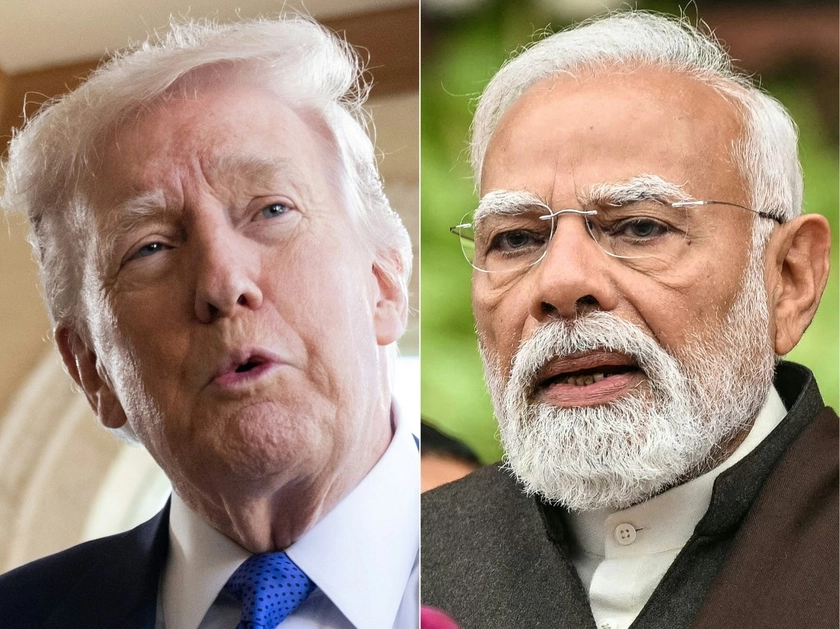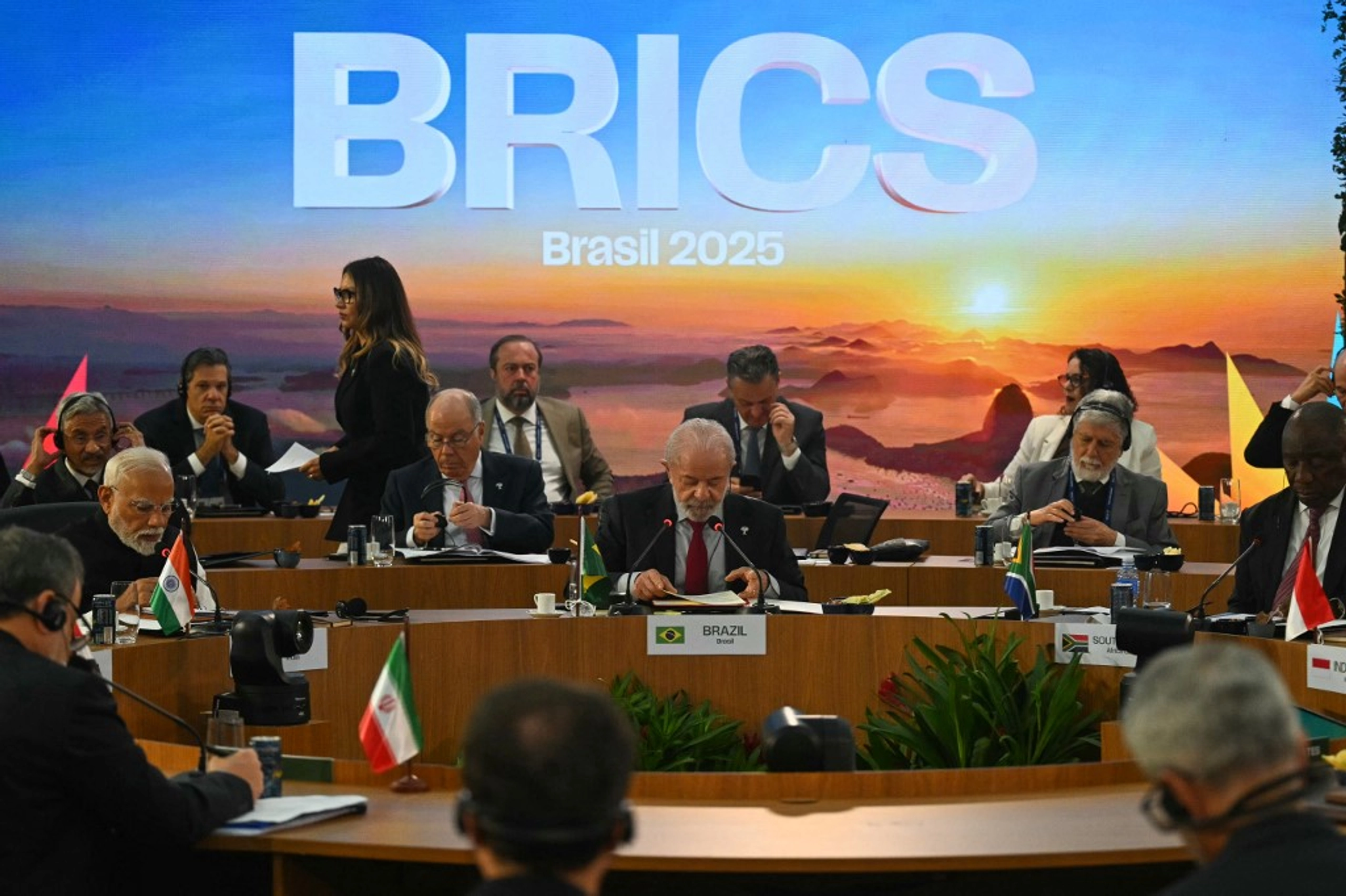
Donald Trump is threatening his Brazilian counterpart Lula da Silva with 50% import tariffs as of Aug. 1, even though Brazil has no trade surplus with the US. A major reason is the trial of former Brazilian President Jair Bolsonaro, who has been indicted for an alleged coup attempt after losing the 2022 presidential election.
“The trial should not be taking place. It is a witch hunt which should end IMMEDIATELY,” Trump wrote to Lula.
JOIN US ON TELEGRAM
Follow our coverage of the war on the @Kyivpost_official.
Another reason he cited in his letter was the Brazilian Supreme Court’s recent ruling that social media companies are responsible for illegal content posted by users, under penalty of fines and eviction from the social media market. Trump referred to this as “UNLAWFUL censorship” and an “insidious attack on the fundamental Free Speech Rights of Americans.”
During an interview with CNN’s Christiane Amanpour, Lula rightly stated that Trump was elected to govern the US, not to be “the emperor of the world” and that his interference in internal Brazilian affairs, specifically its independent judiciary, was unacceptable.
Lula also suggested that Brazil can take a punch, after all, it is a co-founder of the now 10-nation BRICS alliance that accounts for 40% of international trade, 25% of the world’s GDP while representing nearly half the world’s population.
“BRICS however was not created to fight with any country, but as equals to discuss in a peaceful manner our issues. This is how we seek peace in Ukraine, Gaza and on the African continent, especially Congo.”
Russia’s Invasion of Ukraine is Now Longer than WWI – Five Things to Know
This is where his argument became problematic. For he criticized both Trump’s renewed arms sales to Ukraine and the military spending increase by NATO countries to 5% of their GDP. Yet he didn’t mention that this is mainly a reaction to the fact that BRICS member Russia is an aggressor and shows no willingness for peace.
A similar state of denial prevailed at the recent BRICS summit in Rio de Janeiro on July 6-7, where Xi Jinping and Vladimir Putin were conspicuously absent – Xi due to “schedule conflicts,” Putin to avoid embarrassing conference host Lula. (After all, Brazil is a member of the International Criminal Court and – due to the arrest warrant that the Court issued-on the grounds of being “allegedly responsible for the war crime of unlawful deportation and transfer of children from occupied areas of Ukraine to the Russian Federation” – obliged to arrest Putin.)
Still, the Russian president delivered a video address, though it lasted only a little more than seven minutes.
“I would like to emphasize that BRIC states represent different development models, religions and distinct civilizations and cultures. Yet all stand for equality, good neighborliness, the priority of traditional values and the lofty ideals of friendship and harmony,” he also said.
Particularly striking and shameless was his choice of the term good neighborliness. As if he, for over three years now, were not waging a devastating and murderous war of conquest against a neighboring country in an effort to subjugate it and at least reduce it to an economically nonviable rump state, if not wipe it completely off the map.
Did a peace-minded conference attendee raise any concern and confront him with data on human rights abuses and evidence of war crimes, collected by the Center for Civil Liberties, a Ukrainian NGO and winner of the 2022 Nobel Peace Prize?
To anyone who took Russia’s national security concerns at face value, it should be obvious by now that this was merely a masquerade for its imperialist appetite.
Did anyone question Putin about the recent ISW (Institute for the Study of War) assessment on Russification activities in the occupied territories of Ukraine? Take three of its key findings: 10,000 Ukrainian children are being trained to become drone operators and developers in preparation for service in Russia’s occupying forces. Moreover, Ukrainians in these areas will, from November on, no longer be able to use their mobile phones if they do not possess a Russian passport. Thirdly, Russia also launched a “war risk insurance program,” to boost urban development and Russian repopulation in the occupied territories.
Did anyone perhaps remind him in a courteous diplomatic manner of the preamble to the UN Charter (in force since Oct. 24, 1945), according to which the Charter members, including the Soviet Union, determined, among other things, “to practice tolerance and live together in peace with one another as good neighbors”?
Did the leaders of the four BRICS democracies, Brazil, India, South Africa and Indonesia look at each other and raise an eyebrow?
Following their summit, the BRICS leaders issued a joint statement in which they indeed strongly condemned “all violations of international humanitarian law,” encouraged ‘’strengthening international peace in accordance with the UN charter,” while also stressing “the need to engage in conflict prevention efforts, including through addressing their root causes.”
The latter subordinate clause, however, echoed of course Russia’s claim that the root cause of its war against Ukraine lies in NATO’s eastward expansion and Ukraine’s pursuit of membership. Which, more than ever, proved to be a fallacy when Putin, despite Trump’s initial offer – no Ukrainian membership or US security guarantees, de jure recognition of Crimean annexation, de facto control of occupied territories, lifting of a number of sanctions, normalization of relations and business deals with the US – stuck to his maximalist territorial demands. After all, he is still gaining ground, believes he is winning and thus stepped up his summer offensive including its “record-breaking” lethal drone campaign against civilian targets.
During the past three and a half years Russia’s goals in Ukraine remained unchanged. In January 2022, US Deputy Secretary of State Wendy Sherman met her Russian counterpart Deputy Foreign Minister Sergei Ryabkov to talk the Russians out of invading Ukraine. Suddenly Ryabkov stunned everyone by shouting “We need Ukraine! We will not return home without Ukraine!”
On June 20, 2025 Putin told the St. Petersburg International Economic Forum: “Russians and Ukrainians are one people. In this sense, all of Ukraine is ours. There’s an old rule that wherever a Russian soldier sets foot, that’s ours.”
To anyone who took Russia’s national security concerns at face value, it should be obvious by now that this was merely a masquerade for its imperialist appetite, its inability to accept itself as a post-imperial nation. Nevertheless, the BRICS statement also contained this declaration: “We condemn in the strongest terms the attacks against bridges and railways infrastructure deliberately targeting civilians in Bryansk, Kursk and Voronezh regions of the Russian Federation on May31, and June 1 and 5, 2025, resulting in multiple civilian casualties, including children.”
Mind the choice of the word children. Effectively a whataboutism, a clearly intended counterpunch directed at the ICC-charges against BRICS-member Putin. Apparently, to maintain consensus, the BRICS representatives were willing to go along with Putin’s denial of Ukraine’s sovereign existence, including his reversal of the roles of aggressor and victim, accusing Ukraine of invading Russia and committing war crimes.
If it is true, as has been mooted, that the perceived hypocrisy and double standards of the West is a reason for countries not to condemn Russia, then their leaders have once again proven that they are perfectly capable of being hypocritical too.
The views expressed in this opinion article are the author’s and not necessarily those of Kyiv Post.
You can also highlight the text and press Ctrl + Enter
OPINION: The Lessons Europe Must Learn From Ukraine