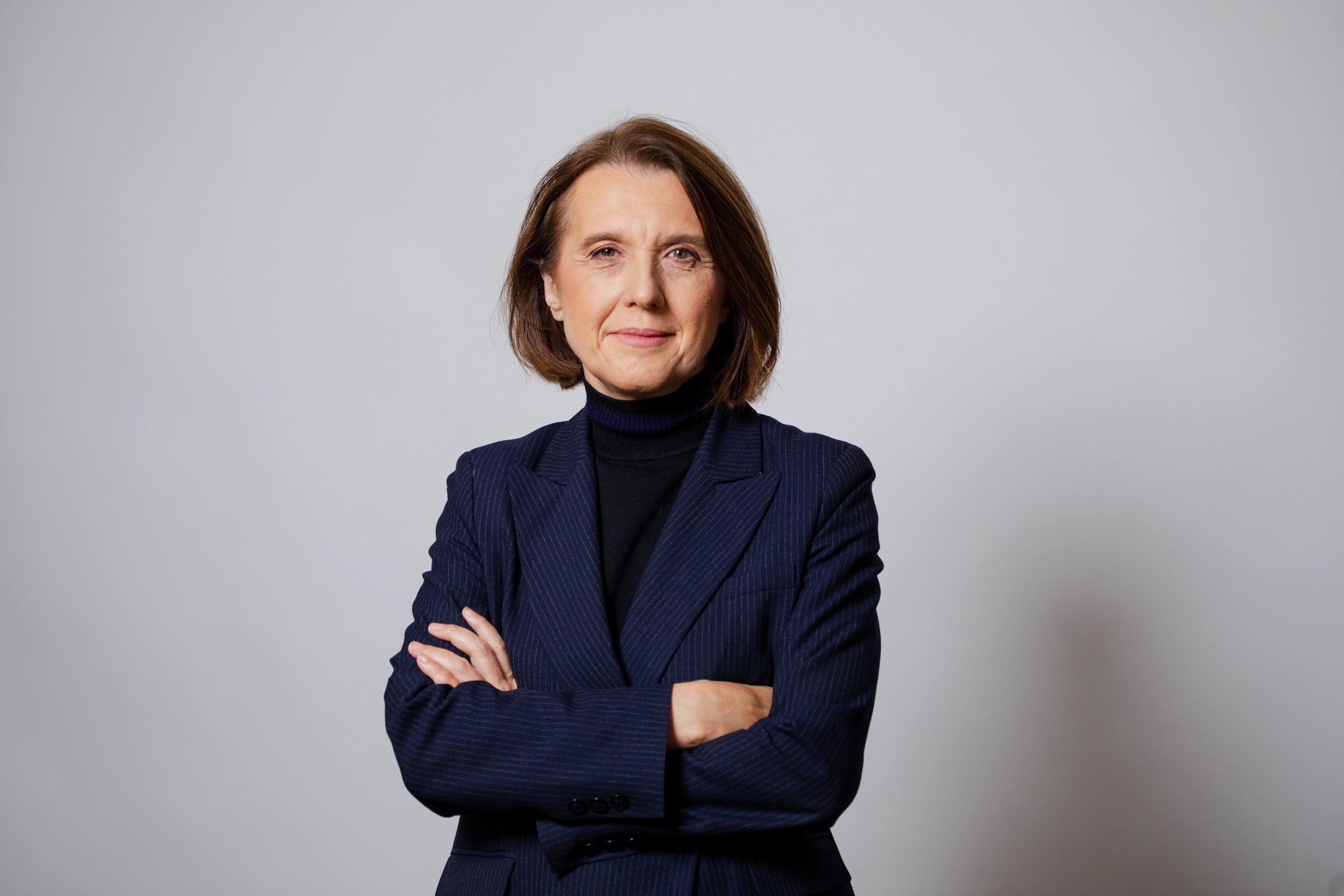
Historical perspective is unavoidable in Poland and Ukraine, which experienced some of the most tumultuous events of the 20th century. The difficult task now for those who wish to strengthen the Polish-Ukrainian alliance is how to avoid politicizing contentious issues.
Michał Kujawski: Which area of the Ministry of Culture’s activities would you consider particularly important in the context of Polish-Ukrainian relations?
JOIN US ON TELEGRAM
Follow our coverage of the war on the @Kyivpost_official.
Hanna Wróblewska: For me, the priority lies both in the past and in the future – meaning the present as well.
MK: Social moods in Poland suggest that history remains the dominant theme. A Polish-Ukrainian intergovernmental commission, operating under the auspices of the Ministers of Culture, is working on historical memory. What exactly does this commission do?
HW: Its task is to organize the administrative and legal aspects related to exhumations of both Polish and Ukrainian populations.
MK: Contrary to popular belief, exhumations don’t concern only the 1943 Volhynia massacre?
HW: From the very beginning, we’ve made it clear that this isn’t just about Volhynia. The Institute of National Remembrance has submitted several applications, some of which concern Polish Army soldiers who died in 1920 and 1939. The most recent permit for work in the village of Zboiska pertains to soldiers from the beginning of World War II. Our joint efforts also cover Ukrainian graves in Poland.
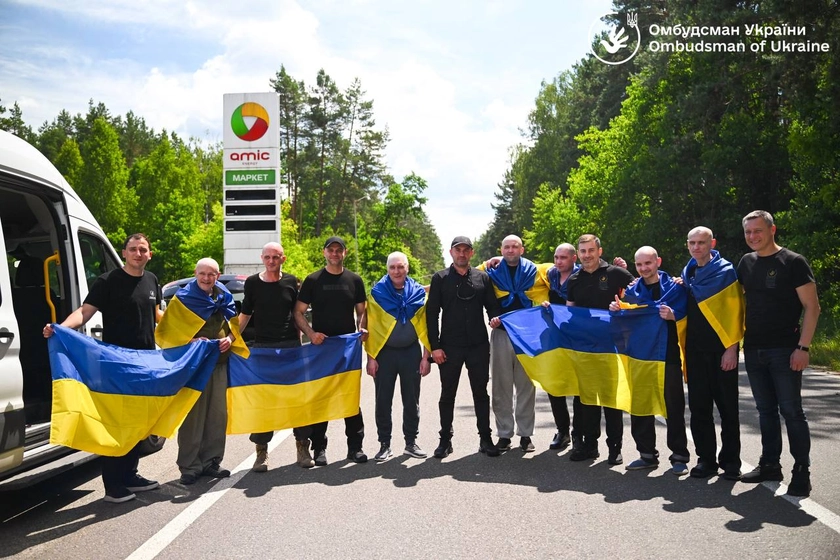
Ukraine Secures Release of Seven Civilians from Russian Captivity
MK: How is this work progressing? Are both sides meeting each other’s expectations?
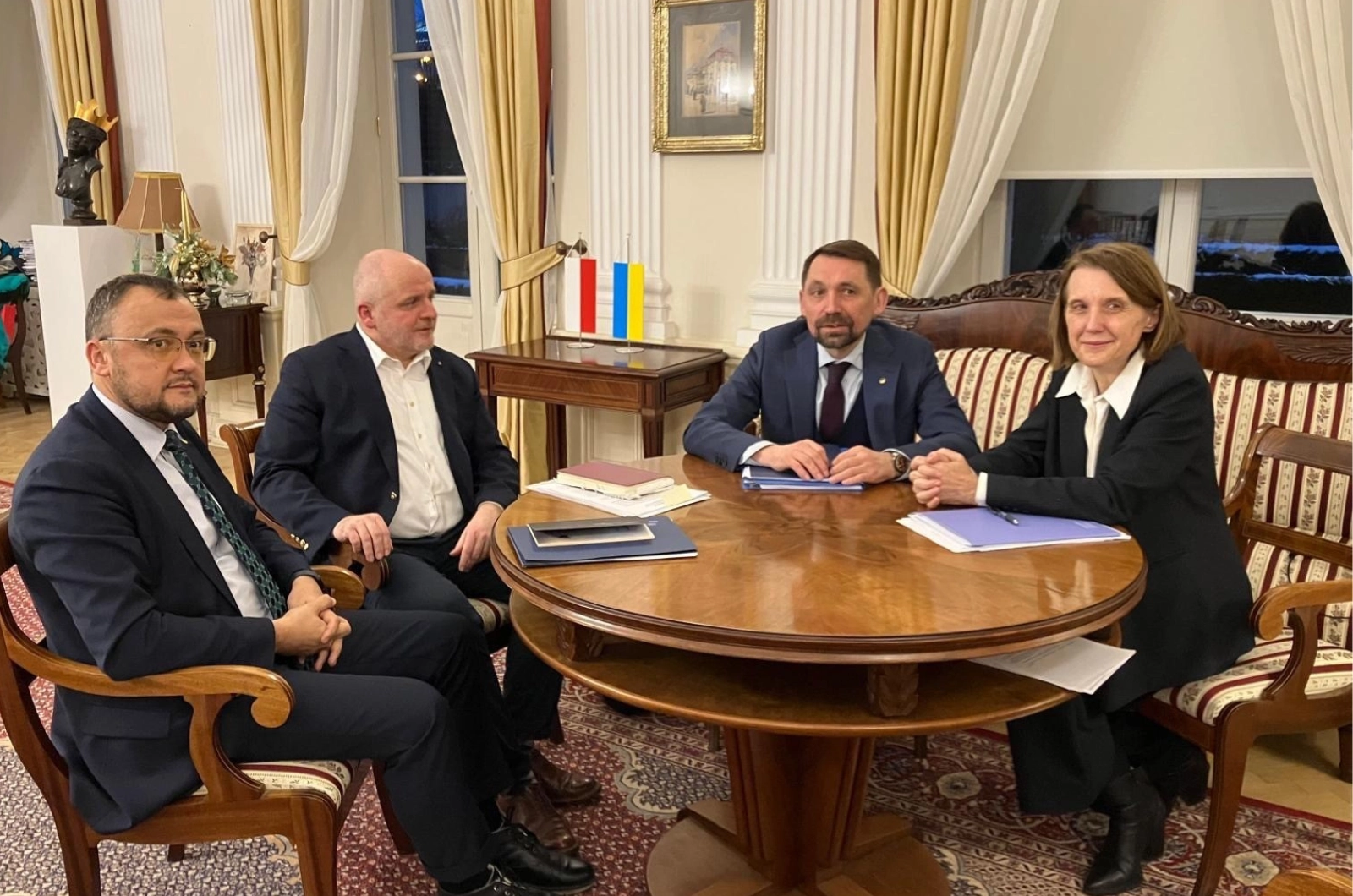
HW: I would describe the atmosphere as one of understanding, although the best people to answer that would be the commission chairs – Andrii Nadzhos and Paweł Kowal. Together with Mykola Tochytsky (former Minister of Culture of Ukraine), we agreed that the commissions should remain small and action-oriented. Our aim was to identify legal and administrative obstacles in both countries that hinder exhumations. We’ve been exchanging information, and the next meeting should take place within the week. In the meantime, exhumation requests are being processed administratively. Work has already been completed in Puznyky. The commission’s role is to identify barriers and help eliminate them.
MK: How has the presidential campaign in Poland affected this work? Karol Nawrocki, president of the Polish Institute of National Remembrance, became president.
HW: The negotiation process is conducted transparently. In addition to the commission, there’s also a stakeholder group – representatives from institutions, organizations, and public offices. Karol Nawrocki participated in the first meeting of this group, even before he announced his candidacy. At the time, he stated that he would not politicize this issue.
MK: Do you believe that promise was kept?
HW: In my view, the ongoing exhumation work was not used for political gain during the campaign. At the conclusion of the work in Puznyky, the meeting at the ministry was attended by representatives of the Freedom and Democracy Foundation, the Institute of National Remembrance, and the Pomeranian Medical University. We all spoke with one voice.
MK: The long-unresolved Volhynia issue continues to stir deep emotions. Public attitudes toward Ukraine are worsening. How can that be addressed?
HW: Ukraine is an important partner in many dimensions – not only historical. Cultural cooperation is also crucial for me. Economic relations, among others, are developing well. Ukraine’s swift accession to the European Union is in Poland’s interest, and we’re doing our best to help it meet the necessary requirements.
MK: Are you not concerned about public sentiment?
HW: If we maintain good communication and avoid politicizing the relationship – which is difficult, but possible – we can prevent a deadlock. The historical dialogue has not yet been fully politicized, and we should safeguard that.
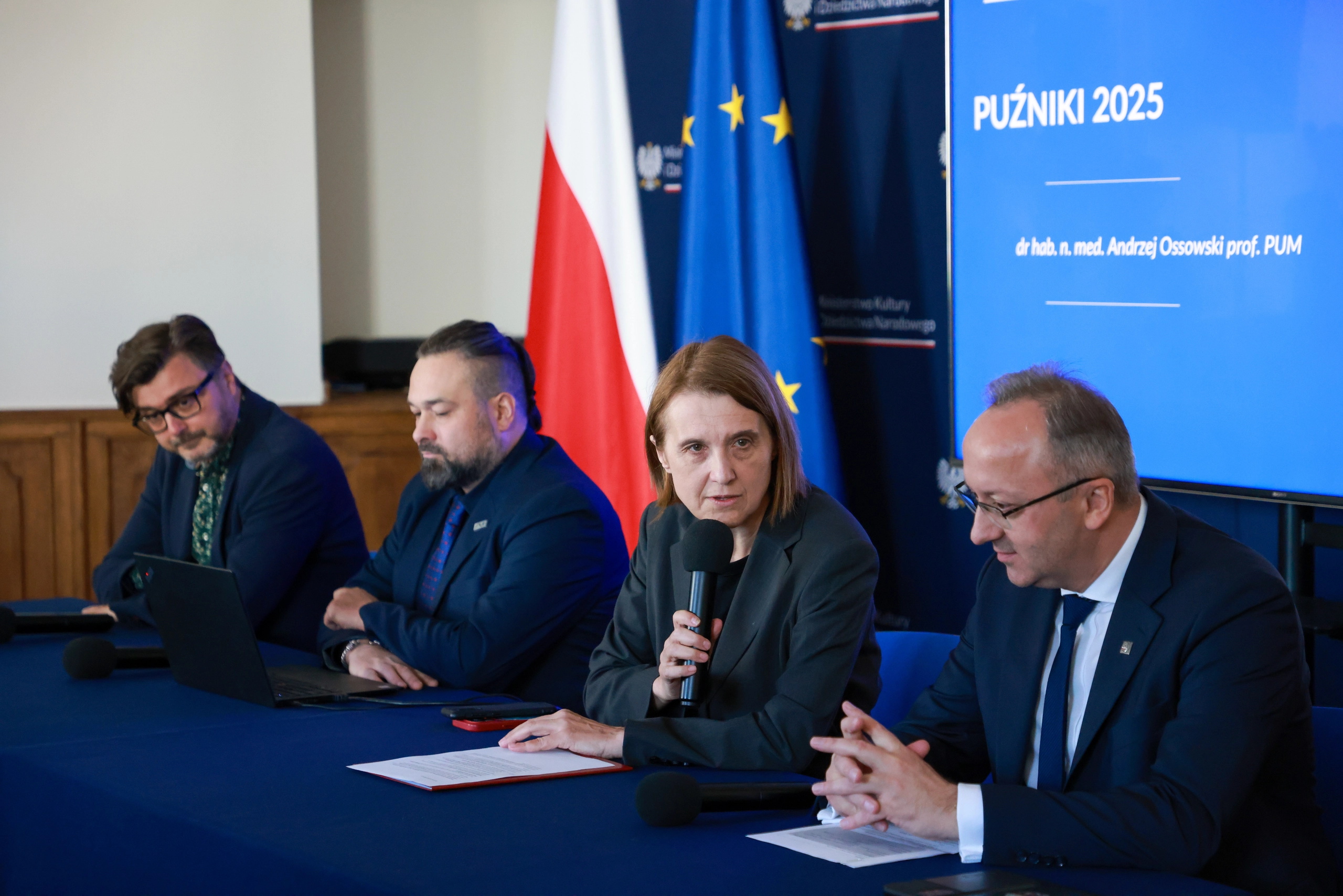
MK: Is the historical dialogue really still depoliticized?
HW: In my opinion, yes – for now. For both us and the Ukrainian side, memory culture is extremely important, which naturally carries the temptation to influence or use it. But each side has the right to shape its own narrative, preserve its memory culture, and recall facts consistent with its own experience. It’s important that this dialogue be led by historians, not politicians. Because historians will be discussing facts, not current politics. I will support dialogue among historians at every level, but I don’t intend to participate in it as Minister of Culture. Not because I’m uninterested, but because such dialogue should be state-supported yet remain grassroots, substantive, and conducted by experts and historians.
MK: In your interview with the Financial Times, you said: “Our museums cannot operate within a theoretical notion of security.” Ukrainian losses are estimated in the billions of dollars, and thousands of cultural sites have been destroyed. What is the current state of preparations for protecting cultural heritage?
HW: At every meeting with our Ukrainian partners, we were shown updated maps of losses. Sometimes the figures changed from one day to the next – Odesa might be bombed overnight, and the numbers would rise. It was deeply moving. We witnessed what we’d only theorized about before – collection safeguarding. We helped our Ukrainian colleagues with conservation and storage of exhibits. They, in turn, shared their wartime experience. I can’t publicly disclose details of our actions.
MK: Are Ukrainian collections being moved and stored abroad, for example in Poland?
HW: I wouldn’t use the word “stored,” but Ukrainian collections have been, and still are, exhibited in Polish and other international museums. The Museum of Modern Art in Warsaw, together with Kyiv’s Mystetsky Arsenal, is organizing the Kyiv Biennial. In Łódź, there’s currently an exhibition titled “In the Eye of the Cyclone. Modernism in Ukraine.” Until the end of March this year, the Royal Castle in Warsaw hosted the exhibition “Cabinet of European Art. Masterpieces from the Bohdan and Varvara Khanenko National Art Museum in Kyiv.” This is an important debate – if war lasts two or three years, collections can be hidden, but if it drags on, we can’t allow people to forget about them. They are part of their identity and culture.
MK: “Culture is an integral part of national security,” you said in Uzhhorod at the Ukraine Culture Conference. What did you mean?
HW: In Ukraine, it’s very evident. Despite the war, interest in culture is growing. Theaters are attracting audiences, more books are being sold. Culture is a part of the struggle for identity – it’s not only about fighting for territory, but also for identity, culture, and language.
MK: Increasing numbers of Ukrainian writers are being translated into foreign languages – not just the canon.
HW: Absolutely. Ukrainian culture is gaining attention, and the Ukrainian community in Poland is becoming increasingly integrated, while also striving to maintain access to its culture, which is a part of European culture.
MK: Can spreading cultural heritage be considered a form of decolonization? Western voices still occasionally describe the war as “a family quarrel.”
HW: Yes, indeed. Major museums like MoMA have begun to reassess the labeling of avant-garde artists. What does “Russian avant-garde” mean? It’s a colonial term. Many of these artists had Polish, Belarusian, Ukrainian, or Jewish roots and didn’t identify with Russian culture. This is an important correction in terms of identity – one that also matters to us.
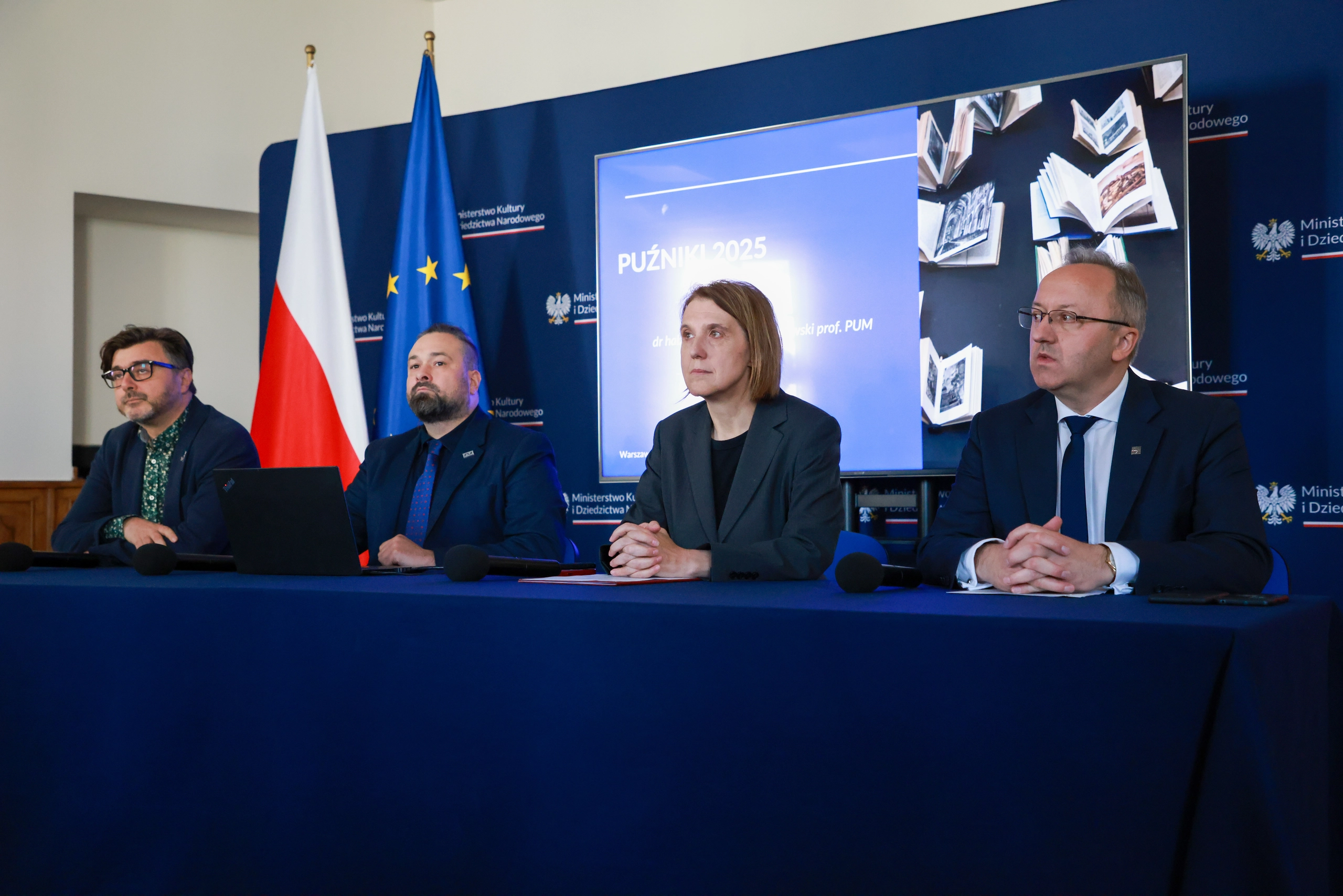
MK: There’s an ongoing debate about the Pilecki Institute and its Lemkin Center, which documented Russian war crimes. However, the work has been halted. Why?
HW: The Lemkin Center operates within the structure of the Pilecki Institute. That institution was never properly regulated. We considered transferring it to the Mieroszewski Center, but ultimately decided to keep it where it is. A strategic plan for its operations is currently being developed. Over 800 testimonies have been collected and are now being analyzed and processed. There was never any idea to stop these activities. The continuation of the Center’s work in the area of compiling reports and documenting Russian crimes in Ukraine was and still is crucial. It is important to develop a format that will make these activities more useful in consultation with the Ukrainian side.
MK: But no new testimonies are being collected.
HW: Right now, it’s crucial to systematize and professionalize the entire process. We’re working on this with Ukrainian organizations. The Lemkin Center was the first to begin documenting these crimes, but today there are many such entities – both governmental and non-governmental. They’re signaling the need for support in processing and archiving the material. It’s worth recalling that the center’s patron, Rafał Lemkin, was a lawyer and the creator of the term “genocide.” The center’s mission isn’t just to document – it’s also to ensure the testimonies can be used as evidence in proceedings concerning crimes against humanity – including before international tribunals.
MK: What’s the future of the team that had been collecting these testimonies?
HW: The Lemkin Center’s team consists of people employed at the Pilecki Institute, working in Warsaw – both Poles and Ukrainians. Their work continues.
MK: But the future of those who collected testimonies directly in Ukraine remains uncertain.
HW: Collaboration with those individuals ended several months ago when their contracts expired. Following an evaluation, a decision was made to focus – together with the Ukrainian side – on processing the materials already gathered, which is in our mutual interest.
You can also highlight the text and press Ctrl + Enter
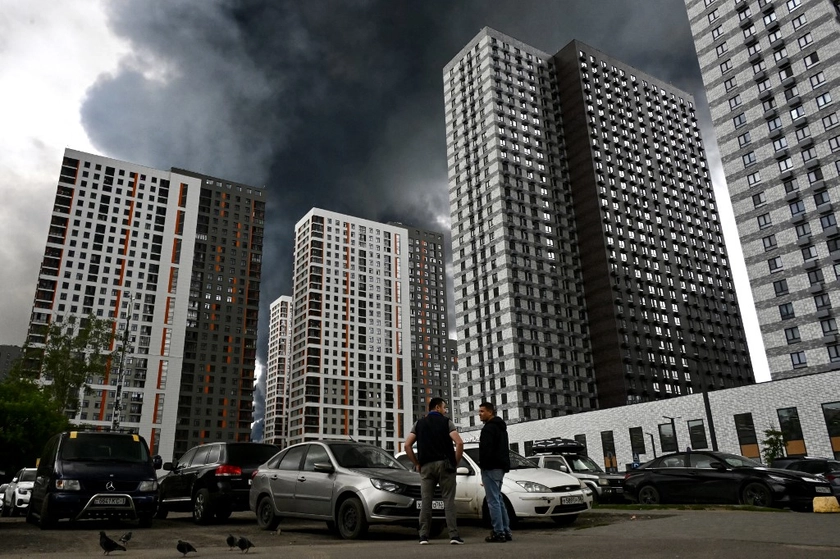
Attack on Moscow Oil Refinery: Putin Under Pressure?