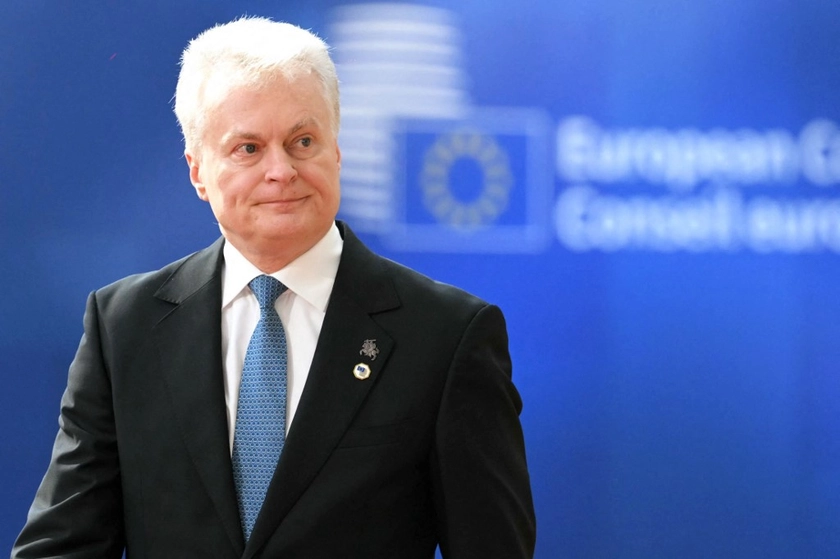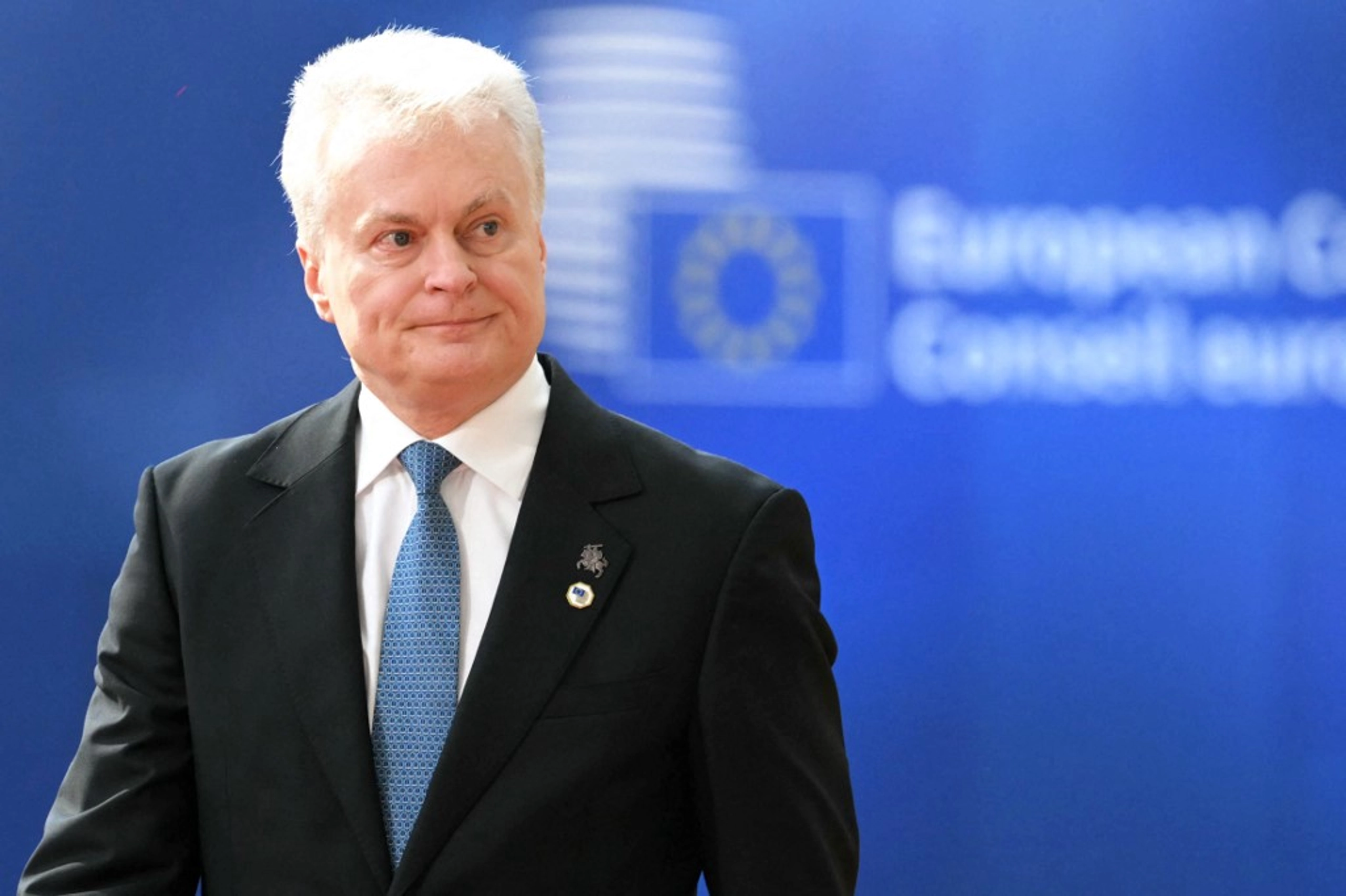
Lithuanian President Gitanas Nausėda has indicated his willingness to mediate the ongoing diplomatic conflict between Ukraine and Poland, provided both nations express a desire for external assistance, LRT reported.
Nausėda offers to mediate diplomatic dispute between Ukraine and Poland
In an interview with the LNK Žinias television channel, Nausėda emphasized his commitment to maintaining the strategic partnership between Kyiv and Warsaw.
JOIN US ON TELEGRAM
Follow our coverage of the war on the @Kyivpost_official.
“First of all, they themselves must express such a desire. I also noted in my annual report that I am ready to do everything so that the ties between two countries close to us – Poland and Ukraine – are not broken,” Nausėda stated.
The Lithuanian leader noted that he plans to travel to northern Poland this weekend to meet with Polish President Karol Nawrocki, where he intends to discuss the situation informally. “We will discuss this issue, which is very important to me,” he said, adding that he hopes to learn more about the background of the conflict and potential avenues for normalization directly from Nawrocki.
Nausėda acknowledged that, currently, both sides have indicated a preference for resolving the dispute bilaterally. “I heard this statement from the Minister of Foreign Affairs of Poland, Radosław Sikorski. But if both sides come to the conclusion that a mediator is needed, if such a request is made, I am certainly ready to do it,” he affirmed.
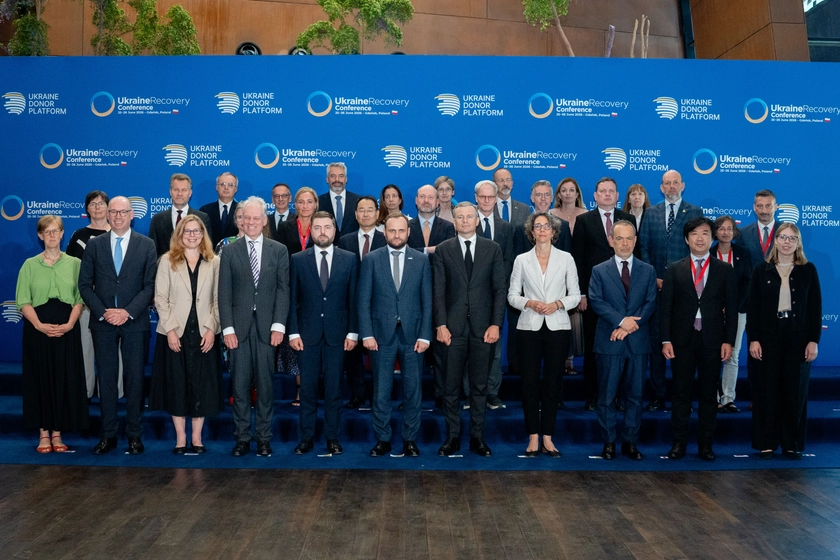
He also noted that during the Ukraine Recovery Conference in Gdańsk, Ukrainian Prime Minister Yulia Svyrydenko demonstrated a clear intention to settle the dispute. “The past is important, but the present is especially important, when the aggression against Ukraine continues,” Nausėda concluded.
Baltic States Urge EU to Accelerate Russian Oil Ban
Historical grievances and returned honors
The diplomatic rift centers largely on historical memory, specifically regarding the World War II-era Ukrainian Insurgent Army (UPA). The dispute escalated recently when Ukraine named a military unit “Heroes of the UPA.” While the UPA is viewed by many in Ukraine as a key part of the national independence struggle, in Poland, the group is held responsible for the mass killings of Polish civilians in Volhynia and Eastern Galicia between 1943 and 1945.
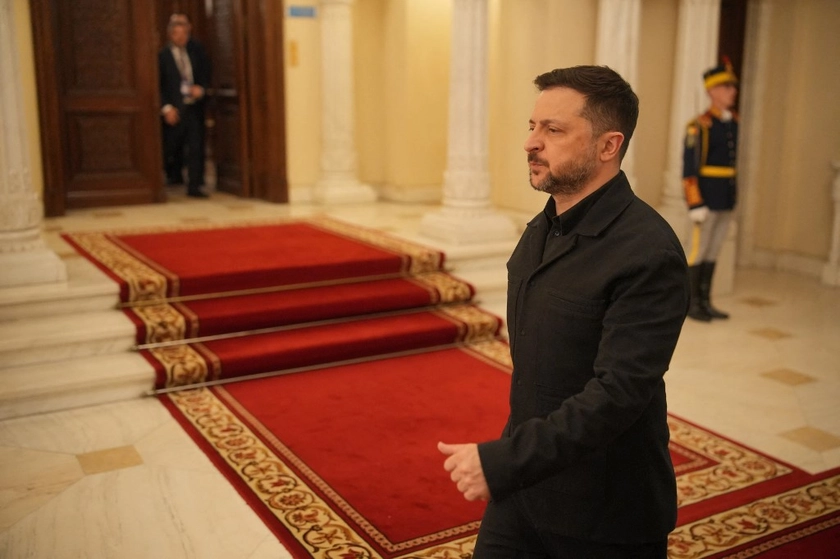
In response to the naming, Polish President Karol Nawrocki stripped UkrainianPresident Volodymyr Zelensky of the Order of the White Eagle, Poland’s highest state honor. In subsequent days, Zelensky, along with several other high-ranking Ukrainian officials and former presidents, formally returned their Polish state decorations.
The political fallout continued this week when Jarosław Kaczyński, leader of Poland’s Law and Justice Party, announced his intention to return his Ukrainian Order of Prince Yaroslav the Wise. Kaczyński claimed the conflict is being “rapidly escalated by the other side” and suggested that Poland should consider blocking the opening of the EU’s next negotiating clusters with Ukraine, though he clarified this was a personal stance.
Polish Prime Minister Donald Tusk has repeatedly called for calm, warning that tensions over historical memory only serve Russian interests. The Polish government recently stated that it does not require outside mediation to resolve the dispute, with government spokesperson Adam Szłapka emphasizing the need for de-escalation.
Business disputes and public opinion
The political tensions are running parallel to localized economic disputes. During the Ukraine Recovery Conference, Polish Foreign Minister Radosław Sikorski highlighted an ongoing conflict between the city of Lviv and the Polish firm Control Process regarding the construction of a waste processing facility.
Sikorski suggested it might be better if Polish companies were not involved in reconstructing Lviv until the city honors an International Chamber of Commerce (ICC) arbitration ruling in favor of the Polish contractor. Lviv Mayor Andriy Sadovyi, who held a separate event in Gdańsk after reportedly not being invited to the main conference, disputes the ruling, arguing the company failed to meet its obligations.
These high-level political and economic frictions align with a notable shift in Polish public sentiment regarding Ukraine’s European integration. According to a new poll conducted by the IBRiS research institute, nearly 60% of Poles currently oppose Ukraine joining the EU.
The survey found that 59.7% of respondents do not support Ukraine’s accession, with 32.3% stating they are “definitely against” it. Conversely, 35.4% of respondents supported Ukraine’s EU membership. The polling indicates a sharp partisan divide, with supporters of the governing coalition significantly more likely to favor Ukrainian accession compared to voters supporting opposition parties.
You can also highlight the text and press Ctrl + Enter
Attack on Moscow Oil Refinery: Putin Under Pressure?