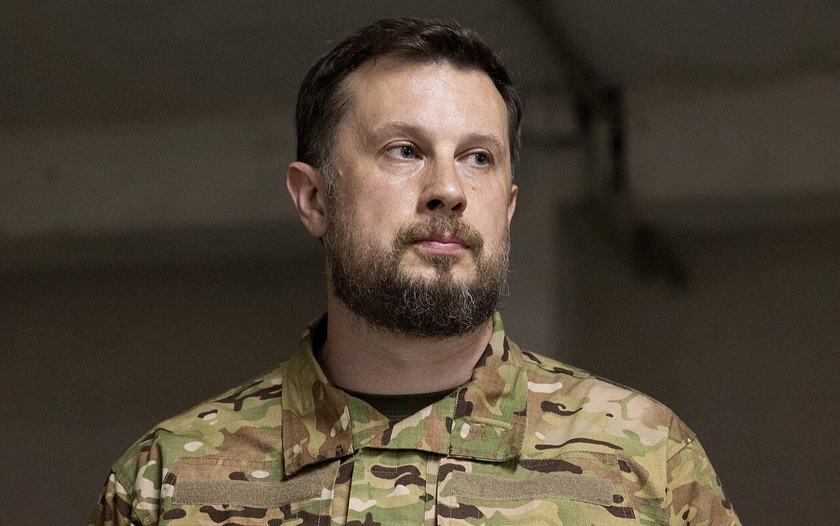
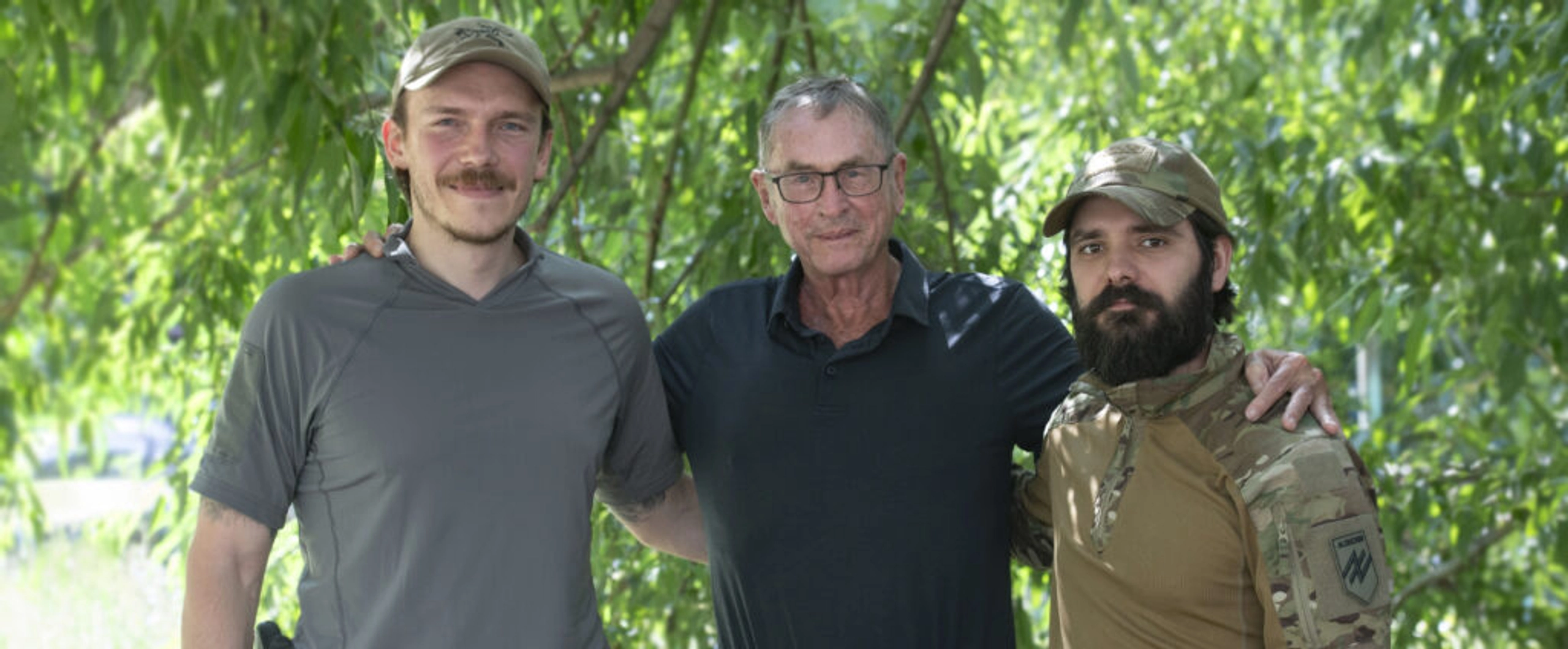
When I first met the commander of one of Ukraine’s most elite military units, Azov, in the summer of last year, I was struck by his extraordinary bravery and the sheer strength of character that he and his comrades displayed. Col. Denys Prokopenko, best known by his call sign “Redis,” had come straight out of the battle on the front line in Donbas just hours before speaking to me.
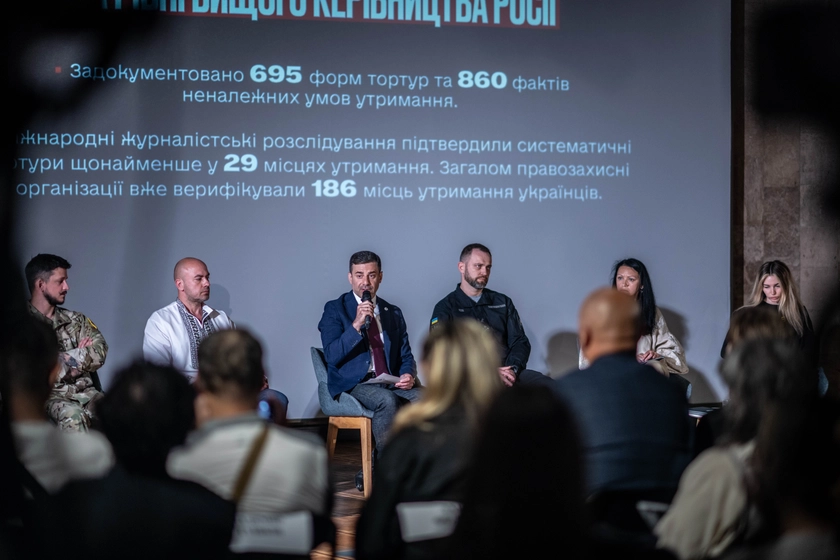
During that first conversation, he spoke of his brigade’s acts of heroism – often verging between life and death – in legendary battles such as the fight for Mariupol. He described the torture he endured in Russian captivity, and his unwavering determination to return to the battlefield after a prisoner exchange that brought him home in July 2023.
Denys joined Azov in 2014, when Russia first seized Crimea and later invaded the eastern regions of Ukraine known as the Donbas. Then, just 23, he joined what was a volunteer battalion comprising organizations active during the Revolution of Dignity on Maidan (the Independence Square in Kyiv). In 2017, at the age of 26, he became the youngest commander in the Armed Forces of Ukraine when he was promoted to major and placed in command of the Azov Regiment, which by then had been incorporated into the National Guard.
Azov, one of the most effective combat units in the Russo-Ukrainian war since 2014, became a prime target of Russian propaganda. Claims of its far-right leaning and even Nazi ideology were used to justify Russia’s narrative of a 2014 “coup” in Ukraine – when in fact a democratic uprising forced pro-Russian President Viktor Yanukovych to flee to Russia. We now know that the sustained disinformation campaign against Azov was part of a broader hybrid war waged against Ukraine, targeting the country’s leadership and aimed at undermining Western support.
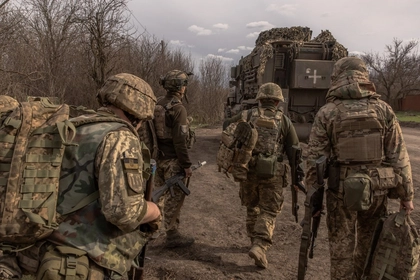
Defense Ministry Develops Digital Combat Log
After nearly a decade of international isolation and misrepresentation, in June 2024 the US finally lifted its ban on providing arms to Azov, effectively dismantling Russia’s propaganda narrative once and for all. Redis called the decision a “victory of the entire civilized world over Russian propaganda.”
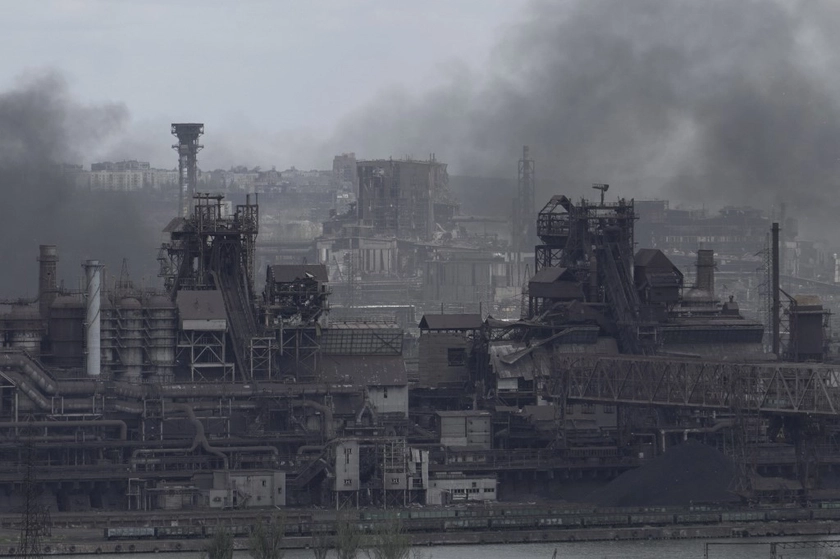
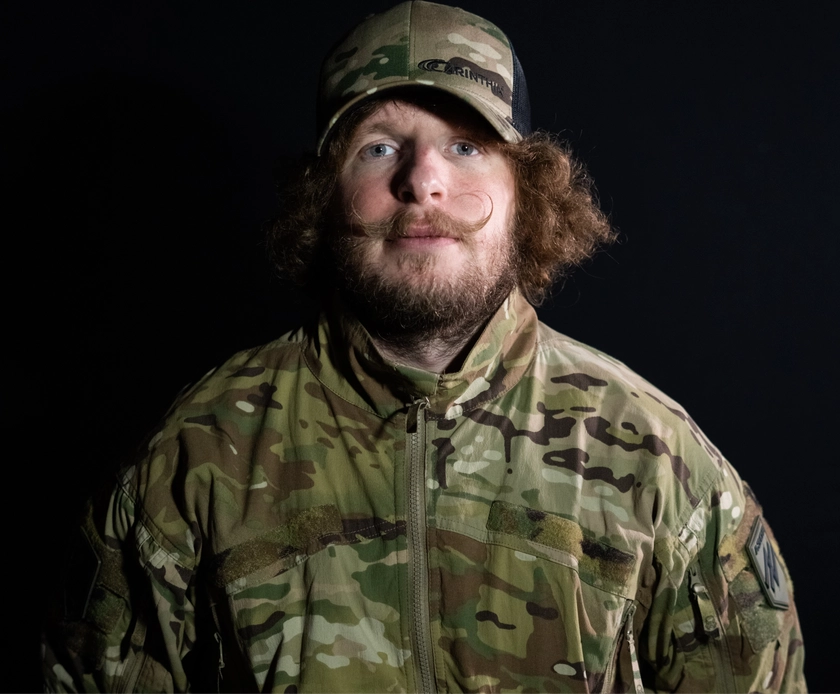
Perhaps the most legendary chapter in Azov’s history was the Siege of Azovstal – the steelworks in their home city Mariupol in southeastern Ukraine. Azov’s defenders pledged to fight to the last man for their hometown. Eventually, after holding the steelworks for a dramatic 82 days – some of which you can learn about through the story of another hero, Ruslan Serbov, whom I interviewed earlier this year – Col. Prokopenko and some 950 Azov fighters surrendered and were taken prisoner. Incidentally, Ruslan, whose call sign is “David,” is Jewish and would – unsurprisingly – never fight for a racist military unit, thereby further ridiculing Russia’s suggestion that Azov members are Nazis.
Surrendering was a profoundly difficult decision, but Azov’s command followed orders from Kyiv’s military leadership to preserve lives of more than 300 severely wounded men. After four months of Russian captivity and nine further months in Turkish detention, Col. Prokopenko returned home and to active duty in July 2023.
Despite the agreement with Russia, many of Redis’s comrades were not returned as promptly and remain in captivity, often in inhumane conditions. Earlier this year, following renewed negotiations between Ukraine and Russia – prompted by Donald Trump’s efforts to end the war in Ukraine – the sides reached an agreement for one of the largest prisoner swaps of the past three years. Some defenders of Mariupol have since returned home, but many are still awaiting their freedom.
Today, Azov continues to evolve through transformational change. In April this year, Ukraine’s National Guard formally reorganized the 12th Special Forces Brigade Azov into the foundation of the new 1st Corps of the National Guard – the Azov Corps. This formation consolidates five brigades under one command, aiming to enhance coordination and operational flexibility across Ukraine’s most critical frontlines – from Kreminna and Bakhmut, to the Kupiansk-Lyman axis, and further south to the Zaporizhzhia sector. Azov’s proven ability to adapt and dominate urban and semi-urban terrain is expected to give Ukrainian forces a decisive edge on the eastern front.
A similar decision was made for another of Ukraine’s most successful military formations – the 3rd Separate Assault Brigade, now restructured into the 3rd Army Corps. The creation of the 1st Azov Army Corps and the 3rd Army Corps reflects Ukraine’s push to streamline military command around experienced and high-performing units to more effectively match and counter the adversary’s capabilities.
Col. Prokopenko recently wrote about this in Ukrainian media. “The Azov model is an asymmetric institution that operates within the framework of the regular army while retaining the flexibility unique to network-based structures. This is where its strategic value lies.”
He continues: “When it comes to the armies of the future, environments like this will form their core. Not corps built according to the NATO handbook, but units capable of responding rapidly, of adapting, of acting autonomously and without interruption even when completely cut off from the main forces. This is where the example of Azov and its own adaptive architecture of warfare becomes critically important.”
And he concludes: “On a global scale, this means that Azov is not a local phenomenon, it’s a prototype for the army of a new era. An era in which the classical nation-states face the blurring of the front lines, where a blow can be struck not only by weaponry but by information, where the key role is played not by military hardware but by the culture of management.”
With the reform of Ukraine’s military command structure and the revitalization of its defense industry, Ukraine is firmly on the path to becoming Europe’s leading military power. This makes Col. Denys Prokopenko – now leading up to 20,000 of Ukraine’s most experienced and battle-hardened troops at just 34 years old – not only one of the greatest heroes of Ukraine, but without exaggeration, one of the most legendary figures of the 21st century.
And so, I return to what he said to me when we met last summer: “This is the war of exhaustion. Russia is exhausted too, no matter how much they try to hide it. If we stay strong, Russia will break down first.”
With heroes like Redis and his Azov Corps, Ukraine can – and will – win this war.
Lord Ashcroft KCMG PC is an international businessman, philanthropist, author and pollster. For more information on his work, visit lordashcroft.com. Follow him on X/Facebook @LordAshcroft.
The views expressed in this opinion article are the author’s and not necessarily those of Kyiv Post.
You can also highlight the text and press Ctrl + Enter

Attack on Moscow Oil Refinery: Putin Under Pressure?