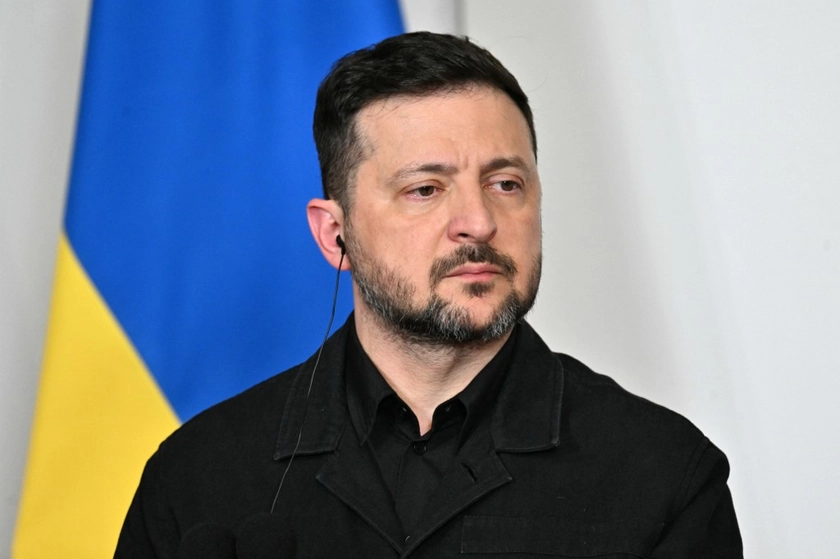
President Volodymyr Zelensky signed the highly controversial bill into law on Tuesday that effectively guts the country’s top anti-corruption organizations of their power to investigate independently, the Verkhovna Rada confirmed on its website.
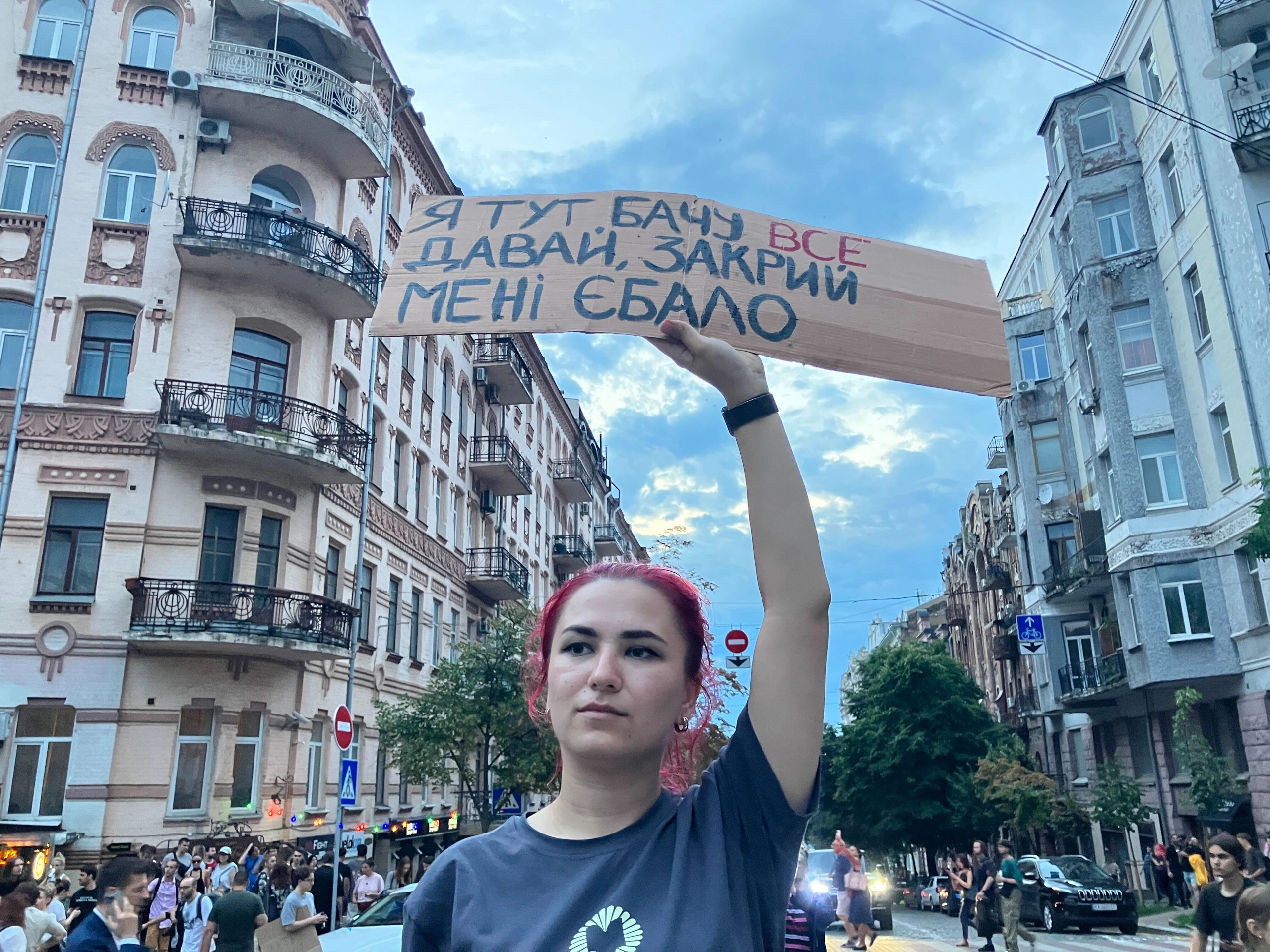
Thousands of people gathered outside the presidential office in Kyiv to protest the new law approved on Tuesday that strips Ukraine’s top anti-corruption organizations of their institutional independence in what many fear is a major blow to the country’s push to eliminate graft in government.
JOIN US ON TELEGRAM
Follow our coverage of the war on the @Kyivpost_official.
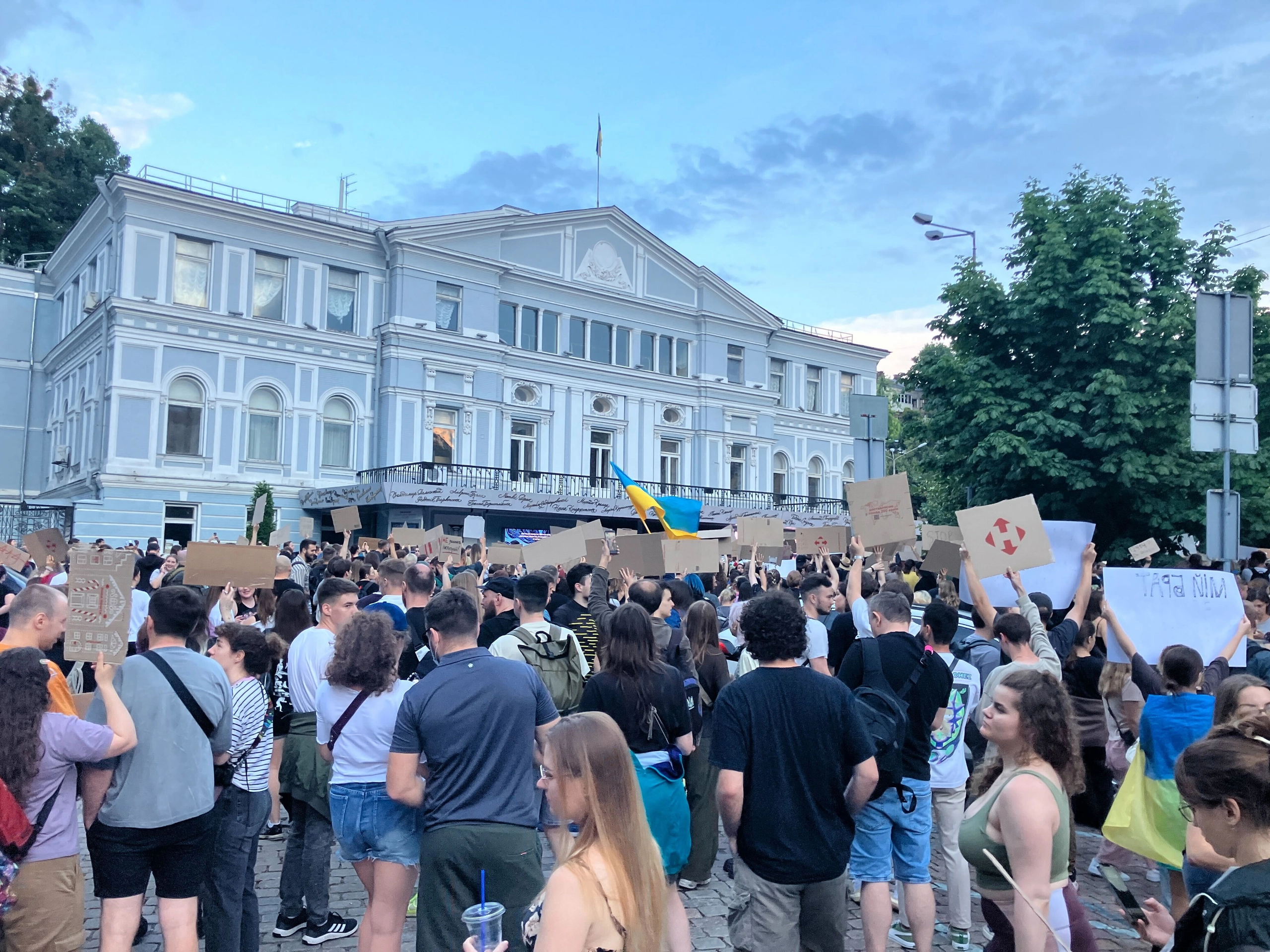
On Tuesday night, Kyiv Post reporters on the ground observed around 2,000 to 3,000 people – mostly young – rallying near the Ivan Franko Theater in central Kyiv, close to the presidential complex.
The protest took place despite martial law, in effect since Russia’s full-scale invasion in 2022, which officially bans public demonstrations.
The peaceful protesters are appealing to Kyiv to slash Bill No. 12414, which, once it becomes law, would effectively abolish the independence of anti-corruption law enforcement bodies in conducting investigations – namely, the National Anti-Corruption Bureau of Ukraine (NABU) and the Specialized Anti-Corruption Prosecutor’s Office (SAPO).
67% of Ukrainians Expect New Post-War President
The bill passed its second reading in lightning speed on Tuesday.
The demonstration – the first of its kind in wartime Kyiv – has stirred up memories of other times in Ukraine’s past when protesters changed the course of the country’s future.
“They are crying that they do not want to return to the times of [former President Viktor] Yanukovych,” Kyiv Post reporter Sergii Kostezh said. “They do not want to return to the times of pro-Russian governance in Ukraine.”
The draft law No. 12414, passed on Tuesday, places NABU and SAPO under the Prosecutor General’s Office – effectively within the president’s purview. The anti-corruption agencies, NABU and SAPO, have operated independently since 2015, often facing resistance from authorities.
This independence allowed them to investigate members of parliament, officials, and even ministers. Having autonomy in investigation, surveillance, and covert operations meant they did not have to share their cases with the existing structures, which tend to be lenient toward top officials.
But under the new bill, investigations – and all measures that were previously independent – will be under the control of the Office of the Prosecutor General, which is within reach of the president’s purview.
This means that as soon as a case against an official reaches a dangerous level, the prosecutor general can technically reassign it from NABU to any other prosecutor within the Prosecutor General’s Office – with unknown consequences for the case.
NABU on Tuesday also accused a senior official from the Security Service of Ukraine (SBU) of demanding a $300,000 bribe from a person to destroy evidence on a case related to the illegal smuggling of conscripts abroad, a day after the SBU raided NABU and SAPO’s offices, where it accused an NABU official of having Russian ties.
NABU said the SBU official demanded a $300,000 bribe from a person “under operative surveillance” without disclosing his or her identity. It is unclear if the incidents are related.
You can also highlight the text and press Ctrl + Enter


Putin’s Worst Nightmare