Has Ukraine’s anti-corruption independence come to an end?
On Tuesday, July 22, the Verkhovna Rada of Ukraine voted to strip the National Anti-Corruption Bureau of Ukraine (NABU) and the Specialized Anti-Corruption Prosecutor’s Office (SAPO) of their independence.
JOIN US ON TELEGRAM
Follow our coverage of the war on the @Kyivpost_official.
The draft law No. 12414, passed on Tuesday, places NABU and SAPO under the Prosecutor General’s Office – effectively within the president’s purview.
Here is what happened, why this is concerning – and why it might be a silver lining for Ukraine’s anti-corruption reform, despite the concerns.
Hastily passed bill
The bill was passed within hours of its appearance.
In the morning, the bill appeared on the agenda and within two hours, it was already voted on, despite opposition.
A couple of hours later, it was signed by Rada Speaker Ruslan Stefanchuk and sent to President Volodymyr Zelensky for signature – unusually fast for Ukrainian legislative procedures.
A total of 263 votes were cast in favor. The pro-government party “Servant of the People” gave 185 votes; another 33 came from the “Opposition Platform – For Life and Peace” party (formerly “Party of Regions”) and former Prime Minister Yulia Tymoshenko’s party “Batkivshchyna.”
Over 40 more votes were collected from other parliamentary parties and non-affiliated lawmakers.
Russia Launched 1,400 Drones and 1,500 Guided Bombs at Ukraine in a Week
A day prior, the Security Service of Ukraine (SBU) also raided NABU and SAPO’s offices, accusing some employees of Russian ties.
Dubious procedures
The manner in which the bill was passed has raised questions about adherence to due process.
Normally, a bill is submitted to the Rada, passes through a first and second reading, then is signed by the speaker and, finally, by the president to become law, taking weeks, if not months, after its inception.
But this time, it went straight to second reading – by incorporating the changes to a seemingly unrelated bill.
Notably, the bill was formally aimed at improving the process of locating missing persons and was titled “Draft Law on Amendments to the Criminal Procedure Code of Ukraine on the Specifics of Pre-trial Investigation of Criminal Offenses Related to the Disappearance of Persons Under Special Circumstances During Martial Law.”
However, amendments were added that effectively eliminate the independence of anti-corruption bodies:
- The prosecutor general is granted access to all NABU cases or may provide such access to any other prosecutor
- The prosecutor general has the right to issue mandatory written instructions to NABU detectives and, in case of non-compliance, change the jurisdiction by transferring the case to other bodies
- The prosecutor general can close investigations at the request of the defense.
Huge blow to anti-graft independence?
The anti-corruption agencies – NABU and SAPO – have operated independently since 2015, often facing resistance from authorities.
This independence allowed them to investigate members of parliament, officials, and even ministers. Having autonomy in investigation, surveillance, and covert operations meant they did not have to share their cases with the existing structures, which tend to be lenient toward top officials.
But from now on, investigations – and all measures that were previously independent – will be under the control of the Office of the Prosecutor General, which is within reach of the president’s purview.
This means that as soon as a case against an official reaches a dangerous level, the prosecutor general can technically reassign it from NABU to any other prosecutor within the Prosecutor General’s Office – with unknown consequences for the case.
There are also concerns with potential information leaks, including to the subject of the investigation.
It was the distrust of international partners toward the Soviet-style law enforcement bodies that led to the creation of NABU and SAPO.
These agencies achieved significant results, the most notable being the suspicion filed against former Deputy Prime Minister Oleksiy Chernyshov.
Despite pressure from authorities on NABU, Chernyshov was eventually served an official suspicion notice upon his return from abroad.
Investigations on such levels might now become impossible.
“Effectively, if this draft law is adopted, the head of SAPO becomes a nominal figure, and NABU loses its independence and turns into a department of the Prosecutor General’s Office. The anti-corruption infrastructure of Ukraine, built since 2015 in partnership with international allies, will be destroyed,” NABU’s press service states.
Several lawmakers resisted. A few even blocked the podium. But Rada Speaker Stefanchuk still brought the bill to a vote.
“I demand a vote to exclude this bill! No one listens to me! This is dictatorship. Now anything can be pushed through Parliament – under cover of shady draft laws,” wrote lawmaker Oleksiy Honcharenko from the “European Solidarity” party on his Telegram channel.
Some hopes lost – but not all
Ukrainian society’s reaction was almost unanimous: The vote was seen as a step backward.
“The anti-corruption infrastructure in the country has been smashed. You can have different views on NABU, SAPO, [State Bureau of Investigation] DBR, [Bureau of Economic Security] BEB, and others, criticize them – but their work was a huge step forward,” lawmaker Inna Sovsun wrote after the bill was passed.
There might be risks, and there might be flaws – but these alone should not be enough to demolish an entire agency, she said.
“There were enough high-profile investigations and important cases. If NABU really had Russian agents, it’s good they were found – sad that it took this long. But that’s no reason to demolish an entire institution. By that logic, we might as well abolish the SBU and the Verkhovna Rada – there are even more Russian moles there,” she added.
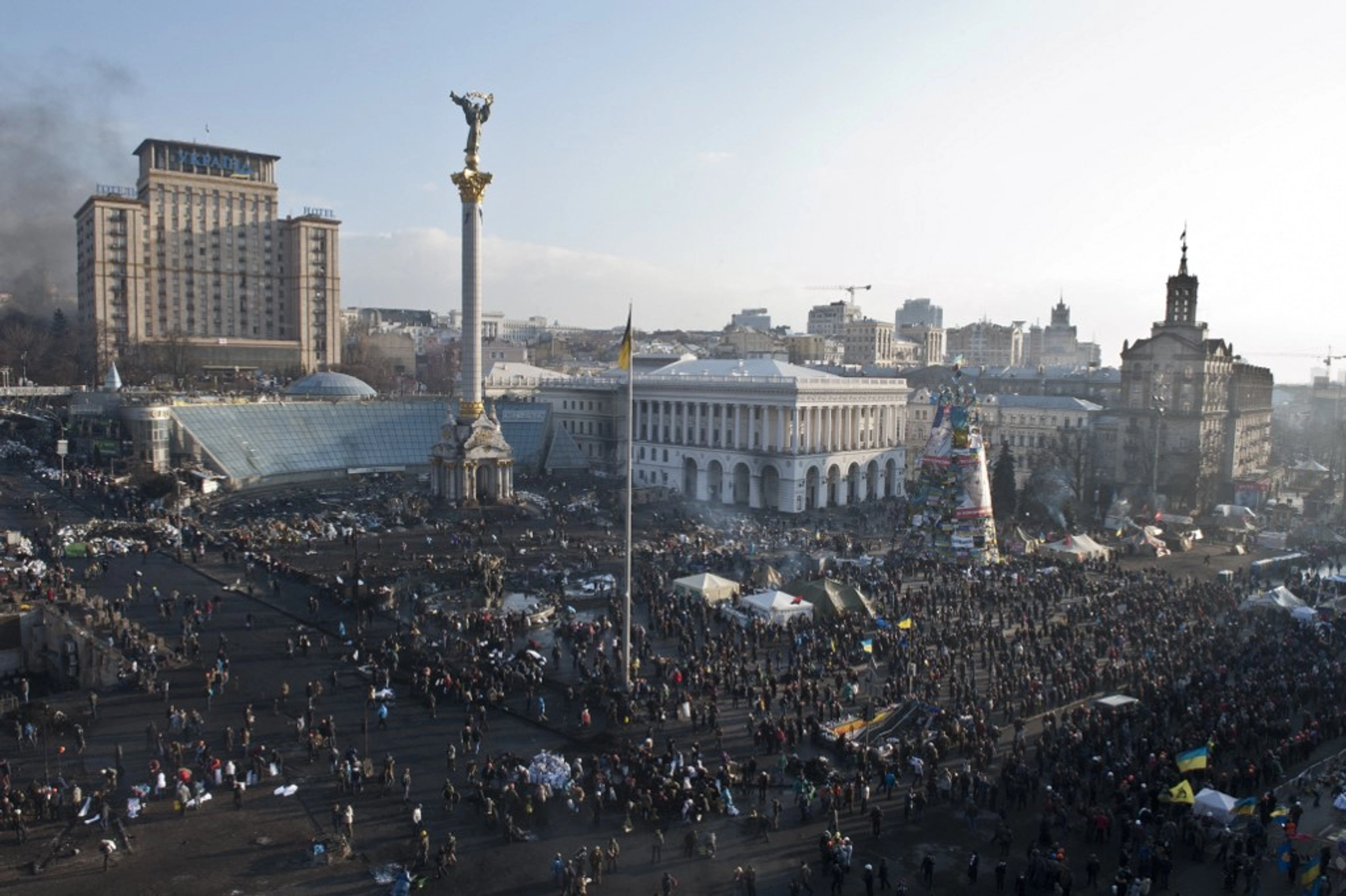
Many representatives of civil society say it reminds them of the pre-Euromaidan Yanukovych era– especially considering that fighting corruption and maintaining independent institutions are among the EU’s demands in the Eurointegration process.
Many fear this process will now slow down.
The “Group of Seven” (G7) Ambassadors for reform in Ukraine have issued a public statement expressing “serious concerns” over the raids on NABU and SAPO that took place on Monday.
Agiya Zagrebelska, former state commissioner of the Antimonopoly Committee, said the latest votes eliminate checks and balances in the system.
“[Bill 12414] is about authoritarianism: ‘We’ll do it because we want to and can.’ About protecting ‘our own.’ About eliminating checks and balances. About rolling back ten-plus years,” Zagrebelska wrote.
Some have also likened it to Euromaidan – or rather, what the revolution stood against.
“We are losing the Ukraine that Maidan stood for – not even because of the Russians. It’s being destroyed today by the green lawmakers you elected, together with [Opposition Platform – For Life],” wrote Serhiy Hnezdilov, prominent blogger and infantryman of Ukraine’s 56th Brigade.
“NABU and SAPO are losing their institutional status and independence; the country’s anti-corruption architecture is being completely dismantled. Congratulations – we’ve become the dragon we’ve been fighting all along,” he added.
Silver lining in Ukraine’s fight against corruption
However, amid the shock and disappointment, there were also glimmers of optimism.
Political analyst Vitaliy Kulyk noted that Ukraine still needs an independent anti-corruption body, and under pressure from Western partners, one will be created again – potentially more effective than NABU and SAPO.
“The existing anti-corruption architecture has proven largely ineffective. So I won’t cry over draft law No. 12414. And I’m not burying the fight against corruption or European integration,” Kulyk wrote.
Western pressures will prompt Kyiv to implement the necessary anti-corruption reforms, Kulyk said.
“The US and EU will still demand transparency and improved efficiency in aid usage. This government will still have to build mechanisms and find an acceptable design for anti-corruption infrastructure. Something else will emerge,” Kulyk added.
Prominent TV host and publicist Vadym Karpiak pointed out that, given the fact that one of the strongest public demands is the fight against corruption, the disappearance of independent anti-corruption bodies will only be temporary.
“NABU and SAPO’s independence will have to be restored – just like the president had to restore the army, the language, and the church, which he underestimated in 2019. The course of history is irreversible. We’ll just lose a few more years,” Karpiak wrote.
As of 5:00 p.m. on Tuesday, Zelensky has yet to sign Bill No. 12414 into law.
You can also highlight the text and press Ctrl + Enter

Attack on Moscow Oil Refinery: Putin Under Pressure?


EXPLAINED: More and Better Western Assistance to Ukraine Announced This Week
EXPLAINED: What’s the Deal With Russia’s Frozen Assets in Europe? All You Need to Know